Publications

Browse PTI technical publications

Find content by subject, editorial format, or publication date

Find technical publications by the powder behavior, material property, process, or measurement you are working with. You can also browse the latest releases, choose an editorial format, or open the complete publication catalog.


Publications

Browse PTI technical publications

Find content by subject, editorial format, or publication date

Find technical publications by the powder behavior, material property, process, or measurement you are working with. You can also browse the latest releases, choose an editorial format, or open the complete publication catalog.

Browse publications by technical subject

Browse by Subject

Find publications by powder behavior, material property, process, or measurement topic.

Latest PTI publications

Latest Publications

See the newest PTI publications first, regardless of technical subject or editorial format.

Browse publications by editorial format

Browse by Format

Choose Feature Articles, Insights, or Know How according to the depth and type of content you need.

Browse all PTI publications

All Publications

Open the complete PTI publication catalog, newest first, and continue loading older content as needed.

Latest from PTI

Recently published

The four newest PTI publications appear here automatically, regardless of subject or editorial format.
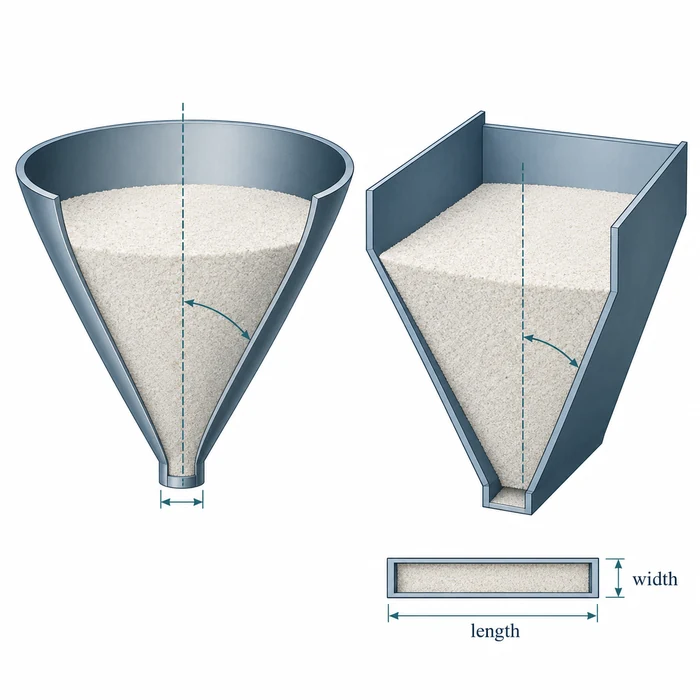
  • Cutaway comparison of a conical hopper with a circular outlet and a wedge hopper with an elongated slot, including an inset top-down view of the slot proportions.
    1 November 2026

    Using Shear-Test Data to Check a Hopper’s Outlet Size and Wall Angle

    Use measured flow functions, wall friction, and defined hopper geometry to check wall-angle suitability and cohesive arching separately, with a recalculated published example and practical decision worksheets.

    Know How

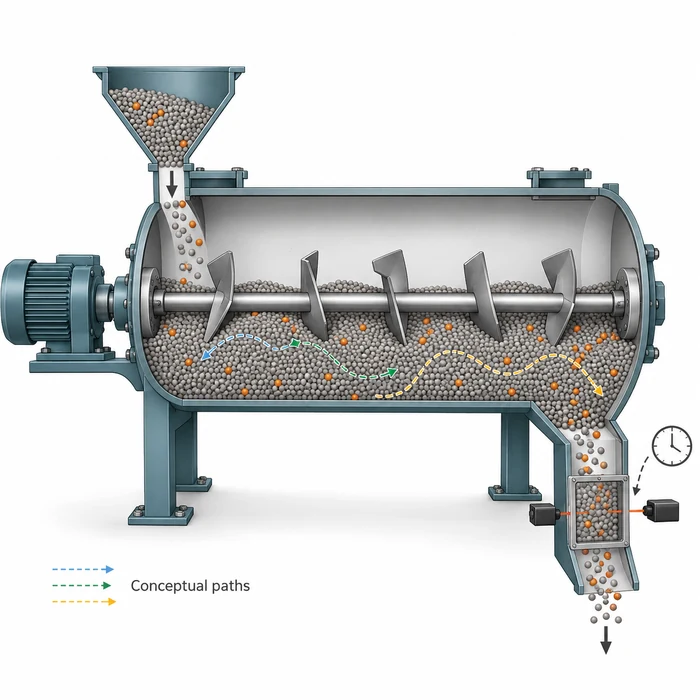
  • Conceptual cutaway of a continuous powder blender showing tracer entry, varied particle paths, and time-resolved outlet detection.
    31 October 2026

    Residence Time Distribution in Powder Processing: Why Average Residence Time Can Mislead

    Mean residence time describes the center of a powder stream's transit-time distribution. It [...]

    Feature Article

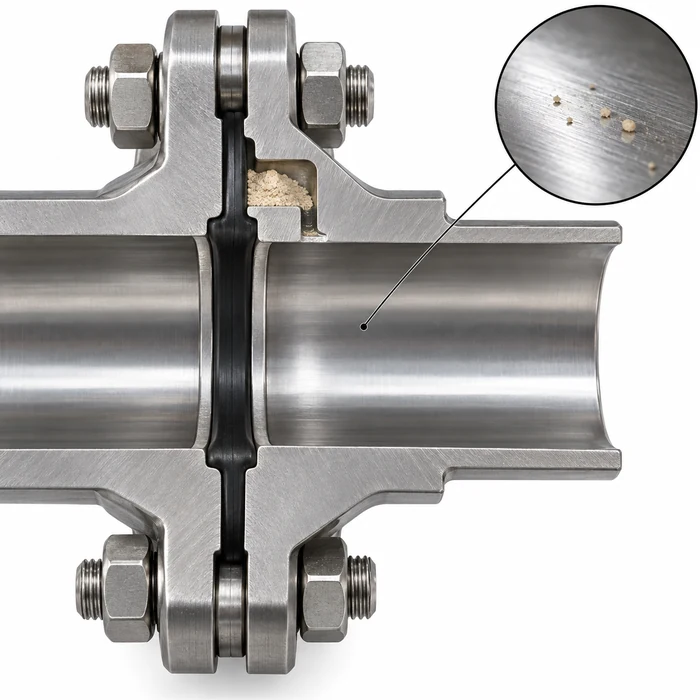
  • Cutaway illustration of a powder-transfer connection showing a visibly clean exposed steel bore, one powder pocket in a recessed gasket groove with an open route to the bore, and a separate magnified inset of sparse particles attached to exposed steel.
    31 October 2026

    Why Powder Lines Still Cause Cross-Contamination After Cleaning

    When a clean-looking powder line still produces contaminated product, compare sample location with when the contaminant appears, then investigate suspected reservoirs with recovery-tested surface or rinse sampling.

    Insights

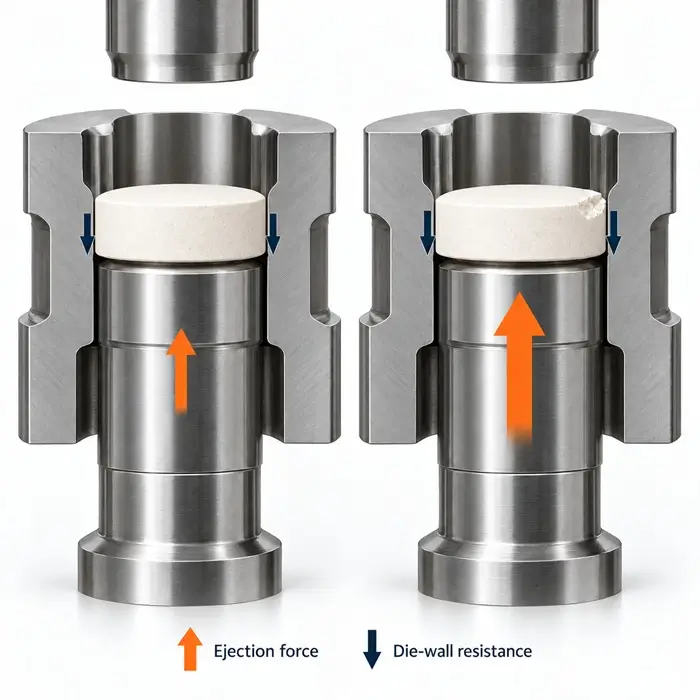
  • Side-by-side cross-section of tablet ejection tooling showing lower and higher ejection forces, opposing die-wall friction, and localized tablet-edge chipping.
    30 October 2026

    Why Can Tablet Ejection Force Rise Without a Loss of Hardness?

    A tablet can meet its hardness specification while requiring more force to [...]

Browse by Subject

Find PTI content by technical subject

Choose the powder behavior, material property, process, or measurement behind the question. Each subject opens the corresponding PTI publication category, bringing related technical publications together in one place. Industries are intentionally omitted because PTI already provides dedicated industry pages.

Browse by format

Choose the depth and type of content

Feature Articles, Insights, and Know How are editorial formats within PTI publications. They are not separate technical destinations.

Feature Articles

Long-form technical analysis built around a defined engineering question, comparison, mechanism, process, or application.

Technical Briefs

Concise, practical explanations of focused powder and particle technology questions, mechanisms, measurement issues, and process challenges.

Insights

Focused interpretation of a study, method comparison, process result, standard, or emerging technical development.

Know How

Practical technical guides that go deeper into measurement, interpretation, equipment, and powder-behavior decisions.

Feature Articles

Long-form technical analysis

Recent Feature Articles examine a defined engineering question in greater depth, connecting mechanisms, measurements, process context, and interpretation where the subject requires it.

  • Dense-phase vs dilute-phase pneumatic conveying pipeline with bend and diverter valve in an industrial powder processing plant
    25 July 2026

    Dense-Phase vs Dilute-Phase Pneumatic Conveying: Matching Conveying Mode to Attrition and Segregation Risk

    Dense-phase and dilute-phase pneumatic conveying create different particle contact mechanics, and the resulting attrition and segregation risk depends on velocity, solids loading ratio, and the powder's own attrition sensitivity, not on a fixed assumption about which mode is gentler.

    Feature Article

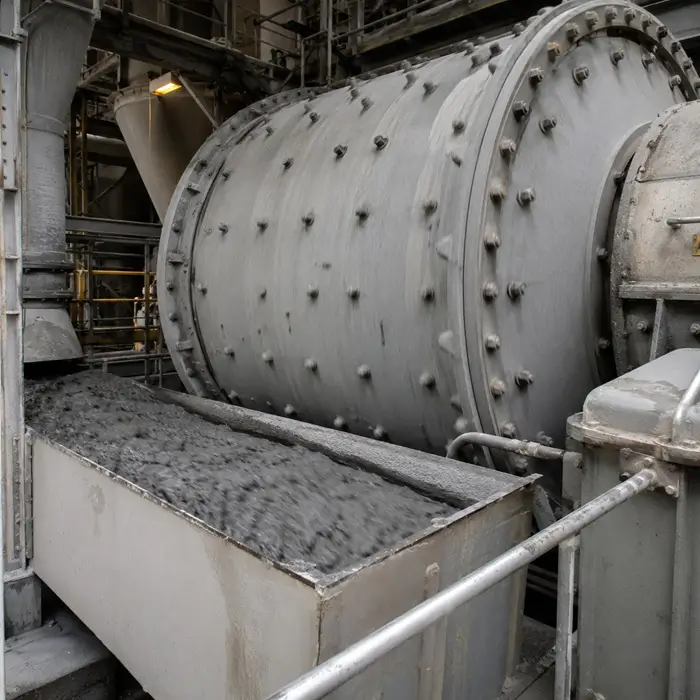
  • Industrial cement grinding mill processing clinker inside a dusty cement production plant.
    18 July 2026

    Cement and Concrete Powder Processing: Fineness, Grinding Aids, and Cementitious Reactivity

    Cement fineness is not a single number. Blaine surface area, particle size distribution, grinding aid chemistry, and moisture history each pull on hydration reactivity in different ways, and a fineness specification that ignores any one of them will eventually let a bad batch through.

    Feature Article

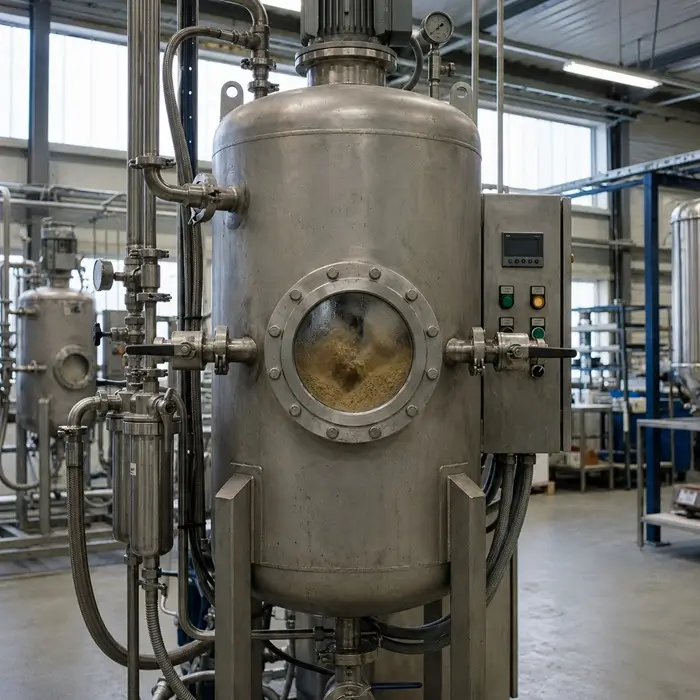
  • Industrial fluidized bed processor with powder moving behind a circular sight glass.
    11 July 2026

    Fluidized Bed Processing in Powder Technology: Granulation, Coating, and Drying Through a Powder Behavior Lens

    Geldart classification, minimum fluidization velocity, bubble dynamics, droplet-to-particle size ratio, and permeability all determine whether a fluidized bed process delivers controlled granule growth, uniform coating, or consistent drying at production scale.

    Feature Article

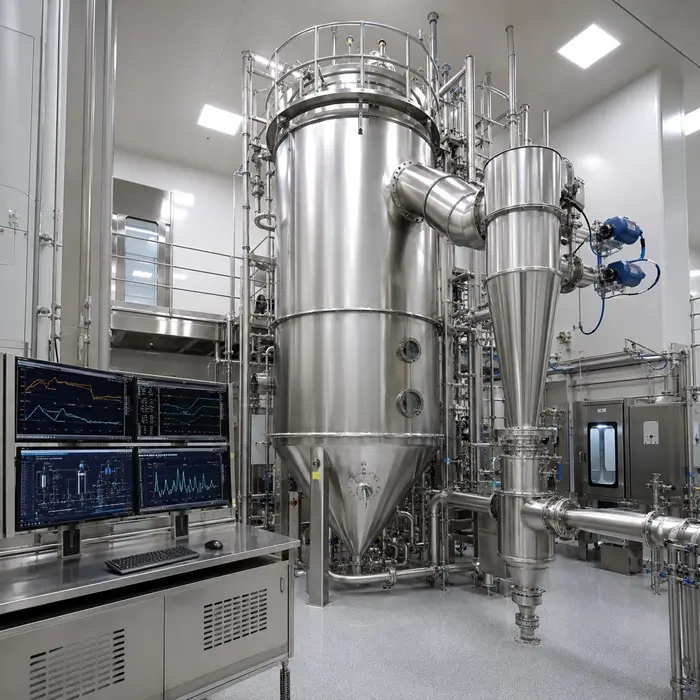
  • Photorealistic view inside a pharmaceutical spray drying facility with a stainless steel spray dryer, cyclone separator, product collection lines, inline NIR sensor probes and process monitoring screens.
    4 July 2026

    Spray Drying 4.0: Real-Time PAT, AI Process Control, and What Engineers Actually Gain

    Process analytical technology combined with machine learning is changing residual moisture control and yield prediction in pharmaceutical and food spray drying. The gains are real but bounded, and the off-line test panel has not been replaced.

    Feature Article

Technical Briefs

Concise answers to focused technical questions

Recent Technical Briefs provide concise, practical explanations of focused powder and particle technology questions, covering specific mechanisms, measurement issues, processing challenges, and interpretation problems.

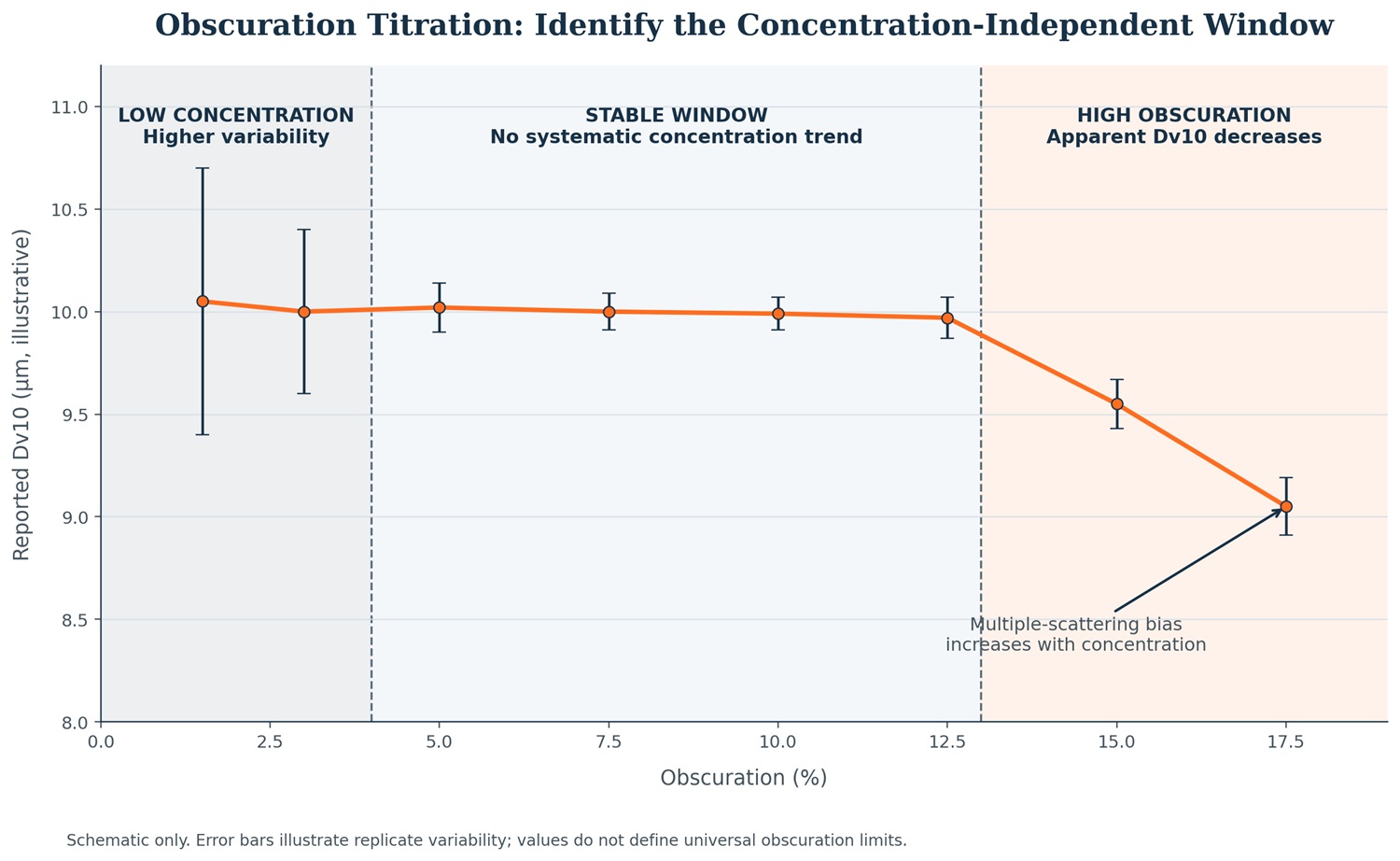
  • Illustrative Dv10 versus obscuration plot showing high variability at low concentration, a stable measurement window, and decreasing apparent Dv10 at high obscuration.
    26 October 2026

    Why Can Higher Obscuration Create False Fines?

    A finer PSD at higher obscuration does not automatically indicate better dispersion [...]

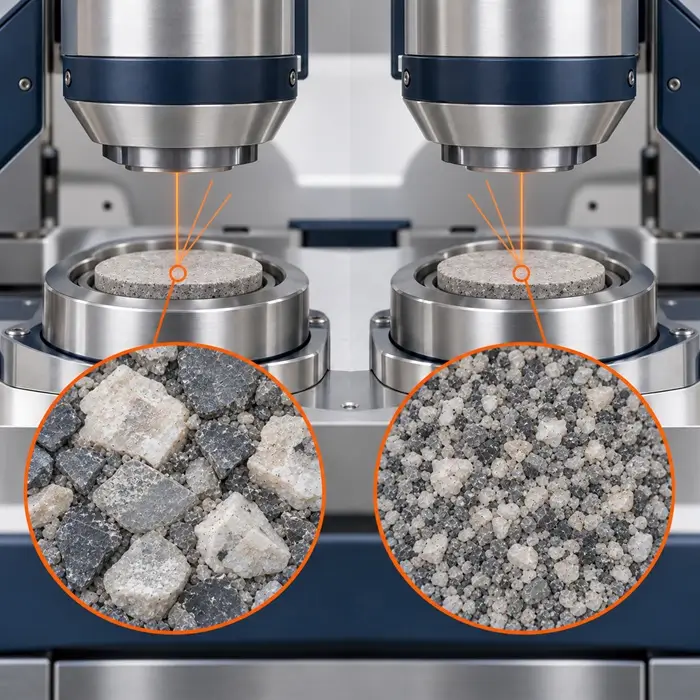
  • Side-by-side XRF analysis of pressed powder pellets with magnified views comparing coarse and fine mineral grains.
    23 October 2026

    Why Can XRF Results Change With Particle Size?

    A reported XRF concentration depends on the prepared specimen as well as its [...]

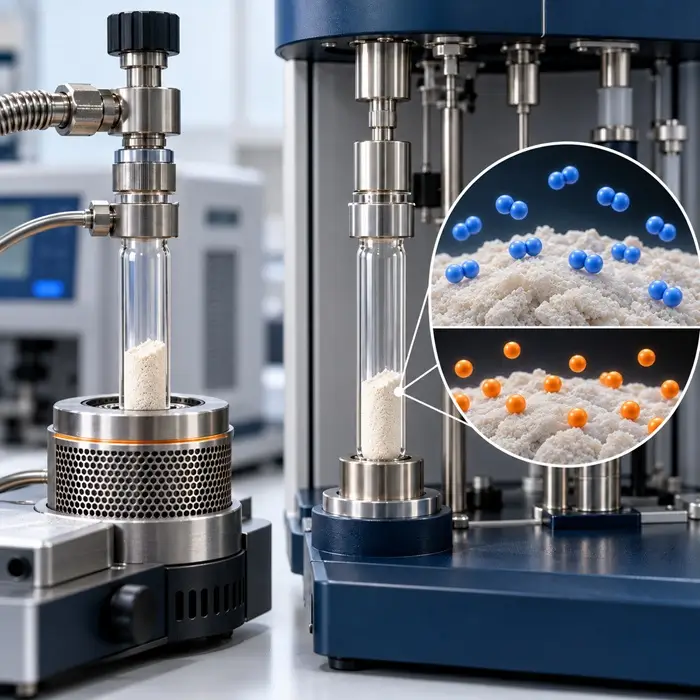
  • BET surface area analysis showing a powder degassing station and nitrogen versus krypton adsorption on a magnesium stearate surface.
    22 October 2026

    Why Do BET Results Change With Degassing and Adsorptive Gas?

    A BET surface area reflects how the sample was prepared and which adsorptive [...]

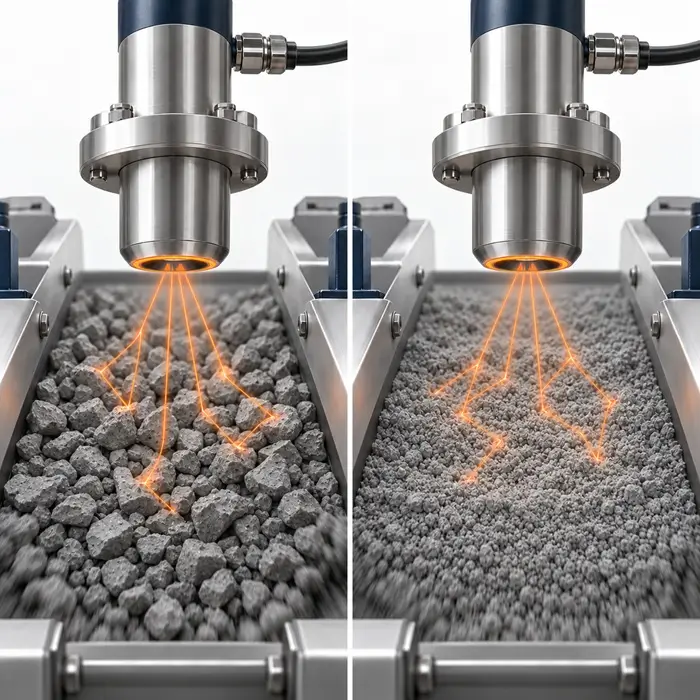
  • Side-by-side NIR moisture measurement of coarse and fine powders, illustrating how particle size changes diffuse light scattering.
    21 October 2026

    Why Does an NIR Moisture Reading Shift When Particle Size Changes?

    NIR moisture predictions depend on both water absorption and light scattering. Changing [...]

Insights

Focused technical interpretation

Recent Insights examine a study, method, process result, standard, or emerging technical development in a tighter editorial format.

  • Diagram showing roller compaction ribbon solid fraction governed by mass feed rate, nip angle and roll force
    25 July 2026

    Roller Compaction Ribbon Solid Fraction: Why the Same Roll Force Can Produce Different Granules

    Two lots that pass the same incoming flowability spec can still granulate differently after roller compaction. The reason usually traces to ribbon density, which responds to roll force, gap width, and feed screw speed as an interacting set, not to roll pressure in isolation.

    Insights

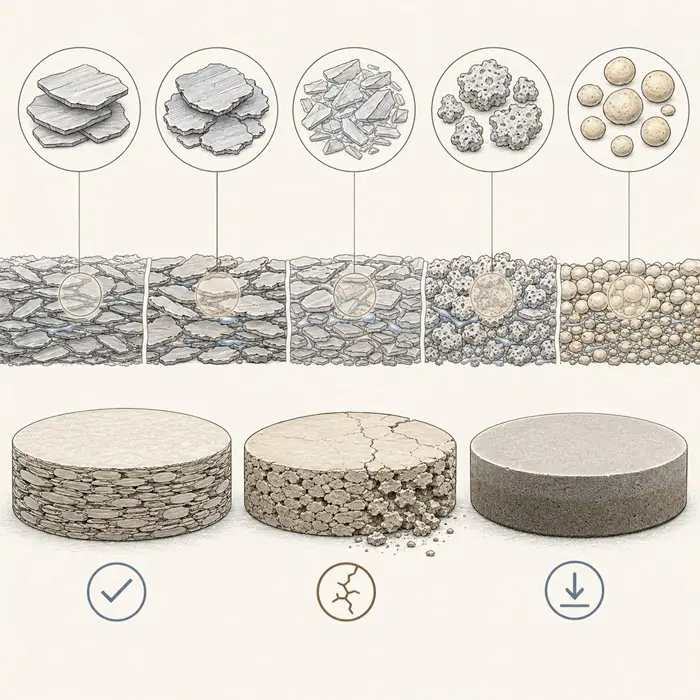
  • Technical illustration comparing how different cosmetic powder particle shapes affect packing and pressed-cake performance.
    18 July 2026

    Preparing for an EU Talc Ban: What Mineral and Starch Alternatives Need to Match

    Talc's expected EU restriction is forcing cosmetic formulators toward mica, kaolin, silica, and starch. None of them reproduce talc's platelet slip, oil absorption, and low dustiness at the same time, and each substitution changes flow and compaction behavior in pressed powder products differently.

    Insights

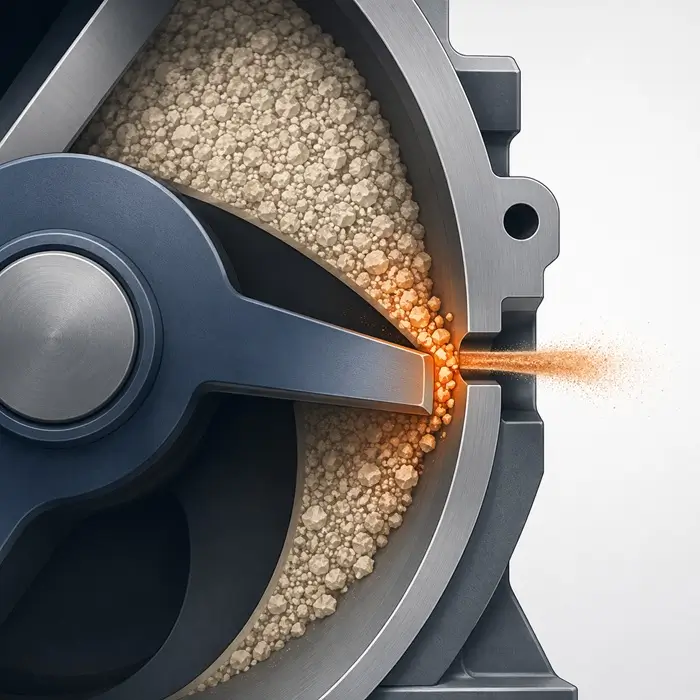
  • Technical cutaway of a rotary airlock showing particle attrition at the rotor tip and fine-particle leakage through the clearance.
    11 July 2026

    What Rotary Airlocks Actually Do to Powder

    Rotary airlocks function as pressure boundaries as much as metering devices. The rotor tip clearance governs particle attrition at the nip zone and the rate of fine-particle bypass under differential pressure. As clearance widens through wear, the downstream particle size distribution shifts in a pattern frequently misread as upstream process variation.

    Insights

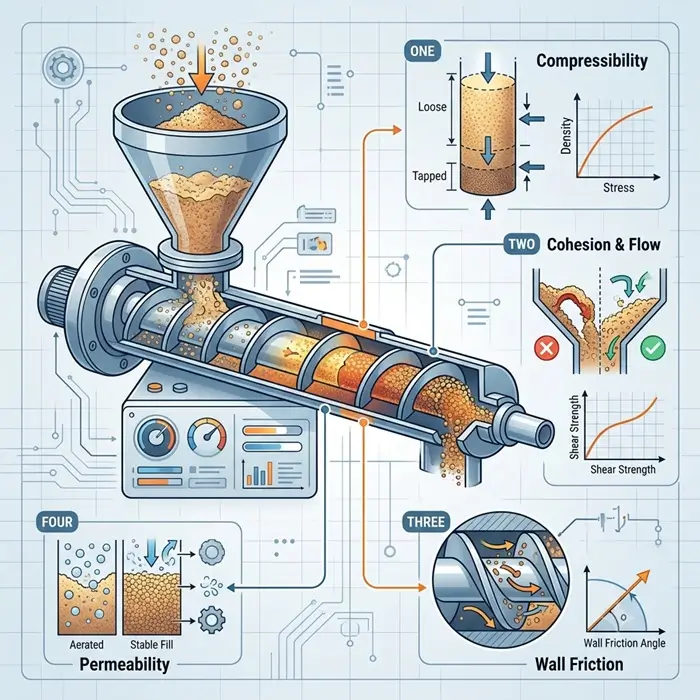
  • Technical illustration showing how compressibility, cohesion, wall friction and permeability affect powder filling and movement inside a screw feeder.
    4 July 2026

    Screw Feeder Dosing Accuracy and Powder Compressibility: Why the Same Screw Behaves Differently on Similar Products

    The same screw feeder at the same speed can deliver consistently on one powder and drift by several percent on another. The difference lies in compressibility, wall friction, and cohesion, and in how bulk density shifts as the hopper empties.

    Insights

Know How

Practical technical guidance

Recent Know How publications focus on practical measurement, method selection, interpretation, equipment, and technically useful working guidance.

  • Close-up photo of a segregated powder heap showing fine particles on top and coarse granules around the base, illustrating particle size separation.
    5 July 2025

    Segregation Mechanisms and Prevention in Blending and Transport

    Segregation ruins powder blends after mixing. This article breaks down the five [...]

    Know How

  • powder feeder selection
    1 June 2025

    Selecting the Right Feeder for your Powder Type

    Selecting the right powder feeder prevents flow issues and dosing errors. It [...]

    Know How

  • Selecting the right powder mixer
    6 April 2025

    Selecting the Right Powder Mixer for your blend

    There is no one-size-fits-all powder mixer—the right choice depends entirely on your [...]

    Know How

  • powder flow optimization
    2 March 2025

    Powder Flow Optimization in Industrial Processes

    Introduction to Powder Flow Optimization It comes as no surprise that powder [...]

    Know How

All Publications

The complete PTI publication catalog

Browse all published PTI content, newest first. Use the subject index above when you know the technical topic, or the structured PTI hubs when you want a guided route through a problem, property, measurement, process area, or industry.

  • Co-processed excipient powder sample tested for flow and compaction near a continuous direct compression feed frame
    12 September 2026

    Co-Processed Excipients in Continuous Manufacturing: How Particle Engineering Changes Powder Flow and Compaction Performance

    Co-processing engineers particle morphology, density, and surface structure into a single composite excipient particle. Flow function and compactibility testing show what that buys formulators on continuous direct compression lines, and where it does not.

    Feature Article

  • Jenike shear cell vs ring shear tester comparison diagram for hopper design decisions
    5 September 2026

    Jenike Shear Cell vs Ring Shear Tester: Matching the Method to the Hopper or Silo Decision

    Jenike shear cells and ring shear testers measure the same yield locus through different mechanics. Here is how their sample, stress range, and time differences map onto the mass-flow versus funnel-flow hopper design decision, plus a checklist for choosing between them.

    Know How

  • Copper powder feedstock being loaded into a laser powder bed fusion machine for additive manufacturing
    5 September 2026

    GRCop-42 and the Copper Powder Feedstock Problem in Laser Powder Bed Fusion

    Copper reflects most near-infrared laser light and conducts absorbed heat away faster than almost any other engineering metal. GRCop-42's move into commercial powder catalogs shows how feedstock morphology, oxide content, and particle size distribution are being engineered around that problem rather than worked around it.

    Feature Article

  • Power consumption curve rising and plateauing during high-shear wet granulation endpoint detection as granules consolidate
    5 September 2026

    High-Shear Wet Granulation Endpoint Detection: What Power Consumption Signals Actually Tell You

    The power or torque trace in high-shear wet granulation rises and plateaus as granules consolidate, but the signal is a supporting process indicator, not a direct particle size measurement, and its interpretation is bounded by batch size, impeller geometry, and formulation.

    Insights

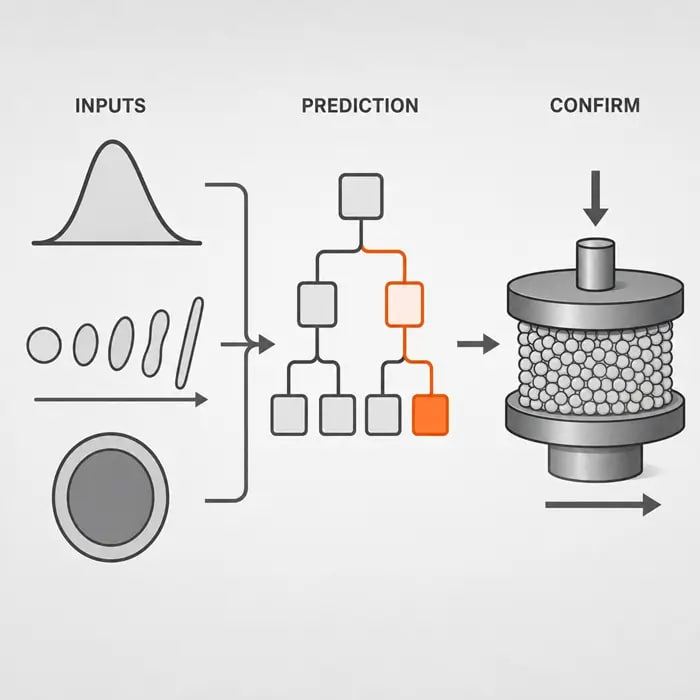
  • Machine learning flowability prediction workflow showing particle property inputs feeding a classifier next to a shear cell confirmation test
    29 August 2026

    Machine Learning Flowability Prediction: What Constituent-Property Models Can and Can’t Replace

    A Pharmaceutical Research study trained Random Forest and XGBoost classifiers on particle size, shape, surface energy, and silica dry-coating data to predict powder blend flowability category. The accuracy holds up as a screening tool and breaks down in specific, predictable places.

    Insights

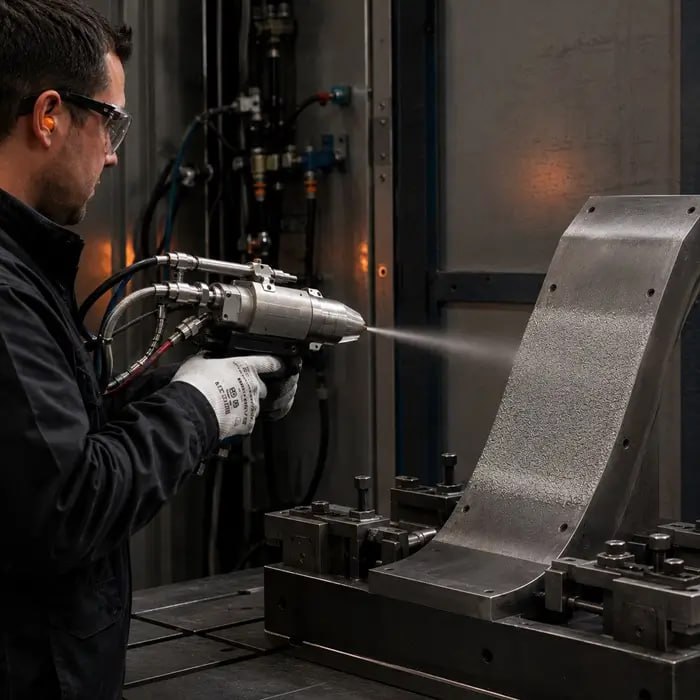
  • Cold spray nozzle depositing metal powder onto a substrate, illustrating cold spray critical velocity and bonding
    29 August 2026

    Cold Spray Powder Deposition: Particle Velocity, Oxide Layers, and Why Some Powders Won’t Bond

    Cold spray coatings form only when particles clear a critical impact velocity, a threshold set by material properties, particle size and morphology, and native oxide condition. This article looks at what powder-side QC can flag before a spray trial, and where it stops short of predicting deposition efficiency.

    Feature Article

  • Triboelectric separation charging tube sorting plastic flakes by contact charge polarity in an industrial free-fall separator
    22 August 2026

    Triboelectric Separation: Using Charge Difference to Sort Plastics and Minerals Instead of Fighting It

    Triboelectric separation turns contact electrification from a handling hazard into a deliberate sorting mechanism. This article covers how material pairs are selected by charge polarity, what feed moisture and particle size do to separation efficiency, and where the technique sits relative to density and optical sorting.

    Feature Article

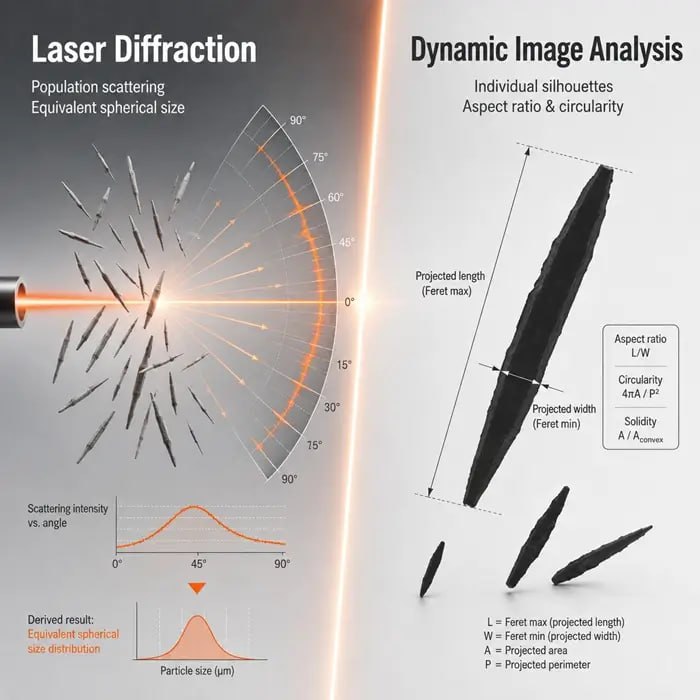
  • Diagram comparing laser diffraction equivalent-sphere sizing with dynamic image analysis shape descriptors for an elongated particle
    22 August 2026

    When Laser Diffraction and Dynamic Image Analysis Are Run Together: What Combined PSD-Shape Workflows Add to Interpretation

    Pairing laser diffraction with dynamic image analysis adds per-particle shape descriptors, aspect ratio, circularity, convexity, that help explain an anomalous D50 or D90 and show where the combined result still cannot replace a dedicated particle morphology study.

    Insights

  • Technician checking blend uniformity data in a pharmaceutical cleanroom relevant to FDA hub-and-spoke distributed manufacturing rule
    15 August 2026

    FDA’s Proposed Hub-and-Spoke Distributed Manufacturing Rule: What It Means for Blend Uniformity and Granulation Consistency

    FDA's proposed hub-and-spoke registration rule treats geographically separate manufacturing units as one establishment. The registration paperwork is new; proving that blend uniformity, granulation endpoints, and moisture behavior actually match between sites is the older, harder problem.

    Feature Article

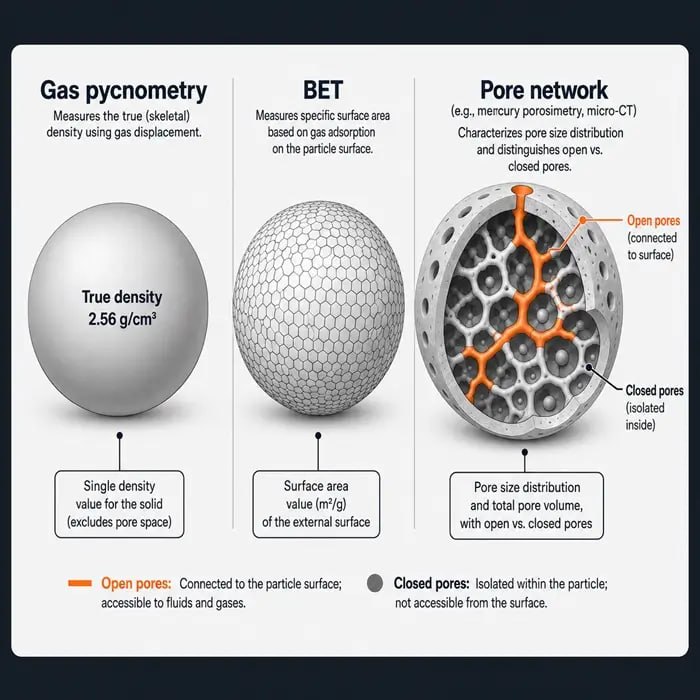
  • X-ray micro-CT pore network diagram showing open and closed porosity in a powder particle compared to gas pycnometry and BET surface area
    15 August 2026

    X-ray Micro-CT for Powder Pore Networks: What It Adds Beyond Gas Pycnometry and BET Surface Area

    Gas pycnometry and BET surface area each report a single number. X-ray micro-CT builds a three-dimensional map of the pore network, showing connectivity, tortuosity, and closed porosity that single-value tests cannot resolve, within real resolution and sample-size limits.

    Insights

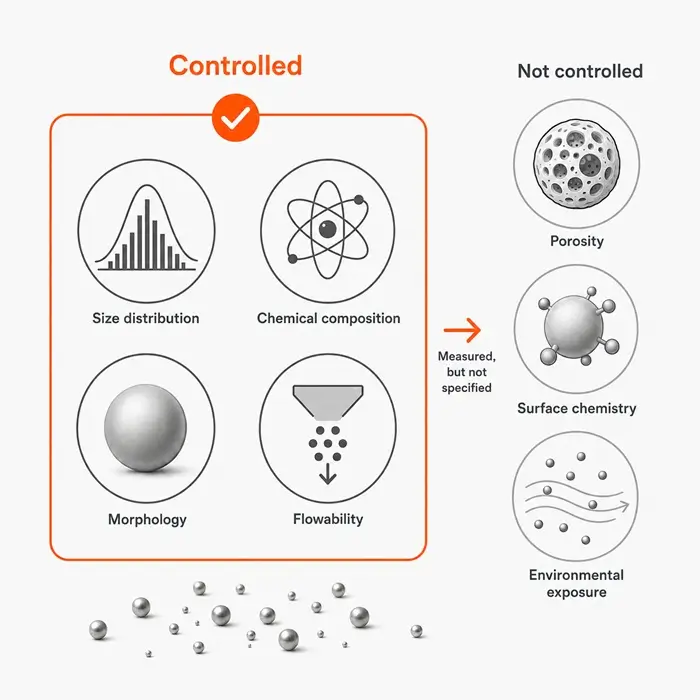
  • SAE AIR7359 illustration showing controlled and non-controlled metal powder feedstock properties in additive manufacturing
    8 August 2026

    SAE AIR7359: Why Some Metal Powder Feedstock Properties Are Left Out of AM Specifications

    AIR7359 explains why AMS-AM metal powder feedstock specifications leave certain properties uncontrolled, citing limited applicability and immature standardized inspection methods, and what that gap means for aerospace AM qualification programs.

    Insights

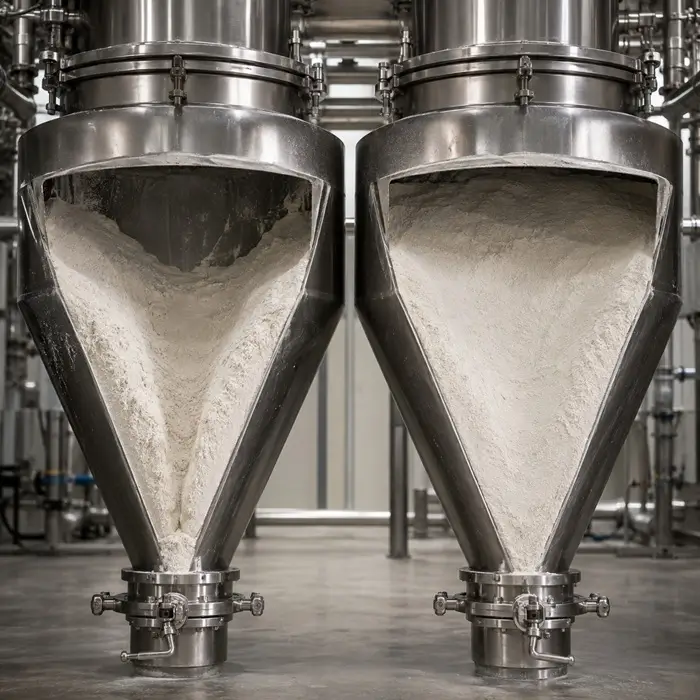
  • Two stainless steel powder hoppers showing contrasting mass flow and funnel flow behavior.
    8 August 2026

    Powder Spreading in Powder Bed Fusion: What Recoater Interaction Reveals About Layer Defects

    Powder spreading in powder bed fusion is a recoater-powder interaction shaped by cohesion, particle size distribution, and particle shape. This article maps streaking, short-feeding, and layer non-uniformity back to their underlying mechanisms and separates powder-driven causes from blade wear and spreading speed.

    Feature Article

FeedSpot Materials Science Blogs recognition badge

External recognition

Recognized in FeedSpot’s 2026 Materials Science Blogs list

PowderTechnology.info ranked #5 in FeedSpot’s 2026 Materials Science Blogs Top 7.
Independent recognition of PTI within the materials science publishing field.

Testing support

Need the measurement, not just the article?

If the publications help narrow the technical question but the decision still depends on measured powder behavior, Delft Solids Solutions can help define an appropriate test plan and interpret the result. Explore Delft Solids Solutions testing support →


Delft Solids Solutions logo