

SUBJECT
Analytical Techniques and Methods
Publications on analytical methods used to characterize powders, particles, surfaces, structure, composition, and material behavior.
PUBLICATIONS
Browse publications
Explore PTI articles, Insights, Know How, and technical publications related to this subject.
 19 September 2026
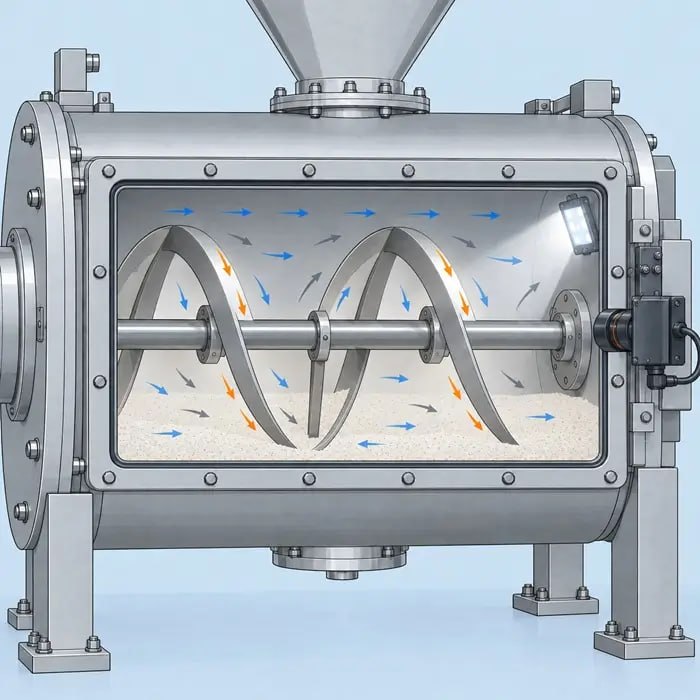
Real-Time Powder Flow Imaging: What LED-Based Particle Image Velocimetry Adds Beyond Static Flowability Tests
LED-based particle image velocimetry (PIV) images the velocity field inside a moving powder bed during blending, adding spatial resolution that static angle of repose, Hausner ratio, and shear cell tests cannot provide. Here is what that resolution can and cannot support for a process decision.
Insights
 5 September 2026
High-Shear Wet Granulation Endpoint Detection: What Power Consumption Signals Actually Tell You
The power or torque trace in high-shear wet granulation rises and plateaus as granules consolidate, but the signal is a supporting process indicator, not a direct particle size measurement, and its interpretation is bounded by batch size, impeller geometry, and formulation.
Insights
 22 August 2026
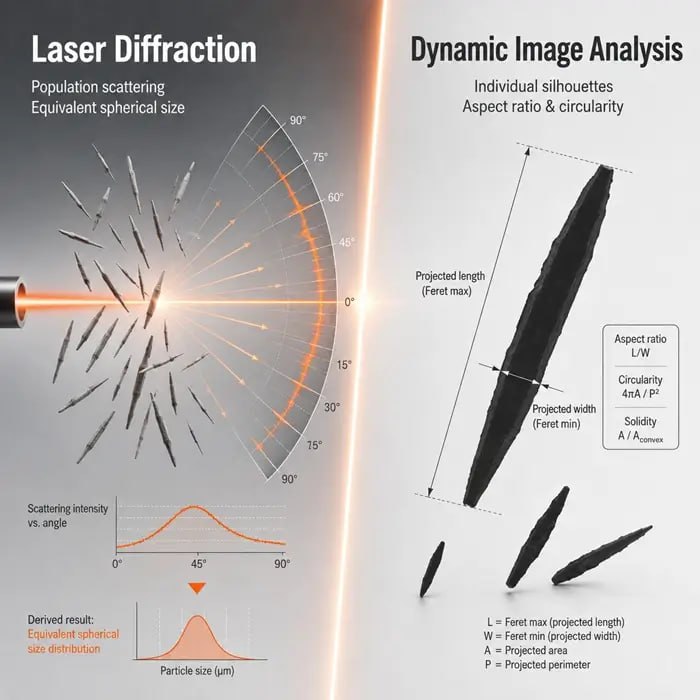
When Laser Diffraction and Dynamic Image Analysis Are Run Together: What Combined PSD-Shape Workflows Add to Interpretation
Pairing laser diffraction with dynamic image analysis adds per-particle shape descriptors, aspect ratio, circularity, convexity, that help explain an anomalous D50 or D90 and show where the combined result still cannot replace a dedicated particle morphology study.
Insights
 15 August 2026
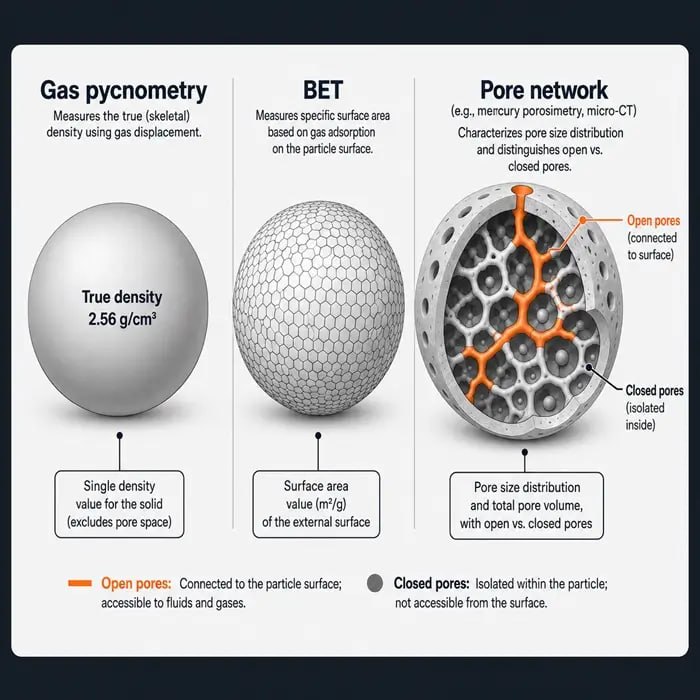
X-ray Micro-CT for Powder Pore Networks: What It Adds Beyond Gas Pycnometry and BET Surface Area
Gas pycnometry and BET surface area each report a single number. X-ray micro-CT builds a three-dimensional map of the pore network, showing connectivity, tortuosity, and closed porosity that single-value tests cannot resolve, within real resolution and sample-size limits.
Insights
 1 August 2026
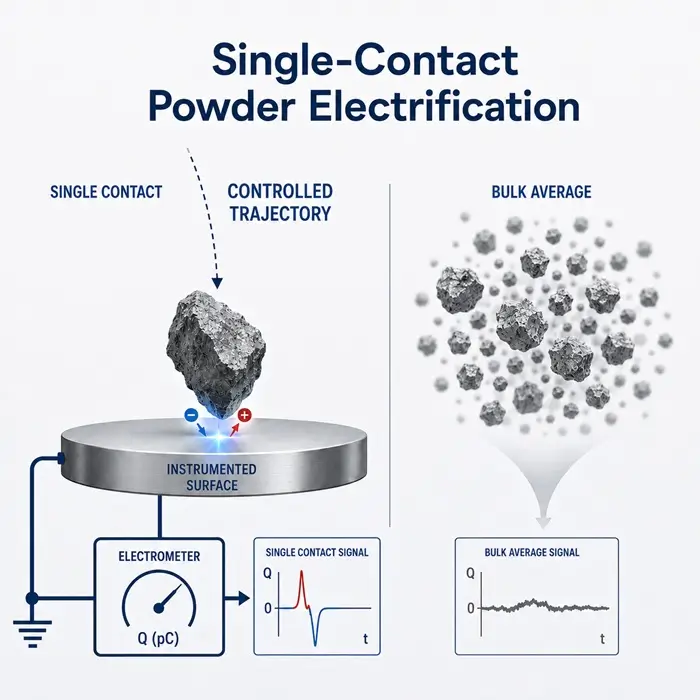
Single-Contact Electrification Testing: Isolating Charge Transfer Per Contact
Single-contact electrification apparatus measures charge transfer from one controlled particle-surface or particle-particle contact, isolating a variable that bulk triboelectric and charge decay measurements can only report as an average.
Insights
 4 July 2026
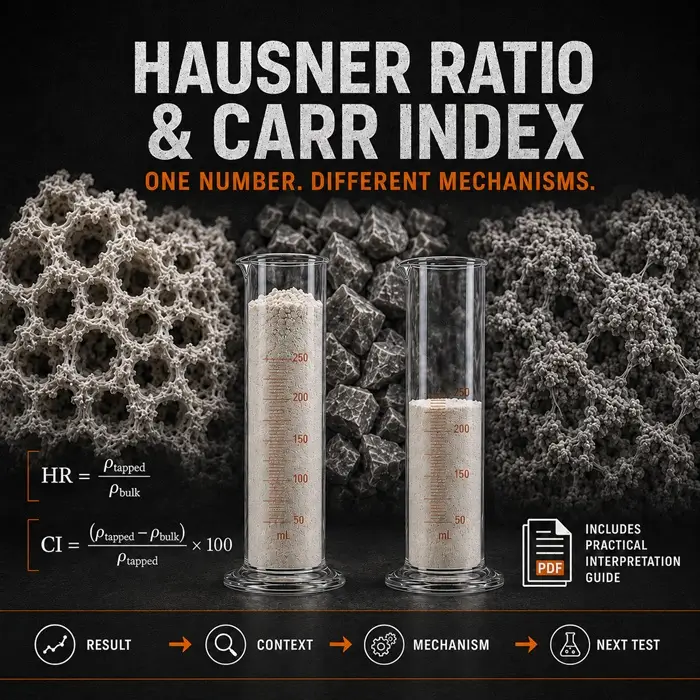
Hausner Ratio and Carr Index: What the Numbers Tell You and Where They Break Down
Both the Hausner Ratio and Carr Index reduce bulk and tapped density to a single number. The mechanism behind that number, whether aeration, particle shape, or surface cohesion, determines whether it supports a process decision or actively misleads one.
Know How
 4 July 2026
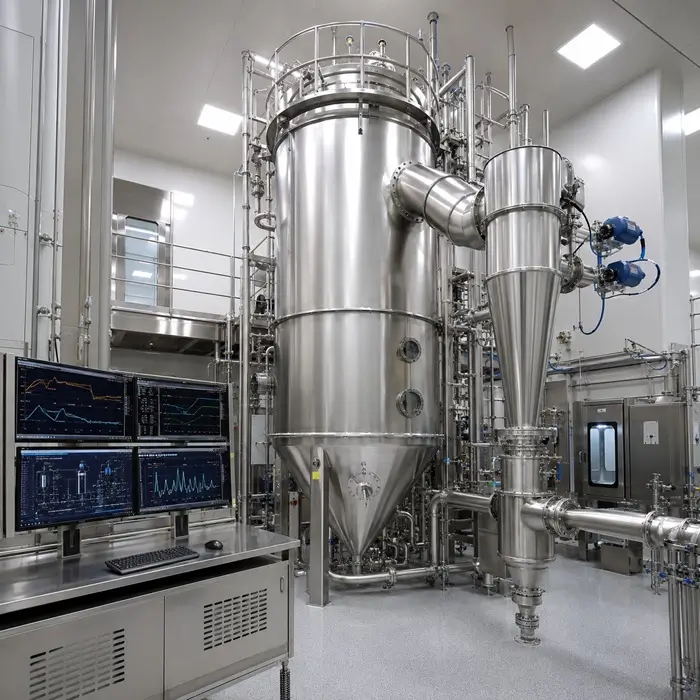
Spray Drying 4.0: Real-Time PAT, AI Process Control, and What Engineers Actually Gain
Process analytical technology combined with machine learning is changing residual moisture control and yield prediction in pharmaceutical and food spray drying. The gains are real but bounded, and the off-line test panel has not been replaced.
Feature Article
 27 June 2026
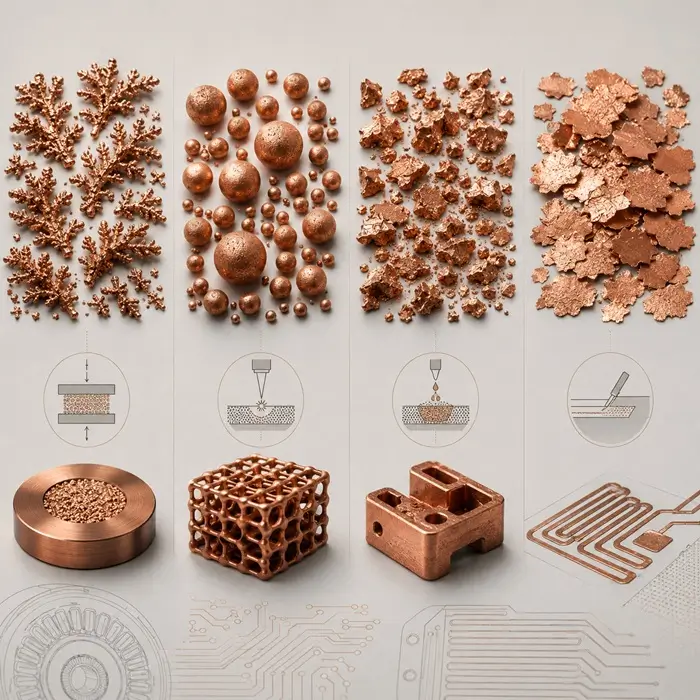
Copper Powder for Electrification: Why Morphology, Purity, and Packing Density Are Now Engineering Variables
Sintered contacts, additive manufactured heat exchangers, EV motor components, and conductive pastes each require a different copper powder. This article explains why morphology, particle size distribution, oxygen content, and packing density are engineering variables, and how to specify them correctly for electrification applications.
Feature Article
 20 June 2026
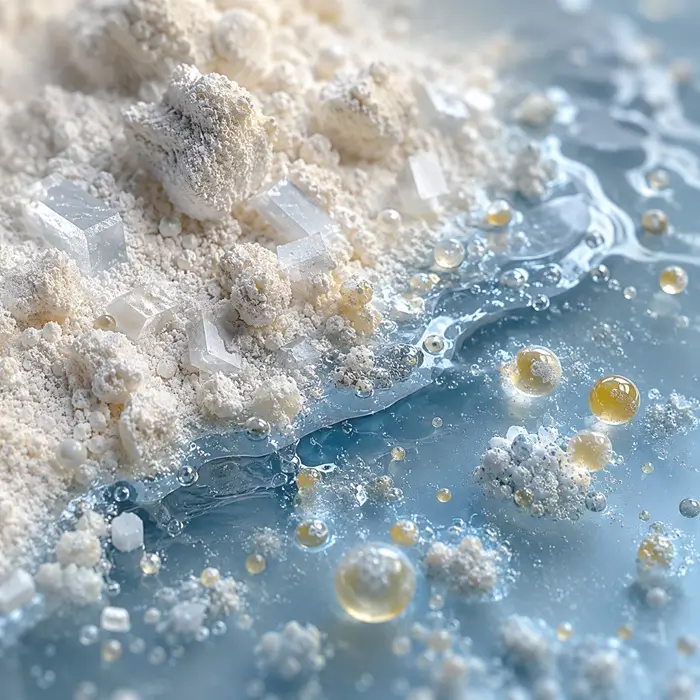
Poorly Soluble APIs: How Surface Contact Shapes Dissolution and Bioavailability
Poorly soluble APIs now represent the majority of the pharmaceutical development pipeline. Dissolution and oral bioavailability are determined by molecular solubility, surface wetting behavior, solid-state stability, and how the formulation interacts with the GI environment from first contact onward. Amorphous dispersions, lipid systems, nanocrystals, and co-crystals each rely on different surface mechanisms to deliver their intended advantage.
Feature Article
 6 June 2026
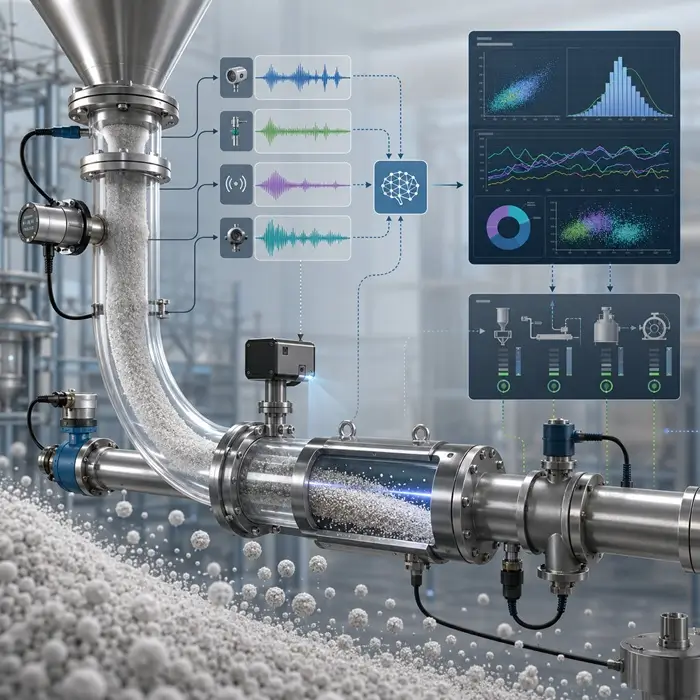
Real-Time Particle Characterization and Process Control
Real-time particle characterization is moving powder processing from delayed laboratory checks toward [...]
Feature Article
 16 May 2026
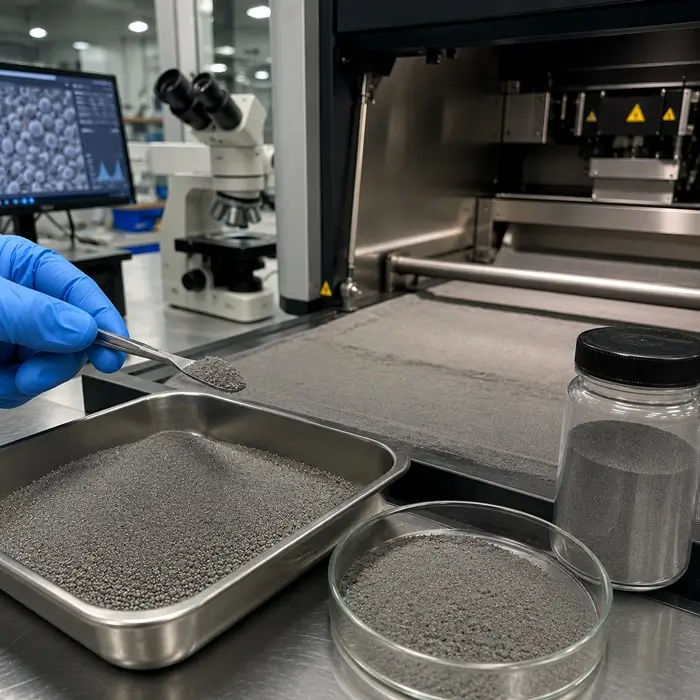
Metal Powder Feedstock Quality in Additive Manufacturing: From Particle Behavior to Part Performance
Metal powder feedstock quality has a direct effect on print stability and [...]
Feature Article
 9 May 2026
When Paint Passes Color QC but Fails in Application
Paint QC can approve a batch that still behaves badly on the substrate. [...]
Feature Article