

SUBJECT
Conveying
Publications on pneumatic and mechanical conveying, particle transport, pressure loss, segregation, attrition, and powder behavior during transfer.
PUBLICATIONS
Browse publications
Explore PTI articles, Insights, Know How, and technical publications related to this subject.
 26 September 2026
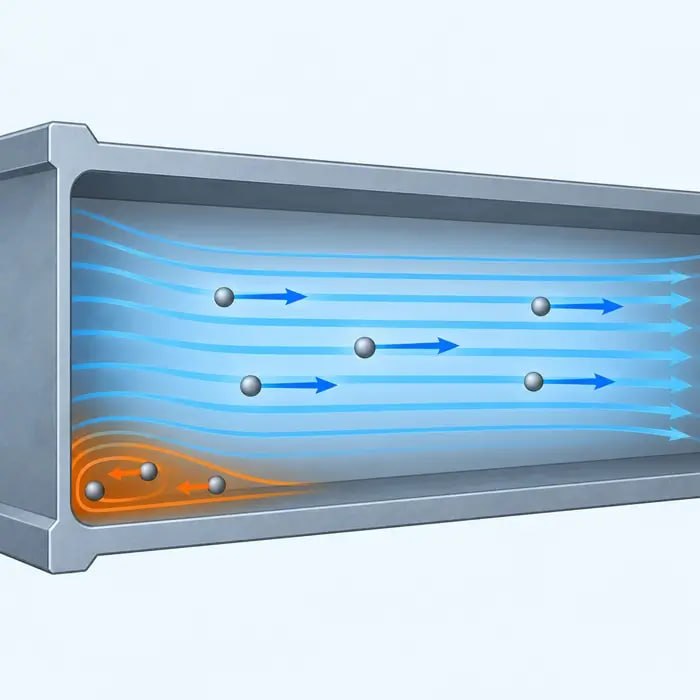
Triboelectric Particle Back-Flow in Pneumatic Conveying: Why Charged Particles Migrate Upstream at Duct Corners
CFD-DEM simulations show triboelectrically charged particles can reverse direction in low-drag duct corner zones during pneumatic conveying, with the delay between feed pulses driving the effect more than pulse length.
Insights
 19 September 2026
Vacuum Conveying for Fine and Hazardous Powders: Containment, Velocity, and Filter Design
Vacuum conveying contains by default: any breach draws air inward rather than pushing powder out. That containment advantage comes with a fixed pressure budget, and filter design competes directly with conveying velocity for every millibar of available driving force.
Feature Article
 25 July 2026
Dense-Phase vs Dilute-Phase Pneumatic Conveying: Matching Conveying Mode to Attrition and Segregation Risk
Dense-phase and dilute-phase pneumatic conveying create different particle contact mechanics, and the resulting attrition and segregation risk depends on velocity, solids loading ratio, and the powder's own attrition sensitivity, not on a fixed assumption about which mode is gentler.
Feature Article
 11 July 2026
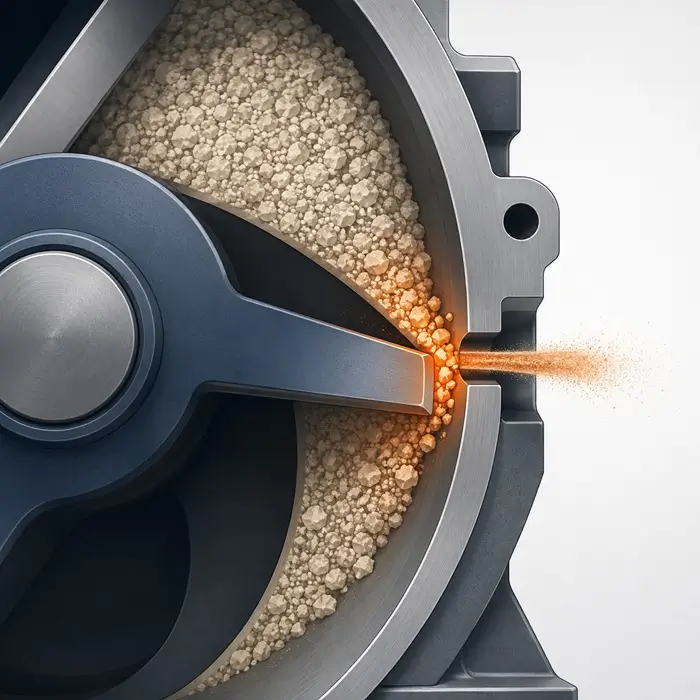
What Rotary Airlocks Actually Do to Powder
Rotary airlocks function as pressure boundaries as much as metering devices. The rotor tip clearance governs particle attrition at the nip zone and the rate of fine-particle bypass under differential pressure. As clearance widens through wear, the downstream particle size distribution shifts in a pattern frequently misread as upstream process variation.
Insights
 6 June 2026
Why Hopper Fill Level Changes Powder Discharge
Do not diagnose a feeder as if the hopper sends it one [...]
Insights
 6 June 2026
Powder Deaeration: Flushing, Surging, and Air Retention
Powder instability after conveying, filling, or transfer is often treated as [...]
Know How
 6 June 2026
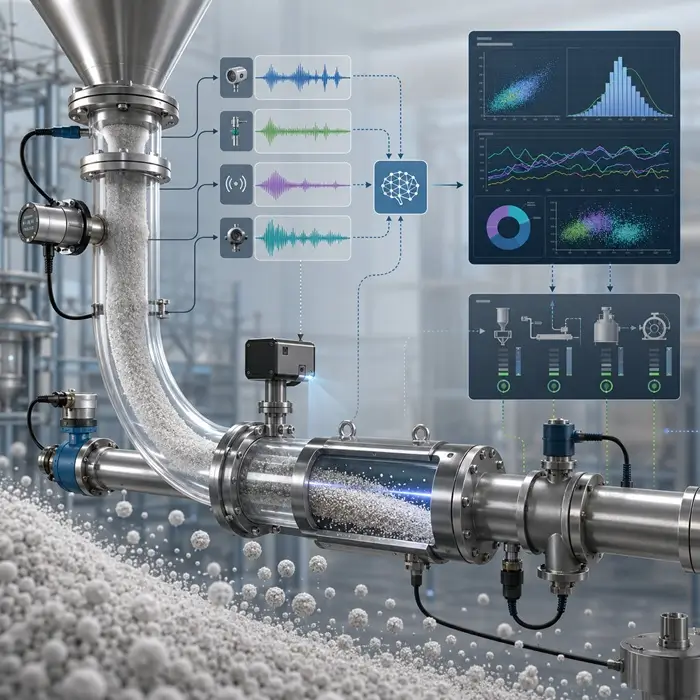
Real-Time Particle Characterization and Process Control
Real-time particle characterization is moving powder processing from delayed laboratory checks toward [...]
Feature Article
 30 May 2026
Fine Powder Fluidization in Pneumatic Conveying and Discharge Control
Fine powder fluidization can support controlled pneumatic conveying, especially in dense phase [...]
Feature Article
 11 April 2026
Powder Segregation Diagnosis During Mixing, Conveying, and Filling
Powder segregation diagnosis starts by locating where the blend loses uniformity. Some [...]
Feature Article
 4 April 2026
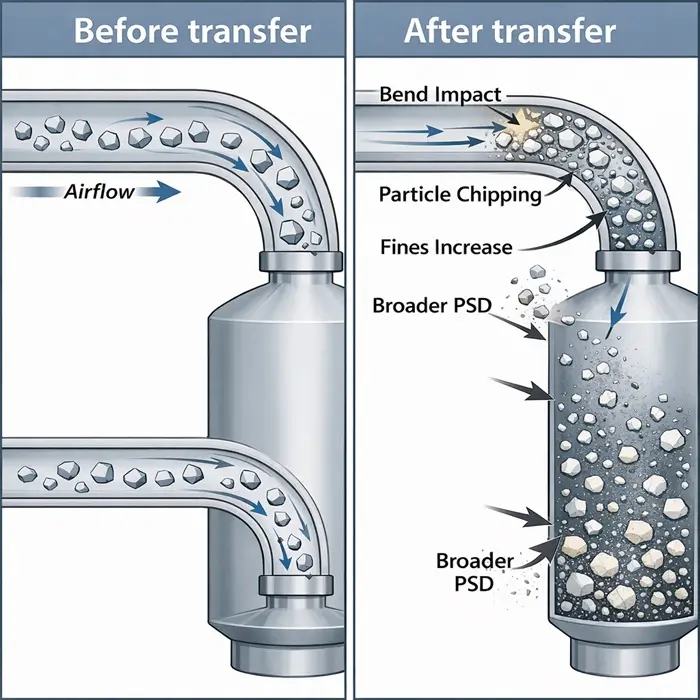
Pneumatic Conveying Attrition: Transfer Quietly Changes Powder
Pneumatic conveying attrition can change a powder even when the transfer looks [...]
Insights
 14 February 2026
Deaeration lag, why “easy flowing” powders still surge
Deaeration lag in powders creates a timing mismatch between how fast your [...]
Insights
 13 December 2025
Control banding for powders: making incomplete data actionable
Control banding for powders turns incomplete hazard data into a clear exposure [...]
Insights