

SUBJECT
Dustiness
Publications on dust generation, fines release, airborne particle behavior, and the material and process conditions that influence dustiness.
PUBLICATIONS
Browse publications
Explore PTI articles, Insights, Know How, and technical publications related to this subject.
 26 September 2026
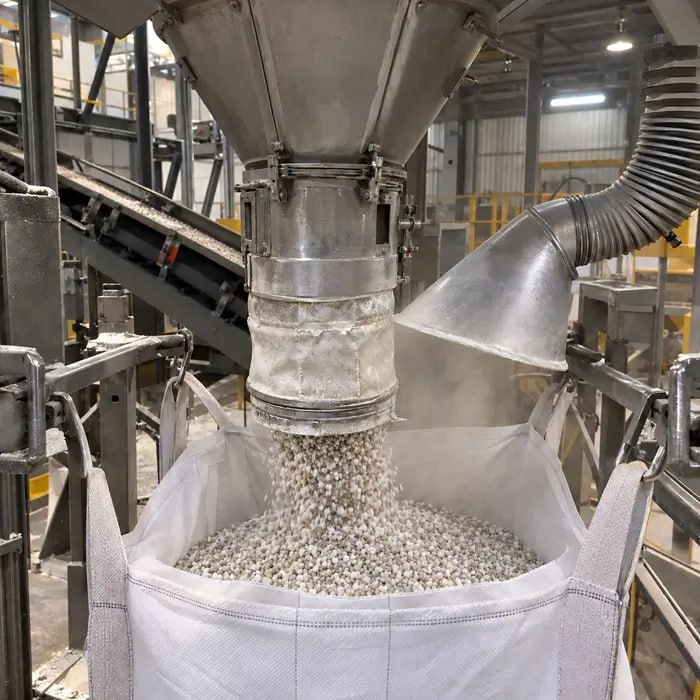
Fertilizer Powder and Granule Handling: Segregation, Caking, and Dust Control
Bulk-blended fertilizer fails in three recurring ways: segregation between straight materials of different size and density, hygroscopic caking in urea and ammonium nitrate under humidity cycling, and dust release during bagging. Each failure mode maps to a specific diagnostic test rather than a single generic powder check.
Feature Article
 29 June 2026
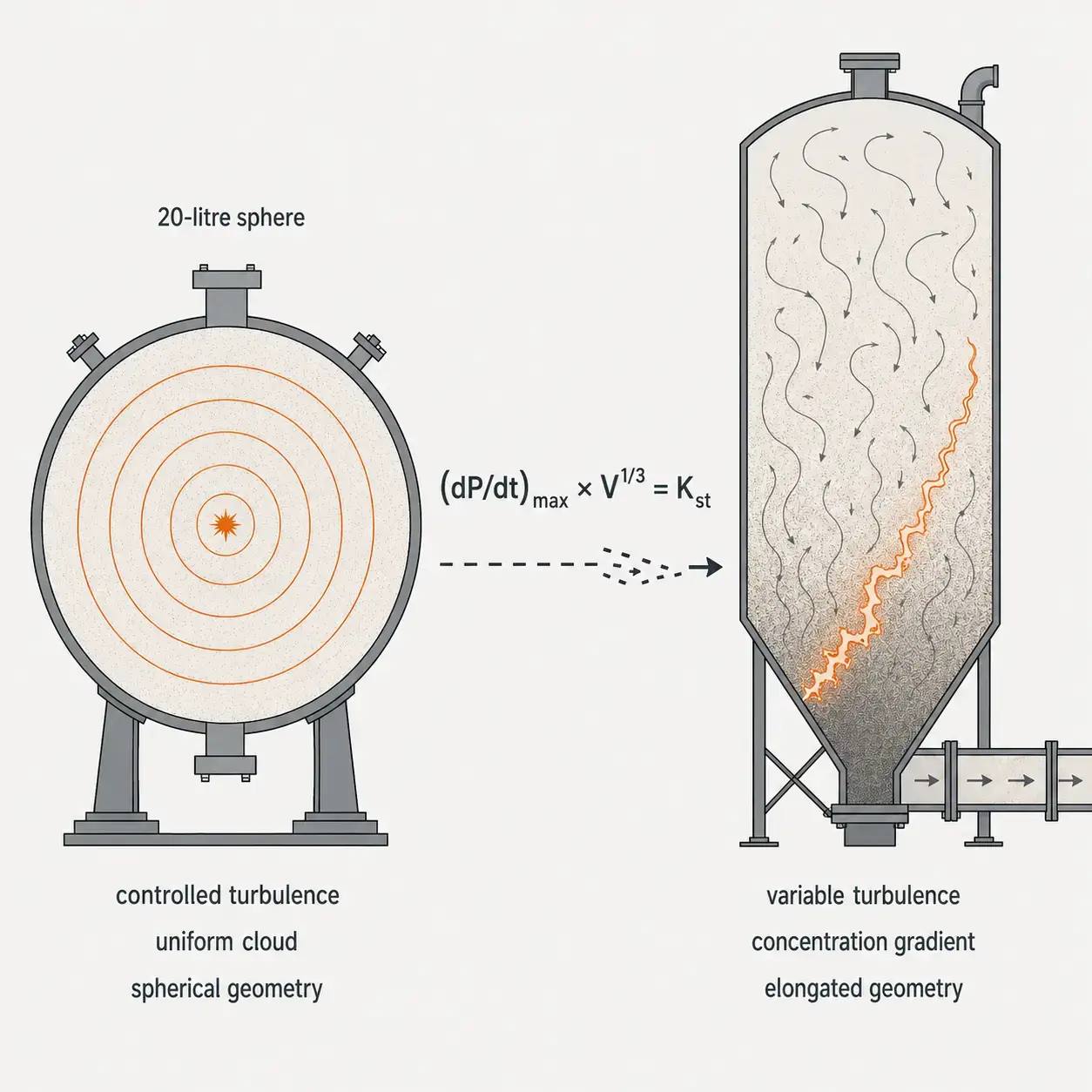
Why Kst Is Not Enough: What the Explosion Index Tells You and What It Misses
Kst quantifies explosion rate-of-pressure-rise under standardized lab conditions. It does not directly describe how an explosion behaves in your vessel, at your turbulence level, or with your ignition scenario. This insight explains what the number means, where the cubic law holds, and when a competent person must go further than the test certificate.
 23 May 2026
Fines in Powder Behavior: Why Small Amounts Matter
Fines in powder behavior matter because fine particles add surface area, contact [...]
Insights
 25 April 2026
Why Dust Control in Powder Handling Starts With Powder Behavior
Dust control in powder handling works best when it starts with the [...]
Insights
 4 April 2026
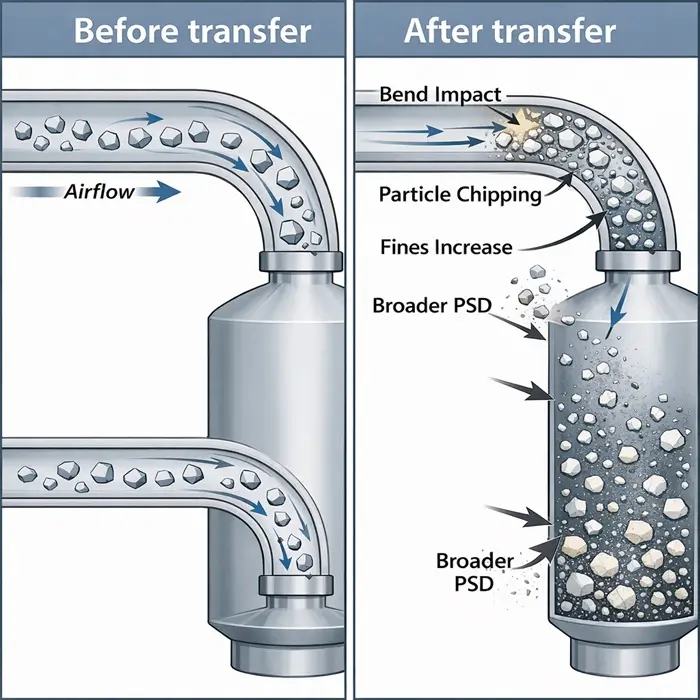
Pneumatic Conveying Attrition: Transfer Quietly Changes Powder
Pneumatic conveying attrition can change a powder even when the transfer looks [...]
Insights
 28 March 2026
Powder Dustiness Is a Release Problem, Not a Fines Number
Powder dustiness is a release behavior. It is not a simple fines [...]
Insights
 7 February 2026
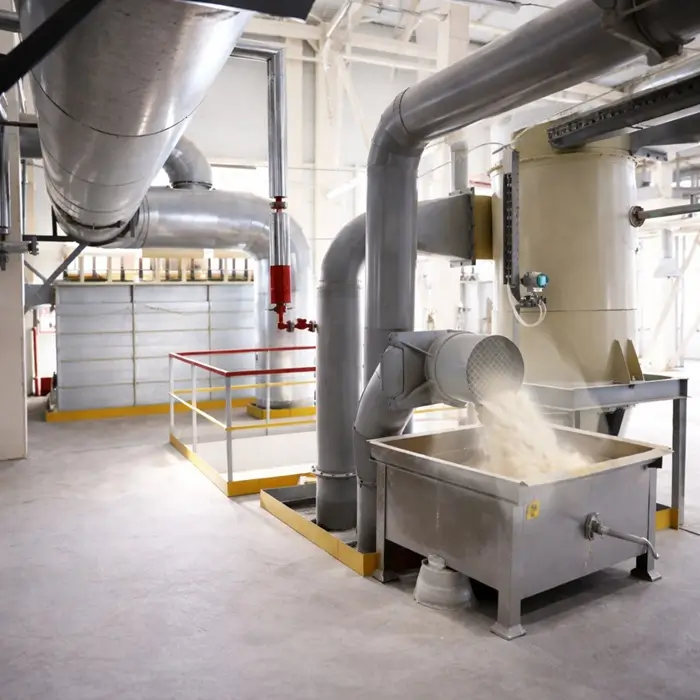
The Search for Universal Dust Explosivity Criteria
Universal dust explosivity criteria fail because explosibility depends on dispersion, turbulence, ignition, [...]
Feature Article
 13 December 2025
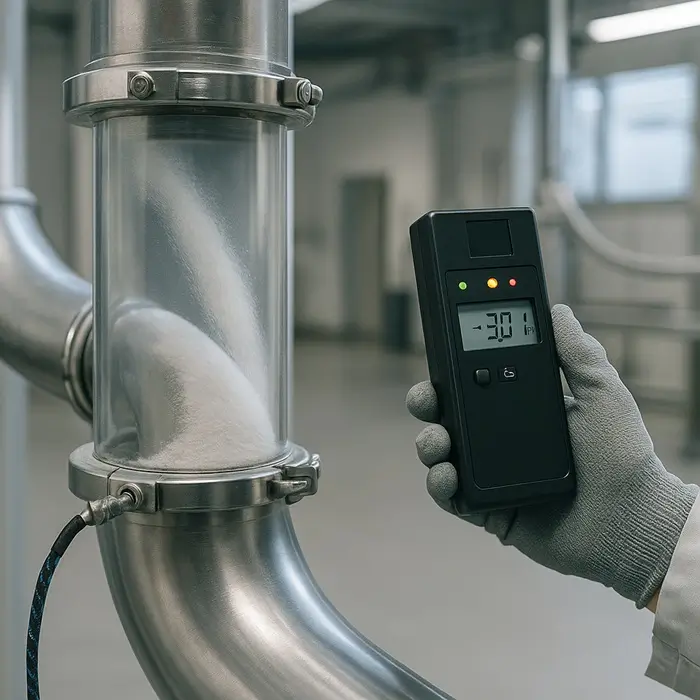
Triboelectric Charging in Powders: The science, failure modes, and industrial controls
Triboelectric charging forms when powders contact and separate, creating a shifting charge [...]
Feature Article
 13 December 2025
Control banding for powders: making incomplete data actionable
Control banding for powders turns incomplete hazard data into a clear exposure [...]
Insights
 6 December 2025
Titanium dioxide powder classification in 2025: what changed, what did not
titanium dioxide powder classification is shifting again in 2025. An EU court [...]
Insights
 30 November 2025
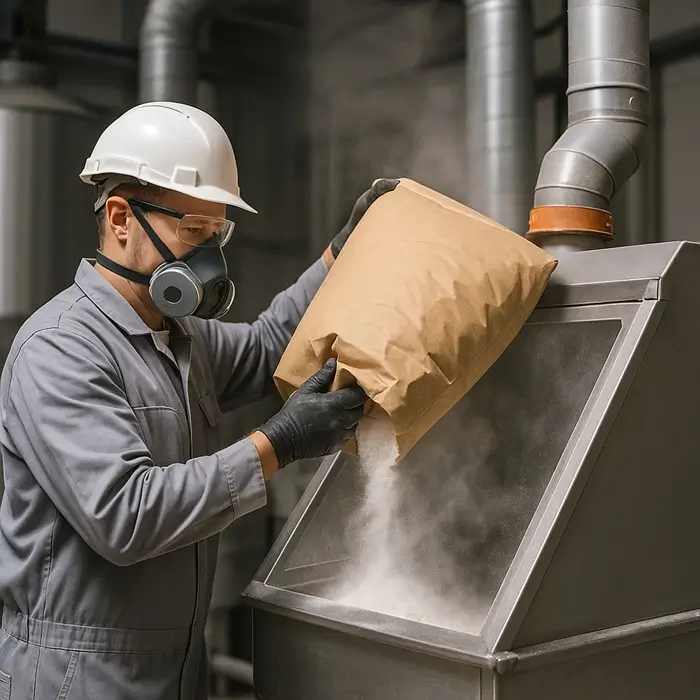
Managing Powder Dustiness in Industrial Plants
Powder dustiness is a measurable property, not a housekeeping detail. When you [...]
Know How
 29 August 2025
Electrostatic Troubleshooting in Powder handling
Electrostatic troubleshooting in powder handling addresses particle properties, environmental factors, and equipment [...]
Know How