
Table of contents
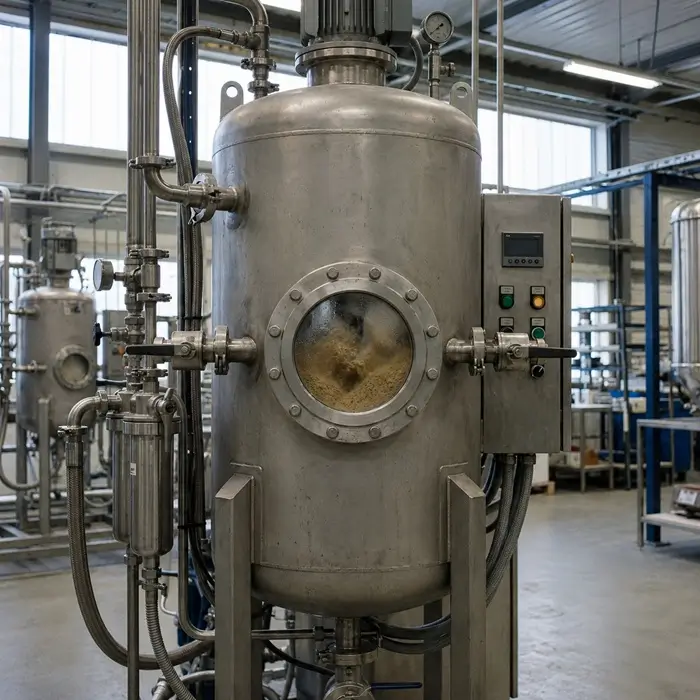
Fluidized bed processing brings three distinct unit operations—granulation, coating, and drying—together within one equipment class used extensively in pharmaceutical tablet manufacturing, food powder conditioning, and specialty chemical production. Its value and operational sensitivity arise from the same source: granule size distribution, coating uniformity, and residual moisture are shaped by the interaction between the powder bed, the moving gas, the spray conditions, and the equipment geometry. Air velocity, distributor design, and nozzle configuration all matter, but their effects depend on how the material fluidizes, circulates, wets, consolidates, and dries.
The framework begins with Geldart classification and minimum fluidization velocity, then moves through bubble dynamics, particle circulation, spray distribution, and drying behavior. Permeability, pressure fluctuations, shear behavior, and bulk density provide complementary evidence for diagnosing whether the bed and finished granules remain within the intended process range. This article builds that framework in sequence and links each mechanism to the design, monitoring, or process-transfer decision it can support.
Geldart Classification: Four Groups That Define Bed Behavior
The starting point for any fluidized bed design is classifying the feed powder by Geldart group. Geldart’s classification, originally proposed in 1973 and subsequently extended to account for interparticle forces and wet-particle conditions, separates powders into four groups based on the density difference between particle and fluidizing gas and the mean particle size. The classification provides an initial prediction of the fluidization regime a dry feed powder is likely to exhibit, although cohesion, moisture, particle shape, and a broad particle size distribution can modify the actual bed response.
Group A powders, typically 20 to 150 micrometers with moderate particle density, fluidize smoothly through a homogeneous, non-bubbling expansion phase before bubble formation begins at a second, higher velocity. This homogeneous region can make Group A materials well suited to coating and granulation because the bed operates in a relatively stable, well-mixed state before bubble dynamics introduce greater spatial variation. Many pharmaceutical excipients, spray-dried intermediates, and fine food powders fall within or near this region, although cohesion, particle shape, and formulation composition can shift the actual behavior. Group B powders, roughly 100 to 800 micrometers with sand-like density, begin bubbling at or close to minimum fluidization velocity with little or no homogeneous expansion phase, making them more sensitive to bubble dynamics, gas velocity, bed depth, and equipment geometry.
Group C powders are cohesive fines, generally below 20 to 30 micrometers, for which van der Waals, electrostatic, and, where moisture is present, capillary forces can resist separation by the fluidizing gas. These materials may channel, fluidize as agglomerates, or fail to achieve uniform fluidization. Fines accumulating in otherwise flowable blends can push a Group A or B material toward more Group C-like behavior, particularly after attrition during processing. Group D consists of relatively large or dense particles that require higher gas velocities and may exhibit spouting or jetting behavior. These materials are less common in conventional fine-powder granulation but remain relevant to pharmaceutical pellet coating, agricultural seed coating, and certain industrial drying applications.
Minimum Fluidization Velocity and the Air Velocity Operating Window
Minimum fluidization velocity (Umf) is the superficial air velocity at which the pressure drop across the bed becomes sufficient to support the particle mass. Below Umf, the bed behaves as a fixed, packed structure. At and above Umf, particles begin to separate, and the bed expands. This transition defines the lower boundary of the practical fluidization range. At higher velocities, entrainment increases as particles approach their individual terminal velocities, although fine particles may leave the bed before the bulk material does. The ratio U/Umf indicates where the process operates relative to minimum fluidization and should be matched to the Geldart group, particle size distribution, and process objective.
Umf can be estimated from the Archimedes number using widely used correlations such as the Wen and Yu approximation. Their accuracy depends on how well the assumptions and input properties represent the actual powder, and uncertainty increases for irregular particles, polydisperse feeds, and mixtures containing particles of different sizes or densities. Analysis of predictive accuracy for minimum fluidization velocity correlations in Powder Technology identifies the conditions under which standard approaches can produce significant error. For these systems, experimental determination using the actual feed powder under representative bed, gas, and distributor conditions is more reliable than relying on a single correlation.
A significant complication in defining the operating window for real formulations is that the effective Umf of a powder mixture is not a simple average of the component values. As fines accumulate or granules grow during processing, changes in particle size distribution, cohesion, and void structure can alter both the pressure drop and the gas velocity required for uniform fluidization. Fines-rich regions may compact, channel, or fluidize differently from the bulk of the bed even when the average air velocity remains above the measured Umf. Air retention behavior of the powder, closely related to permeability, governs how quickly the bed pressure profile adjusts when air velocity changes and whether local pressure imbalances develop across the distributor plate.
Bubble Formation, Slugging, and Reading Pressure Fluctuations as Process Signals
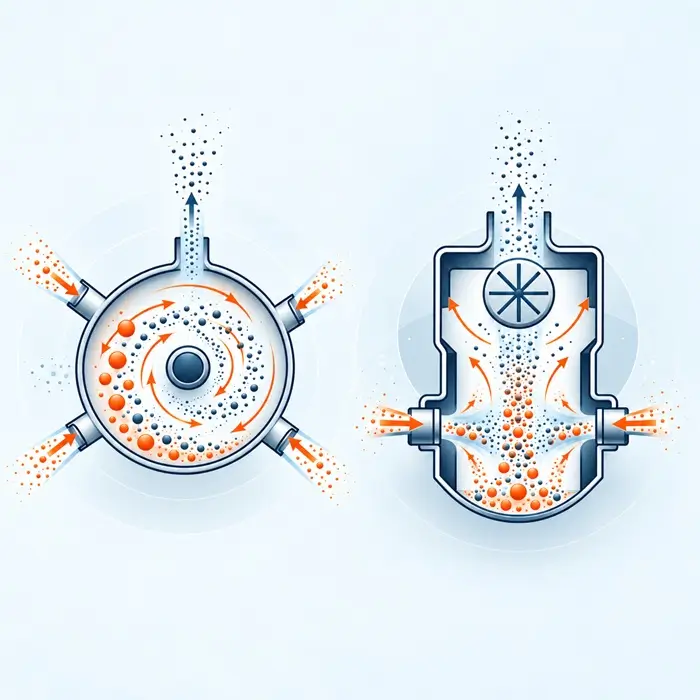
In Group B powders and in Group A powders operating above the minimum bubbling velocity, gas bubbles form near the distributor plate, rise through the bed, coalesce with neighboring bubbles, and erupt at the bed surface. Bubble size generally increases with height as bubbles merge during their ascent. When bubbles grow large relative to the vessel diameter, the flow regime can transition toward slugging, depending also on bed depth, gas velocity, distributor design, and particle properties. A slug occupies much of the vessel cross-section, pushes a plug of particles upward as it rises, and then breaks through the bed surface, allowing the particles to collapse before the cycle repeats.
Reviews of scale-up in bubbling fluidized bed reactors document cases where slugging emerged at production scale from development processes that showed no slugging at pilot scale, in part because changes in bubble growth and vessel geometry caused the bubble-diameter-to-column-diameter ratio to cross the slugging threshold. Slugging has direct consequences for uniformity: particles in the advancing slug nose receive concentrated spray exposure while particles in the dense phase between slugs receive less, broadening coat weight distribution and creating intermittent spray-zone dead zones that increase local liquid saturation and agglomeration risk in granulation.
Pressure-fluctuation monitoring provides practical access to bed dynamics without optical access to the vessel interior. The amplitude and standard deviation of the pressure signal often increase as bubbles grow and slugging develops, although the response depends on measurement location and operating conditions. Power spectral density analysis of the pressure time series can reveal characteristic frequencies associated with bubble passage and, in slugging beds, slug passage. Comparing this signal fingerprint between development and production scale during process transfer is more informative than comparing average pressure drop alone, because similar average pressure drops can occur while the time-domain behavior differs substantially.
Granulation: Nozzle Configuration and the Growth-Agglomeration Boundary
Fluidized bed granulation builds controlled agglomerates from fine feed particles by applying a liquid binder through a spray nozzle into the fluidized bed. The process objective is controlled growth: binder droplets create nuclei and support subsequent coalescence or layering, while drying limits uncontrolled agglomeration. Whether the granule size distribution moves toward the intended range depends on nozzle configuration, particle circulation, spray flux, binder properties, drying conditions, and the relationship between droplet and particle size. Nozzle configuration defines the spray zone geometry and particle exposure, while the droplet-to-particle size ratio strongly influences the initial nucleation mechanism.
Nozzle Configuration and Particle Circulation
Top-spray granulation positions one or more spray nozzles above the fluidized bed, delivering binder solution or melt downward onto the circulating particles. Droplets pass through heated process air before reaching the bed, so some evaporation can occur in flight; if drying is excessive, droplets may reach the particles with reduced wetting capacity or contribute to fines formation. The spray zone is relatively broad, and granule growth depends on the balance among droplet size, spray rate, atomization conditions, bed temperature, and particle circulation. Top spray is widely used in pharmaceutical and food granulation to modify particle size, flow, compressibility, bulk density, and downstream handling, depending on the formulation and process objective.
Bottom-spray, or Wurster, configurations use a cylindrical draft tube inserted into the bed to create a defined particle circulation loop. Particles accelerate upward through the tube, pass through the spray zone at its base, and fall through the outer annular region before re-entering the column. Because particle velocity through the spray zone is high and exposure time per pass is short, Wurster processing is used primarily for film coating rather than granulation. Partition gap height, the clearance between the bottom of the draft tube and the distributor plate, is one of the primary mechanical controls for particle circulation rate and spray-zone exposure, although airflow, product load, and distributor design also influence the circulation pattern. Rotor-granulator configurations impose centrifugal motion on the bed using a rotating disk, creating a compact bed with relatively high mechanical energy input and making them particularly suited to layering granulation, pelletization, and the production of dense, spherical particles.
The Droplet-to-Particle Size Ratio and the Nucleation Regime
The relationship between spray droplet size and feed particle size strongly influences the nucleation mechanism and the resulting granule growth pattern. When droplets are small relative to the feed particles, the liquid can spread across particle surfaces and promote distribution nucleation, in which binder is shared among particles before stable nuclei form. When droplets are large relative to the feed particles, a single droplet can immerse several particles simultaneously, producing larger and more highly saturated nuclei through immersion nucleation. The resulting granule size distribution also depends on binder wetting, viscosity, spray rate, drying conditions, and particle circulation. Studies of droplet size and particle size effects in fluidized bed melt agglomeration demonstrate that the transition between distribution and immersion nucleation produces different nucleus structures and growth behavior.
The dimensionless spray flux (ψa) quantifies the potential for droplet footprints to overlap within the spray zone. It represents the rate at which projected wetted area is delivered relative to the rate at which fresh powder surface passes through that zone. At low spray flux values, typically below 0.1, droplet overlap is limited, and the process can operate in a drop-controlled nucleation regime in which individual droplets form discrete nuclei, provided that droplet penetration and wetting are also favorable. As spray flux increases, repeated deposition on previously wetted regions becomes more likely, promoting larger or merged nuclei and a broader granule size distribution. The foundational dimensionless spray flux framework provides the quantitative basis for evaluating this distinction and estimating the spray conditions required for controlled liquid distribution.
Scale-up can increase effective spray flux unless the spray zone and powder-surface renewal rate are scaled together. As batch size increases, spray rate is often raised to maintain the same liquid-to-solid ratio per unit time, but the amount of fresh powder surface passing through each spray zone may not increase proportionally when nozzle number, position, and circulation pattern remain unchanged. The process can therefore shift toward greater droplet overlap and a higher risk of uncontrolled agglomeration even when the nominal spray rate per kilogram appears unchanged. Controlling spray flux at scale may require additional or repositioned nozzles, adjustment of the total spray rate, and preservation of comparable particle circulation through each spray zone. Droplet size should be selected to support appropriate penetration and wetting rather than assumed to reduce spray flux. Agglomeration mechanisms in powder processing are frequently triggered by scale-up decisions that appear numerically justified but do not preserve the relationship between liquid delivery and fresh powder surface exposure.
Coating in Fluidized Beds: Film Formation, Spray Zone Balance, and Overwetting
Fluidized bed coating applies a continuous film layer to particles or granules to control drug release, protect against moisture, mask taste, or improve handling properties. The process requirement is that particles receive sufficiently uniform cumulative exposure to the spray zone across the coating cycle. Achieving this uniformity depends on consistent particle circulation, stable spray-zone conditions, and a drying rate that keeps pace with liquid input. In Wurster coating, the partition gap between the draft tube base and the distributor plate is one of the primary mechanical controls for particle circulation rate and spray-zone exposure. Changing the gap alters the pressure balance, solids circulation, and particle cycle time. A gap that is unsuitable for the airflow, batch load, particle size, or chamber geometry can therefore increase variability in spray exposure and coating thickness.
Overwetting occurs when liquid is applied faster than the bed can evaporate it. Wetted particles may collide before their surfaces dry, allowing liquid bridges to form; if those bridges persist and consolidate, permanent agglomerates result. The risk is often highest during startup, before the bed reaches thermal equilibrium, and whenever drying capacity falls, or liquid input rises, such as after a drop in inlet air temperature, an increase in spray rate, reduced airflow, or a decrease in bed mass while the spray rate remains unchanged.
Outlet air temperature is a responsive real-time indicator of the balance between liquid input and evaporative capacity. A falling outlet temperature at otherwise stable inlet conditions can indicate that evaporative load has increased relative to drying capacity. Exhaust air humidity provides complementary evidence and helps distinguish a genuine moisture-balance shift from changes caused by airflow or inlet conditions. In pharmaceutical coating, outlet temperature and humidity are therefore most useful when interpreted together with spray rate, inlet air conditions, airflow, and product temperature within a defined process-control range.
Drying in Fluidized Beds: Heat and Mass Transfer, Endpoint Logic, and Granule Structure Effects
Fluidized bed drying removes moisture from granules, crystalline powders, or spray-dried particles by convective heat and mass transfer between the fluidizing air and the particle surface. Drying proceeds in two phases. In the constant-rate period, the particle surface remains wet and the drying rate is controlled by external heat and mass transfer: air temperature, humidity, and air velocity set the rate. In the falling-rate period, moisture must migrate from the particle interior to the surface before evaporation can continue, and drying rate becomes a function of internal granule structure. Setting the drying endpoint during the falling-rate period, where internal transport resistance buffers the process against external condition variation, gives more reproducible residual moisture than an endpoint reached in the constant-rate period.
Granule internal porosity determines drying kinetics in the falling-rate period. Highly porous granules dry faster because moisture transport paths to the surface are shorter and more interconnected. Dense, low-porosity granules retain moisture longer and may require higher inlet temperatures or extended drying time to reach the same target. Two granulations with the same batch weight but different internal porosity can show substantially different drying behavior, which is a source of transfer failure when granule structure is not fully characterized during development.
Endpoint detection by loss on drying (LOD) requires offline sampling and provides a snapshot rather than a continuous signal. Near-infrared spectroscopy applied in-line gives a faster, nondestructive moisture estimate. The most appropriate endpoint depends on the critical quality attribute and may be defined using moisture content, product temperature, exhaust conditions, an NIR model, or a combination of signals. Water activity provides complementary information about risks such as caking, recrystallization, and microbial growth during storage, particularly for hygroscopic formulations.
Permeability: The Variable That Behaves Differently at Production Scale
Permeability in a fluidized powder bed describes how easily air can flow through the particle mass at a given void fraction. It sets the pressure drop across the bed at any operating velocity and determines whether every region of the bed is above or below minimum fluidization velocity. In a laboratory column with a small cross-section and a well-designed distributor, gas distribution and bed behavior are generally easier to characterize, although local permeability differences can still occur. In a production vessel with a larger diameter, a different column aspect ratio, and often a different distributor design, permeability variation across the bed can create local differences in fluidization state within the same vessel.
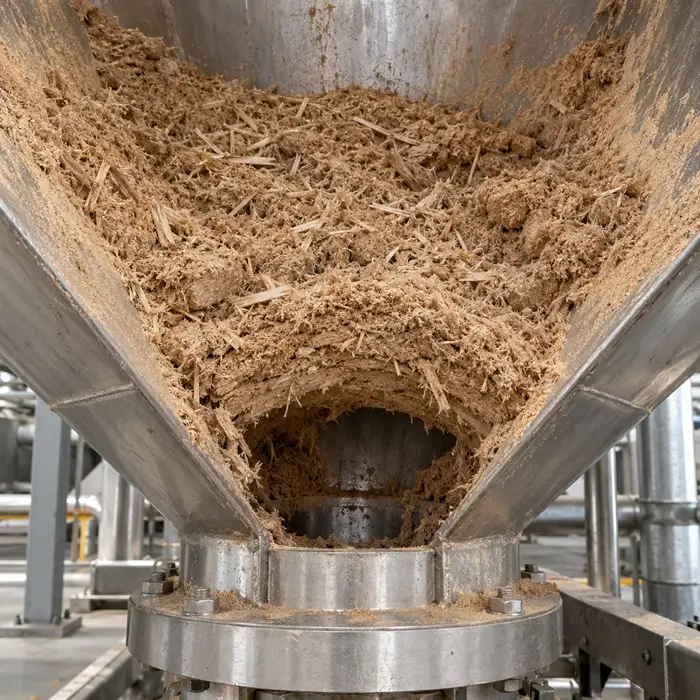
Permeability is sensitive to particle size distribution. An increase in fines content reduces bed permeability substantially because fine particles occupy the interparticle voids that would otherwise carry airflow, reducing the void fraction available for gas passage. If granulation generates fines through attrition or spray drying events at the nozzle tip, local permeability in fines-rich zones drops; those regions can fall below Umf while the rest of the bed remains fluidized, producing localized wet mass formation or channeling. Three routes through which scale-up changes permeability are worth separating: increased batch mass raises static bed height and shifts the distributor-to-bed pressure drop ratio; spray geometry that does not scale with vessel diameter changes the local moisture distribution, locally compacting the feed; and manufacturing site transfers often introduce particle size distribution shifts that alter permeability without the connection being recognized. Systematic approaches to fluidized bed granulation scale-up address bed moisture content and droplet size as the key parameters to match across scales, which is directly connected to keeping permeability within the development range.
Measuring powder permeability during development, and tracking how it changes as granulation proceeds, provides an early warning of scale-up risk before any production trial begins. A powder showing rapid permeability decrease in the early wetting stage is at risk of defluidization at production scale even when the laboratory batch appears controlled. Permeability as a cause of dosing instability in feeding systems operates through the same mechanism: localized regions of reduced air permeability that shift the pressure balance within the powder mass and produce behavior the process was not designed to accommodate.
Shear Cell Data and Bulk Density as Process Transfer Evidence
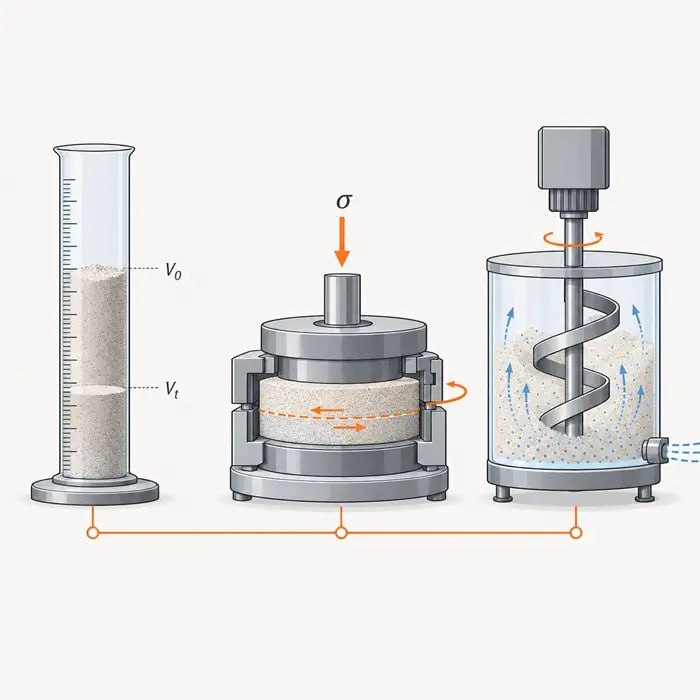
Shear cell testing measures the shear stress required to initiate powder flow under a range of normal stresses. The flow function (ff) derived from shear cell data characterizes how cohesive the material is across the stress range relevant to the processing conditions. For granulation process transfer, the most useful application is tracking how the flow function evolves through the granulation cycle. At the start, the feed powder has a flow function reflecting its dry state. As binder liquid is added, cohesion increases and the flow function declines. As granules form and drying proceeds, the flow function recovers toward the target range for the finished product. Establishing this trajectory during development, using shear cell testing at controlled process intervals, creates a reference profile for what a well-run batch looks like. A production batch where the flow function does not recover appropriately during drying signals that the process is running outside its design window.
Bulk density evolution provides parallel information. Aerated bulk density may increase or decrease after granulation, depending on granule size, internal porosity, shape, surface texture, and packing behavior. Tapped bulk density reveals how the granule bed responds to mechanical consolidation. The ratio of tapped to aerated bulk density, the Hausner ratio, provides a rapid at-line quality indicator for each batch. The Hausner ratio and Carr index are compressibility indicators reflecting particle size distribution, shape, surface energy, and moisture state simultaneously; they are most informative when compared against a characterized product profile rather than used as absolute flow predictors.
For process transfer decisions, the combination of permeability, shear cell flow function, and bulk density provides complementary evidence about the granulation outcome. If all three remain within the ranges established during development, the results support successful transfer, but they do not establish it by themselves. Deviations can help narrow the investigation, although they should be interpreted alongside particle size distribution, moisture, granule strength, porosity, yield, and other relevant product attributes. A higher-than-expected flow function indicates a less cohesive material, but it does not uniquely identify granule porosity, nucleus density, spray rate, or inlet temperature. The right combination of powder flow test methods for the material and relevant consolidation stress range is essential for using these measurements consistently across pharmaceutical and food granulation processes.
Fluidized Bed Performance Requires a Connected Process View
Fluidized bed performance cannot be reduced to air velocity, spray rate, or drying temperature in isolation. The behavior observed inside the vessel results from the interaction among particle properties, gas distribution, liquid delivery, circulation, and changing granule structure. Geldart classification and minimum fluidization velocity provide the starting framework, while pressure fluctuations, permeability, moisture response, particle size distribution, shear behavior, and bulk density reveal how the process actually develops.
During scale-up, the objective is therefore not simply to reproduce individual machine settings. It is to preserve the relationships that govern particle circulation, wetting, growth, and drying. A process transfers successfully when the bed dynamics and resulting product attributes remain within the intended operating range, supported by multiple complementary measurements rather than a single parameter.