
Particle behavior hub
Understand why powders behave the way they do
Connect particle characteristics, interactions, and material state to bulk and process behavior

Particle size, shape, packing, surface interactions, moisture, heat, charge, and liquid-phase behavior combine to determine how powders perform. Start with the property you need to understand, or move in from a problem, process area, or measurement question.
Particle behavior hub
Understand why powders behave
the way they do
Connect particle characteristics, interactions,
and material state to bulk and process behavior
Particle size, shape, packing, surface interactions, moisture, heat, charge,
and liquid-phase behavior combine to determine how powders perform.
Start with the property you need to understand, or move in from a problem,
process area, or measurement question.



Powder properties and behavior
Find the property, then understand what controls it
Each page explains what the property or behavior represents, the variables that govern it, how it interacts with other powder characteristics, how it can be measured, and where it matters in processing. Filter by family, or search for a property, mechanism, or familiar technical term.
Showing 6 of 28 properties.
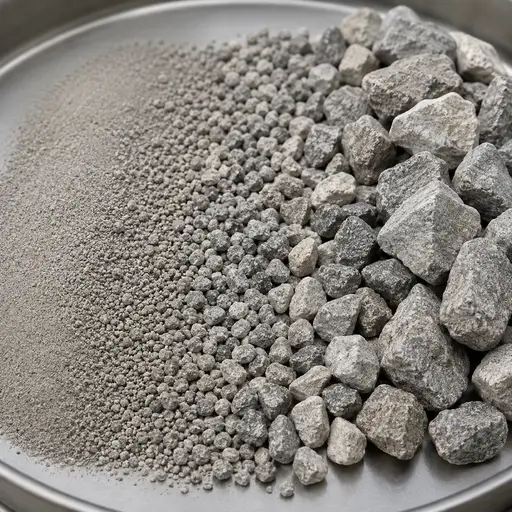 Particle size distribution
The balance of fines, coarse particles, and intermediate sizes affects packing, segregation, dust release, dissolution, and process consistency.
Particle size distribution
The balance of fines, coarse particles, and intermediate sizes affects packing, segregation, dust release, dissolution, and process consistency.
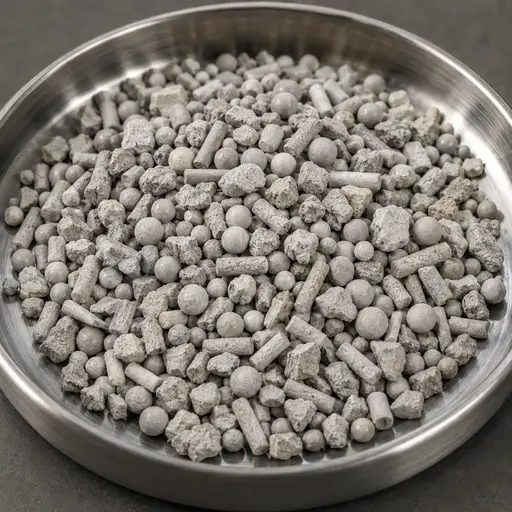 Particle shape and morphology
Sphericity, aspect ratio, angularity, surface texture, and particle form influence contact, packing, flow, breakage, and interfacial behavior.
Particle shape and morphology
Sphericity, aspect ratio, angularity, surface texture, and particle form influence contact, packing, flow, breakage, and interfacial behavior.
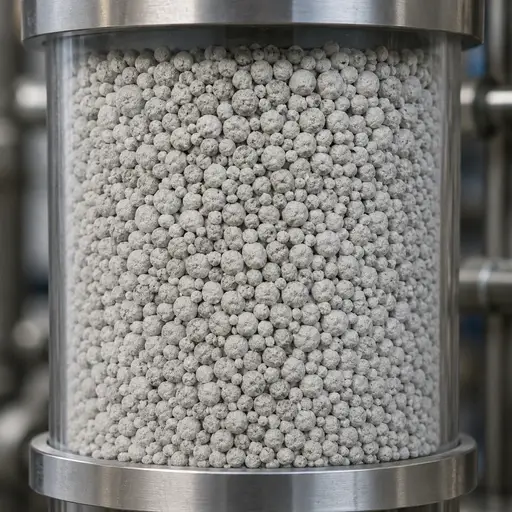 Density and packing
Particle, bulk, and tapped density describe different aspects of material and bed structure. Packing controls void space, consolidation response, and volumetric process behavior.
Density and packing
Particle, bulk, and tapped density describe different aspects of material and bed structure. Packing controls void space, consolidation response, and volumetric process behavior.
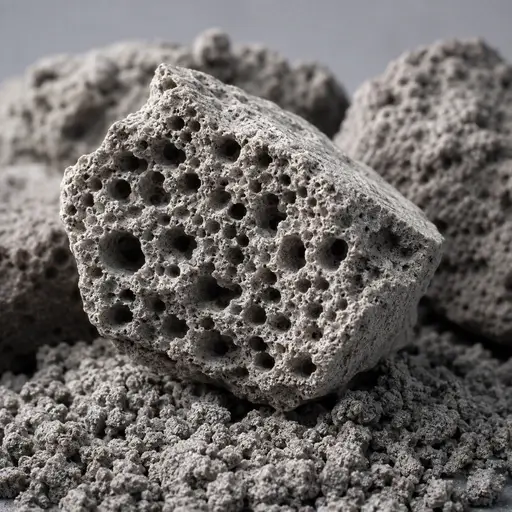 Porosity and surface area
Internal pores, accessible pore volume, and specific surface area influence density, adsorption, wetting, dissolution, reaction, and transport.
Porosity and surface area
Internal pores, accessible pore volume, and specific surface area influence density, adsorption, wetting, dissolution, reaction, and transport.
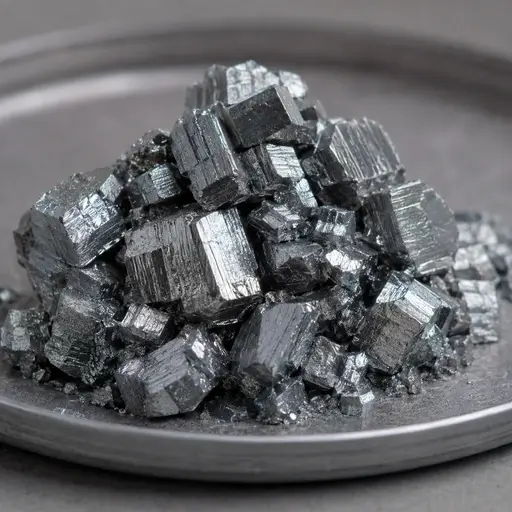 Crystallinity
Crystal order, amorphous content, and polymorphic state can change mechanical, thermal, sorption, dissolution, and stability behavior.
Crystallinity
Crystal order, amorphous content, and polymorphic state can change mechanical, thermal, sorption, dissolution, and stability behavior.
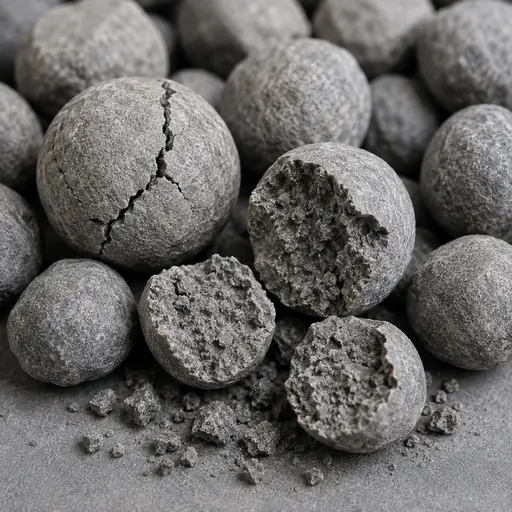 Particle strength and fracture
Particle and agglomerate strength determine whether material survives conveying, compaction, impact, and repeated handling or generates fragments and fines.
Particle strength and fracture
Particle and agglomerate strength determine whether material survives conveying, compaction, impact, and repeated handling or generates fragments and fines.
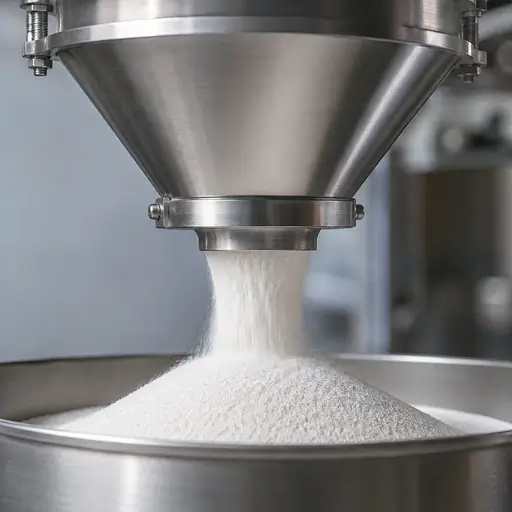 Powder flowability
Flowability emerges from particle interactions, stress history, air, moisture, geometry, and process conditions rather than from one intrinsic powder number.
Powder flowability
Flowability emerges from particle interactions, stress history, air, moisture, geometry, and process conditions rather than from one intrinsic powder number.
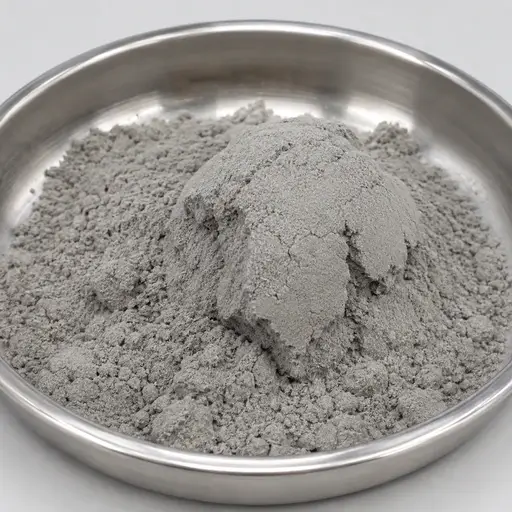 Cohesion
Attractive forces between particles resist separation and rearrangement, influencing arching, handling, agglomeration, and consolidation.
Cohesion
Attractive forces between particles resist separation and rearrangement, influencing arching, handling, agglomeration, and consolidation.
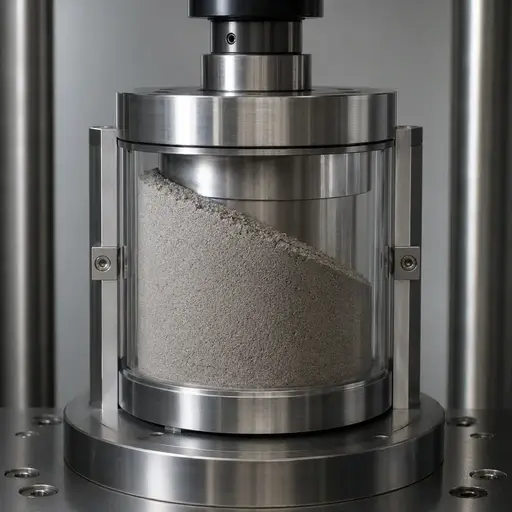 Shear properties
Yield strength, internal friction, and flow function describe how a consolidated powder deforms and fails under shear.
Shear properties
Yield strength, internal friction, and flow function describe how a consolidated powder deforms and fails under shear.
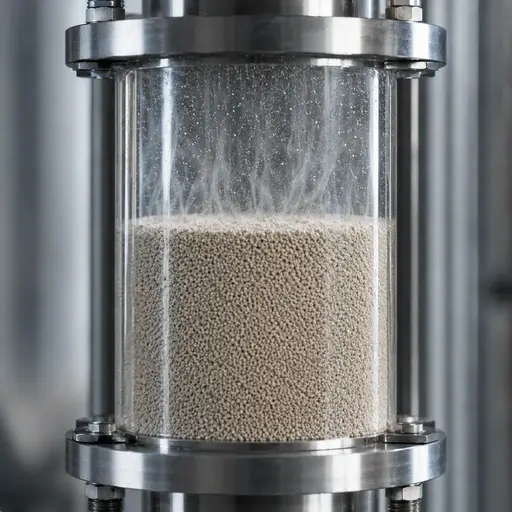 Powder permeability
The resistance of a powder bed to gas flow controls deaeration, air retention, pressure gradients, and some discharge and densification behavior.
Powder permeability
The resistance of a powder bed to gas flow controls deaeration, air retention, pressure gradients, and some discharge and densification behavior.
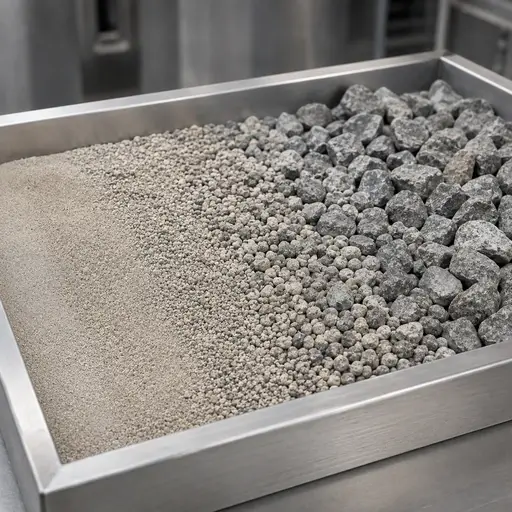 Segregation
Differences in size, density, shape, or mobility can separate components during filling, transfer, vibration, mixing, and discharge.
Segregation
Differences in size, density, shape, or mobility can separate components during filling, transfer, vibration, mixing, and discharge.
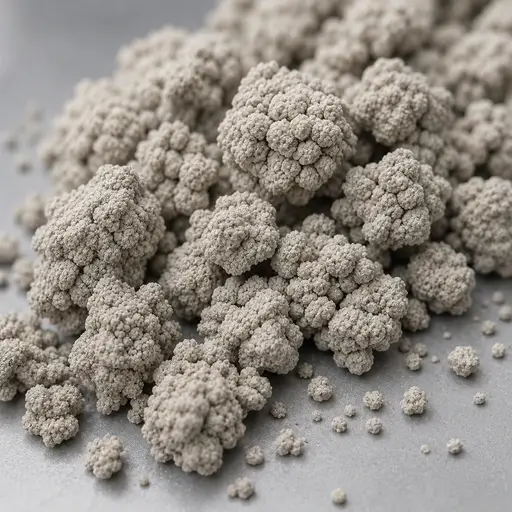 Agglomeration
Particles form larger clusters through cohesive forces, liquid bridges, binders, sintering, or process-driven contacts, changing size and handling behavior.
Agglomeration
Particles form larger clusters through cohesive forces, liquid bridges, binders, sintering, or process-driven contacts, changing size and handling behavior.
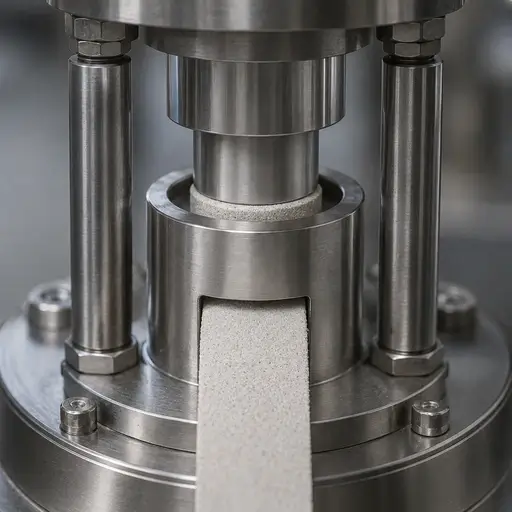 Compaction behavior
Particle rearrangement, deformation, fragmentation, and bonding under load determine densification, compact strength, and elastic recovery.
Compaction behavior
Particle rearrangement, deformation, fragmentation, and bonding under load determine densification, compact strength, and elastic recovery.
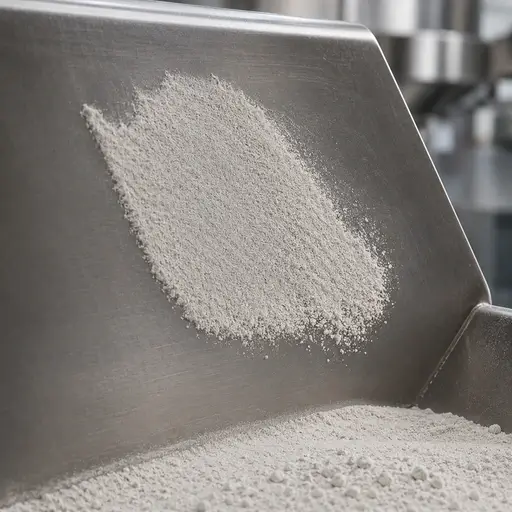 Adhesion
Particle-to-surface attraction drives sticking, coating, fouling, wall buildup, and product retention on process equipment.
Adhesion
Particle-to-surface attraction drives sticking, coating, fouling, wall buildup, and product retention on process equipment.
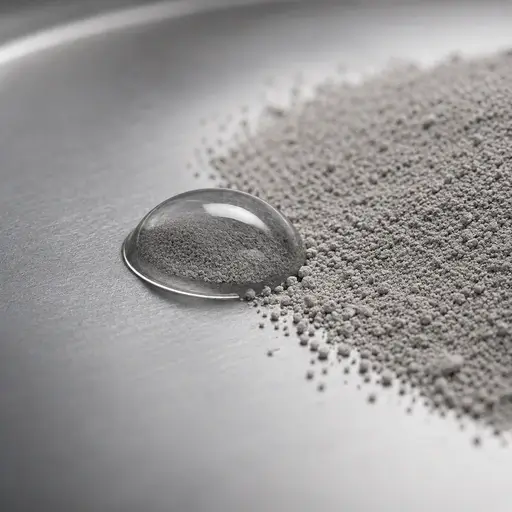 Surface energy
Surface free energy influences wetting, adhesion, cohesion, and the tendency of particles or liquids to create and maintain interfaces.
Surface energy
Surface free energy influences wetting, adhesion, cohesion, and the tendency of particles or liquids to create and maintain interfaces.
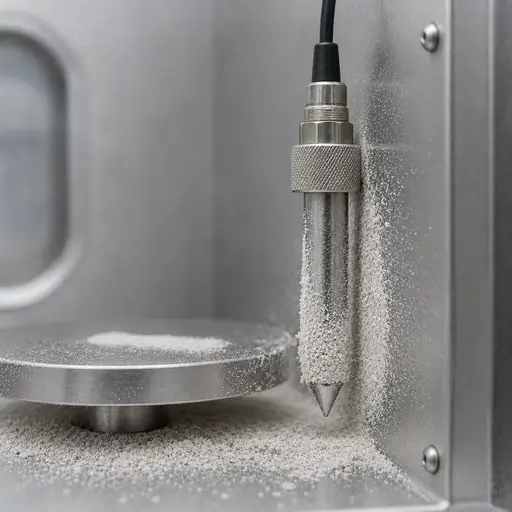 Electrostatic effects
Charge generation, retention, and decay depend on material contacts, humidity, conductivity, and grounding, affecting adhesion, dust, flow, and separation.
Electrostatic effects
Charge generation, retention, and decay depend on material contacts, humidity, conductivity, and grounding, affecting adhesion, dust, flow, and separation.
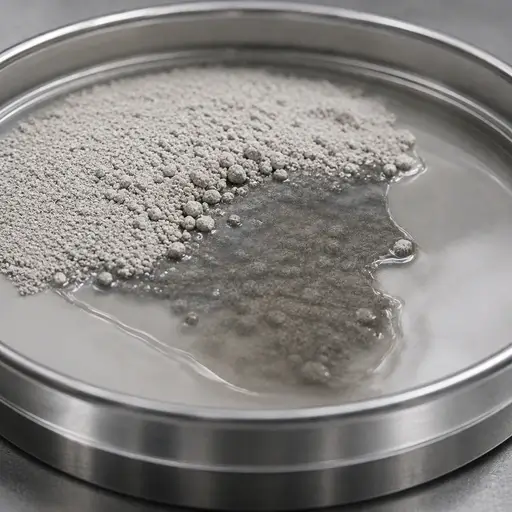 Wettability
The ability of a liquid to spread over and penetrate powder surfaces governs sinking, clumping, air displacement, and the start of dispersion or dissolution.
Wettability
The ability of a liquid to spread over and penetrate powder surfaces governs sinking, clumping, air displacement, and the start of dispersion or dissolution.
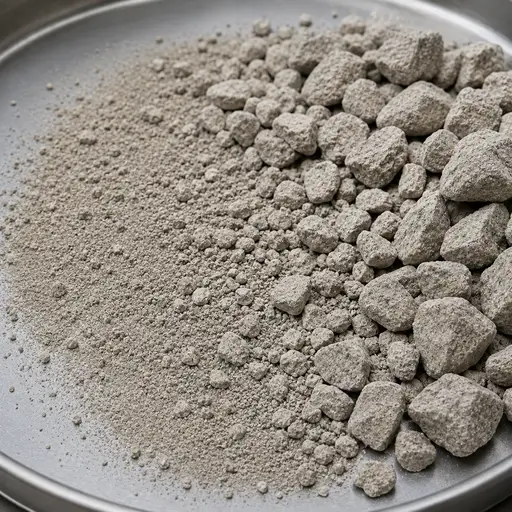 Attrition
Repeated rubbing, impact, and handling gradually wear particles or granules, shifting particle size distribution and creating fines.
Attrition
Repeated rubbing, impact, and handling gradually wear particles or granules, shifting particle size distribution and creating fines.
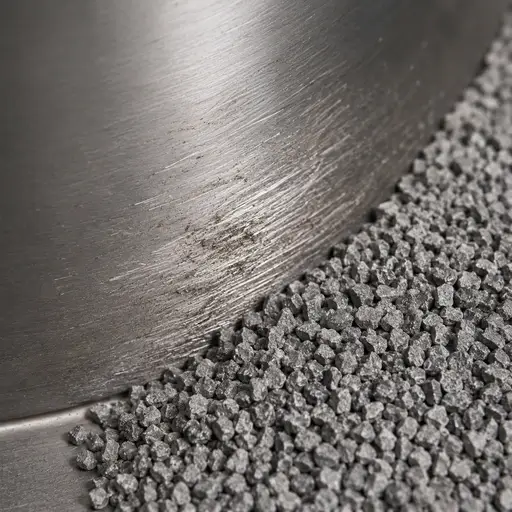 Abrasion
Hard particles or repeated contact can wear particle surfaces, coatings, and process equipment, changing integrity and contamination risk.
Abrasion
Hard particles or repeated contact can wear particle surfaces, coatings, and process equipment, changing integrity and contamination risk.
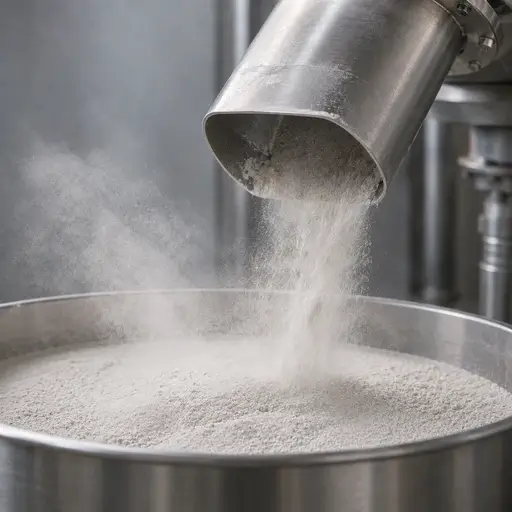 Dustiness
A powder's tendency to release airborne particles depends on fines, cohesion, particle strength, handling energy, and environmental conditions.
Dustiness
A powder's tendency to release airborne particles depends on fines, cohesion, particle strength, handling energy, and environmental conditions.
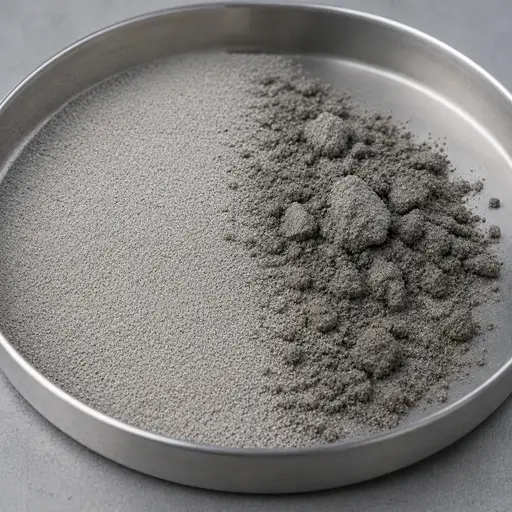 Moisture sensitivity
Water uptake, sorption state, and humidity history can alter cohesion, surface conductivity, caking, flow, and physical or chemical stability.
Moisture sensitivity
Water uptake, sorption state, and humidity history can alter cohesion, surface conductivity, caking, flow, and physical or chemical stability.
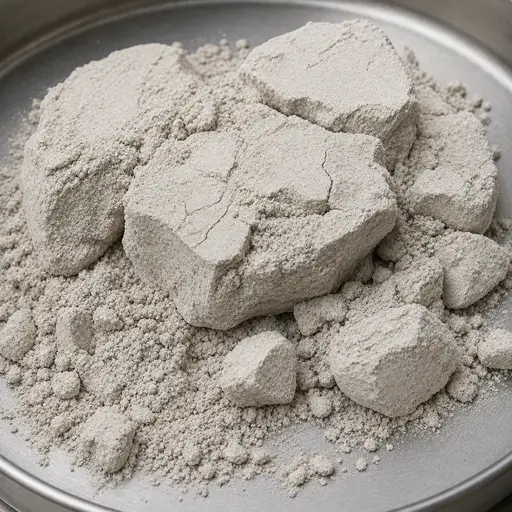 Caking
Time-dependent particle bonding can convert a free-moving powder into soft lumps or hardened beds through moisture, temperature, pressure, and material transformations.
Caking
Time-dependent particle bonding can convert a free-moving powder into soft lumps or hardened beds through moisture, temperature, pressure, and material transformations.
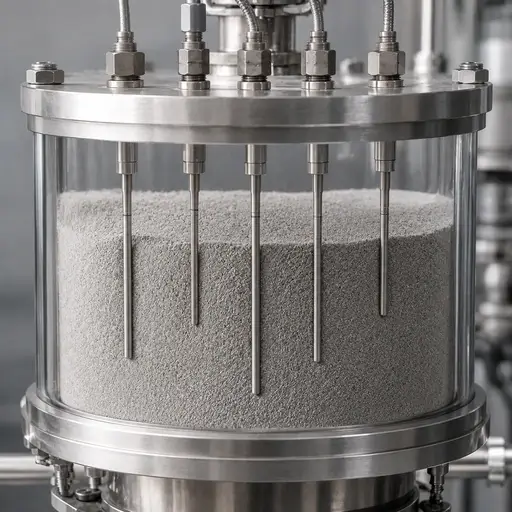 Thermal properties
Heat capacity, conductivity, diffusivity, and bed structure govern temperature response, heat removal, and thermal gradients in powders.
Thermal properties
Heat capacity, conductivity, diffusivity, and bed structure govern temperature response, heat removal, and thermal gradients in powders.
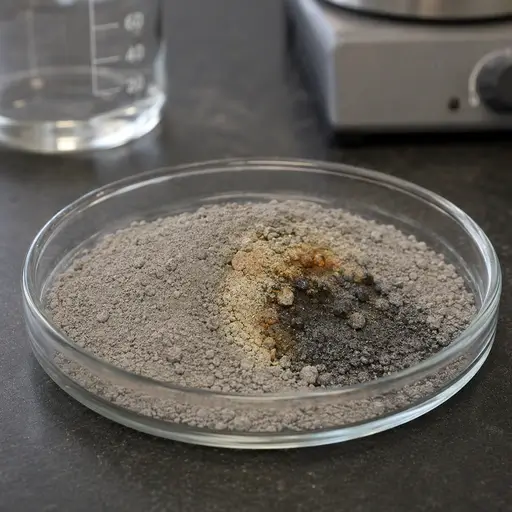 Chemical reactivity
Surface area, composition, atmosphere, temperature, moisture, and contamination determine oxidation, decomposition, and other powder reactions.
Chemical reactivity
Surface area, composition, atmosphere, temperature, moisture, and contamination determine oxidation, decomposition, and other powder reactions.
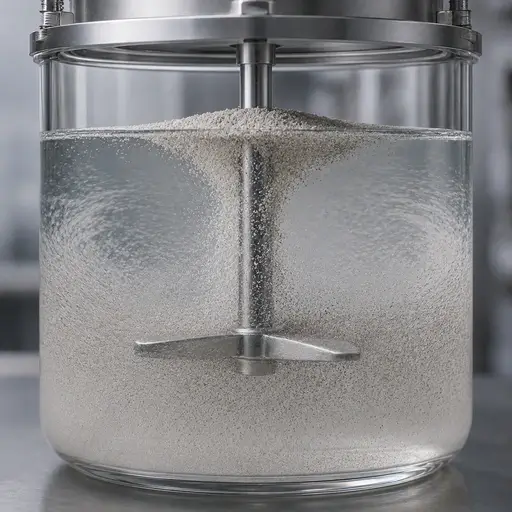 Dispersion
Deagglomeration and stabilization determine whether particles separate into a liquid and remain distributed rather than reflocculating.
Dispersion
Deagglomeration and stabilization determine whether particles separate into a liquid and remain distributed rather than reflocculating.
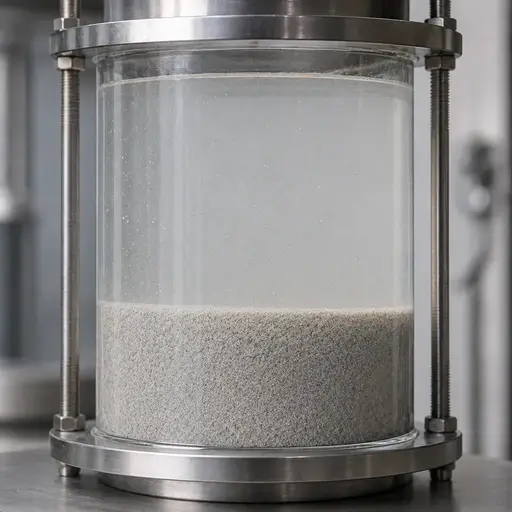 Sedimentation
Particle size, density contrast, liquid properties, and interparticle interactions govern settling, clarification, and suspension stability.
Sedimentation
Particle size, density contrast, liquid properties, and interparticle interactions govern settling, clarification, and suspension stability.
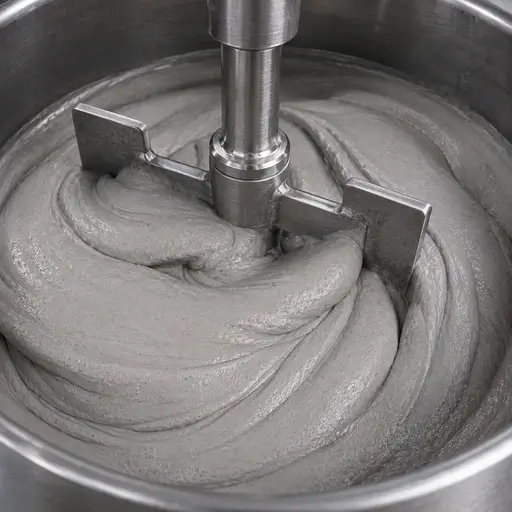 Viscosity
Solids loading, particle interactions, and liquid composition determine viscosity, yield behavior, shear response, and processability of concentrated suspensions.
Viscosity
Solids loading, particle interactions, and liquid composition determine viscosity, yield behavior, shear response, and processability of concentrated suspensions.
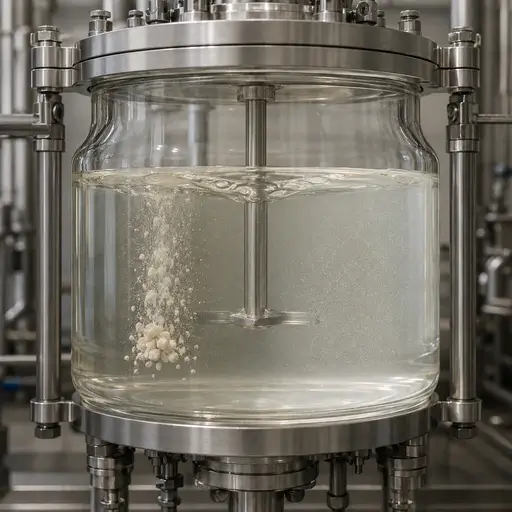 Solubility and dissolution
Equilibrium solubility sets how much material can dissolve, while surface area, wetting, mixing, and transport control the rate of dissolution.
Solubility and dissolution
Equilibrium solubility sets how much material can dissolve, while surface area, wetting, mixing, and transport control the rate of dissolution.
No property matches that term. Try a broader term, or start from the problem instead.
When behavior becomes a problem
Start with what the powder is doing
If the behavior is already causing a process failure, move into the Troubleshooting Hub. These common routes connect the visible symptom back to the properties and mechanisms worth separating.




Technical routes
Connect properties to the rest of PTI
Move from the property view into the sector, process, and measurement context that determines how the behavior becomes relevant in practice.

Need the measurement, not just the guidance? PowderTechnology.info works closely with Delft Solids Solutions, a contract research organization specializing in the physical behavior of powders and granules. DSS provides contract testing and characterization, with its laboratory working in accordance with ISO 17025. Contact Delft Solids Solutions.