🔑 Key Takeaway
Co-processed excipients can affect much more than powder flow: by changing particle structure and, in some formulations, reducing the number of separately metered material streams, they can influence feeding stability, segregation risk, lubricant sensitivity, compactibility, and overall CDC robustness. Their value is not inherent, however, because some co-processed systems outperform equivalent physical blends while others do not. The practical decision is whether a specific grade removes a defined process constraint strongly enough to justify its added material cost, supply dependence, and regulatory qualification burden.
Table of contents

A continuous direct compression line can run steadily until a feeder refill creates a feed-rate deviation, a difficult low-rate ingredient becomes unstable to dose, or tablet tensile strength shifts after a change in blender conditions. These appear as process problems, but their origin can lie upstream in the physical form of the formulation components.
The question is not simply whether co-processing produces a better excipient. It is whether the resulting particle structure changes feeding, flow, segregation, lubrication, or compaction in a way that improves the specific formulation and process.
What Co-Processing Actually Changes at the Particle Level
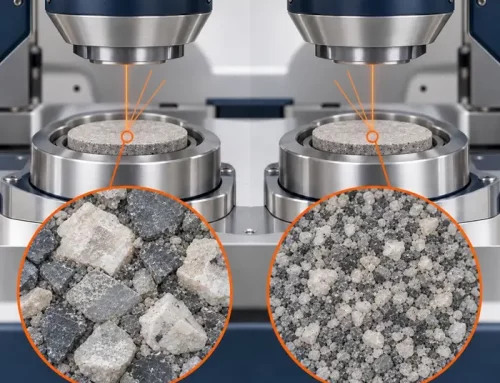
Co-processing combines two or more excipients through a particle engineering step, typically spray drying, fluid-bed co-granulation, roller drying, or co-agglomeration, so that the components are integrated at the particle or subparticle level rather than remaining as fully separate particle populations mixed only during blending. The resulting material behaves as a composite excipient system whose functional properties are determined by both its constituent materials and the process used to combine them.
Recent review work on co-processed excipients in direct compression frames this as a deliberate particle engineering strategy aimed at improving attributes such as flowability, compactibility, and lubricant tolerance relative to conventional excipients or physical mixtures. A 2026 review of co-processed excipients for direct compression further emphasizes that manufacturing route and material attributes jointly determine the resulting structure-performance relationship, which is particularly relevant when consistent flow and blend homogeneity are required during continuous operation.
What changes at the particle level depends on the materials and co-processing route, but commonly includes particle shape, internal porosity, apparent density, surface composition, and the spatial distribution of the constituent excipients within the engineered particle. Those changes can affect packing, interparticle contact, flow, and deformation during compaction.
Modern direct-compression grades are already engineered for pharmaceutical processing, so the useful comparison is not between a co-processed particle and an untreated powder. The comparison should establish whether processing the components together creates a particle structure with functional behavior that cannot be reproduced by physically blending the corresponding direct-compression grades. The role of particle morphology in bulk powder behavior remains important because particle shape and surface structure, not chemical composition alone, influence how the material packs and flows.
Co-Processing vs Physical Blending: Where the Difference Actually Sits
A physical blend preserves separate particle populations. Each component retains its own particle size distribution, density, surface characteristics, and deformation behavior, even though the components interact during blending and compression.
A physical blend can also combine deformation mechanisms. MCC mixed with a brittle material such as lactose or dibasic calcium phosphate already provides plastic deformation alongside fragmentation. Brittle particles can fracture during compression and expose fresh bonding surface whether or not they were co-processed with the MCC.
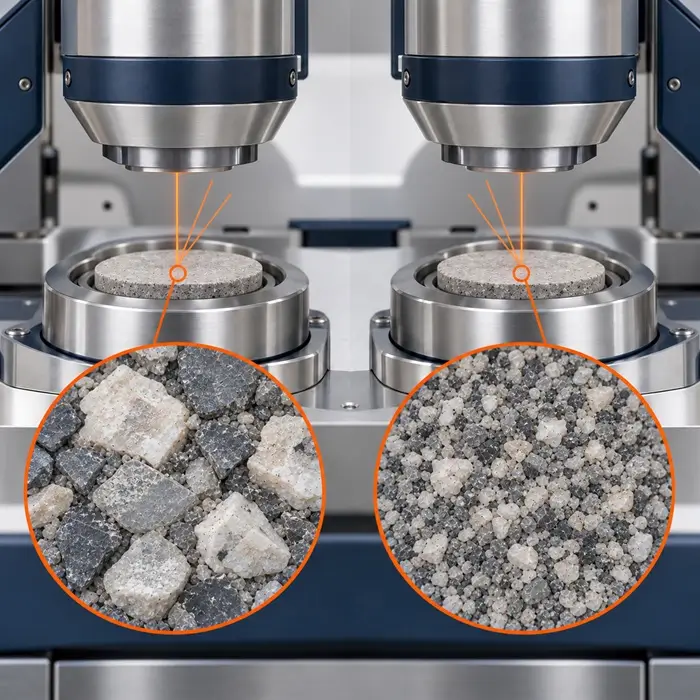
Co-processing has to add something beyond the presence of plastic and brittle constituents. Depending on the system, that additional effect can come from constituent distribution within the engineered particle, internal porosity, surface composition, particle morphology, or fixing the component ratio within one particle population.
Silicified microcrystalline cellulose illustrates why this distinction matters. PROSOLV SMCC combines MCC with colloidal silicon dioxide rather than pairing a plastic filler with a conventional brittle filler. Comparative work on MCC, SMCC, and physical MCC-silica mixtures found that silica improved the tensile strength of lubricated MCC tablets, but co-processing provided no additional lubricated tablet-strength benefit above the corresponding physical mixtures. Co-processing itself is not evidence of synergy. The functional advantage has to be demonstrated for the specific material system.
Commercial Grades Show That Co-Processing Is Not One Mechanism
Commercial co-processed excipients illustrate how different the underlying particle-engineering strategies can be.
| Grade | Composition | Processing route / form | Evidence / source basis |
|---|---|---|---|
| PROSOLV SMCC | 98% MCC + 2% colloidal silicon dioxide | Spray-dried MCC with colloidal silicon dioxide | Independent study: no additional lubricated tablet-strength benefit over the corresponding MCC-silica physical mixtures in the van Veen comparison |
| MicroceLac 100 | 75% lactose monohydrate + 25% MCC | Co-spray dried | Independent study: poorest flow but best compact mechanical resistance among four lactose-based co-processed excipients; not a same-ratio physical-mixture comparison |
| Cellactose 80 | 75% lactose monohydrate + 25% powdered cellulose | Co-spray dried | Supplier-reported: improved compactibility and flowability versus the corresponding physical blend |
| Avicel HFE-102 | 90% MCC + 10% mannitol | Co-spray dried | Independent study: comparable flow, but higher tablet tensile strength and markedly lower lubricant sensitivity than the corresponding physical mixture |
| Avicel DG | 75% MCC + 25% anhydrous dibasic calcium phosphate | Co-spray dried | Independent study: poorest flow among three Avicel co-processed grades; no same-ratio physical-mixture comparator in that study |
| Ludipress | Lactose monohydrate + povidone + crospovidone | Free-flowing granulated co-processed powder | Product documentation: multifunctional filler, binder, and disintegrant system; no direct physical-mixture comparison stated |
The range of these products is the important point. “Co-processed excipient” describes a particle-engineering strategy, not one mechanism or one predictable performance outcome. The useful comparison is between the specific co-processed grade and the realistic formulation alternative.
Why Continuous Feeding Changes the Value Proposition
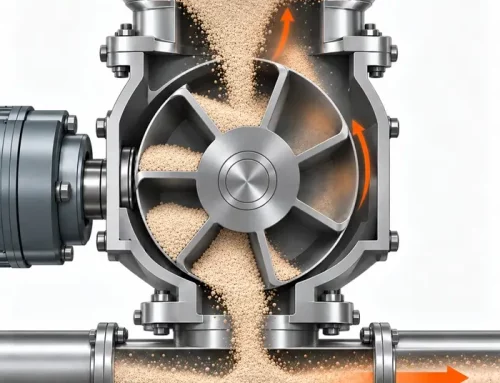
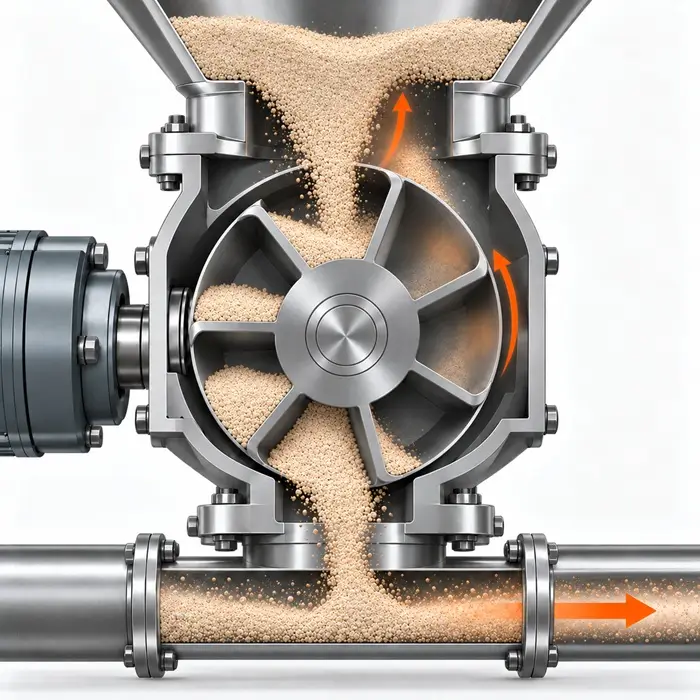
Continuous direct compression commonly feeds the API and excipients at controlled rates through loss-in-weight feeders before the materials enter the continuous blender. Each separate material stream brings its own feeding behavior, refill cycle, and potential source of feed-rate disturbance.
If a co-processed grade supplies two or more required constituents at the formulation ratio that would otherwise be introduced independently, those constituents no longer need separate feed-rate control on the CDC line. That can remove a feeder and its refill cycle and prevent short-term ratio variation between two independently dosed streams. Ratio control does not disappear, however. It moves upstream to the co-processed-excipient manufacturing process, supplier specification, and lot-to-lot composition control.
The SMCC example discussed above shows why line-level value can differ from compaction synergy. Even when co-processing does not improve lubricated tablet strength over a well-prepared physical mixture, incorporating silica within the engineered material can still change how that minor constituent is distributed and handled.
That matters because colloidal silicon dioxide can be difficult to feed as a separate low-rate stream. In a published continuous-feeding study, electrostatic behavior made most tested tooling configurations unsuitable for steady feeding. The authors nevertheless resolved the feeding difficulties using the methods developed in the study, so the result demonstrates a demanding but solvable feeding problem rather than an inherently unfeedable material.
The same formulation also used PROSOLV HD90 and additional colloidal silicon dioxide as separate streams, showing the limit of the feeder-reduction argument: a co-processed grade removes a feed stream only when it already supplies the required amount of that constituent.
Using Shear Cell Data to Compare Co-Processed and Blended Excipients
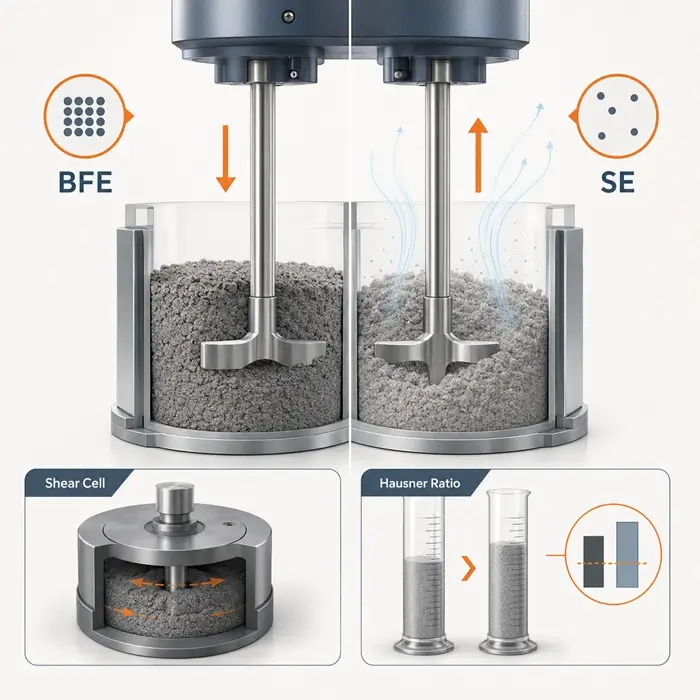
Flow function classification from ring shear or Jenike shear cell testing provides a controlled way to compare cohesive-to-free-flowing behavior between a co-processed grade and its physical-blend equivalent, and the distinction between the two test formats is covered in detail in the comparison of Jenike shear cell and ring shear tester methods.
Co-processing does not by itself predict whether a material will flow better. Avicel HFE-102 and a corresponding 9:1 physical mixture of MCC and mannitol showed comparable flow properties even though the co-processed grade in the same study showed clear advantages in tablet tensile strength and lubricant sensitivity. In a separate comparison of three spray-dried Avicel co-processed excipients, HFE-102 showed the best flow properties, Avicel CE-15 occupied the middle range, and Avicel DG showed the poorest flow. The same processing category produced substantially different flow behavior because particle size, shape, density, and surface characteristics differed among the grades.
Shear-cell data remain useful because they provide a controlled comparison under defined consolidation stresses. Simpler indices such as the Hausner ratio can support screening but carry the interpretation limits described in the Hausner ratio and Carr index interpretation guide and should not substitute for shear testing when the formulation or process decision has significant consequences.
CDC feed hoppers, feeders, and continuous blenders also expose powders to aeration, agitation, and changing stress states that differ from standard shear-cell conditions. Dynamic and aerated powder testing can add information where feeder or blender behavior is the real concern.
Compactibility, Lubricant Sensitivity, and Mixing Strain
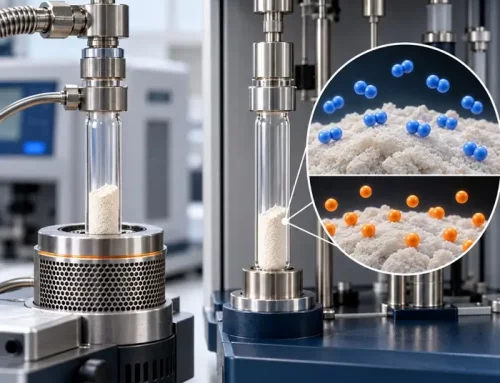
Compactibility is commonly evaluated by plotting tablet tensile strength against compaction pressure, as discussed in powders under pressure and why deformation behavior matters. Magnesium stearate can reduce tensile strength by coating particle surfaces and limiting the interparticulate bonding available during compaction.
One way to quantify that effect is the lubricant sensitivity ratio:
LSR = ((TS₀ − TSₗᵤᵦ) / TS₀) × 100%
where TS₀ is the tensile strength of the unlubricated compact and TSₗᵤᵦ is the tensile strength after lubrication under the defined condition. A higher LSR represents a larger loss of tablet strength after lubrication.
The important qualification is that lubricant concentration does not define the lubrication condition by itself. Surface coating also depends on the mechanical strain imposed during mixing. Blender geometry, fill level, impeller speed, mixing intensity, and the number of times material passes through the active mixing zone can all change the resulting tabletability.
That is the useful lesson from work on tabletability deterioration in microcrystalline cellulose. Hand mixing with magnesium stearate produced unexpectedly severe and highly variable deterioration in MCC tabletability, showing that the measured lubricant response can depend strongly on the lubrication procedure itself.
The same issue carries into CDC. In a study using a vertical continuous blender, tablet tensile strength was associated with total blade passes, which changed with blender hold-up, impeller speed, and throughput. Laboratory lubricant-sensitivity testing should reproduce the intended continuous mixing exposure as closely as practical rather than relying on lubricant percentage and nominal blending time alone.
A 2023 direct comparison of lubricant sensitivity in batch and continuous tableting provides a useful qualification. The study examined two direct-compression lactose grades using a tumble blender for batch processing and a horizontal blender for continuous processing. The relative lubricant-sensitivity ranking of the two lactose grades was similar across the two modes, leading the authors to conclude that magnesium stearate sensitivity behaved largely as a material property independent of equipment and blending method. In the continuous process, however, sensitivity also depended on the magnesium stearate inlet position. For these brittle lactose grades, the material ranking transferred from batch to continuous processing, while the magnitude of the tensile-strength response still depended on process exposure.
Why Lubricant Sensitivity Differs by Deformation Mechanism
Plastically deforming excipients such as microcrystalline cellulose depend strongly on clean interparticle surface contact for bonding, so magnesium stearate coating can produce a pronounced loss of tensile strength. Brittle materials behave differently because fragmentation during compression exposes fresh surfaces that remain available for bonding even when the original particle exterior has been lubricated. This helps explain why formulations containing a brittle component are often less lubricant-sensitive than formulations dominated by plastic deformation.
Blend Segregation Risk in Continuous Direct Compression
Co-processing removes a specific segregation pathway: constituents incorporated into one engineered particle population no longer behave as two independent powder populations that can separate through differences in particle size, density, or percolation behavior. The general mechanisms remain those described in the diagnosis of powder segregation during mixing, conveying, and filling and the interpretation of particle size distribution in process context.
That does not eliminate formulation segregation. The API remains a separate particle population unless it is itself incorporated into the engineered particle, and differences in API particle size, density, cohesion, and surface behavior relative to the excipient can still produce segregation or feeding problems. Other separately dosed components remain subject to the same limitation.
Shorter residence times do not by themselves make CDC more segregation-prone. A whole-train CDC study using formulations deliberately selected for their tendency to segregate during batch processing found that the continuous line handled the challenging compositions effectively and was surprisingly tolerant of materials susceptible to batch segregation.
The relevant risks therefore need to be located in the actual process rather than attributed generically to continuous manufacturing. Important points include discharge behavior inside feeder hoppers, refill disturbances, ratio variation between independently metered streams, interfaces between unit operations, post-blender transfer, and the tablet-press feed system.
Where This Supports Formulation and Process Decisions on CDC Lines
ICH Q13, implemented through FDA guidance on continuous manufacturing of drug substances and drug products, places process dynamics, material traceability, and disturbance control within the wider continuous-manufacturing control strategy. Excipient selection has to be judged by its effect on the complete formulation and line rather than by an isolated powder-property improvement.
A co-processed grade is most defensible when comparative testing shows that it removes a specific constraint the conventional formulation does not handle robustly. That may be a difficult feed stream, a narrow lubrication window, inadequate compactibility, problematic flow, or segregation between constituents that otherwise remain separate.
The decision should include feeder configuration, process performance, API-to-excipient compatibility, material cost, supply reliability, and qualification requirements. If the conventional formulation already feeds, blends, and compresses robustly, a specialty co-processed grade may add complexity without enough process benefit to justify it.
The 2026 EMA Q&A Changes the Qualification Decision
For products intended for the European market, the European Medicines Agency’s final Q&A on co-processed excipients used in solid oral dosage forms took legal effect on August 1, 2026, following public consultation on a draft first published in September 2024.
EMA states that co-processed excipients can present a higher degree of risk than the corresponding excipients used individually because of factors including composition complexity, quality control, formulation development, and stability. At the same time, the Q&A makes clear that a CoPE is not treated as a novel excipient, a finished-product intermediate without active substance, or a ready-to-use mixture under the referenced EU excipient guidance.
The framework defines three categories: Category A for high-risk CoPEs, Category B for medium risk, and Category C for low risk. Assignment depends on the potential effect of the CoPE on finished-product critical quality attributes and, where applicable, critical process parameters. The assessment considers factors including the CoPE’s function, physicochemical characteristics, composition in terms of the number of excipients, its proportion in the finished product, and the functions of other excipients in the formulation. Potential effects on finished-product attributes such as appearance, assay, content uniformity, active-substance release, stability, impurity profile, and bioavailability should also be considered.
EMA also expects applicants to discuss intended CoPE functionalities that cannot be achieved through simple blending or by using a special grade of a single excipient, making the comparative testing used during formulation development directly relevant to the regulatory justification.
Supplier-level composition control is the regulatory counterpart to the feeding trade-off described above: when separate line-level ratio control is removed, control of constituent composition shifts upstream to the CoPE manufacturer.
A co-processed grade should not be selected on flow or tabletability performance alone, with regulatory assessment deferred until later. The development team should establish the applicable risk category, understand the supplier’s control strategy and supporting documentation, and determine the dossier implications while the material choice is still open.
Testing Checklist for Evaluating Co-Processed Grades
Evaluate the co-processed grade against the realistic conventional or physical-blend alternative. Use the formulation ratios and process conditions intended for production rather than supplier data or convenient laboratory settings.
- Define the problem the co-processed grade must solve. Identify whether the target is feeding, flow, segregation, lubricant sensitivity, compactibility, excipient count, or another specific process limitation. The comparison should test that claimed benefit rather than simply establish whether the material performs differently.
- Map the feeding architecture for both alternatives. Identify which components require separate loss-in-weight feeders, their target feed rates, refill behavior, and known feeding difficulties. Confirm whether the co-processed grade actually eliminates a separately controlled material stream or simply changes the powder being fed.
- Compare flow under identical conditions. Run the co-processed grade and physical-blend alternative at the same shear-cell consolidation stresses and using the same test method. Where feeder or blender behavior is the actual constraint, add dynamic or aerated testing that represents the relevant handling condition.
- Quantify lubricant sensitivity under representative mixing exposure. Generate tensile strength versus compaction pressure profiles for lubricated and unlubricated material and calculate LSR where appropriate. Match lubricant concentration and mechanical strain history as closely as practical to the intended continuous blender rather than defining lubrication by blending time alone.
- Check particle size and density relationships with the API and remaining components. Compare particle size distribution, bulk density, and, where relevant, tapped density. Identify which segregation pathways the co-processed material removes and which remain because the API or other ingredients still form separate particle populations.
- Challenge feeder refill and recovery. Stable feeding between refills is not sufficient. Determine how quickly each feeder recovers after refill and whether transient feed-rate changes propagate into blend composition or tablet properties.
- Run a production-representative continuous trial. Use realistic throughput, blender hold-up, impeller conditions, residence time, feeder configuration, and compression conditions. Confirm that laboratory differences in flow, lubrication response, or compactibility translate into meaningful line performance.
- Check the regulatory and supply package before locking the material. For European products, establish the applicable EMA co-processed-excipient risk category and dossier implications. Review supplier controls, specifications, change-notification arrangements, availability, and second-source limitations.
- Make the final decision on process value, not excipient performance alone. Compare the measured robustness gained with raw-material cost, equipment requirements, development effort, qualification burden, and supply risk.