

SUBJECT
Bulk Solids Characterization
Publications on the measurement and interpretation of bulk powder properties relevant to flow, storage, handling, processing, and product performance.
PUBLICATIONS
Browse publications
Explore PTI articles, Insights, Know How, and technical publications related to this subject.
 10 October 2026
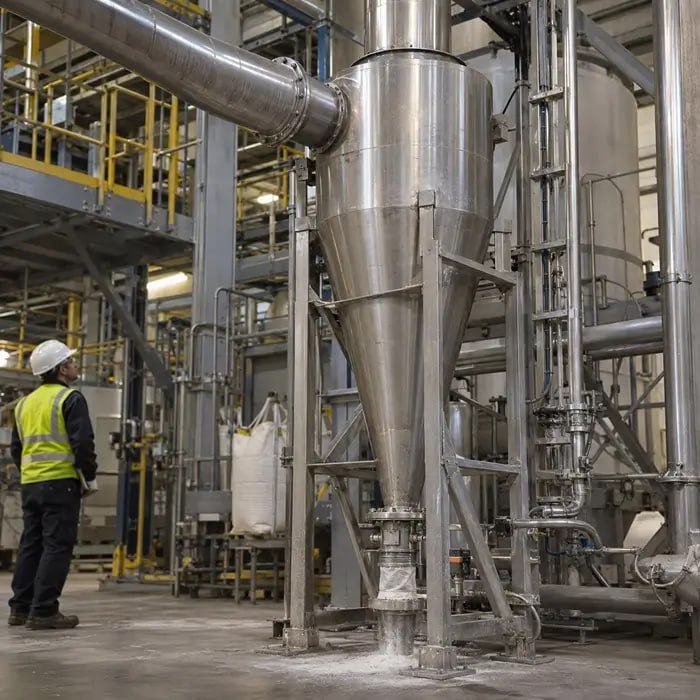
Cyclone Separation of Fine Powders: Cut Size, Efficiency Curves, and Agglomeration
The classical cyclone cut size model assumes discrete, non-agglomerating particles. Cohesive or moisture-sensitive fines can travel through a cyclone as agglomerates instead, which changes what a PSD result actually tells you about classifier performance.
Feature Article
 10 October 2026
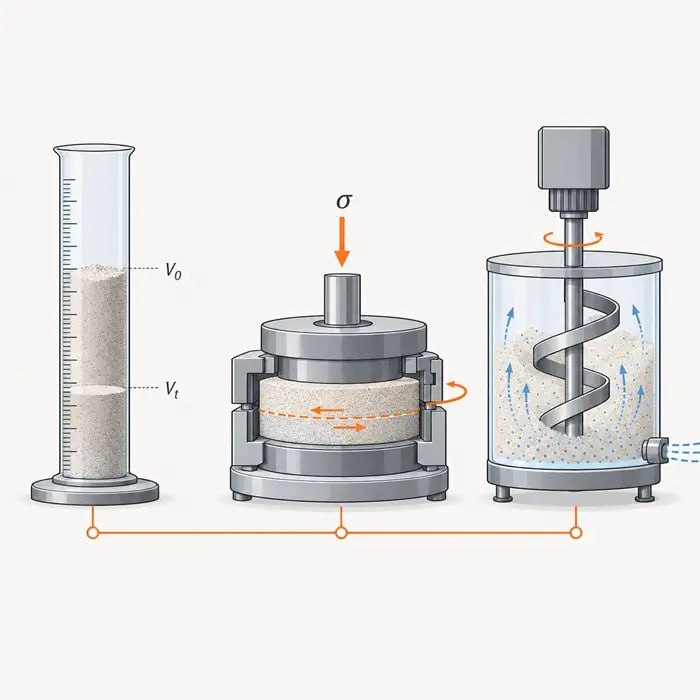
PBF Powder Flowability Testing: Why Different Methods Disagree and What the Results Mean
Hausner ratio, shear cell, and dynamic flow energy results on the same PBF powder lot rarely agree exactly. That disagreement is a decision input, not proof that a method or lab got it wrong.
Insights
 3 October 2026
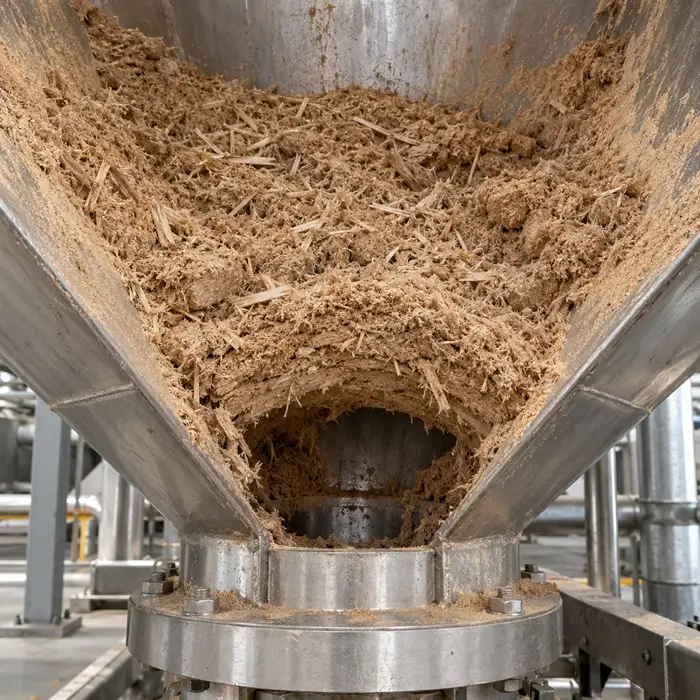
Wood Powder Feeding Problems: Separating Moisture Effects From Particle Interlocking
Wood powder can bridge because fibrous particles mechanically interlock, because moisture increases [...]
Feature Article
 3 October 2026
Micronization by Jet Milling: How Classification, Milling Intensity, and Time Change Surface Properties
Jet milling micronization reduces particle size through particle-particle impact controlled by classifier wheel speed and feed rate. Pushing the cut point lower can raise amorphous surface content and hygroscopicity in ways a passing PSD result will not reveal. This guide covers the mechanism and the tests that actually diagnose a changed lot.
Know How
 3 October 2026
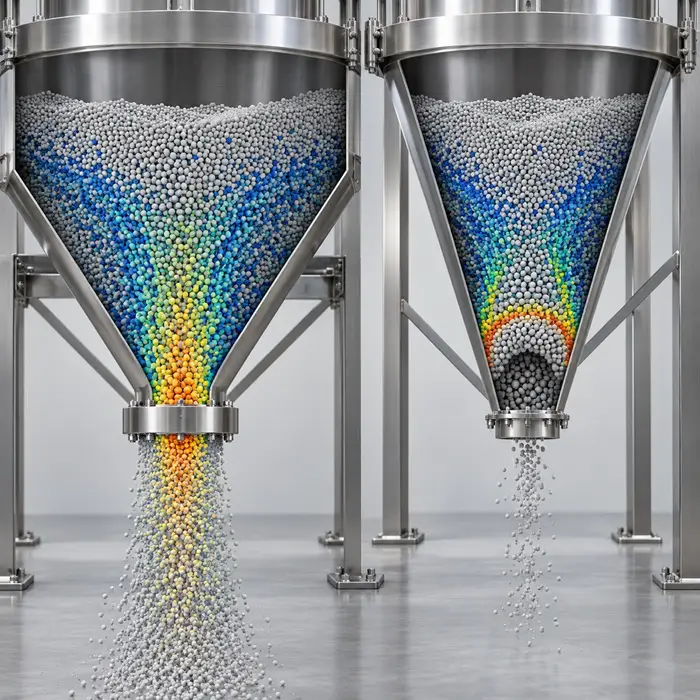
DEM Calibration: Why a Model That Reproduces One Bulk Test Can Still Fail in a Different Hopper Geometry
DEM input parameters are fitted to match a bulk observable, not derived from first principles. A parameter set calibrated against an angle of repose test constrains one point in a multi-dimensional parameter space. When the hopper geometry changes, the stress state changes, and unconstrained parameters become the dominant source of prediction error.
Insights
 26 September 2026
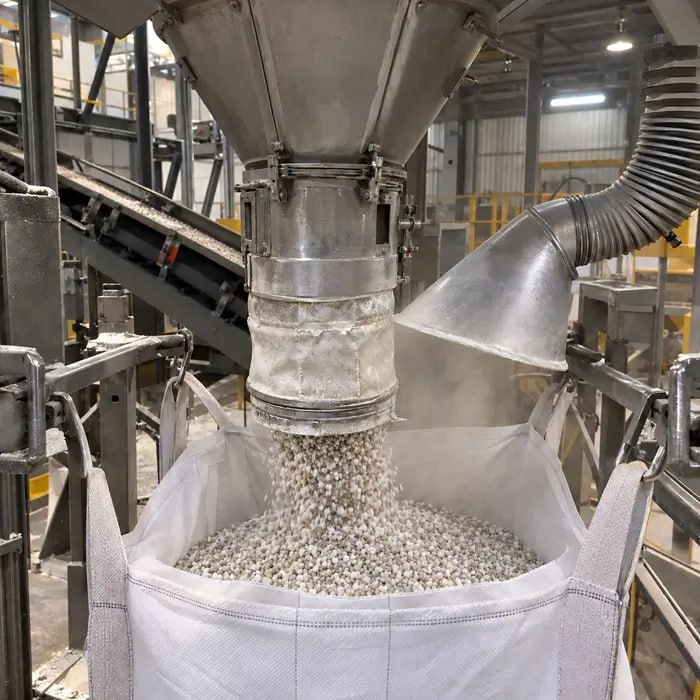
Fertilizer Powder and Granule Handling: Segregation, Caking, and Dust Control
Bulk-blended fertilizer fails in three recurring ways: segregation between straight materials of different size and density, hygroscopic caking in urea and ammonium nitrate under humidity cycling, and dust release during bagging. Each failure mode maps to a specific diagnostic test rather than a single generic powder check.
Feature Article
 19 September 2026
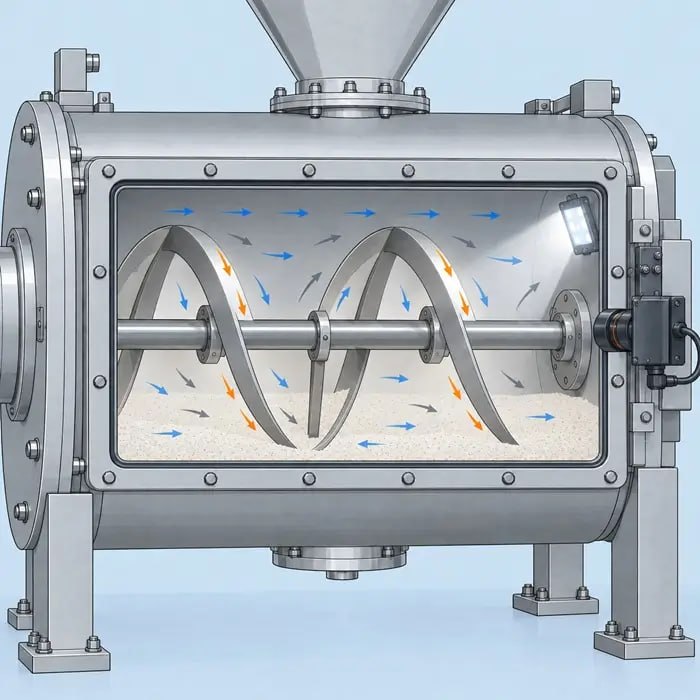
Real-Time Powder Flow Imaging: What LED-Based Particle Image Velocimetry Adds Beyond Static Flowability Tests
LED-based particle image velocimetry (PIV) images the velocity field inside a moving powder bed during blending, adding spatial resolution that static angle of repose, Hausner ratio, and shear cell tests cannot provide. Here is what that resolution can and cannot support for a process decision.
Insights
 19 September 2026
Vacuum Conveying for Fine and Hazardous Powders: Containment, Velocity, and Filter Design
Vacuum conveying contains by default: any breach draws air inward rather than pushing powder out. That containment advantage comes with a fixed pressure budget, and filter design competes directly with conveying velocity for every millibar of available driving force.
Feature Article
 12 September 2026
Co-Processed Excipients in Continuous Manufacturing: How Particle Engineering Changes Powder Flow and Compaction Performance
Co-processing engineers particle morphology, density, and surface structure into a single composite excipient particle. Flow function and compactibility testing show what that buys formulators on continuous direct compression lines, and where it does not.
Feature Article
 5 September 2026
Jenike Shear Cell vs Ring Shear Tester: Matching the Method to the Hopper or Silo Decision
Jenike shear cells and ring shear testers measure the same yield locus through different mechanics. Here is how their sample, stress range, and time differences map onto the mass-flow versus funnel-flow hopper design decision, plus a checklist for choosing between them.
Know How
 5 September 2026
GRCop-42 and the Copper Powder Feedstock Problem in Laser Powder Bed Fusion
Copper reflects most near-infrared laser light and conducts absorbed heat away faster than almost any other engineering metal. GRCop-42's move into commercial powder catalogs shows how feedstock morphology, oxide content, and particle size distribution are being engineered around that problem rather than worked around it.
Feature Article
 29 August 2026
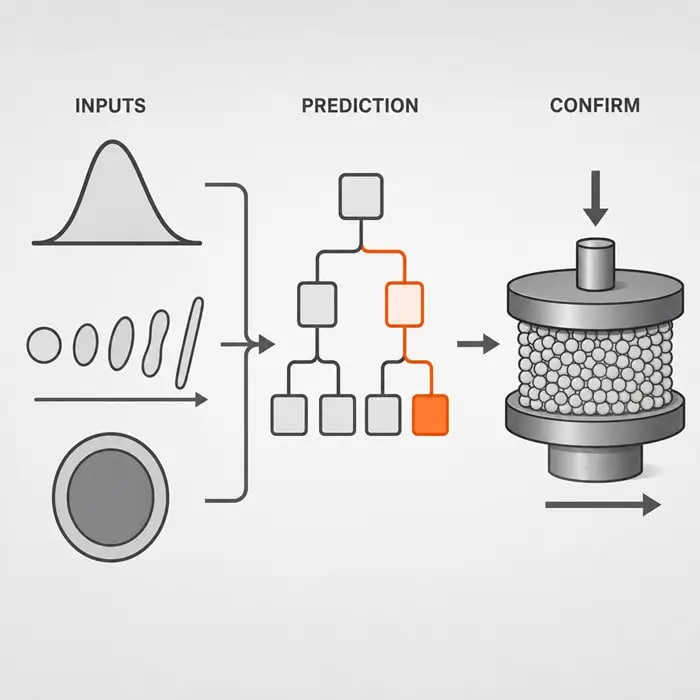
Machine Learning Flowability Prediction: What Constituent-Property Models Can and Can’t Replace
A Pharmaceutical Research study trained Random Forest and XGBoost classifiers on particle size, shape, surface energy, and silica dry-coating data to predict powder blend flowability category. The accuracy holds up as a screening tool and breaks down in specific, predictable places.
Insights