Publications

Browse PTI technical publications

Find content by subject, editorial format, or publication date

Find technical publications by the powder behavior, material property, process, or measurement you are working with. You can also browse the latest releases, choose an editorial format, or open the complete publication catalog.


Publications

Browse PTI technical publications

Find content by subject, editorial format, or publication date

Find technical publications by the powder behavior, material property, process, or measurement you are working with. You can also browse the latest releases, choose an editorial format, or open the complete publication catalog.

Browse publications by technical subject

Browse by Subject

Find publications by powder behavior, material property, process, or measurement topic.

Latest PTI publications

Latest Publications

See the newest PTI publications first, regardless of technical subject or editorial format.

Browse publications by editorial format

Browse by Format

Choose Feature Articles, Insights, or Know How according to the depth and type of content you need.

Browse all PTI publications

All Publications

Open the complete PTI publication catalog, newest first, and continue loading older content as needed.

Latest from PTI

Recently published

The four newest PTI publications appear here automatically, regardless of subject or editorial format.
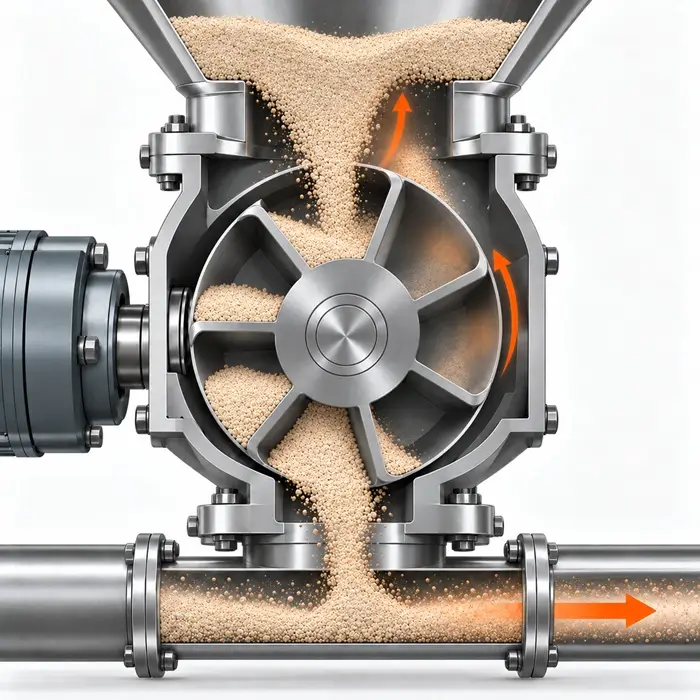
  • Cutaway of a rotary airlock showing partially filled powder pockets, returning gas near the inlet, and discharge into a pneumatic conveying line.
    24 October 2026

    Rotary Valve Failure Modes: How Powder Properties Drive Leakage, Wear, and Jamming

    When a rotary airlock valve leaks, wears, or jams, the cause usually lies in the powder rather than the equipment. This insight maps cohesion, abrasiveness, bulk density, and particle size distribution to distinct failure patterns and explains what each pattern tells you about the powder state.

    Insights

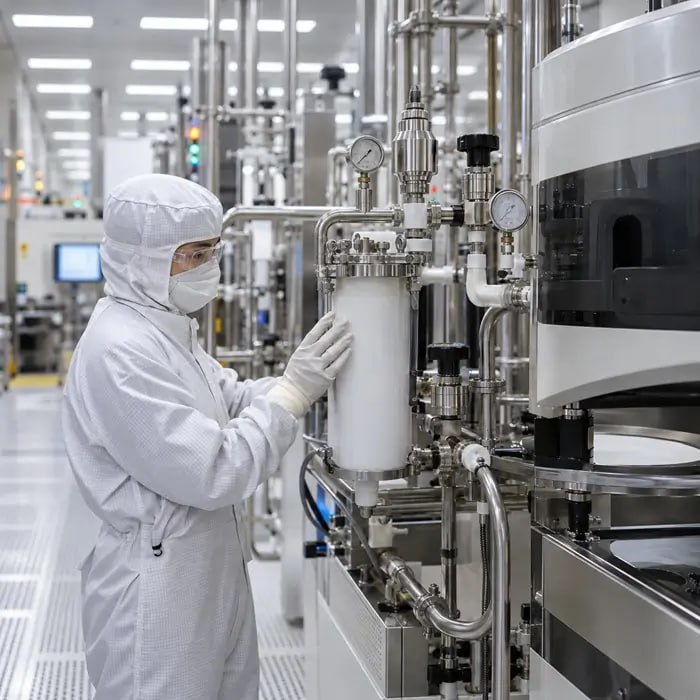
  • Technician checking CMP slurry point-of-use filtration for oversize agglomerates that cause wafer scratch defects
    24 October 2026

    CMP Slurry Abrasive Powders: Why Trace Oversize Agglomerates, Not Median Particle Size, Drive Wafer Scratch Defects

    Median particle size passes QC while wafers still scratch. Here is why a ppm-level population of 1 to 10 micron agglomerates in CMP slurry drives scratch defects, and which measurements actually catch it.

    Feature Article

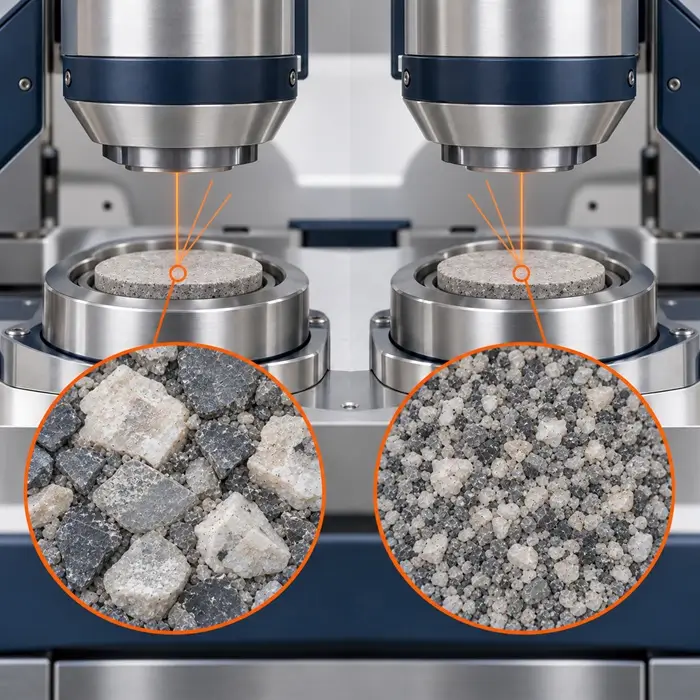
  • Side-by-side XRF analysis of pressed powder pellets with magnified views comparing coarse and fine mineral grains.
    23 October 2026

    Why Can XRF Results Change With Particle Size?

    A reported XRF concentration depends on the prepared specimen as well as its [...]

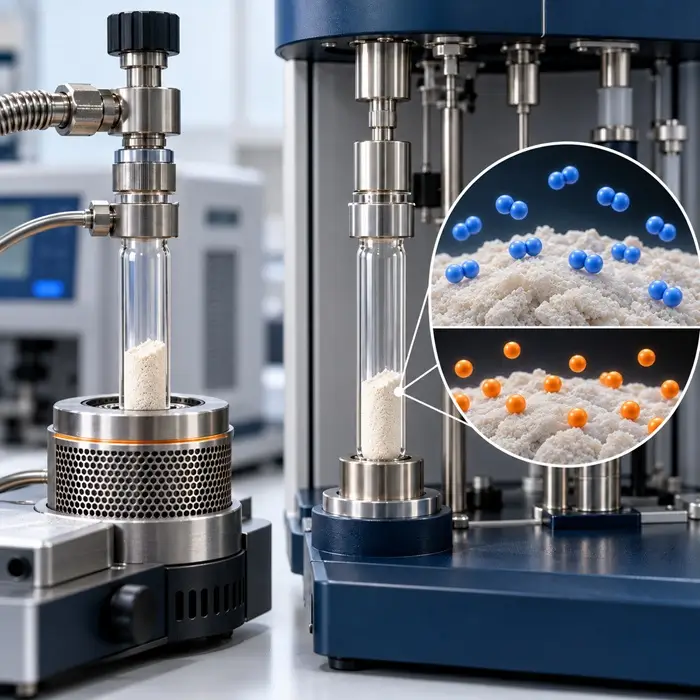
  • BET surface area analysis showing a powder degassing station and nitrogen versus krypton adsorption on a magnesium stearate surface.
    22 October 2026

    Why Do BET Results Change With Degassing and Adsorptive Gas?

    A BET surface area reflects how the sample was prepared and which adsorptive [...]

Browse by Subject

Find PTI content by technical subject

Choose the powder behavior, material property, process, or measurement behind the question. Each subject opens the corresponding PTI publication category, bringing related technical publications together in one place. Industries are intentionally omitted because PTI already provides dedicated industry pages.

Browse by format

Choose the depth and type of content

Feature Articles, Insights, and Know How are editorial formats within PTI publications. They are not separate technical destinations.

Feature Articles

Long-form technical analysis built around a defined engineering question, comparison, mechanism, process, or application.

Technical Briefs

Concise, practical explanations of focused powder and particle technology questions, mechanisms, measurement issues, and process challenges.

Insights

Focused interpretation of a study, method comparison, process result, standard, or emerging technical development.

Know How

Practical technical guides that go deeper into measurement, interpretation, equipment, and powder-behavior decisions.

Feature Articles

Long-form technical analysis

Recent Feature Articles examine a defined engineering question in greater depth, connecting mechanisms, measurements, process context, and interpretation where the subject requires it.

  • Industrial pneumatic conveying receiver with stainless steel pipework and hopper used for fine powder fluidization.
    30 May 2026

    Fine Powder Fluidization in Pneumatic Conveying and Discharge Control

    Fine powder fluidization can support controlled pneumatic conveying, especially in dense phase [...]

    Feature Article

  • Gloved technician sieving metal powder for sustainable powder metallurgy and powder reuse control
    23 May 2026

    Sustainable Powder Metallurgy: Powder Reuse, LCA, and Circular Manufacturing

    Sustainable powder metallurgy depends on controlled powder loops, not on powder processing [...]

    Feature Article

  • Metal powder feedstock quality assessment in an additive manufacturing lab with fine metal powder, powder bed fusion equipment, and microscopy inspection
    16 May 2026

    Metal Powder Feedstock Quality in Additive Manufacturing: From Particle Behavior to Part Performance

    Metal powder feedstock quality has a direct effect on print stability and [...]

    Feature Article

  • Paint QC bench with drawdown panels, grind gauge, colorimeter, and gloss meter showing dispersion-related coating defects.
    9 May 2026

    When Paint Passes Color QC but Fails in Application

    Paint QC can approve a batch that still behaves badly on the substrate. [...]

    Feature Article

Technical Briefs

Concise answers to focused technical questions

Recent Technical Briefs provide concise, practical explanations of focused powder and particle technology questions, covering specific mechanisms, measurement issues, processing challenges, and interpretation problems.

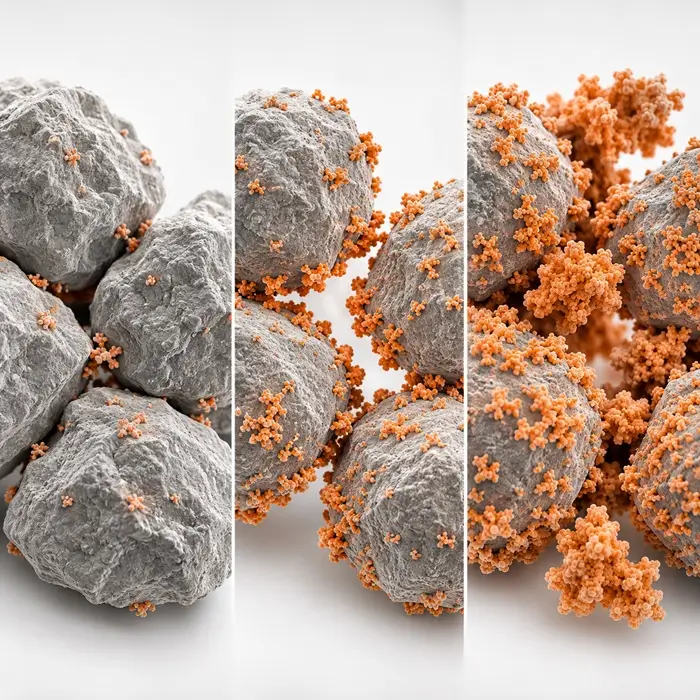
  • Microscopic comparison of powder particles showing low silica coverage, effective surface coverage, and excessive silica agglomeration that can worsen powder flow.
    14 October 2026

    Why Does Too Much Silica Make Powder Flow Worse?

    Fumed (colloidal) silica improves powder flow by separating host particles and reducing [...]

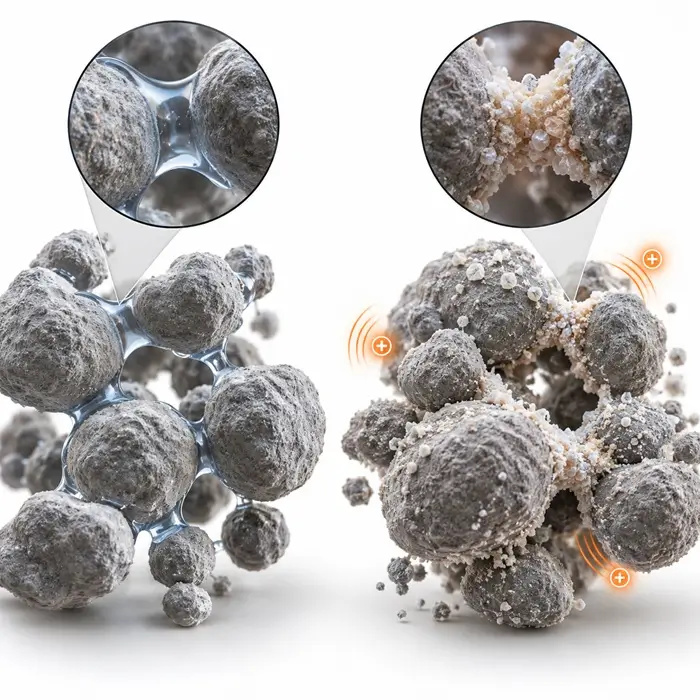
  • Scientific comparison of powder particles before and after drying, showing liquid bridges, solid bridges, electrostatic charge retention, and fines.
    13 October 2026

    Why Does Powder Become More Cohesive After Drying?

    Drying does not always improve powder flow. Dissolved material can form solid [...]

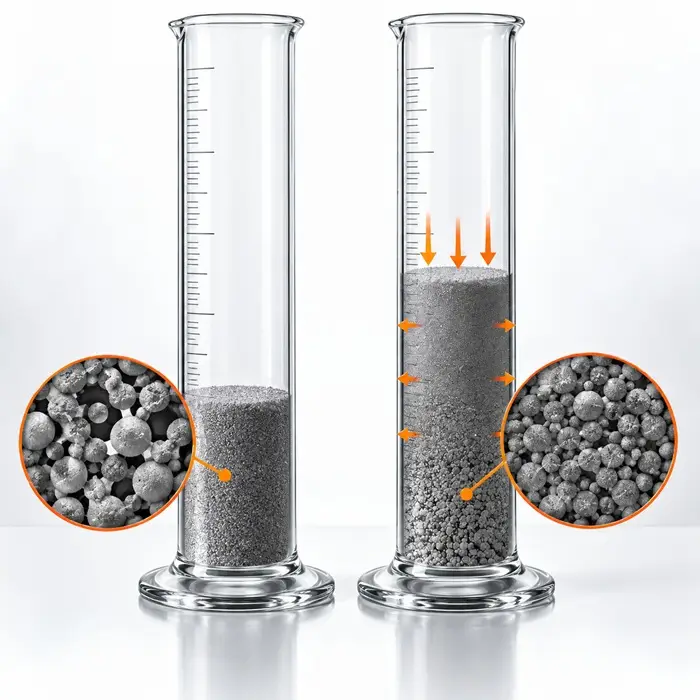
  • Technical illustration comparing two powder fill masses in identical graduated cylinders, showing differences in bed depth, particle packing, and stress transmission.
    12 October 2026

    Why Does Tapped Density Change With Fill Mass?

    Increasing fill mass can raise or lower measured tapped density, depending on [...]

Insights

Focused technical interpretation

Recent Insights examine a study, method, process result, standard, or emerging technical development in a tighter editorial format.

  • Powder operating window diagram showing a stable powder operating zone surrounded by six process boundaries: consolidation and wall friction, aeration and permeability, humidity and caking, wetting and agglomerates, segregation after transfer, and temperature and time history.
    30 May 2026

    Powder Operating Window: Why a Good Powder Fails in the Wrong Process

    A powder operating window defines the process conditions in which a [...]

    Insights

  • Fine particles between larger powder particles showing how fines in powder behavior affect surface area, contact points, and restricted air paths.
    23 May 2026

    Fines in Powder Behavior: Why Small Amounts Matter

    Fines in powder behavior matter because fine particles add surface area, contact [...]

    Insights

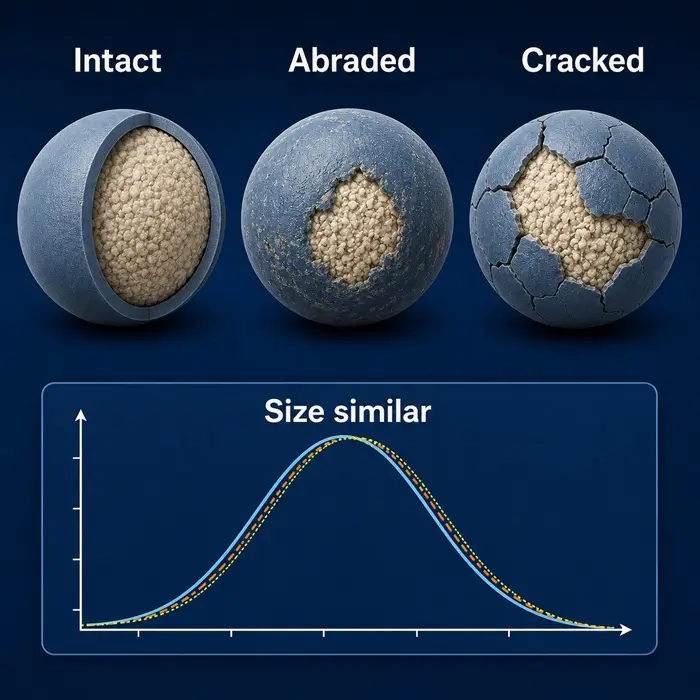
  • Coated particle damage illustration showing intact, abraded, and cracked particles with similar particle size distribution.
    16 May 2026

    Coated Particle Damage Before Particle Size Changes

    Coated particle damage can change performance before particle size distribution shows a [...]

    Insights

  • Powder wettability illustration showing poor wetting, trapped air, dry-core clumping, and controlled dispersion in liquid.
    9 May 2026

    Powder Wettability: Why Powders Float, Clump, or Disperse

    Powder wettability controls the first contact between powder and liquid. When liquid [...]

    Insights

Know How

Practical technical guidance

Recent Know How publications focus on practical measurement, method selection, interpretation, equipment, and technically useful working guidance.

Nothing Found

All Publications

The complete PTI publication catalog

Browse all published PTI content, newest first. Use the subject index above when you know the technical topic, or the structured PTI hubs when you want a guided route through a problem, property, measurement, process area, or industry.
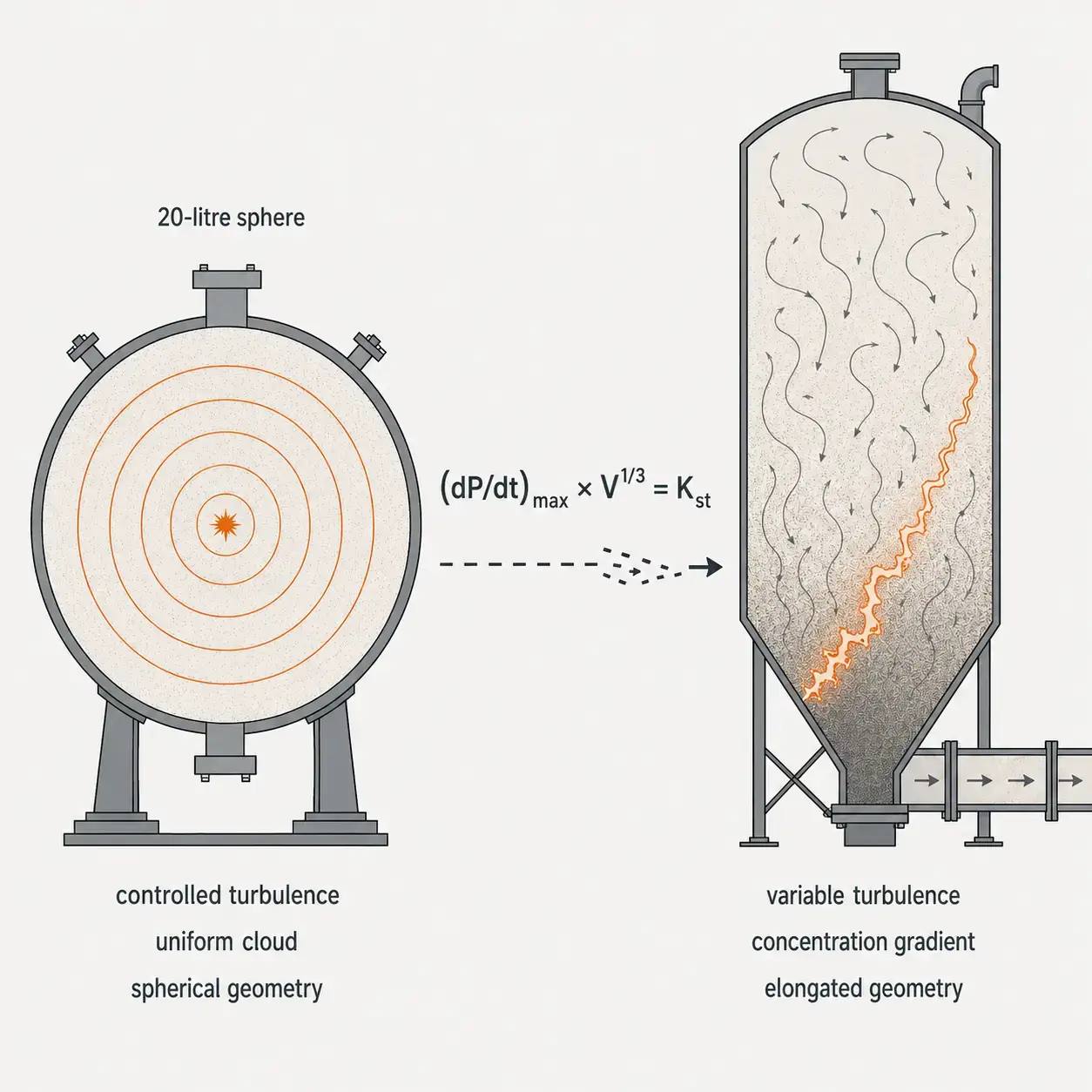
  • Technical diagram showing Kst explosion index limitations — standardized 20-litre sphere test conditions compared with real industrial vessel geometry and turbulence
    29 June 2026

    Why Kst Is Not Enough: What the Explosion Index Tells You and What It Misses

    Kst quantifies explosion rate-of-pressure-rise under standardized lab conditions. It does not directly describe how an explosion behaves in your vessel, at your turbulence level, or with your ignition scenario. This insight explains what the number means, where the cubic law holds, and when a competent person must go further than the test certificate.

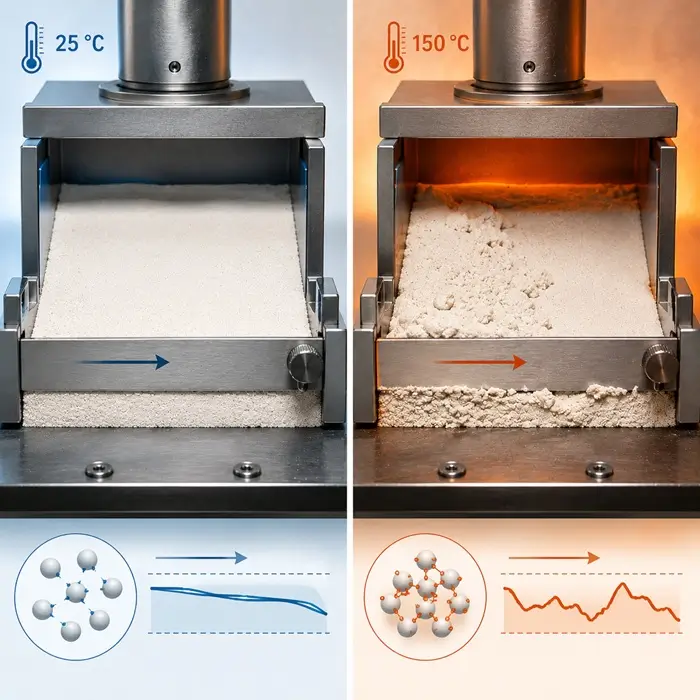
  • echnical comparison of powder flowability at 25°C and 150°C, showing smooth powder behavior at room temperature and clumped, uneven flow at elevated temperature.
    27 June 2026

    Powder Flowability at Elevated Temperature: Why Room-Temperature Results Don’t Predict Hot-Bed Behavior

    Temperature shifts surface energy, contact compliance, and residual moisture state in ways that can reverse a powder's ambient flow behavior. This Insight explains the dominant mechanisms across three temperature ranges and what elevated-temperature testing reveals for SLS powder beds, spray dryer outlets, and heated conveying systems.

    Insights

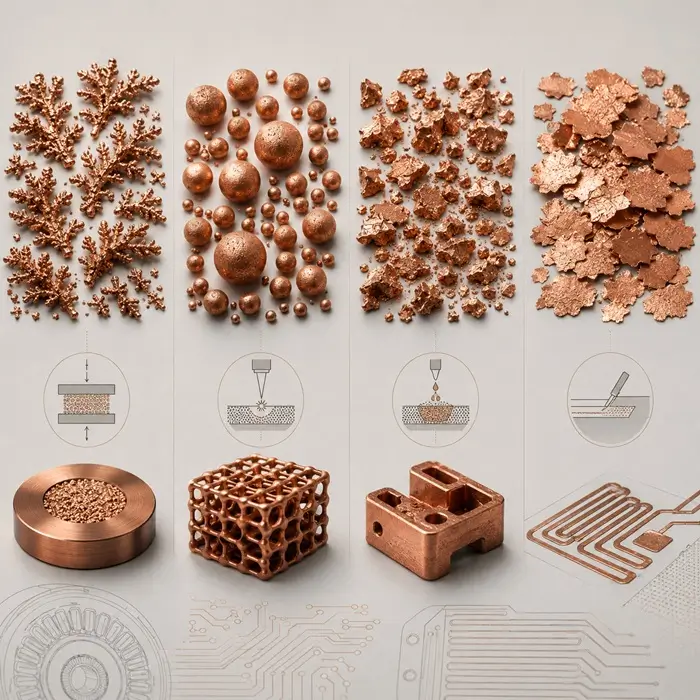
  • Technical comparison of copper powder morphologies used in electrification applications, including dendritic, spherical, irregular, and flake copper particles.
    27 June 2026

    Copper Powder for Electrification: Why Morphology, Purity, and Packing Density Are Now Engineering Variables

    Sintered contacts, additive manufactured heat exchangers, EV motor components, and conductive pastes each require a different copper powder. This article explains why morphology, particle size distribution, oxygen content, and packing density are engineering variables, and how to specify them correctly for electrification applications.

    Feature Article

  • Macro view of pharmaceutical powder particles, crystals, and lipid droplets at the interface with an aqueous medium, illustrating surface contact and early dissolution of poorly soluble APIs.
    20 June 2026

    Poorly Soluble APIs: How Surface Contact Shapes Dissolution and Bioavailability

    Poorly soluble APIs now represent the majority of the pharmaceutical development pipeline. Dissolution and oral bioavailability are determined by molecular solubility, surface wetting behavior, solid-state stability, and how the formulation interacts with the GI environment from first contact onward. Amorphous dispersions, lipid systems, nanocrystals, and co-crystals each rely on different surface mechanisms to deliver their intended advantage.

    Feature Article

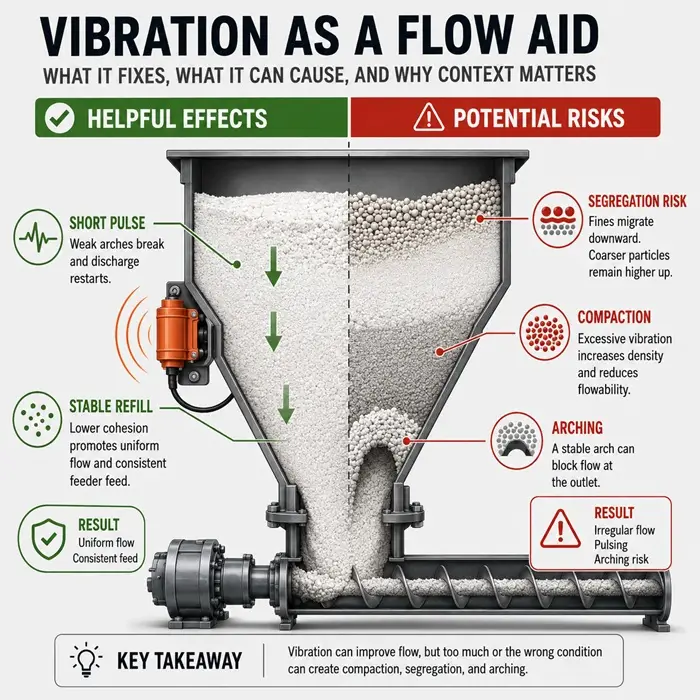
  • Technical diagram of vibration as a flow aid showing hopper discharge, compaction, segregation risk, and feeder stability.
    20 June 2026

    Vibration as a Flow Aid: When It Helps Powder Flow

    Vibration can improve powder discharge when it breaks a weak arch or [...]

    Insights

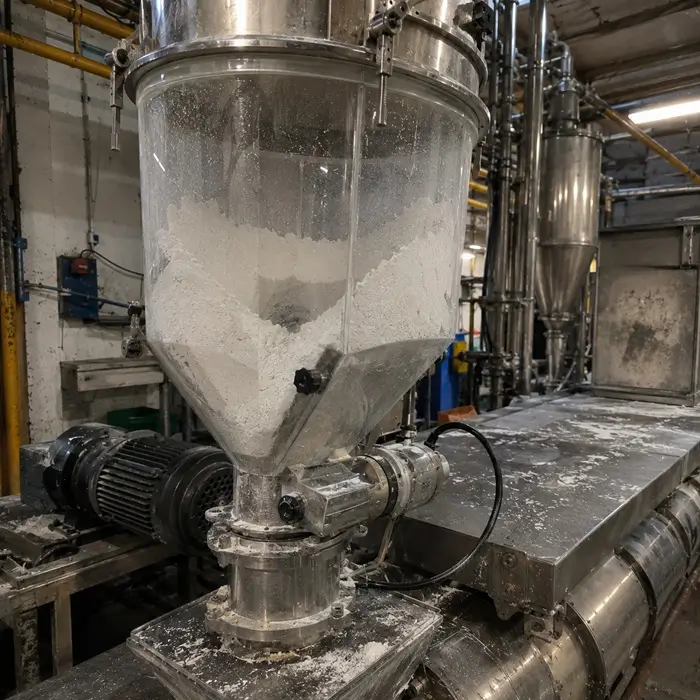
  • Calcium carbonate powder bridging inside a transparent feeder hopper on a polypropylene compounding line.
    13 June 2026

    Calcium Carbonate Powder in Polypropylene: Dust Suppression and Dosing Errors

    Dust suppression oil can reduce airborne calcium carbonate dust, but it may [...]

    Feature Article

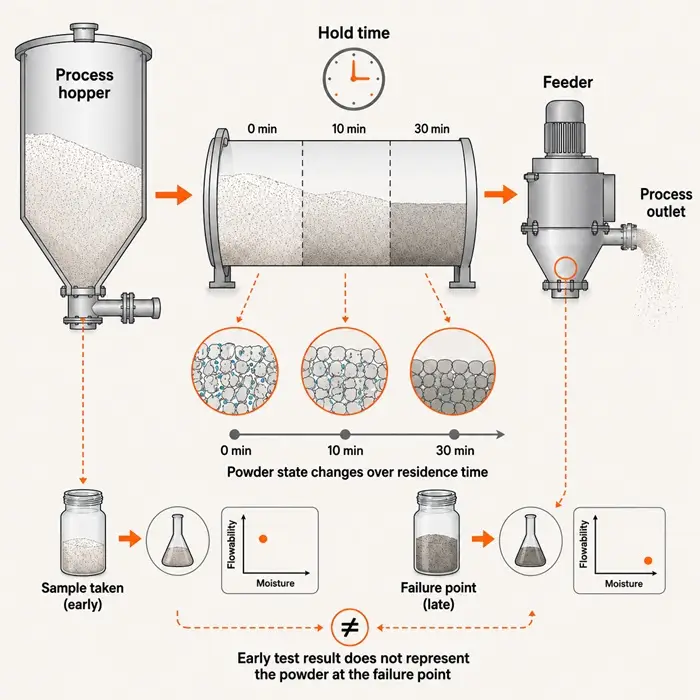
  • Powder residence time diagram showing how an early sample can differ from the powder state at the failure point
    13 June 2026

    Powder Residence Time Can Make the Test Result Miss the Failure

    Powder residence time matters because the sample and the failure often describe [...]

    Insights

  • Technical illustration comparing stable hopper discharge at adequate fill level with unstable powder flow, arching risk, and pulsing at low fill level.
    6 June 2026

    Why Hopper Fill Level Changes Powder Discharge

    Do not diagnose a feeder as if the hopper sends it one [...]

    Insights

  • Technical infographic showing powder deaeration, permeability, density recovery, air retention, flushing, surging, and feeder instability after filling.
    6 June 2026

    Powder Deaeration: Flushing, Surging, and Air Retention

    Powder instability after conveying, filling, or transfer is often treated as [...]

    Know How

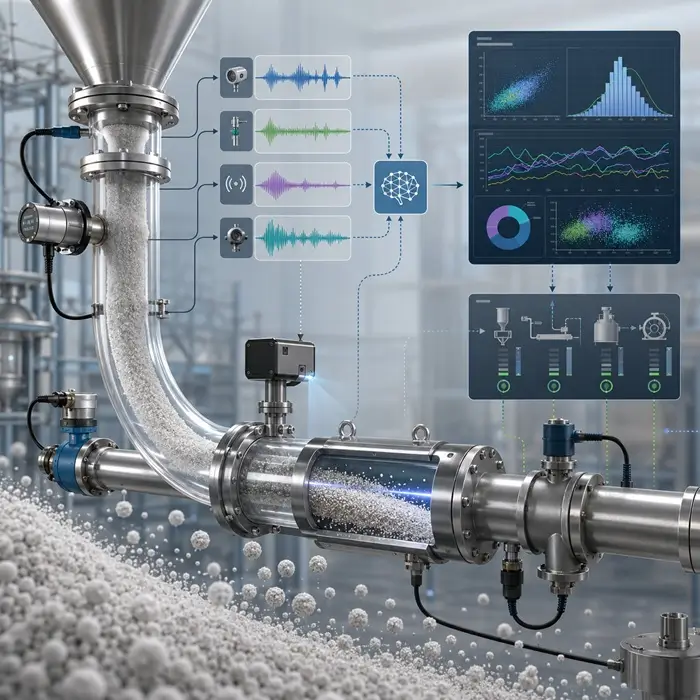
  • Real-time particle characterization system linking inline powder sensors, process data, and hybrid models for powder process control.
    6 June 2026

    Real-Time Particle Characterization and Process Control

    Real-time particle characterization is moving powder processing from delayed laboratory checks toward [...]

    Feature Article

  • Industrial pneumatic conveying receiver with stainless steel pipework and hopper used for fine powder fluidization.
    30 May 2026

    Fine Powder Fluidization in Pneumatic Conveying and Discharge Control

    Fine powder fluidization can support controlled pneumatic conveying, especially in dense phase [...]

    Feature Article

  • Powder operating window diagram showing a stable powder operating zone surrounded by six process boundaries: consolidation and wall friction, aeration and permeability, humidity and caking, wetting and agglomerates, segregation after transfer, and temperature and time history.
    30 May 2026

    Powder Operating Window: Why a Good Powder Fails in the Wrong Process

    A powder operating window defines the process conditions in which a [...]

    Insights

FeedSpot Materials Science Blogs recognition badge

External recognition

Recognized in FeedSpot’s 2026 Materials Science Blogs list

PowderTechnology.info ranked #5 in FeedSpot’s 2026 Materials Science Blogs Top 7.
Independent recognition of PTI within the materials science publishing field.

Testing support

Need the measurement, not just the article?

If the publications help narrow the technical question but the decision still depends on measured powder behavior, Delft Solids Solutions can help define an appropriate test plan and interpret the result. Explore Delft Solids Solutions testing support →


Delft Solids Solutions logo