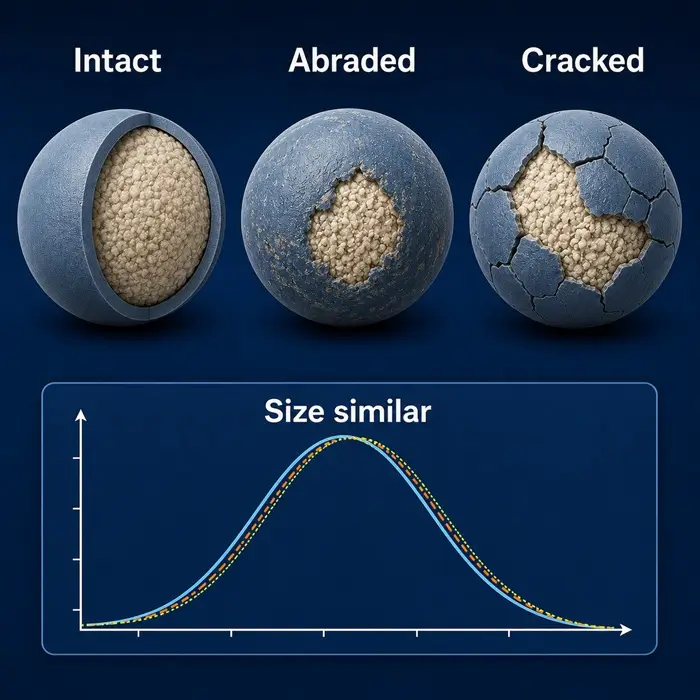
Coated particle damage does not always announce itself through particle size. A particle can keep roughly the same diameter while its surface has already changed enough to affect performance.
This is relevant for powders, granules, encapsulated ingredients, coated actives, layered particles, and engineered materials. Their function often depends less on size alone and more on the condition of the outer layer. Once that surface changes, the material may behave differently, even when the interpretation of the standard particle size distribution still shows an acceptable result.
Mechanical stress can damage a coating during conveying, blending, filling, compaction, drying, packaging, or storage. Particles collide with equipment walls and with each other. Some coatings abrade gradually. Others crack under repeated impact. Brittle layers may chip. Softer coatings may smear or deform.
The result is a particle that still belongs to the same size range but no longer has the same functional surface.
Particle Size Can Miss the First Signs of Damage
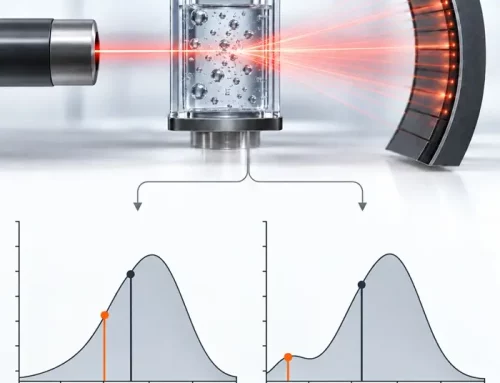
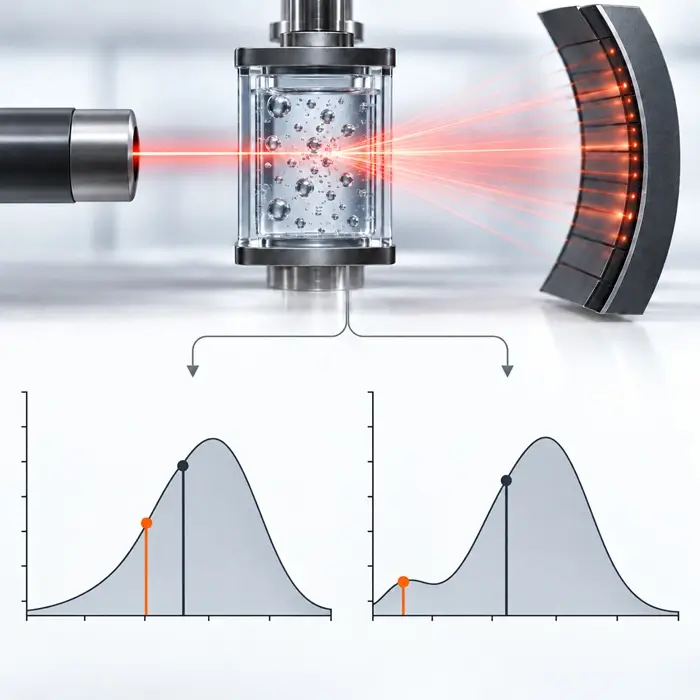
Particle size distribution is useful, but it does not always detect surface failure. If a coating cracks without producing much loose debris, the measured size may remain nearly unchanged. The same applies when a thin outer layer wears away but the core remains intact.
That is why a stable PSD should not automatically be treated as proof of stable particle function.
This is especially relevant when the coating controls release rate, taste masking, oxidation protection, moisture uptake, color stability, solubility, reactivity, or handling behavior. A small exposed area can sometimes affect performance before the whole particle breaks down.
The diagnostic point is simple: size describes the particle population, while coating condition describes whether the particle surface can still do its job.
What Changes When the Coating Is Damaged
Coated particle damage can change several material properties at once.
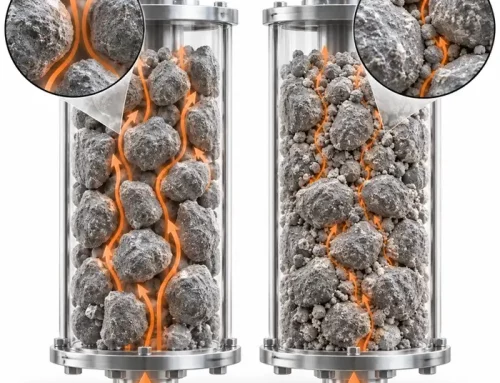
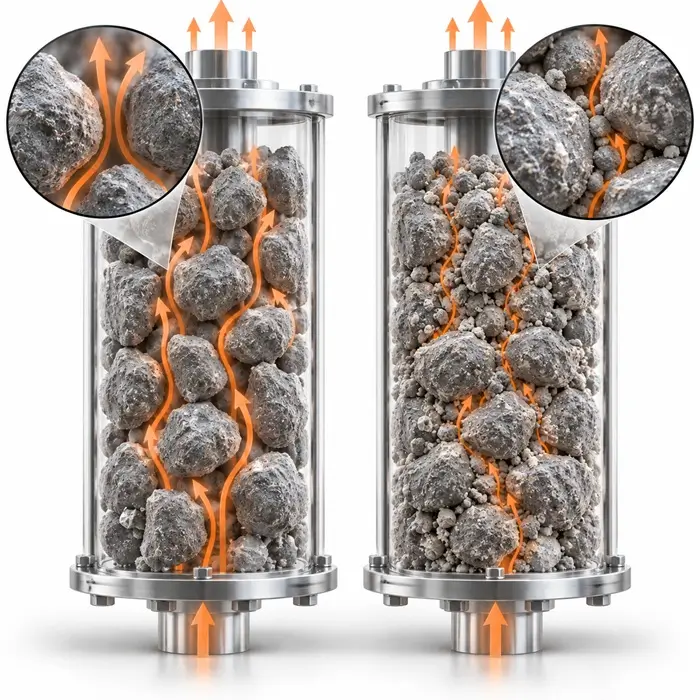
An exposed core may absorb moisture more quickly. A cracked layer may release an active ingredient earlier than intended. An abraded surface may create more fines, increase dustiness, or change how particles interact during flow. In some materials, surface damage can also affect electrostatic behavior, adhesion, or storage stability.
This is where coating damage becomes a process issue rather than a cosmetic defect. A batch may show unexpected caking, faster dissolution, poor shelf stability, color change, or inconsistent dosing. The particle size data may still appear acceptable.
That mismatch is the clue. The process symptom has moved away from the original damage mechanism.
Mechanical Stress Can Damage Functional Layers
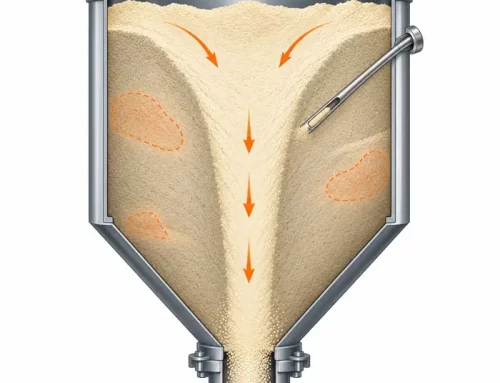
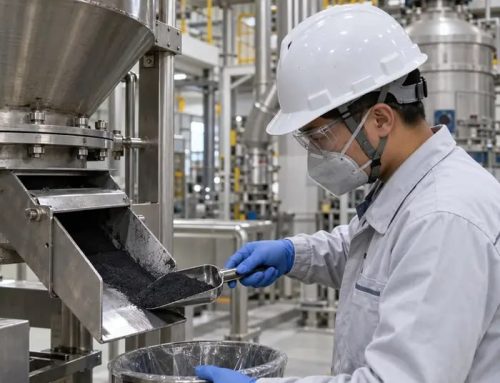
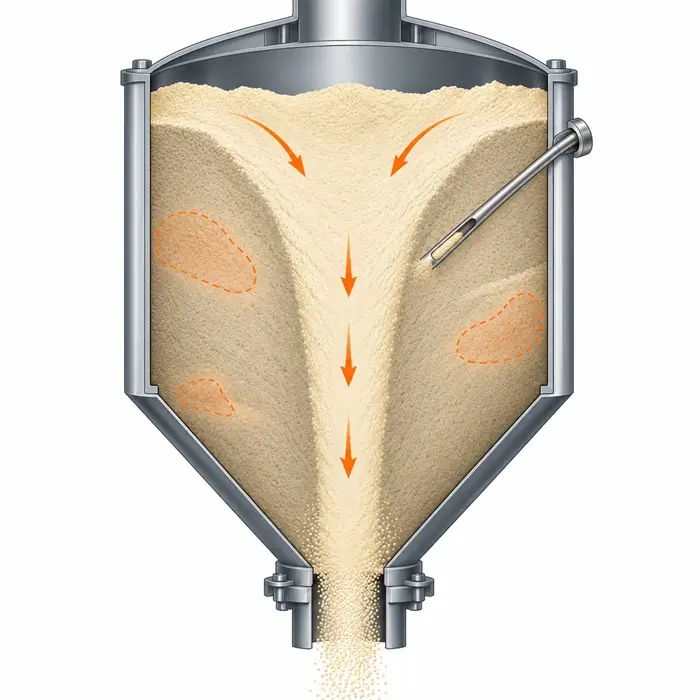
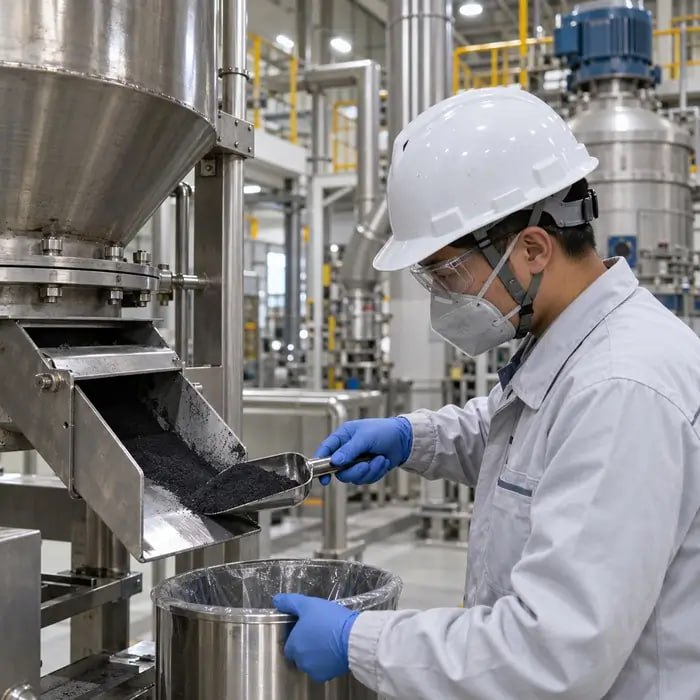
Coated particles face stress throughout the process chain. Transfer lines, mixers, fluid beds, filling systems, tablet presses, packaging lines, and storage bins all create particle contact. The stress may come from impact, friction, compression, or repeated low-level abrasion.
That matters because coated particles often fail by surface wear before they fail by full breakage. Research on coated particle attrition describes mechanisms such as abrasion, coating failure, and layer damage, with coating composition and particle stress history influencing resistance to damage. Attrition and abrasion resistance of particles coated with pre-mixed polymer coating systems provides a useful scientific background for this mechanism.
The same logic applies in practical powder handling. A coated granule may survive transport as a recognizable particle, yet arrive with a weaker surface, exposed core material, or altered release behavior. That is why attrition should be treated as a functional risk when particle coating carries product performance.
Better Checks for Coated Particle Damage
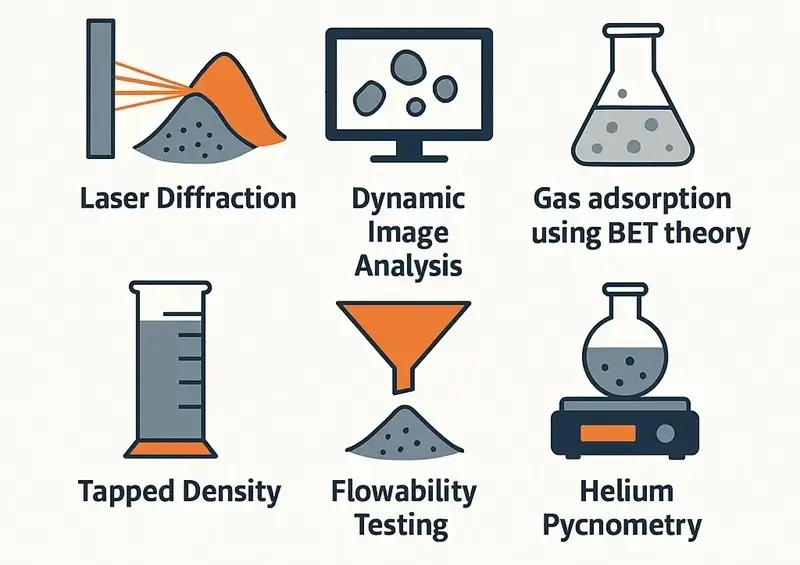
When particle function depends on surface integrity, particle size testing should be combined with methods that can detect surface change.
Microscopy can reveal cracks, exposed cores, chipped coating, and abrasion marks. Image analysis can quantify shape changes or surface defects. Attrition testing can show whether handling stress creates fines or coating fragments. Dissolution, release, moisture uptake, or stability tests can confirm whether the functional behavior has changed.
The most useful test depends on what the coating is supposed to control. A protective coating needs a different evaluation than a release coating or a taste masking layer. For a broader overview of method selection, see Powder Characterization Techniques.
Practical Interpretation
Coated particles should be evaluated according to function, not size alone. If the coating controls performance, then surface integrity belongs in the specification.
A good process assessment asks whether the particles survive the actual stress history of production. That includes transfer, storage, mixing, filling, compaction, and final handling.
This also matters for engineered materials where the outer layer controls how particles interact with binders, humidity, neighboring particles, or thermal steps. For related background, read Core-Shell and Coated Powders for Controlled Interparticle Chemistry.
When a coated powder starts behaving differently, unchanged particle size should not end the investigation. The surface may already be telling a different story.
FAQ Coated Particle Damage
Check out these related articles


Advertisement
[the_ad id=”7029″]