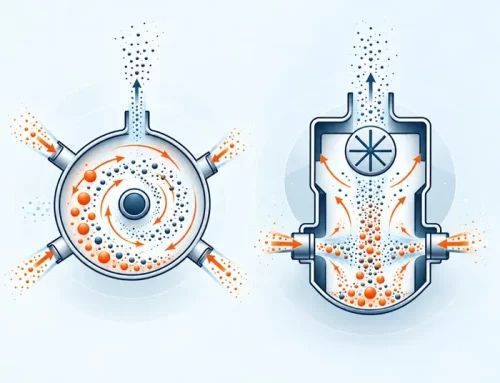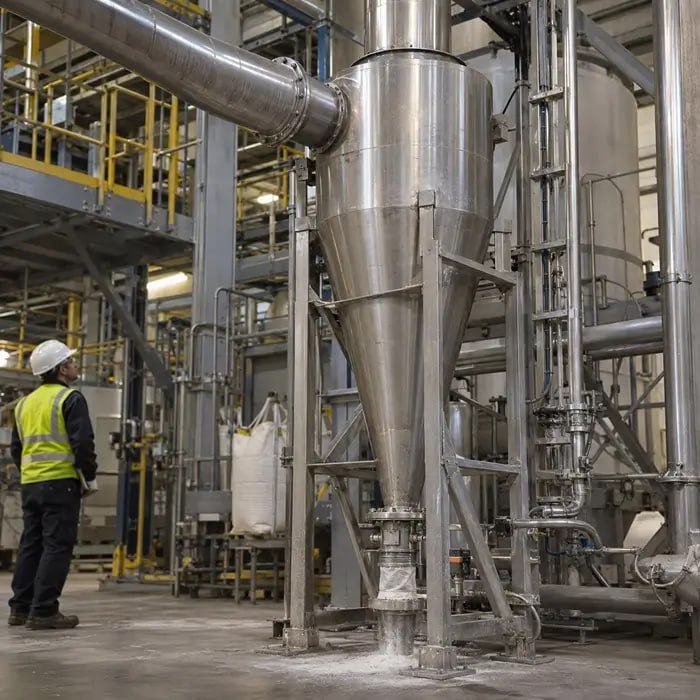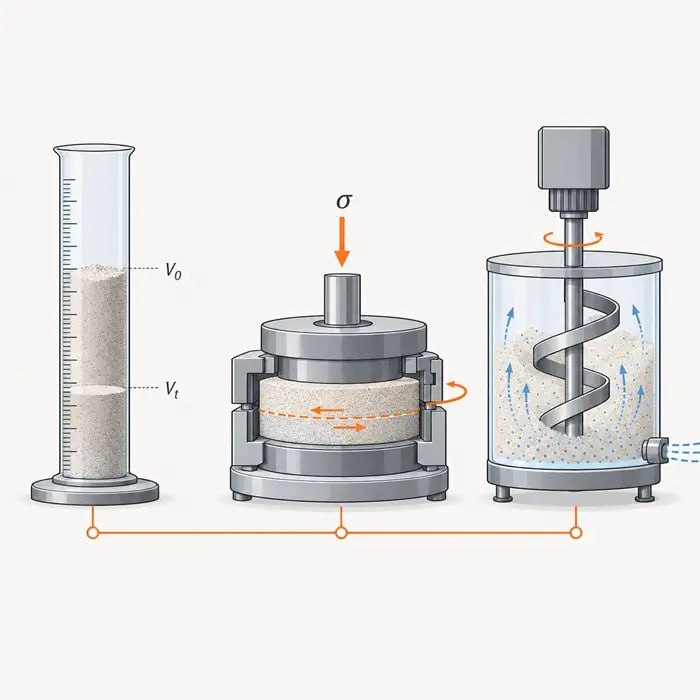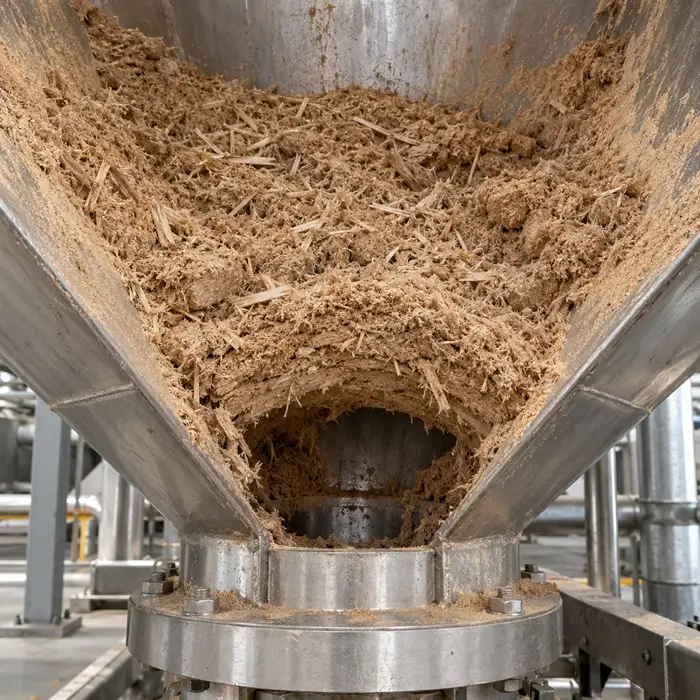


A powder does not need a large fines fraction to behave differently. Fine material changes the active surface of the powder bed. It increases the number of particle contacts and strengthens the influence of surface forces.
That matters because many powder problems start at particle contacts. Cohesion, dust formation, electrostatic charging, air retention, poor discharge, and segregation all depend on how particles touch and separate.
A coarse particle may dominate the mass of a sample. Fine particles often dominate the behavior. This is why two powders with similar D50 values can perform very differently in a hopper, feeder, blender, pneumatic line, tablet press, or packing system.
Surface Area Changes Faster Than Mass
Particle size has a direct effect on specific surface area. For simple spherical particles of the same density, reducing particle diameter by half roughly doubles the surface area per unit mass.
That relationship gives fines their influence. A small mass fraction of fines can contribute a large share of the available surface area. More surface area means more contact points, stronger surface interactions, and more sites for moisture, charge, or surface contamination to influence behavior.
At smaller particle sizes, weight no longer dominates the contact. Surface attraction starts to govern how particles separate, which is why fines stick, coat larger particles, and increase cohesion in the bed.
Moisture strengthens the same contact problem. Fine particles create narrow gaps where small liquid bridges can form, so limited adsorbed moisture can increase cohesion more than expected.
Why D50 Can Miss the Problem
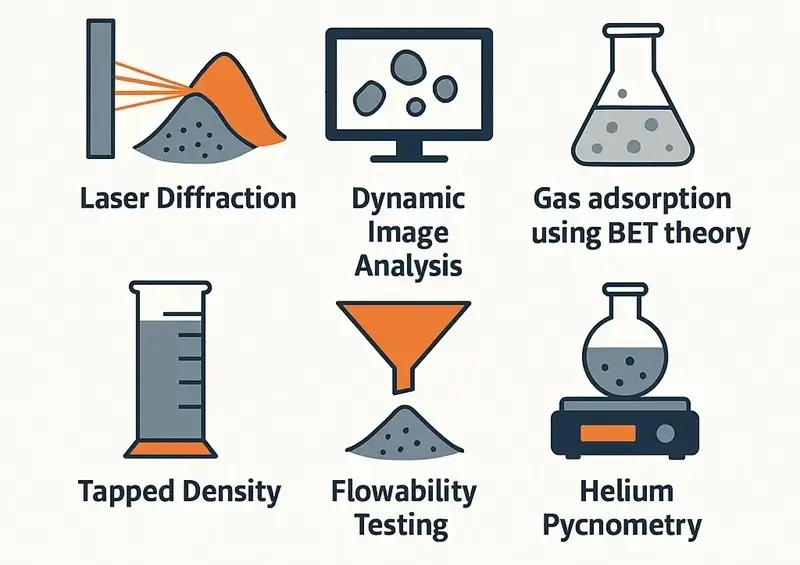
Particle size reports often focus on D10, D50, and D90 values. These numbers are useful, but they can hide a process-relevant change in the fine tail.
The D50 may remain stable while the amount of fine material increases. A powder can pass a routine particle size assessment and still create more dust, flood more easily, retain more air, compact differently, or discharge less reliably.
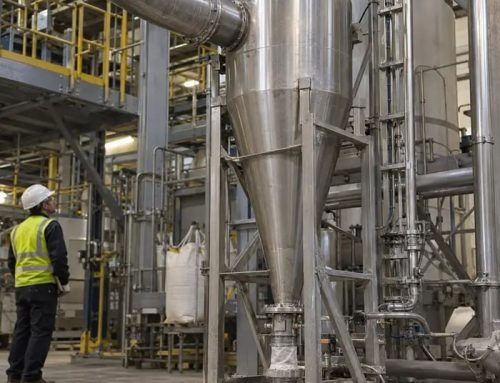
This may occur after milling, drying, transport, pneumatic conveying, freezing, thawing, or repeated handling. Attrition can create a small amount of new fines without shifting the median particle size enough to trigger concern.
Method sensitivity matters. A volume-based particle size result can underemphasize a low-mass fine fraction that has a strong behavioral effect. Sampling, dispersion settings, obscuration, data weighting, and preparation method all influence whether the fine tail is visible.
For troubleshooting, the particle size method must match the suspected mechanism. A stable D50 does not rule out a fines-driven process change.
A Practical Diagnostic Sequence
Start with the observed symptom.
If the powder creates more dust, inspect the fine tail and compare the percentage below the relevant fine-size threshold. Then connect that result to dustiness testing or handling observations.
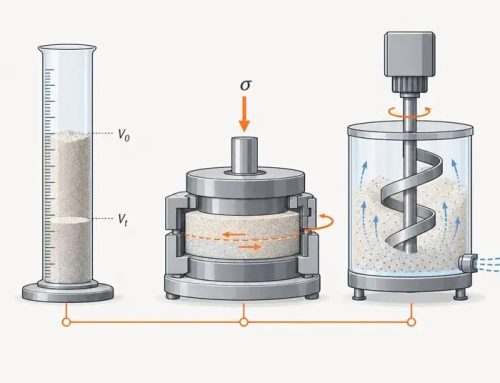
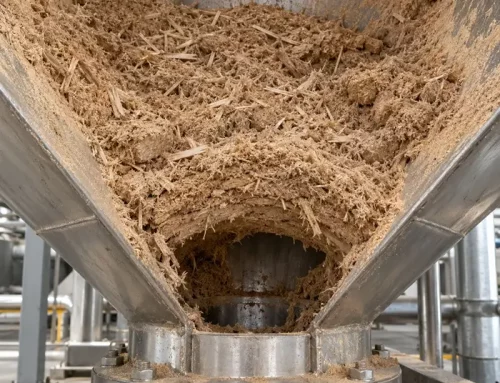
If the powder flows worse or blocks during discharge, verify whether fines have increased and whether they are free particles or attached to larger particles. Then use flow testing, wall friction, or permeability measurements to confirm whether fines are driving the discharge problem.
If the powder floods, flushes, or behaves inconsistently during filling, check the fine fraction alongside permeability or air-retention behavior. Fines can reduce the open pore structure of the bed and slow air release.
If the powder segregates, inspect both the coarse and fine ends of the distribution. A wider size distribution increases the risk that fine particles migrate through voids between larger particles during vibration, transport, or filling.
The useful measurement is not the one that looks complete on a report. It is the one that explains the observed process change.