Dustiness

Dustiness refers to the tendency of fine particles to become airborne during handling, processing, or transport. This phenomenon poses challenges for industries such as pharmaceuticals, food, and chemicals, impacting worker safety, environmental compliance, and material loss.

On this page, discover the causes of dustiness, its measurement techniques, and strategies to reduce dust emissions, ensuring safer and more efficient industrial operations.

Featured Dustiness articles
  • Triboelectric charging in powders at a pneumatic conveying transfer point, showing fine powder flow near grounded stainless steel piping and an electrostatic field sensor.

    Triboelectric Charging in Powders: The science, failure modes, and industrial controls

    Triboelectric charging forms when powders contact and separate, creating a shifting charge distribution. It can drive wall coating, segregation, coating drift, and ESD risk. Control it with hotspot measurements, humidity control, dissipative surfaces, ionisation, and KPI checks. Table of contents Why triboelectric charging in powders [...]

  • Engineer in a powder processing plant reviewing a tablet that visualizes control banding for powders near a ventilated big bag discharge station.

    Control banding for powders: making incomplete data actionable

    Control banding for powders turns incomplete hazard data into a clear exposure control strategy. It links powder properties, task exposure and engineering controls so plants can make consistent, defensible decisions instead of debating “safe enough” for every new material. Why control banding for powders matters now Most [...]

  • titanium dioxide powder classification shown by a tray of white pigment powder with safety documentation

    Titanium dioxide powder classification in 2025: what changed, what did not

    titanium dioxide powder classification is shifting again in 2025. An EU court ruling and new nano hazard lists do not make TiO₂ “safe now.” They force plants to tighten exposure control, dustiness testing, and documentation for all inhalable powders, not only white pigments. Regulators are still wrestling with [...]

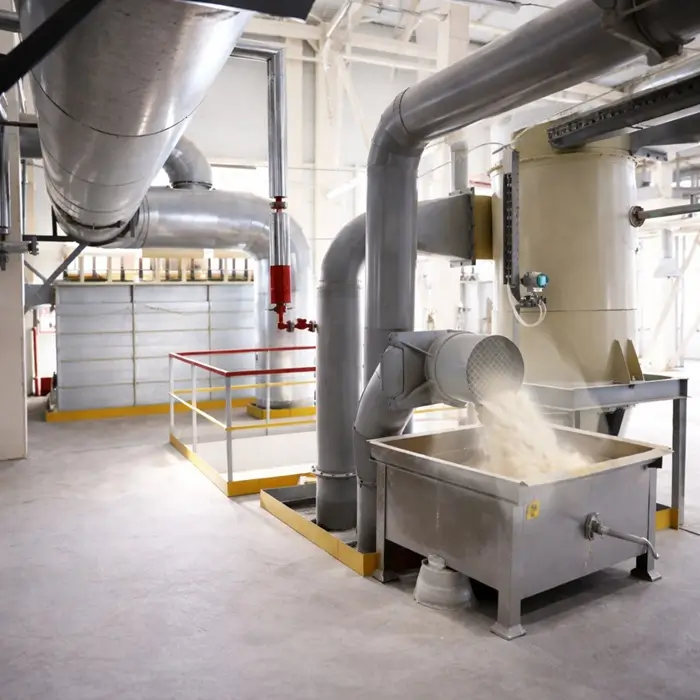
  • Operator emptying a powder bag into an enclosed dump station, managing powder dustiness with local exhaust ventilation.

    Managing Powder Dustiness in Industrial Plants

    Powder dustiness is a measurable property, not a housekeeping detail. When you connect powder dustiness to specific handling steps, equipment design, and containment choices, you can reduce exposure, explosion risk, cross-contamination, and cleaning effort in a structured, defensible way. Table of contents Every plant has [...]

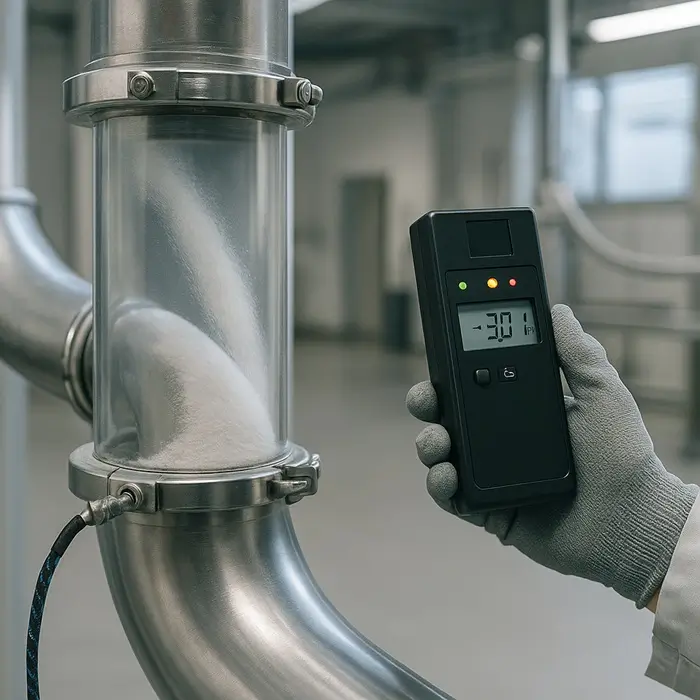
  • Electrostatic troubleshooting powder handling with silo discharge, warning sign, and charge meter.

    Electrostatic Troubleshooting in Powder handling

    Electrostatic troubleshooting in powder handling addresses particle properties, environmental factors, and equipment design. Structured control improves safety, stabilises flow, and protects product quality across industries. Table of contents Why Electrostatic Troubleshooting in Powder Handling Matters Electrostatics show up in very familiar ways. Powders cling [...]

newsletter icon

News And Articles In Your Inbox

Sign up and receive PowderTechnology.info news, articles, and content from our partners in a quick and easy monthly newsletter.
You have been successfully subscribed.
There was an error trying to subscribe. Please try again later.

More Dustiness Articles

Editor’s Picks