
Shear Properties
Shear properties describe how materials respond to forces that cause layers within them to slide relative to one another. These properties are critical in industries like pharmaceuticals, food, and construction, where understanding material flow, stability, and strength is essential for efficient processing and reliable product performance.
On this page, explore the principles of shear properties, methods for their measurement, and their applications in optimizing material handling and processing.
Featured Shear Properties Articles
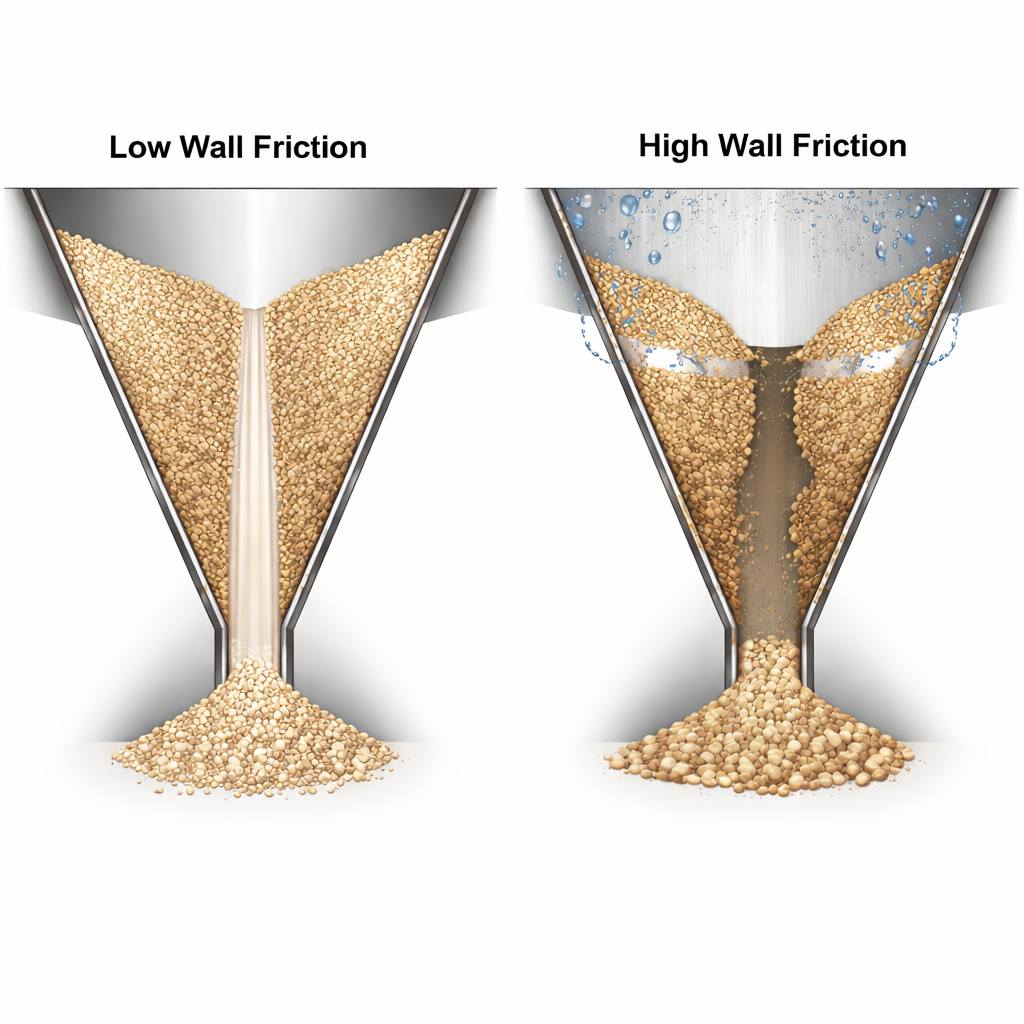
Wall Friction Drift in Hoppers: Why Discharge Degrades Over Time
Many hopper issues are boundary-limited. Wall friction drifts upward over time, so discharge fails even when specs look unchanged. Measure wall friction at operating stress and humidity, then fix the wall first. This is not arching theory This is not a generic “bad flowability” story. It is [...]
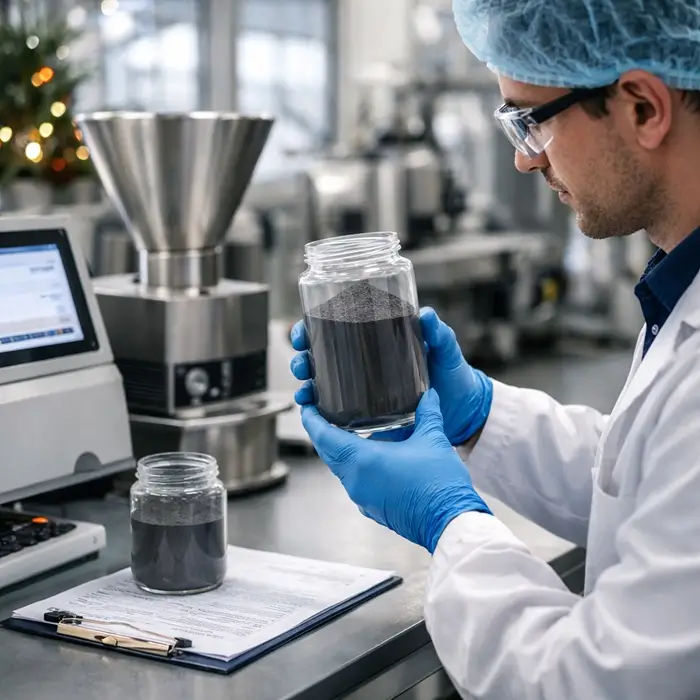
Graphite Under the Tree
In the Holiday rush, winter humidity shifts and faster throughput can break powder flow, so trend PSD, moisture, density, and flow to prevent clogs and quality drift. A winter powder quality control plan is key. Table of contents Winter powder quality control for the Christmas [...]
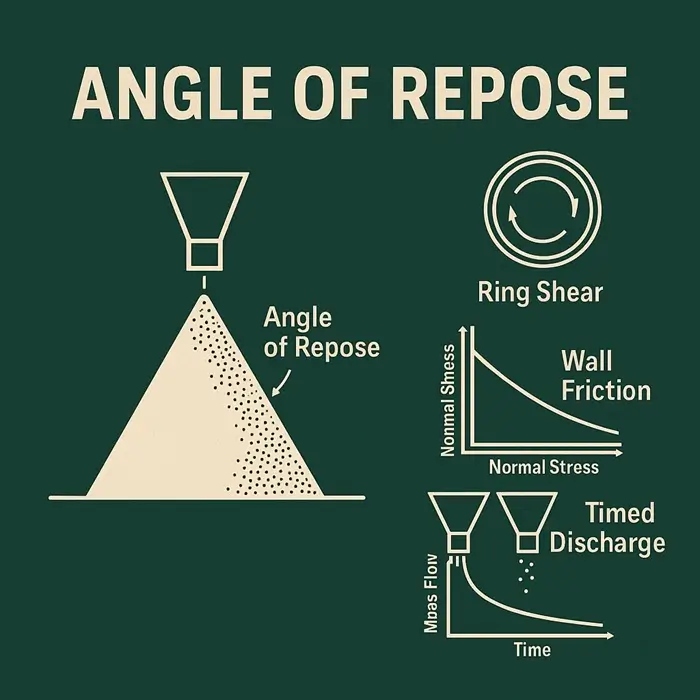
Angle of Repose Is Not a Flowability Test
The angle of repose and flowability are related, not equal. Use the angle as a quick screen, then decide with density, timed discharge, shear, and wall friction data. The angle of repose and flowability feel linked because a cone seems intuitive. However, small method changes shift the result [...]

Selecting and Comparing Powder Flow Test Methods (including PDF guides)
No single flow test defines powder behaviour completely. Each method measures different aspects, so the right choice connects lab data with real process performance. Table of contents Introduction: Why flow tests are not interchangeable Powder handling drives output, cost, and quality. Yet people still [...]

Deep-Sea Particle Dynamics, Through a Powder Lens
vDeep-sea particle dynamics show powder engineering mechanics in powder dynamics. Deep trenches act as natural particle processors. Marine snow, fecal pellets, and mineral dust form fast-sinking aggregates that carry microplastics and fines to the seafloor. The same physics governs industrial powders. Shape, density contrast, aggregation, and turbulence set fate and wear. Engineers can [...]

News And Articles In Your Inbox
Sign up and receive PowderTechnology.info news, articles, and content from our partners in a quick and easy monthly newsletter.
More Shear Properties Articles
- Published On: 31 January 2026
- Published On: 20 December 2025
- Published On: 1 November 2025
- Published On: 1 October 2025
- Published On: 13 September 2025
 Published On: 28 June 2025
 Published On: 6 April 2025
 Published On: 19 January 2024
 Published On: 11 November 2023