

SUBJECT
Feature Article
PUBLICATIONS
Browse publications
Explore PTI articles, Insights, Know How, and technical publications related to this subject.
 10 October 2026
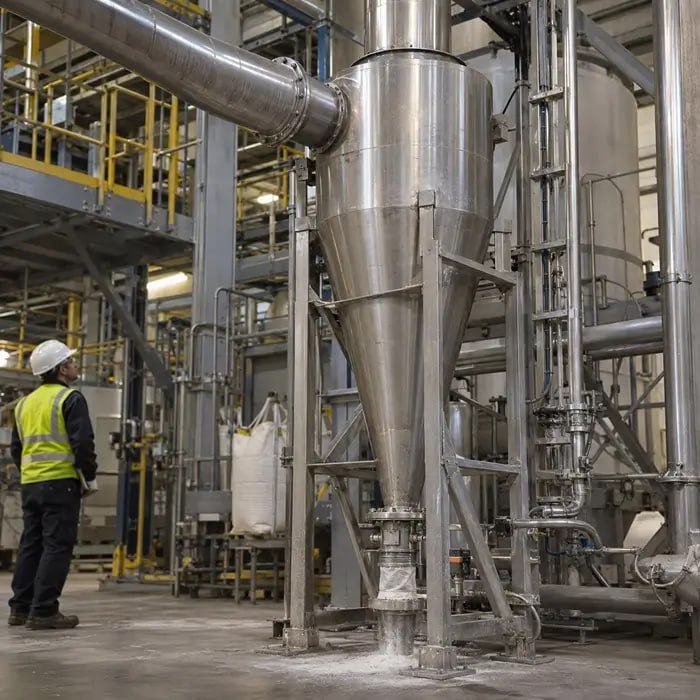
Cyclone Separation of Fine Powders: Cut Size, Efficiency Curves, and Agglomeration
The classical cyclone cut size model assumes discrete, non-agglomerating particles. Cohesive or moisture-sensitive fines can travel through a cyclone as agglomerates instead, which changes what a PSD result actually tells you about classifier performance.
Feature Article
 3 October 2026
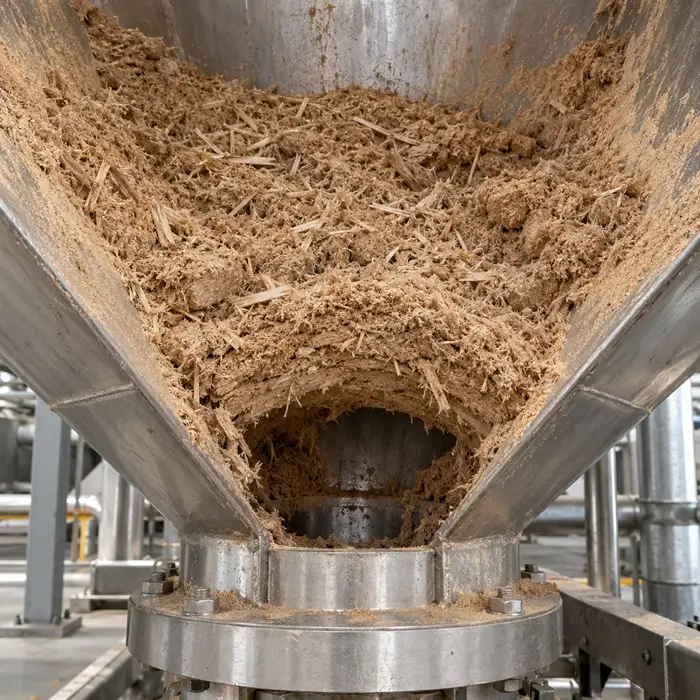
Wood Powder Feeding Problems: Separating Moisture Effects From Particle Interlocking
Wood powder can bridge because fibrous particles mechanically interlock, because moisture increases [...]
Feature Article
 26 September 2026
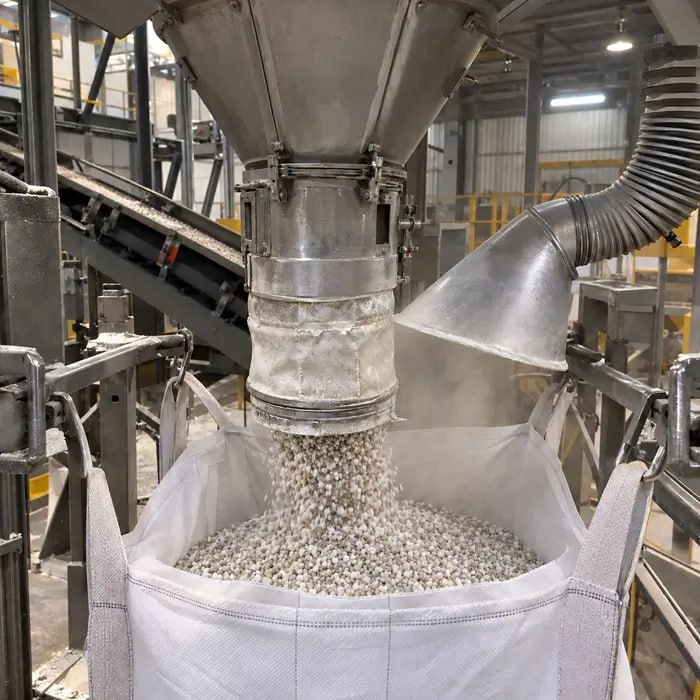
Fertilizer Powder and Granule Handling: Segregation, Caking, and Dust Control
Bulk-blended fertilizer fails in three recurring ways: segregation between straight materials of different size and density, hygroscopic caking in urea and ammonium nitrate under humidity cycling, and dust release during bagging. Each failure mode maps to a specific diagnostic test rather than a single generic powder check.
Feature Article
 19 September 2026
Vacuum Conveying for Fine and Hazardous Powders: Containment, Velocity, and Filter Design
Vacuum conveying contains by default: any breach draws air inward rather than pushing powder out. That containment advantage comes with a fixed pressure budget, and filter design competes directly with conveying velocity for every millibar of available driving force.
Feature Article
 12 September 2026
Co-Processed Excipients in Continuous Manufacturing: How Particle Engineering Changes Powder Flow and Compaction Performance
Co-processing engineers particle morphology, density, and surface structure into a single composite excipient particle. Flow function and compactibility testing show what that buys formulators on continuous direct compression lines, and where it does not.
Feature Article
 5 September 2026
GRCop-42 and the Copper Powder Feedstock Problem in Laser Powder Bed Fusion
Copper reflects most near-infrared laser light and conducts absorbed heat away faster than almost any other engineering metal. GRCop-42's move into commercial powder catalogs shows how feedstock morphology, oxide content, and particle size distribution are being engineered around that problem rather than worked around it.
Feature Article
 29 August 2026
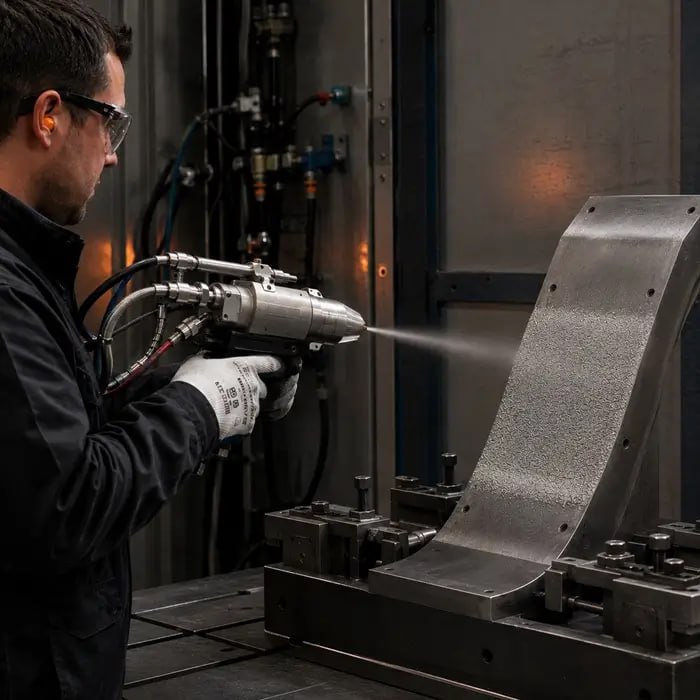
Cold Spray Powder Deposition: Particle Velocity, Oxide Layers, and Why Some Powders Won’t Bond
Cold spray coatings form only when particles clear a critical impact velocity, a threshold set by material properties, particle size and morphology, and native oxide condition. This article looks at what powder-side QC can flag before a spray trial, and where it stops short of predicting deposition efficiency.
Feature Article
 22 August 2026
Triboelectric Separation: Using Charge Difference to Sort Plastics and Minerals Instead of Fighting It
Triboelectric separation turns contact electrification from a handling hazard into a deliberate sorting mechanism. This article covers how material pairs are selected by charge polarity, what feed moisture and particle size do to separation efficiency, and where the technique sits relative to density and optical sorting.
Feature Article
 15 August 2026
FDA’s Proposed Hub-and-Spoke Distributed Manufacturing Rule: What It Means for Blend Uniformity and Granulation Consistency
FDA's proposed hub-and-spoke registration rule treats geographically separate manufacturing units as one establishment. The registration paperwork is new; proving that blend uniformity, granulation endpoints, and moisture behavior actually match between sites is the older, harder problem.
Feature Article
 8 August 2026
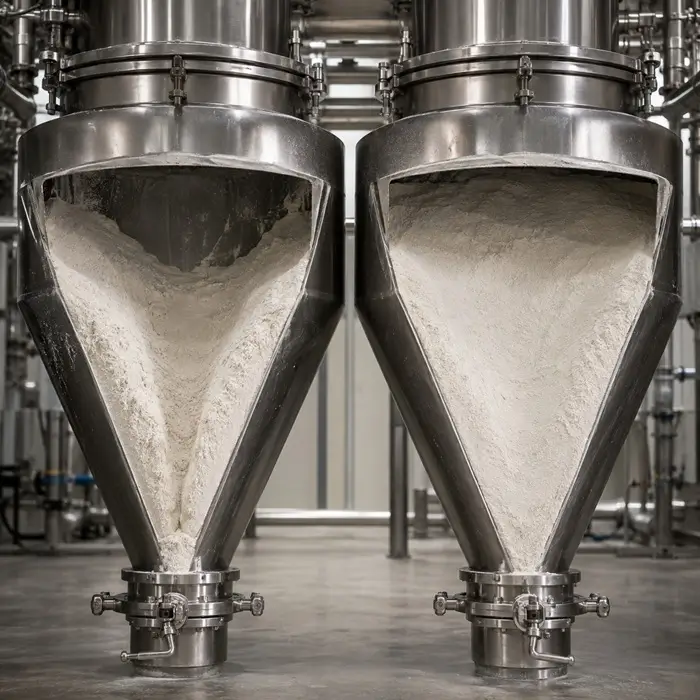
Powder Spreading in Powder Bed Fusion: What Recoater Interaction Reveals About Layer Defects
Powder spreading in powder bed fusion is a recoater-powder interaction shaped by cohesion, particle size distribution, and particle shape. This article maps streaking, short-feeding, and layer non-uniformity back to their underlying mechanisms and separates powder-driven causes from blade wear and spreading speed.
Feature Article
 1 August 2026
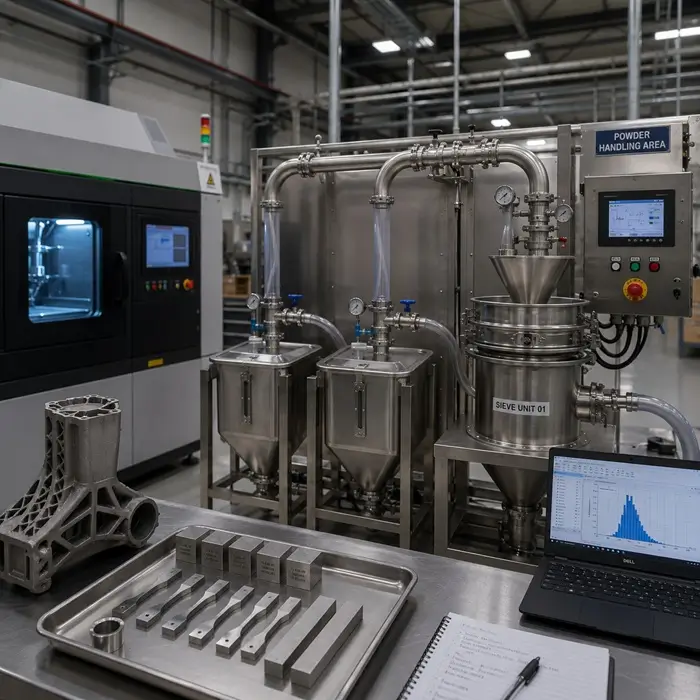
Virgin-to-Reused Powder Blend Ratios in Aerospace PBF-LB Qualification: Where the Decision Actually Sits
As aerospace metal additive manufacturing capacity expands, more reused powder is going back into qualified builds. The virgin-to-reused blend ratio decision depends on PSD shift, satellite formation, and morphology drift, and cannot be settled by a single powder check disconnected from the part's stress state.
Feature Article
 25 July 2026
Dense-Phase vs Dilute-Phase Pneumatic Conveying: Matching Conveying Mode to Attrition and Segregation Risk
Dense-phase and dilute-phase pneumatic conveying create different particle contact mechanics, and the resulting attrition and segregation risk depends on velocity, solids loading ratio, and the powder's own attrition sensitivity, not on a fixed assumption about which mode is gentler.
Feature Article