
Recycling and resource recovery

Recovered material behavior
across sorting, separation, drying and reuse

Polymer flakes, recovered powders, reclaimed fibers, cullet, metal fines, mineral fines, electronic fragments, carbon-rich residues and mixed fuel fractions are not one category

Composition, particle size, liberation, moisture, bulk density, contamination and process history decide whether a recovered stream sorts cleanly, separates at the cut point you set, discharges from the hopper, feeds at a steady rate, dries evenly and meets the specification of whatever process takes it next. This page connects what you are seeing on the line to the mechanism behind it and the measurement that settles it.
Icon representing recovered material routes

By material type

Polymer flakes, recovered powders, reclaimed fibers, paper and cellulose, cullet, metal fines, mineral fines, electronic fragments, carbon-rich residues, mixed fuel fractions.

Icon representing recurring recovered material behavior routes

By observed behavior

Feed variation, contamination, poor liberation, separation losses, fines, dust, moisture sensitivity, unstable feeding, breakage, segregation, carryover, and material yield loss.

Icon representing recovered material measurement routes

By measurement route

The test that clearly separates one likely mechanism from another under realistic recovered-material handling, separation, sorting, and processing conditions encountered.

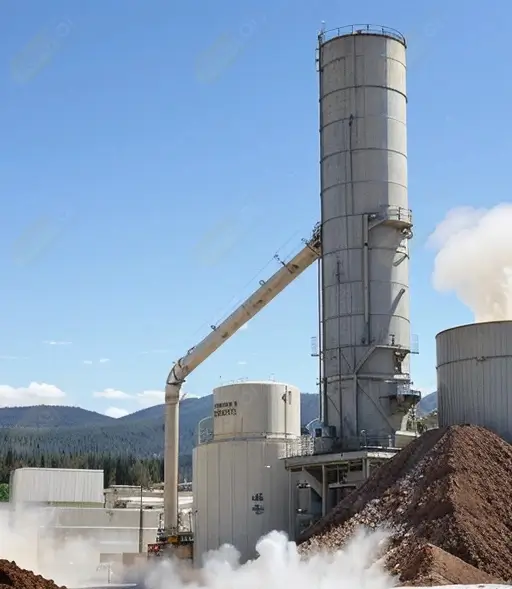
Icon representing process area routes

By process area

Intake, sorting, size reduction, screening, separation, washing, drying, classification, densification, blending, storage, recovery, reprocessing, recycling, and reuse.

Find your route

Start with the recovered stream, then the behavior

Recovered materials do not behave as one category. Pick the polymer, fiber, cullet, metal, mineral, electronic, carbon-rich or mixed residual class, then the behavior you are seeing on the line. The result names the mechanisms worth separating, the measurement to start with, and where in the process it usually shows up. It is a triage route, not a diagnosis.

  1. 1Material
  2. 2Behavior
  3. 3Route

Step 1  What are you handling?

Step 2  What are you seeing?

Step 3  Your route

Material routes

Ten recovered streams, ten behavior profiles

Resource recovery handles polymer flakes and regrind, ground powders and fines, reclaimed fibers, recovered cellulose, cullet, metal turnings, mineral fines, laminated electronic fragments, carbon-rich residues and mixed residual fractions with very different compositions, particle sizes, densities, moisture responses, liberation states and contamination histories. Each class has its own behavior profile, so the most useful route starts with the material before moving to the visible process problem.

Mixed recycled polymer flakes and regrind in a shallow stainless-steel sample dish

Recycled polymer flakes and regrind

Post-industrial and post-consumer polymer fragments vary in size, shape, polymer type, contamination, moisture, and thermal history. These differences affect feeding, melting, filtration, and reuse.

Polymer typeFeedingMelt
Fine recovered polymer powder and grinding fines in a shallow stainless-steel sample dish

Recovered polymer powders and fines

Powders and fines from grinding, sorting, handling, and reprocessing can create dust, segregation, poor flow, rapid melting, and inconsistent recycled blends during downstream reuse.

FinesDustBlend
Reclaimed textile fibers and opened fluff in a shallow stainless-steel sample dish

Reclaimed textile fibers and fluff

Recovered fibers vary in length, composition, entanglement, finish, moisture, and contamination. Opening, cleaning, sorting, and blending determine whether they can be reused consistently.

LengthEntanglementBlend
Recovered paper and cellulose fibers in a shallow stainless-steel sample dish

Recovered paper and cellulose fibers

Recovered cellulose streams differ in fiber length, ash, coatings, moisture, ink, adhesive residue, and previous processing damage. These factors affect repulping, classification, and reuse.

Fiber lengthAshResidue
Crushed glass cullet and glass fines in a shallow stainless-steel sample dish

Glass cullet and glass fines

Cullet and glass fines require control of size, color, ceramic contamination, metals, organics, moisture, and sharp irregular particles before remelting or alternative reuse.

ColorContaminantsRemelt
Metal granules, turnings, and fines in a shallow stainless-steel sample dish

Metal granules, turnings, and fines

Recovered metal fractions vary in alloy, shape, oxidation, oil contamination, moisture, density, and particle size. Reliable separation and reuse depend on accurate qualification.

AlloyOxidationSeparation
Crushed mineral and construction fines in a shallow stainless-steel sample dish

Mineral and construction fines

Concrete, brick, gypsum, asphalt, mineral wool, and aggregate fines vary in mineralogy, moisture, particle size, contaminants, residual binder content, bulk density, and composition.

MineralogyMoistureFines
Shredded electronic and composite fragments in a shallow stainless-steel sample dish

Electronic and composite fragments

Electronic, laminated, and composite waste requires liberation of tightly bonded materials before metals, polymers, glass, and functional components can be separated.

LiberationPurityRecovery
Black carbon-rich recovered powder in a shallow stainless-steel sample dish

Carbon-rich recovered materials

Recovered carbon black, char, graphite-rich fractions, and carbonaceous residues vary in ash, volatiles, surface area, contamination, and previous thermal exposure.

AshSurface areaVolatiles
Mixed residual and recovered-fuel fraction in a shallow stainless-steel sample dish

Mixed residual and fuel fractions

Mixed residual and recovered-fuel streams contain variable combinations of polymers, paper, textiles, wood, minerals, metals, moisture, contaminants, ash, and chlorine.

CompositionAshHeating value

Quick comparison

Material route, common risk, first measurement

The same symptom points to different mechanisms depending on the recovered stream, its composition, particle size, liberation state, moisture condition, contamination history and process step. This is the fast bridge between recovered material behavior and the most useful first measurement route. The rows follow the same order as the cards above.

Recovered material routes, the handling or processing risk each one carries most often, and the measurement worth running first.

Material routeCommon handling or processing riskUseful first measurement
Recycled polymer flakes and regrindContamination, mixed polymers, poor feeding, moisture, inconsistent melting, and filtration problemsPolymer identification, particle size, moisture, contamination level, and melt behavior
Recovered polymer powders and finesDusting, segregation, oxidation, poor flow, rapid melting, and variable blend compositionParticle size distribution, moisture, bulk density, flowability, and polymer type
Reclaimed textile fibers and fluffEntanglement, bridging, contamination, variable fiber length, moisture, and blend inconsistencyFiber length, composition, moisture, bulk density, and contamination level
Recovered paper and cellulose fibersMoisture variation, ash, adhesive residue, shortened fibers, poor separation, and inconsistent repulpingFiber length, moisture, ash content, composition, and surface contamination
Glass cullet and glass finesCeramic contamination, metals, color mixing, sharp fragments, fines, and inconsistent remeltingParticle size, color composition, moisture, and contaminant identification
Metal granules, turnings, and finesMixed alloys, oxidation, oil contamination, irregular shape, fines, and separation lossesAlloy composition, particle size, moisture, oxidation, and bulk density
Mineral and construction finesMixed mineralogy, moisture, gypsum or organic contamination, excessive fines, and variable binder residueParticle size, moisture, mineralogy, composition, and contaminant content
Electronic and composite fragmentsIncomplete liberation, hazardous carryover, mixed materials, dust, and poor separation selectivityComposition, particle size, liberation analysis, density, and contaminant screening
Carbon-rich recovered materialsVariable ash, oxidation, volatiles, agglomeration, contamination, and inconsistent surface propertiesAsh content, surface area, volatiles, moisture, and particle size
Mixed residual and fuel fractionsVariable composition, moisture, metals, chlorine, ash, inconsistent feeding, and unstable energy valueComposition, moisture, ash, chlorine, particle size, and calorific value

One risk per row is the one most often reported, not the only one that occurs. Use the selector above to work a specific combination through to a route.

Recurring problems

Start from the behavior you can see

These eight come from your own route card and comparison table: variable feed composition, contamination and carryover, poor liberation, separation losses, fines and dust, moisture and drying variation, feed and flow instability and particle breakage. Each is one idea rather than three, so the card and the mechanism list line up. Each card runs back to the mechanisms worth separating and forward to the measurement that confirms which one is governing.
Icon representing variable feed composition

Variable feed composition

Source · Blend ratio · History

Icon representing contamination and carryover

Contamination and carryover

Impurity · Residue · Transfer

Icon representing poor material liberation

Poor material liberation

Bonding · Breakage · Release

Icon representing separation losses

Separation losses

Purity · Recovery · Misplacement

Icon representing fines and dust generation

Fines and dust generation

Attrition · Yield · Exposure

Icon representing moisture and drying variation

Moisture and drying variation

Washing · Storage · Reabsorption

Icon representing feed and flow instability

Feed and flow instability

Bridging · Density · Feeding

Icon representing particle breakage and degradation

Particle breakage and degradation

Strength · Cycles · Properties

Measurement routes

The test that answers your question

Recovered material behavior rarely resolves to one number. Composition, contamination, particle and fiber size, liberation, moisture, bulk density, flowability, dustiness, blend uniformity, breakage resistance, ash and thermal history can all contribute to the same visible process symptom. Pick the method by the question, not by the symptom.

Composition, purity, and contamination

Composition and contaminant analysis
Bulk composition, alloy and polymer identification, trace metals, chlorine, and the contaminants that limit reuse.

Surface contamination and chemistry
Oils, adhesives, inks, coatings, oxidation, and surface residues that survive washing and affect downstream bonding.

Particle size, fiber length, and liberation

Particle and fiber size distribution
Fines, oversize, fiber length, cut point performance, and the spread that drives screening and separation.

Microscopy, morphology, and liberation
Attachment between phases, degree of liberation, fragment shape, smearing, and composite fracture behavior.

Moisture, drying, and consolidation

Moisture content and drying behavior
Free and bound moisture, drying curves, reabsorption during storage, and moisture held by absorbent fractions.

Caking and consolidation testing
Blocking under load and humidity, consolidation in silos and bags, and storage limits for a damp recovered fraction.

Flow, density, and feeding

Flowability and shear testing
Cohesion, consolidation under load, wall friction, arching and bridging tendency, and feeder discharge.

Bulk and tapped density
Packing, density variation between deliveries, compressibility, volumetric feed accuracy, and transport efficiency.

Fines, dust, and segregation

Dustiness and fines release
Dust released at shredding, screening, and transfer, respirable fraction, yield loss to extraction, and exposure.

Blend uniformity and segregation testing
Blend ratio consistency between recovered and virgin material, sampling, and separation during transfer and storage.

Degradation, ash, and thermal history

Attrition, breakage, and degradation
Breakage under impact and abrasion, fines generation through recovery loops, and property loss across reuse cycles.

Ash, loss on ignition, and thermal history
Ash and inorganic residue, volatile and organic content, residual binder, and previous thermal exposure.

Compare every method All test methods on the site, grouped by the question they answer.

Process routes

Where the behavior actually shows up

The same recovered stream behaves differently depending on where it sits in the process. Intake, sorting, size reduction, screening, physical separation, washing, drying, densification, blending, feeding and storage each expose a different property, a different contamination pathway and a different failure mode.

01

Intake, sampling, and verification

Sampling, weighing, inspection, moisture control, and composition checks define incoming condition and guide processing.

02

Sorting and initial pre-cleaning

Manual, optical, mechanical, and sensor-based sorting remove unwanted materials and divide mixed streams into more consistent fractions.

03

Size reduction and liberation

Shredding, cutting, crushing, milling, and granulation expose attached materials while controlling damage, heat, and fines generation.

04

Screening and classification

Screens, sieves, air classifiers, and other separators divide materials by particle size, shape, mass, density, or aerodynamic behavior.

05

Physical separation

Magnetic, eddy-current, density, electrostatic, optical, and ballistic methods separate materials using physical differences.

06

Washing and cleaning

Washing, friction cleaning, flotation, and surface treatment remove soil, oils, labels, salts, coatings, and process residues.

07

Controlled drying and conditioning

Drying temperature, residence time, airflow, bed depth, cooling, and storage condition determine residual moisture, reabsorption, and whether a fraction feeds predictably.

08

Densification and agglomeration

Compaction, pelletizing, briquetting, and agglomeration improve bulk density, feeding, transport, storage, and overall downstream processing efficiency.

09

Blending, feeding, and storage

Recovered fractions must be blended and delivered consistently without segregation, bridging, contamination, moisture uptake, or quality drift.

Go deeper

Guides and articles for recovered materials

Longer reads that work through the mechanisms behind these routes, from the visible handling problem to material properties, measurement choice and interpretation.

Black mass powder recovered from shredded lithium-ion batteries

Black mass powder quality

What makes recovered black mass usable or unusable, which contaminants matter, and the measurements that separate a saleable fraction from a rejected one.

Recovered metal powder being qualified for reuse in powder metallurgy

Powder reuse, life cycle assessment and circular manufacturing

How reused metal powder changes across cycles, what oxidation and morphology drift do to it, and where the environmental case actually sits.

Recovered powder fractions collected for recyclability assessment

Powder recyclability in manufacturing

Where recovered powder can substitute for virgin material, what limits the substitution rate, and how to qualify a recycled fraction before it goes into production.

Define recovered-feed operating windows

A recovered stream can remain within specification while changes in composition, moisture, contamination, particle size, liberation, process history, or storage move it outside its operating range.

Choose tests for variable recovered materials

Test selection should distinguish incoming variability, liberation and separation efficiency, processing damage, and recovered-output quality rather than relying on a single specification.

Control fines without sacrificing material recovery

Reducing dust and fines can improve handling and purity, but excessive removal may discard valuable material or alter the composition and performance of the recovered fraction.

Qualify recovered materials for reliable reuse

A recovered fraction should be evaluated against its intended next process, including feeding, melting, bonding, formulation, mechanical properties, product quality, and acceptance limits.

FAQ

Recovered material questions

The most important distinction is usually not the visible symptom itself but the mechanism behind it. Similar symptoms can result from composition drift, contamination, incomplete liberation, separator cut point, moisture, fines generation, segregation, particle breakage, or interaction between the material, the equipment and the storage environment.
Recovered material carries its history with it. Collection route, season, upstream sorting performance, storage time, humidity, washing and drying condition, and the number of recovery cycles already completed can all shift how the same nominal stream sorts, separates, feeds and dries.
The useful method depends on the question. Composition and contaminant analysis may help with acceptance and purity, while particle size, liberation, moisture, bulk density, flowability, dustiness, blend uniformity, attrition or ash and loss on ignition may be more relevant for separation, feeding, drying and reuse quality. A useful test program starts with the suspected mechanism rather than a standard list of measurements.
Start with the information you already have. Use the material route when the recovered stream class is known, the behavior route when a visible handling or separation symptom is driving the investigation, and the measurement route when you already know which property or test family needs evaluation.
Laboratory testing is useful when the symptom does not reveal the controlling mechanism, when several causes are plausible, or when a new supply route, sorting configuration, separator setting, wash or drying step, blend ratio with virgin material, or reuse application needs evaluation before implementation. Test conditions should reproduce the relevant moisture, load, temperature and storage environment as closely as practical.
Yes. Purity loss, yield loss, unstable feeding, dust, caking, uneven drying or variable reuse performance can result from several interacting factors. Complementary measurements can help separate effects such as composition, particle size, liberation, moisture, density, cohesion, breakage resistance and material history.

Need the measurement, not just the guidance? PowderTechnology.info works closely with Delft Solids Solutions,
a contract research organization specializing in the physical behavior of powders and granules. DSS provides
contract testing and characterization, with its laboratory working in accordance with ISO 17025.
Contact Delft Solids Solutions.

Delft Solids Solutions logo