
Table of contents

Winter powder quality control for the Christmas production rush
A dead battery in a new toy, or faded ink on a card, can start as a powder issue. During the Christmas rush, plants run longer hours and accept fewer rechecks. Meanwhile, winter microclimates appear across docks, warehouses, and dosing rooms. As a result, powders that behaved well in September can suddenly clog, cake, or disperse poorly; that’s why you need a winter powder quality control plan.
Graphite, carbon black, titanium dioxide, silica, and many other powders sit behind holiday packaging, electronics, and coatings. Yet small shifts in particle size, moisture uptake, or electrostatic behaviour can ripple through a whole line. Therefore, seasonal control matters, even when the formulation stays unchanged.
Why the End-of-Year rush exposes powder weak points
Winter adds two stressors at once, environment and throughput. Heating, cold storage, and open docks create fast humidity swings inside one facility. At the same time, demand compresses schedules, so teams shorten quarantine time. In addition, rush sourcing can introduce new lots with subtle differences.
Because powders respond strongly to humidity, temperature, and handling history, failures can look random. However, they usually track back to a measurable change in powder behaviour.
Common peak season symptoms include:
-
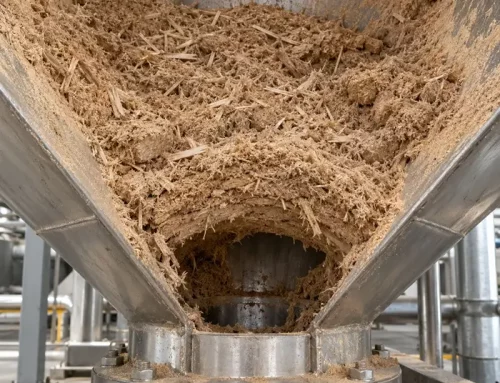
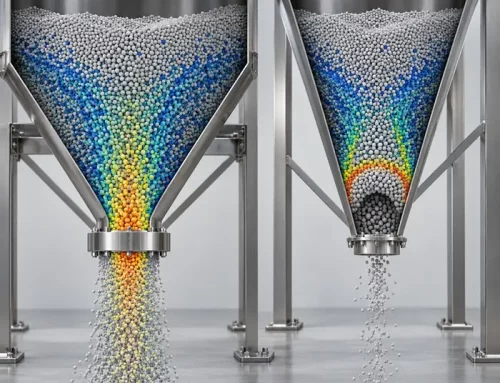
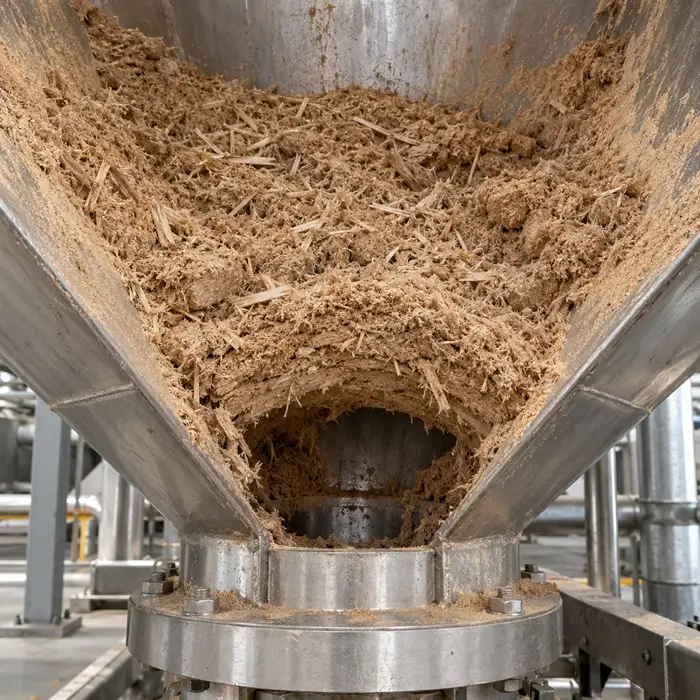
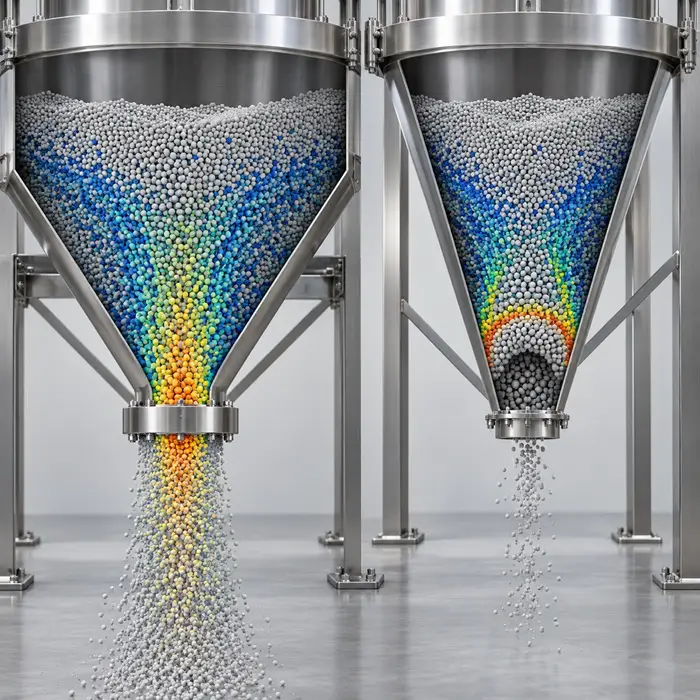
Hopper ratholing or bridging, especially after weekend holds
-
Static cling and wall build-up near bag dumps and feeders
-
Agglomerates surviving blending, then showing up as defects later
-
Coating streaks, haze, or colour drift in inks and coatings
-
Conductivity spread in carbon-filled polymers or battery electrodes
Nobody wants a line stop when the last pallets must ship before the holidays.
Particle size distribution sets the baseline
Particle size distribution drives packing, mixing efficiency, and dispersion quality. Even a small shift in median size, or the fine tail, can change dustiness and cohesion. Therefore, PSD should anchor winter release decisions.
Laser diffraction remains a strong tool for fast PSD checks. It converts scattering patterns into a distribution that you can trend by lot. That trend often matters more than a single pass or fail number. Check out ISO 13320:2020
Practical winter actions:
-
Trend D10, D50, and D90 by supplier lot, not only batch code.
-
Watch the fine fraction, because it drives dust, cohesion, and charging.
-
Revalidate dispersion settings after supplier changes or shift changes.
Graphite shows the risk clearly. Oversized particles can scratch sensitive coating hardware and raise wear. Too many fines can increase surface area, raise binder demand, and increase agglomeration. As a result, electrode density and resistivity can drift without a recipe change.
Flowability shifts when humidity moves
Even with stable PSD, powders must discharge reliably from hoppers and feeders. Winter magnifies both static and cohesion, although the direction depends on the material and site climate. Low humidity often increases electrostatic charging in fine carbons and polymer powders. Those powders can stick to walls and resist dosing. Higher humidity can create liquid bridges and increase cohesion, especially in hygroscopic systems.
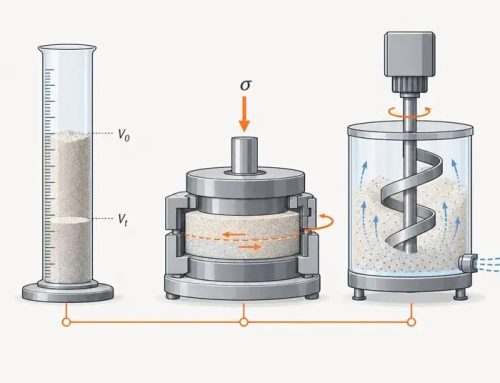
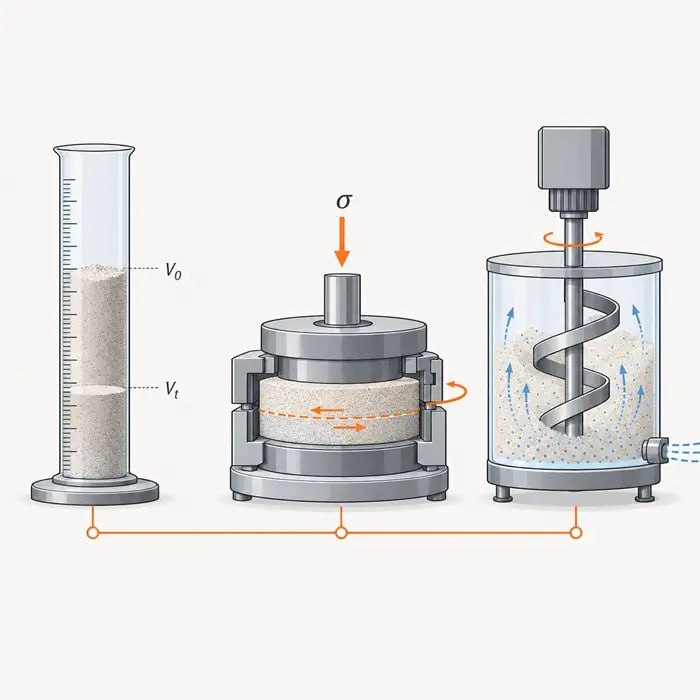
You need data that reflects your real handling conditions. Powder rheometry can map dynamic flow energy under controlled states. However, many plants also build strong screening stacks with simpler tools.
A practical flow check stack:
-
A dynamic flow check for high risk powders and critical lines
-
A shear cell test when hopper discharge failures cost real downtime
-
A fast screening metric, such as Hausner ratio, for trending drift
When flow starts to fail, start with the simplest levers:
-
Stabilise humidity at receiving, dosing, and packaging points.
-
Improve grounding and implement antistatic handling routines.
-
Control fill and discharge rates, because shear history changes behaviour.
-
Use flow aids only after you confirm the dominant mechanism.
Read the ASTM Standard Test Method for Shear Testing of Bulk Solids Using the Jenike Shear Tester
Density and compaction reveal handling history
Peak season logistics increase storage time and vibration exposure. Powders compact under their own weight and during transport. Tap density testing captures how packing evolves under repeated settling. That value links to hopper behaviour, re dispersion time, and sometimes final performance.
Interpretation needs context. A higher tap density can indicate better packing and fewer voids. However, it can also signal tighter beds that break apart slowly during mixing. Meanwhile, low and unstable density can flag segregation risk during transport.
Useful winter practices:
-
Record bulk density and tap density together, because the ratio flags compressibility.
-
Trend density by lot and storage duration, not only by production date.
-
Add an after hold recheck for powders stored longer than one week.
Moisture sorption is the silent driver
Moisture rarely announces itself early. Instead, it shifts flow, adhesion, and agglomeration over time. Winter heating, cold docks, and uneven ventilation create local humidity swings. Therefore, the same powder can behave differently between two lines.
Dynamic vapour sorption testing can map uptake versus relative humidity. The curve shows where a powder moves from stable to risky. In practice, the most useful output is the threshold where uptake accelerates.
Translate sorption data into controls:
-
Define a storage humidity limit for each moisture-sensitive powder.
-
Choose liners, barriers, or desiccants based on that limit.
-
Set a maximum open time at point of use near bag dumps.
Moisture can also raise microbial risk in some organic powders. In many inorganic powders, the bigger risk is caking or surface change. Therefore, link the risk statement to the specific material class.
Winter powder quality control plan, you can run fast
Seasonal pressure rewards simple, repeatable checks. You need a plan that catches drift early without slowing output. For many plants, trending delivers the highest value with the lowest friction.
A practical checklist:
-
Incoming lots: PSD screen, moisture screen, and quick dispersion check.
-
Before blending: confirm storage time and recheck density after long holds.
-
During processing: trend flow metrics and reject early, not after mixing.
-
After changes: revalidate after supplier, dryer, or milling setting changes.
-
In the plant: stabilise humidity where powders get opened and dosed.
If you only add one habit, add batch trending. It turns holiday chaos into a controlled dataset. As a result, you detect drift before customers do.
Why this matters for holiday products
Batteries need consistent conductive networks and stable electrode density. Coatings need stable colour strength and viscosity across long runs. Packaging lines need reliable feeding and dosing, even on night shifts. Therefore, the seasonal story shows up as downtime, scrap, and late shipments.
Graphite under the tree is a festive image. It also captures a real plant truth: peak demand makes powders less forgiving. Keep powder behaviour stable, and the season stays smooth.