Featured

Discover handpicked Featured Content related to powder technology and material sciences. Dive into selected articles, videos, and editor’s picks showcasing the latest innovations and insights. Your premier destination for curated updates in the dynamic world of powders and materials.

Featured Articles
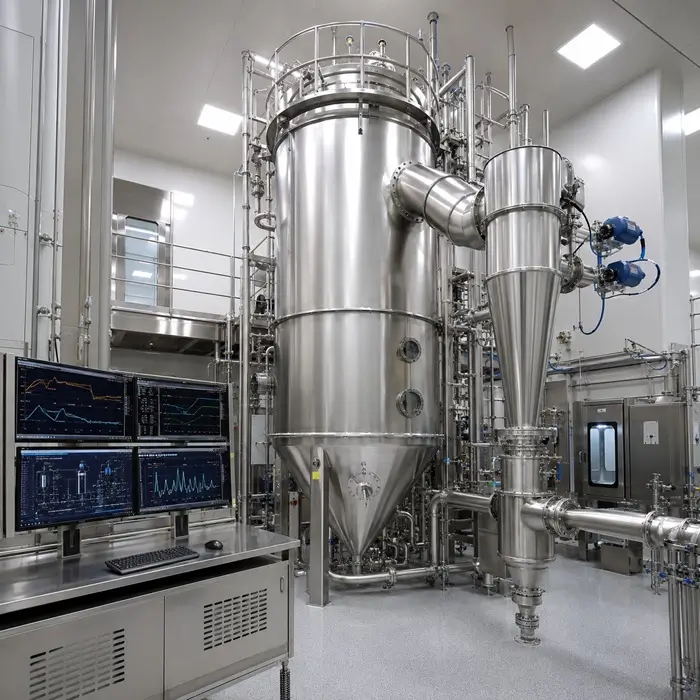
  • Photorealistic view inside a pharmaceutical spray drying facility with a stainless steel spray dryer, cyclone separator, product collection lines, inline NIR sensor probes and process monitoring screens.

    Spray Drying 4.0: Real-Time PAT, AI Process Control, and What Engineers Actually Gain

    Process analytical technology combined with machine learning is changing residual moisture control and yield prediction in pharmaceutical and food spray drying. The gains are real but bounded, and the off-line test panel has not been replaced.

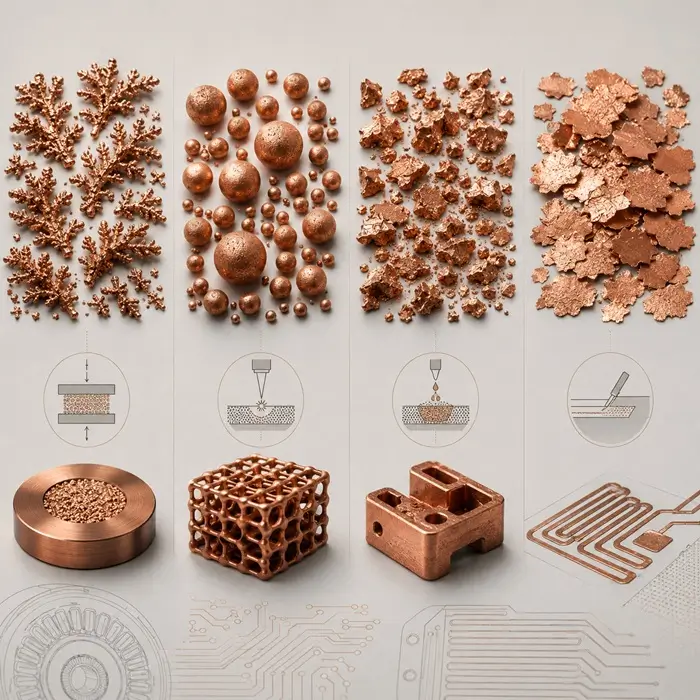
  • Technical comparison of copper powder morphologies used in electrification applications, including dendritic, spherical, irregular, and flake copper particles.

    Copper Powder for Electrification: Why Morphology, Purity, and Packing Density Are Now Engineering Variables

    Sintered contacts, additive manufactured heat exchangers, EV motor components, and conductive pastes each require a different copper powder. This article explains why morphology, particle size distribution, oxygen content, and packing density are engineering variables, and how to specify them correctly for electrification applications.

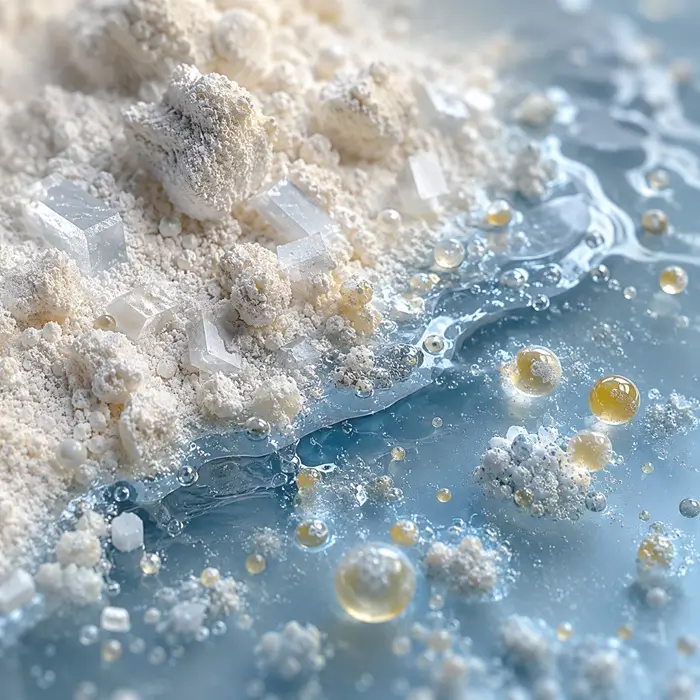
  • Macro view of pharmaceutical powder particles, crystals, and lipid droplets at the interface with an aqueous medium, illustrating surface contact and early dissolution of poorly soluble APIs.

    Poorly Soluble APIs: How Surface Contact Shapes Dissolution and Bioavailability

    Poorly soluble APIs now represent the majority of the pharmaceutical development pipeline. Dissolution and oral bioavailability are determined by molecular solubility, surface wetting behavior, solid-state stability, and how the formulation interacts with the GI environment from first contact onward. Amorphous dispersions, lipid systems, nanocrystals, and co-crystals each rely on different surface mechanisms to deliver their intended advantage.

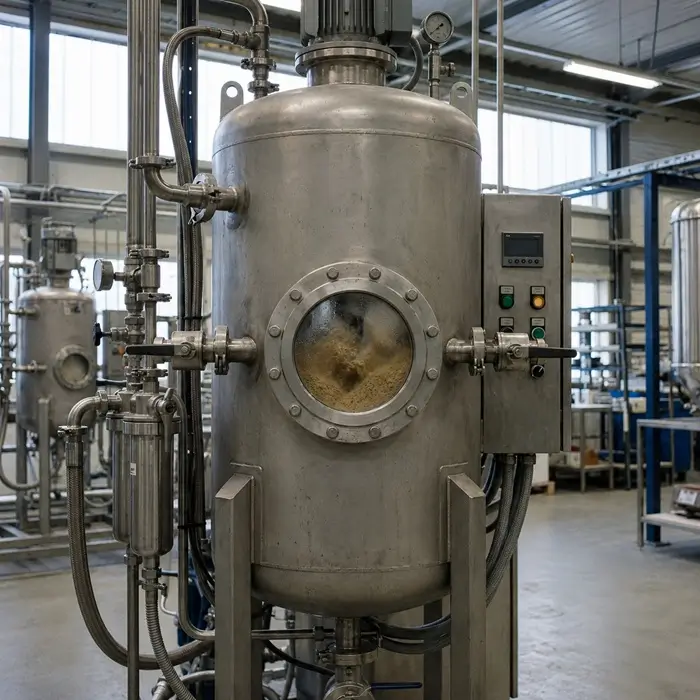
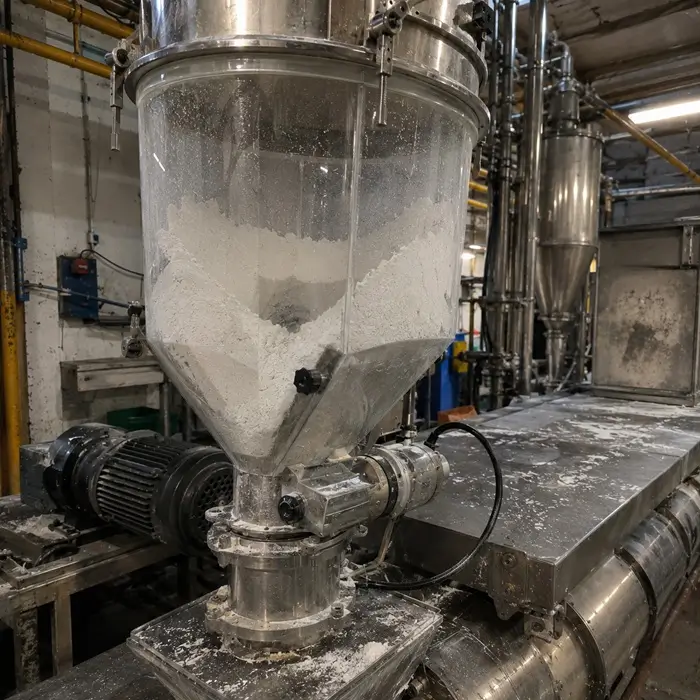
  • Calcium carbonate powder bridging inside a transparent feeder hopper on a polypropylene compounding line.

    Calcium Carbonate Powder in Polypropylene: Dust Suppression and Dosing Errors

    Dust suppression oil can reduce airborne calcium carbonate dust, but it may also increase powder cohesion. In polypropylene compounding, that change can disturb loss-in-weight feeder refill behavior, causing bridging, rat-holing, delayed settling, and unstable screw feed. Before changing the feeder hardware, check whether the calcium carbonate surface treatment has altered the powder’s flow [...]

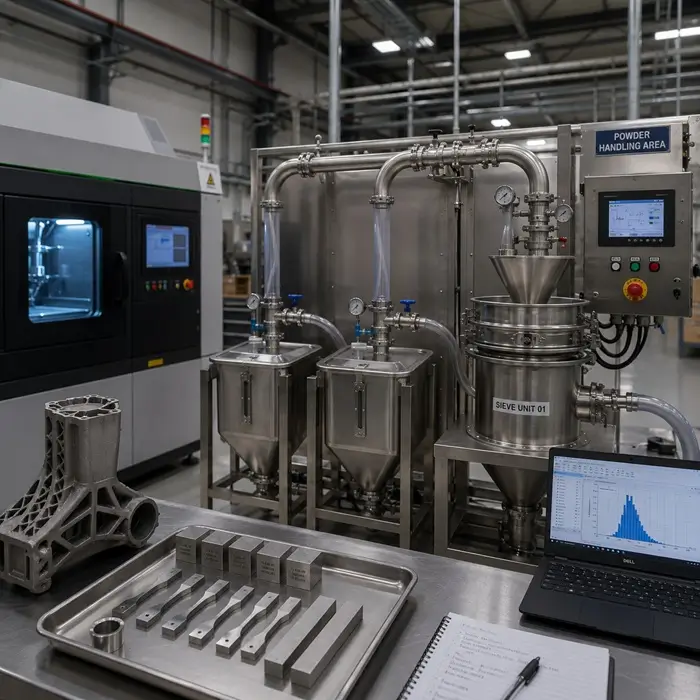
  • Real-time particle characterization system linking inline powder sensors, process data, and hybrid models for powder process control.

    Real-Time Particle Characterization and Process Control

    Real-time particle characterization is moving powder processing from delayed laboratory checks toward inline sensors, soft sensors, and hybrid models that support faster process decisions. The major shift is the interpretation of sensor signals through particle-scale mechanisms. Pressure, vibration, acoustic, optical, thermal, and process data can increasingly be linked to changes in particle size, [...]

newsletter icon

News And Articles In Your Inbox

Sign up and receive PowderTechnology.info news, articles, and content from our partners in a quick and easy monthly newsletter.

You have been successfully subscribed.
There was an error trying to subscribe. Please try again later.

Editor’s Picks

Delft Solids SolutionsPorosity and Surface Area Characterization 2024 Banner Promotion