

Pharma & biotech
Powder behavior in
pharmaceutical & biotech production
APIs, excipients, granules and biologics are not one category
Particle size, moisture sensitivity, cohesion, electrostatic behavior, bulk density, particle strength and surface properties decide whether a pharmaceutical powder flows, cakes, segregates, doses evenly, dusts, compacts, or disperses. This page connects what you are seeing on the line to the mechanism behind it and the measurement that settles it.



Find your route
Start with the material, then the behavior
Pharma and biotech powders do not behave as one category. Pick the material class, then the behavior or process instability you are seeing. The result names the mechanisms worth separating, the measurement to start with, and where in the process it usually shows up. It is a triage route, not a diagnosis.
- 1Material
- 2Behavior
- 3Route
Step 1 What are you handling?
Step 2 What are you seeing?
Step 3 Your route
Material routes
Pharma and biotech material classes
One site may handle micronized APIs, excipients, granules, low-dose blends, lyophilized and spray-dried powders, inhalation grades, potent compounds and dry process media. Each class carries its own behavior profile, so the most useful route starts with the material.
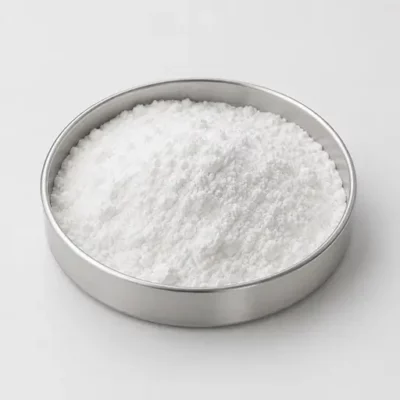
Active pharmaceutical ingredients and micronized drug substances
Micronized and low-dose drug substances are cohesive, charge readily, and can shift behavior with small changes in particle size distribution.
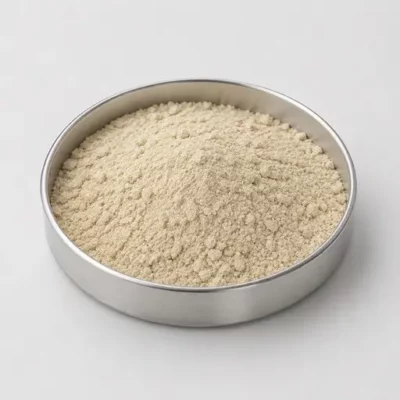
Excipients and functional formulation powders
Excipients set flow, compaction, lubrication, disintegration, and overall blend uniformity throughout manufacturing and downstream processing.
Granules, intermediates, and tablet blends
Granules and blends must hold their particle size distribution and composition through transfer, feeding, compression, and capsule filling.
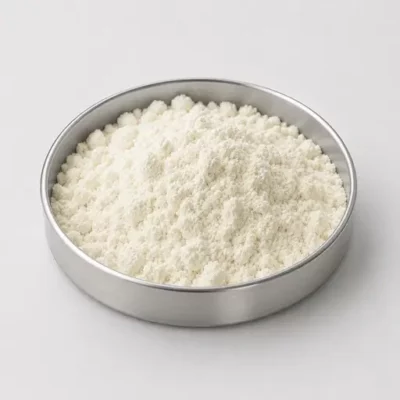
Biologics, lyophilized, and spray-dried powders
Largely amorphous powders are sensitive to moisture, handling stress and morphology change, and can shift once the glass transition falls near the storage temperature.
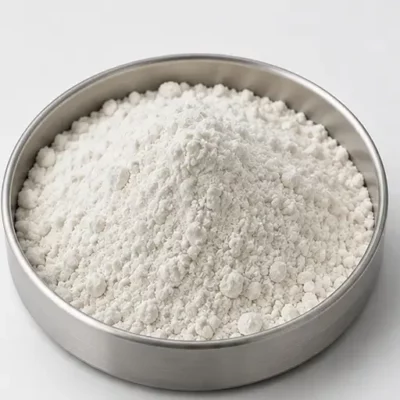
Inhalation, potent, and low-dose powders
Fine and highly potent powders demand control of dispersion, containment and charging, and the aerodynamic size fraction usually governs performance.
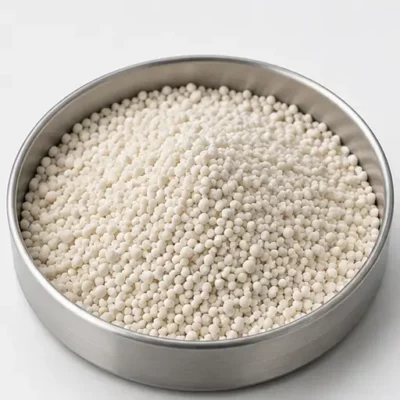
Cell-culture media and biotech process powders
Complex dry media combine hygroscopic components, broad particle size distributions, dissolution requirements, and segregation risk during preparation.
Quick comparison
Material class, common risk, first measurement
The same symptom points to different mechanisms depending on the material class, the dose level and the process step. This is the fast bridge between the two.
| Material type | Common risk | Useful first measurement route |
|---|---|---|
| APIs and micronized drug substances | Cohesion, agglomeration, and dose variability | Particle size distribution, morphology |
| Excipients and functional formulation powders | Flow variation, segregation, and compaction behavior | Bulk density, flowability |
| Granules, intermediates, and tablet blends | Segregation, attrition, and blend non-uniformity | Particle size distribution, friability |
| Biologics, lyophilized, and spray-dried powders | Moisture uptake and structural change | Moisture content, sorption behavior |
| Inhalation, potent, and low-dose powders | Fine-particle control, charging, and containment | Particle size distribution, dustiness |
| Cell-culture media and biotech process powders | Caking, dissolution variation, and segregation | Moisture, particle size |
One risk per row is the one most often reported, not the only one that occurs. Use the selector above to work a specific combination through to a route.
Recurring problems
Start from the behavior you can see
These eight cover what actually gets reported in pharmaceutical and biotech plants. Each one runs back to the mechanisms worth separating and forward to the measurement that confirms which one is governing.






Also covered: bridging & arching, adhesion. All symptoms
Measurement routes
The test that answers your question
Pharma and biotech powder behavior rarely resolves to one number. Particle size, moisture, cohesion, bulk density, morphology, segregation tendency, electrostatic behavior and particle strength can all sit behind the same visible symptom. Pick the method by the question, not by the symptom.
Process routes
Where the behavior actually shows up
The same formulation behaves differently depending on where it sits in the process. Each step exposes a different property and a different failure mode.
Go deeper
Guides and articles for pharma and biotech powder behavior
Longer reads that work through the mechanisms behind these routes, from the visible process problem to material properties, measurement choice and interpretation.


FAQ
Pharma and biotech powder behavior questions
Need the measurement, not just the guidance? PowderTechnology.info works closely with Delft Solids Solutions,
a contract research organization specializing in the physical behavior of powders and granules. DSS provides
contract testing and characterization, with its laboratory working in accordance with ISO 17025.
Contact Delft Solids Solutions.
