
Table of contents
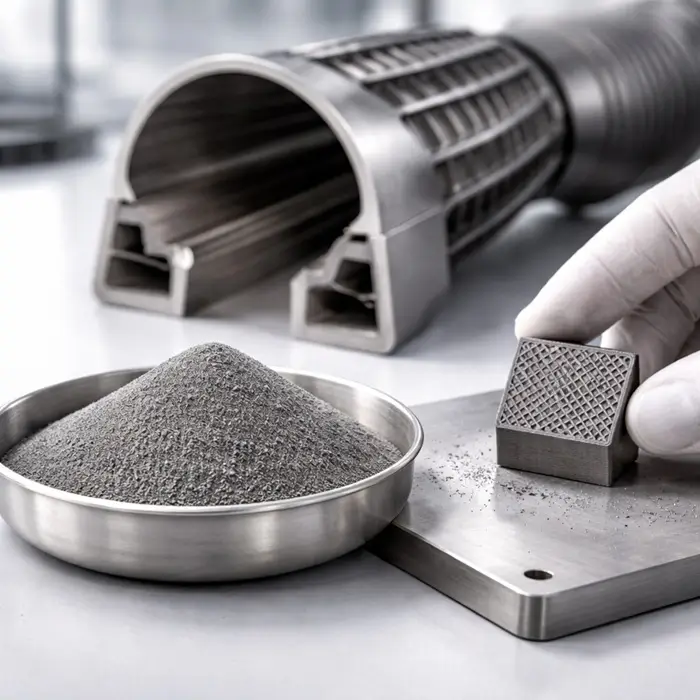
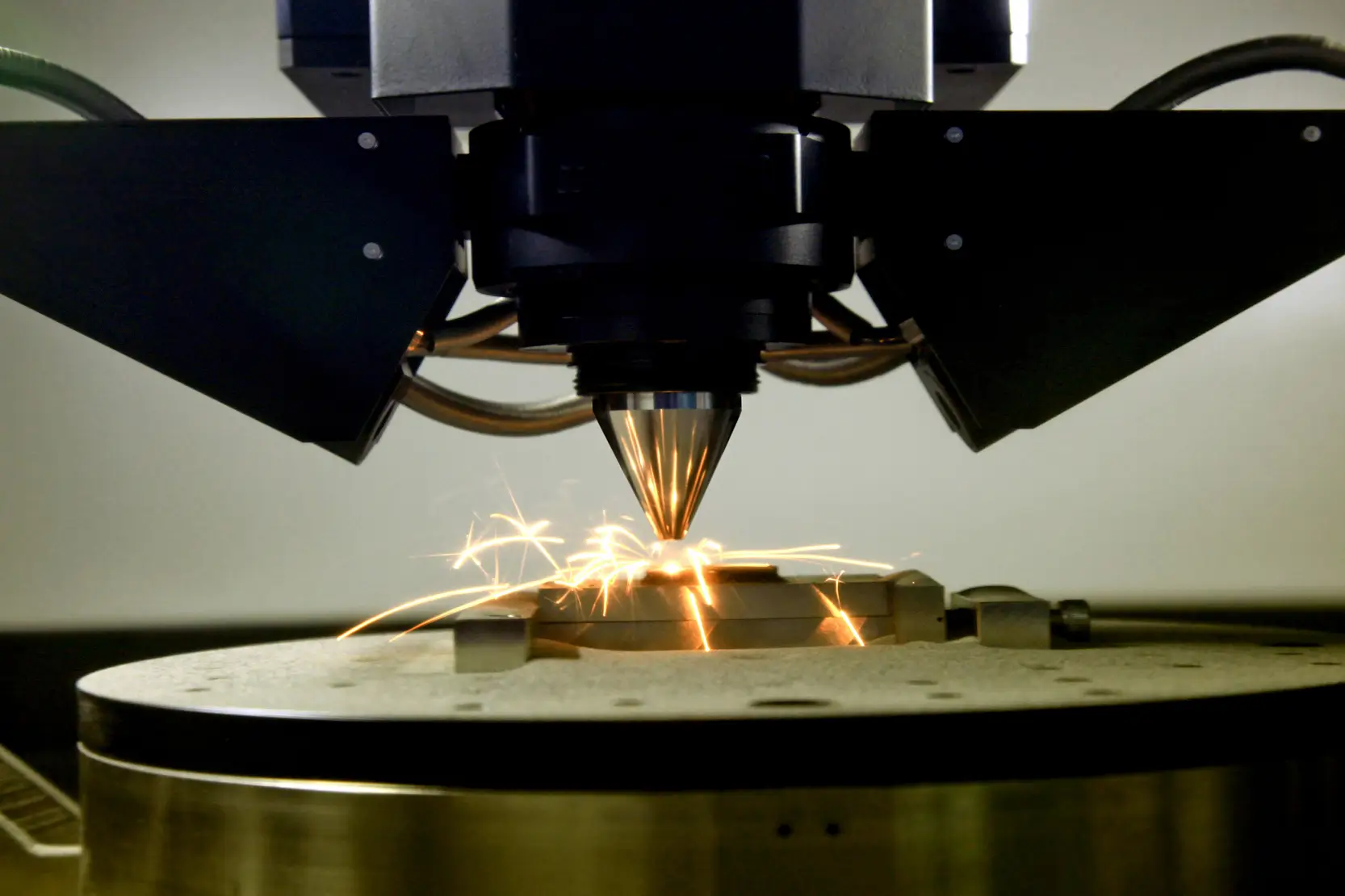
Rocket engines push materials into temperature and stress regimes where familiar superalloys start to lose margin. That pressure is driving renewed interest in concentrated refractory alloy powders for rocket propulsion, especially where additive manufacturing can unlock cooling geometries that conventional routes cannot produce.
Refractory metals such as tungsten, tantalum, molybdenum, and niobium offer extreme melting points and strong high-temperature strength. However, they also bring known liabilities. Oxidation risk rises quickly at elevated temperatures. Room temperature brittleness can be severe. Processing becomes difficult because these elements do not behave politely in melting and casting.
The current shift is not a simple return to refractory metals. It is a move toward complex, multi-element refractory alloys produced as powders with controlled chemistry and repeatable print behavior. For propulsion hardware, the powder is not a feedstock detail. The powder defines what the part can become.
Why refractory alloys are back on the propulsion roadmap
Reusable propulsion pushes two stresses hard at the same time. It pushes temperature capability, and it pushes cyclic durability. That combination exposes the limits of strength-only thinking.
In a chamber, injector, or nozzle section, failure rarely comes from a single property. It comes from an interaction. Thermal gradients create stress. Stress drives cracking. Cracking accelerates oxidation and hot gas attack. Once oxygen penetrates, strength and ductility fall further. Historical nozzle material work shows why refractory systems stay relevant.
Refractory-based alloys are attractive because they can keep meaningful strength at temperatures where many superalloys soften. Yet that advantage only matters if the material system can survive the real environment, including oxygen exposure and thermal cycling.
What makes complex concentrated refractory alloys different
Complex concentrated refractory alloys place several refractory elements in the same alloy system, often near equiatomic proportions. Many candidate systems favor a body-centered cubic solid solution, which can support high temperature strength and useful deformation modes at elevated temperature.
This design approach expands the property design space, but it also expands the risk space.
First, composition control becomes harder. Small deviations in volatile elements can shift phase stability and local microstructure.
Second, interstitials become critical. Oxygen, nitrogen, and carbon can embrittle many refractory systems at low levels. This matters during powder making, powder handling, and printing.
Third, oxidation protection becomes non-negotiable. Most refractory systems need a strategy, either by alloying, coatings, or both.
Why conventional powder making struggles
For many alloys, gas atomization works well. You melt a master alloy, atomize it, and screen the powder. For multi-element refractory systems, that simplicity can break down.
Several refractory elements have very different melting points and vapor pressures. During melting and atomization, selective evaporation can shift composition. Segregation can occur during solidification. The result is not just imperfect powder. It is powder where chemistry varies from particle to particle, which then prints as a variable microstructure.
If your target is repeatable additive manufacturing, particle-level homogeneity is not a luxury. It is a requirement.
Solid state electrolytic reduction as a powder synthesis route
Solid-state electrolytic reduction offers a route that avoids full melting of the alloy. The concept resembles FFC Cambridge-style processing.
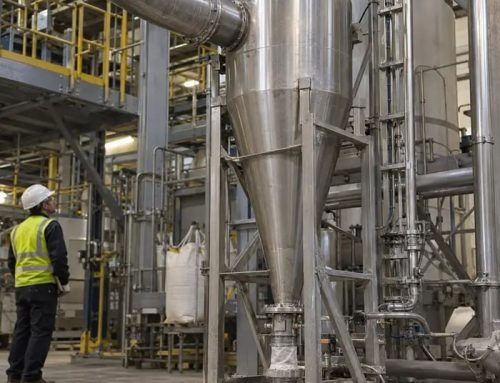
You start with a blended oxide precursor that contains the desired metal oxides. You compact and sinter it into a porous cathode. You immerse the cathode in a molten salt electrolyte, often calcium chloride, and apply an electrical potential that drives oxygen removal from the solid.
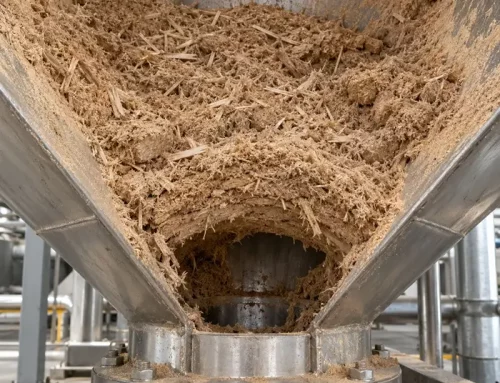
As oxygen leaves the oxide network, a metallic skeleton forms. That skeleton can then be converted into powder by controlled comminution, and in some concepts by hydriding and dehydriding to enable fracture into smaller particles.
Why this route is attractive
It avoids the main failure modes of melt atomisation, especially selective evaporation and composition drift.
Because the alloy never reaches a full liquid state, volatile elements are far less likely to boil off and shift the chemistry.
It also lets you combine refractory elements with very different melting points, since reduction and solid-state diffusion build the alloy network without relying on a perfectly mixed melt.
The practical risks you must manage
Uniform reduction across a mixed oxide body is not automatic. Some oxides reduce more easily than others. If reduction proceeds unevenly, you can lock in chemical gradients inside the metallic skeleton.
Interstitial pickup becomes a central risk. Refractory alloys can lose ductility with small changes in oxygen and nitrogen. This means atmosphere control, electrolyte purity, and post-reduction handling need discipline.
Particle morphology is another challenge. This route does not naturally yield spherical particles. If you need powder bed fusion, you must either add a spheroidization step or you must choose a process window that tolerates less ideal morphology.
Check out our article – Laser Spheroidization of Titanium Powders
Concentrated refractory alloy powders for rocket propulsion: the powder quality window
This is where the topic becomes a PowderTechnology feature instead of an aerospace essay. The engine component is the motivation. The powder window is the story.
For laser powder bed fusion, powder behavior sets layer quality, and layer quality sets defect formation. For refractory alloys, that link is tighter because cracking sensitivity can be high and oxidation margins can be narrow.
Powder properties that actually control build outcomes
Particle size distribution
A narrow, controlled distribution supports uniform spreading and stable packing. Many systems use cuts in the tens of microns for powder bed fusion. The exact range depends on the machine and recoater strategy, so treat any single number as typical, not universal.
Particle morphology and satellites
Spherical particles spread and pack more predictably. Satellites and irregular shapes raise interparticle friction and can create local packing defects. Packing defects translate into a lack of fusion and porosity.
Flowability and shear stability
Powder flow is not only does it pour. It is whether it forms stable layers under the recoater. Cohesive behavior, fines content, and surface condition all matter.
Apparent density and tap density
These relate to how the powder beds pack and how much energy the melt pool must absorb to densify the layer.
Interstitial content and surface chemistry
Oxygen and nitrogen do not just affect metallurgy. They affect processability through embrittlement and crack sensitivity, and they can change melt pool behavior through oxide films.
Internal porosity in particles
Gas trapped inside particles can become pores in the part. That matters in high-pressure propulsion hardware.
What to measure, and how to interpret it
Powder engineers need measurements that connect to decisions. This is the minimum set that supports that.
Particle size distribution
Use laser diffraction or dynamic image analysis. Confirm with sieve cuts for production control.
Decision link: if fines rise, flow and layer uniformity often degrade. Reclassify, de-agglomerate, or adjust the process to stop fines growth.
Morphology and satellites
Use SEM or optical image analysis with shape metrics. Track satellite fraction and surface roughness trends.
Decision link: higher satellite content often correlates with poorer spreading and higher defect probability.
Flow and packing behavior
Use a powder rheometer, a rotating drum method, or at least funnel flow plus bulk density measures. Avoid relying on a single-angle metric as a pass fail test.
Decision link: if flow metrics drift, expect recoater disturbances and local density variation in the powder bed.
Oxygen and nitrogen
Use inert gas fusion analysis, and track trends batch to batch.
Decision link: rising interstitials increase crack risk and reduce toughness. Tighten storage, drying, and handling, and audit every exposure point.
Moisture control
Even if the alloy is not hygroscopic, moisture can raise surface oxidation risk during processing. Measure dew point in storage and in the build chamber purge conditions where possible.
Decision link: treat moisture as a variability driver. Control it to protect the surface condition and repeatability.
A practical failure vignette: what “powder drift” looks like
A team qualifies a refractory alloy powder and prints stable coupons across several builds. A later batch arrives with a slightly higher fines fraction and a modest oxygen increase. On paper, it still meets the headline specs.
On the machine, the first warning is mechanical rather than metallurgical. The recoater starts leaving faint streaks, and the powder bed looks less even. The team compensates by adjusting energy density, but cracks begin to form around high-stress features, and porosity remains visible even after HIP.
This is a familiar failure sequence. Layer stability drifts first, then local defects concentrate stress, and a brittle system becomes less forgiving. Oxygen and surface oxides amplify that sensitivity. By the time tensile results fail, the powder and layer behavior already point to the root cause.
The lesson is simple. For these alloys, incoming powder drift is not a minor deviation. It is a primary risk variable.
Additive manufacturing integration, where powders meet thermal reality
Refractory alloy powders face two additive manufacturing problems that often dominate outcomes.
First, the energy required to melt the powder is high because melting points are high, and thermal gradients can be severe. That raises residual stress.
Second, many refractory systems have limited ductility at lower temperatures. That increases cracking risk during rapid solidification and thermal cycling.
Preheating the build plate helps by reducing thermal gradients. Scan strategy and energy density tuning also matter. However, you cannot parameter optimize your way out of unstable powder.
Post-processing is usually required. Stress relief reduces crack driving forces. Hot isostatic pressing can close porosity, but it cannot fix a chemistry problem or a persistent oxide film problem. Oxidation protection typically requires coatings, such as silicides or related barrier systems, depending on the alloy and service environment.
Early detection: how to catch instability before it becomes scrap
If you want a stable production path, you need early signals that sit upstream of mechanical test failure.
Start with layer quality indicators. Recoater streaking, powder bed roughness, and spatter behavior are practical tells. They often move before density and strength drift.
Add coupon logic that is fast and cheap. Print a small density coupon and a microstructure coupon at the start of a build series. Use CT or metallography sampling rules that are consistent. Trend the results rather than chasing single build outliers.
Finally, treat powder reuse tracking as part of process control. Track reuse cycles, blend ratios of virgin to used powder, and oxygen trend slopes. In refractory systems, the slope often matters more than the starting value.
A lean acceptance checklist for incoming powder
This is not a universal standard. It is a practical structure you can adapt to your qualified baseline.
-
PSD, including fines fraction trend versus the qualified batch
-
Morphology statistics, including satellite fraction trend
-
Apparent and tap density, trended
-
A flow metric that reflects spreading stability, not only free flow
-
Oxygen and nitrogen, trended and linked to reuse history – Example reuse release criteria
-
Moisture control, including storage dew point or equivalent handling control
-
A defined action rule, such as reclassify, dry, blend with virgin, or reject
The goal is not perfection. The goal is to catch small property shifts before they translate into unstable layers or failed builds.
Validation, from powder to flight worthy hardware
Certification is not a single test. It is a chain. Microstructure analysis must confirm phase stability and chemical uniformity. Mechanical testing must cover the relevant temperature range, including the low temperature region where brittleness can dominate.
Thermophysical properties matter because they drive thermal stress predictions. Thermal conductivity, expansion, and heat capacity feed directly into design margins.
Finally, component relevant testing is where the truth arrives. Hot gas exposure, thermal shock tests, and test stand runs expose oxidation behavior, crack growth, and coating integrity under realistic gradients and gas chemistries.
For a PowderTechnology feature, the core message is direct. You do not qualify a powder by a datasheet. You qualify it by repeatable layer behavior, repeatable part density, and stable properties across the service cycle.
Concentrated refractory alloy powders for rocket propulsion conclusion
Complex concentrated refractory alloys are an important direction for extreme environment propulsion, but the technology lives or dies on powder discipline. The most advanced alloy concept cannot survive a drifting particle population, uncontrolled interstitial pickup, or unstable layer formation.
That is why this topic belongs on PowderTechnology.info when written correctly. It is a powder engineering story, with propulsion as the proof of the case. The engineer who controls powder synthesis, classification, storage, reuse, and print readiness controls whether the alloy becomes a component or a failed build.