
Table of contents

Powder technology is at a turning point. A growing range of industries now rely on engineered particles to build components with high structural performance and extreme precision. In this context, smart powder processing in additive manufacturing links material design to digital process control.
Additive manufacturing has also changed design philosophy. The part no longer begins as a solid block. Instead, it grows from layers of optimized powders that melt, bond, and solidify under tightly controlled conditions.
At the same time, Industry 4.0 reshapes the way powders flow, react, pack, and transform inside factories. It connects sensors, robotics, predictive models, and modular equipment into a single intelligent system. Together, these two movements create a new manufacturing environment in which materials and machines operate with coordinated precision.
The collective result is a production landscape that supports aerospace turbines, orthopedic implants, electric vehicle platforms, pharmaceutical particles, and food powders at consistent quality levels. This evolution depends on advances in powder design, melt behavior, binder systems, sintering science, and data-driven control. Each step in the chain carries structure and information from the particle level to the final product.
Powders Designed for Additive Manufacturing
Atomization routes for AM powders
Additive manufacturing needs powders that behave predictably during spreading, melting, and solidification. Conventional metal powders were never designed for these conditions. They often show irregular shapes, broad size distributions, surface contamination, and inconsistent oxidation states. These features disrupt layer formation, lower packing density, and destabilize melt pool geometry.
These problems encouraged the development of AM-optimised powders. Flow behavior, size distribution, and surface chemistry are now engineered for process stability.
Gas atomization produces most current AM metals. A molten stream meets an inert gas jet that breaks the liquid into spherical droplets. These droplets cool rapidly. The solidification path is defined by strong undercooling and high cooling rates, which refine grain size and can create non-equilibrium phases.
The near spherical shape improves flow and reduces friction during spreading. Narrow size distributions support uniform layer thickness and predictable energy absorption. However, atomization technology still matters.
Gas atomization is cost-effective for a wide range of alloys, but it also creates some satellite particles. These small particles adhere to larger ones and can increase surface roughness and reduce flow. Plasma atomization uses a plasma torch to melt a wire feedstock. It produces highly spherical, oxygen-free powders with very low oxygen content, which suits reactive materials like titanium and tantalum.
Ultrasonic atomization destabilizes a thin molten film with high-frequency vibrations. It creates droplets with a relatively narrow size distribution and stable morphology. This improves layer uniformity in several AM processes.
Interstitials, contamination, and melt pool stability
Interstitial elements remain critical. Oxygen and nitrogen form brittle oxide and nitride inclusions that act as stress concentrators. They can severely reduce fatigue life and fracture toughness. Hydrogen, when overlooked, forms brittle titanium hydrides. These degrade ductility and fatigue resistance and can also contribute to porosity during thermal cycling or post-processing.
AM melt pool stability is highly sensitive to such contaminants. Even minor variations can change surface tension and Marangoni convection. The result can be keyhole instability, spatter, and local lack of fusion.
Powder reuse and degradation in L-PBF
Powder reuse adds another challenge in laser powder bed fusion (L-PBF). With each recycling cycle, powders experience thermal and mechanical stress from handling, sieving, and exposure to the build chamber environment. Oxide layers grow thicker. Satellites accumulate. Size distribution shifts as fines are removed.
Flow properties deteriorate. Hausner ratio increases. Apparent density declines. These changes directly affect layer uniformity and, therefore, part density and mechanical properties. Strict requalification protocols are needed to define safe reuse limits. Further strategies are described in our overview of powder recyclability in manufacturing.
Binder Jetting and Its Expanding Role
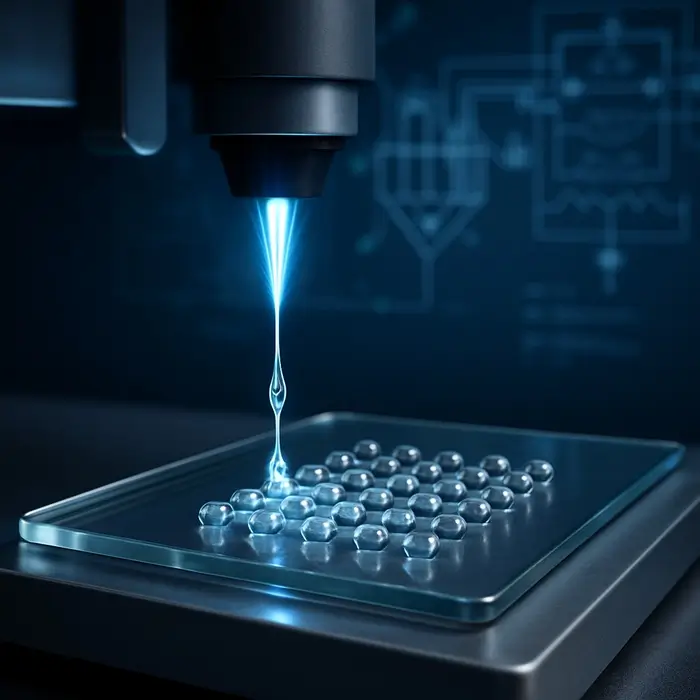
How Binder chemistry and infiltration physics Work
Binder jetting prints quickly because it does not melt the powder during building. A liquid binder traces the part shape within a thin powder bed. This creates a green structure that gains strength later during sintering. This high printing speed of the process suits automotive and consumer product manufacturing, where volume dominates. An absence of strong thermal gradients also reduces distortion and internal stress.
The physics of the process depend on binder chemistry. Systems range from simple aqueous solutions to polymer-based and nanoparticle-loaded suspensions. Formulations are tuned to control viscosity, wetting angle, and binding strength.
Binder infiltration follows capillary flow in a porous medium. The penetration depth depends on pore size distribution, binder surface tension, and powder surface energy. Successful printing requires enough infiltration to create strong green parts, but not so much that it causes bleeding and loss of resolution.
Sintering shrinkage and dimensional control
The transition from green body to fully dense part remains the most sensitive phase. Sintering shrinkage prediction is a complex multi-physics problem. It involves particle size distribution, packing density, and sintering thermodynamics. Inaccurate models lead to dimensional errors.
Industrial experience highlights the importance of specific binder and powder pairs. Examples include water-based binders with stainless steel for cost-effective tooling, or phenolic resins with silica sand for foundry molds.
Defect modes and process limitations
Defect formation modes differ from melt pool-based AM. Slumping occurs when green strength is too low to support overhangs. Warping can arise from non-uniform binder distribution or drying. Differential densification is another major challenge. Sections with different cross sections can sinter at different rates. This creates internal stresses, cracking, or distortion. Controlling these effects is central to binder jetting’s expansion into high-value, near-net shape production.
Hot Isostatic Pressing and Post-Processing Science
Mechanisms of pore closure in AM parts
Even with advanced powders and tuned parameters, AM parts can contain internal voids or incomplete fusion zones. These defects weaken fatigue resistance and reduce reliability. Hot Isostatic Pressing (HIP) helps close internal pores by applying heat and isostatic gas pressure.
The process raises the temperature into a range where diffusion and creep mechanisms become active. Dislocation creep, diffusion creep, and grain boundary sliding all contribute to void collapse. Pores shrink and close through plastic yielding and diffusion-based healing.
Process control and defect detection
HIP performance depends on tight process control. Gas purity requirements are severe, especially for superalloys and titanium. Contamination by oxygen or nitrogen can embrittle the component. Effective HIP also relies on accurate defect detection before treatment. Micro CT scanning is often used to confirm that defect populations are within closable limits.
The industry now introduces rapid HIP cycles. These use higher heating rates and shorter dwell times. They target specific pore populations without excessive grain growth. Standard HIP cycles still focus on full microstructure homogenization.
Balancing microstructure and final properties
The interaction between unique AM microstructures and HIP homogenization is a key research area. AM materials often show fine cellular structures, epitaxial grain growth, and chemical microsegregation. HIP can remove this fine-scale structure. That may improve isotropy, but it can also erase beneficial strength. Each application needs a tailored balance. The link between AM powder microstructure, HIP conditions, and final mechanical properties defines success in aerospace and medical fields.
Detailed case study on HIP-induced microstructural changes in AM parts are reviewed in Khomutov et al. (2020).
Aerospace Adoption and Material Requirements
Design freedoms enabled by AM powders
Aerospace components face intense mechanical and thermal loads. Turbine blades made from nickel based superalloys must resist creep, oxidation, and thermal fatigue. Additive manufacturing allows engineers to create advanced cooling channels, lattice reinforcements, and graded compositions. These features raise performance and reduce weight.
Powders optimized for AM support these designs by enabling reliable layer spreading and clean melting.
Qualification, fatigue, and creep behaviour
Qualification for aerospace requires a deep understanding of dynamic properties. Full fatigue (S-N) curves are needed for AM materials, which remain sensitive to residual defects and surface roughness. For hot section parts, creep rupture thresholds must be defined. They often need to meet or exceed those of cast equivalents, aided by the fine-grained AM microstructure.
A useful comparison is the difference between AM and wrought versions of the same alloy. AM Ti-6Al-4V often shows a fine, martensitic alpha prime structure. This provides higher tensile strength but lower ductility and lower fatigue crack growth resistance than the wrought, bimodal alpha-beta variant.
Managing thermal gradients and cracking
Thermal gradient cracking creates another challenge. Solidification cracking in superalloys and reheat cracking during post-process heat treatment both result from high residual stresses and inelastic strain in constrained regions. Precise control of pre-heating, scan strategy, and support structures is required to avoid these damage mechanisms.
Medical Implants and Biological Compatibility
Porous structures and bone integration
Orthopedic implants benefit strongly from AM because each device can match patient anatomy. Titanium remains the primary material because it integrates well with bone. Powders designed for AM support porous structures that allow cell growth and mechanical interlocking.
Biological response depends strongly on pore size. Pores in the 300 to 600 micrometer range often support bone ingrowth and vascularization. Smaller pores can restrict that behavior.
Residual powders and surface conditioning
Residual powder contamination is a subtle but serious risk. Trapped particles in complex lattice structures can become sites for inflammation or corrosion. Thorough post-print cleaning is required. Protocols often combine ultrasonication with chemical etching.
Surface roughness control also spans several scales. Macro roughness comes from the layer-by-layer process and support removal. Micro and nano roughness are often tuned through chemical or electrochemical treatments. These treatments promote protein adsorption and cell adhesion and help drive a favorable biological response.
Binder jetting in medical manufacturing
Binder jetting is also gaining traction in medical applications. It supports delicate shapes and porous scaffolds for certain devices. Powders need controlled size distribution, clean surfaces, and stable sintering behavior to achieve predictable shrinkage and final density.
Industry 4.0 and the Shift to Smart Processing
Inline characterisation in powder production
Powder-based manufacturing is changing rapidly under the influence of Industry 4.0. Factories now collect large amounts of data from IoT sensors in feeders, mixers, fluidized beds, sintering furnaces, and AM machines. This extends beyond simple monitoring. Data streams are combined in real time to build a richer view of the process.
In powder production, inline particle size and morphology monitoring is becoming standard. Laser diffraction and dynamic image analysis support real-time classification and feedback control.
In situ monitoring in additive manufacturing
Inside additive manufacturing machines, AI-based melt pool monitoring analyzes thermal emission data. It detects patterns that signal a lack of fusion or keyhole porosity and can trigger intervention. For complex processes like sintering and HIP, predictive control algorithms use models of powder flow and densification. They adjust furnace temperature profiles and gas pressures to compensate for lot-to-lot variation.
Digital twins and cyber-physical powder plants
The concept of digital twins for AM builds is moving into practice. A virtual replica of the part is updated in real time with sensor data. It predicts residual stress, distortion, and potential failure points before they occur.
Cyber-physical systems also enable modular powder plants. Individual units, such as atomizers, classifiers, and mixers, operate as intelligent nodes on a network. Each node can monitor its own performance, adjust settings, and reconfigure for different recipes.
Integration of Data and Material Science
Predictive models for smart powder processing in additive manufacturing
The link between additive manufacturing and Industry 4.0 grows stronger each year. AI models predict powder behavior during spreading and melting. They use flow energy, moisture uptake, and surface chemistry data to forecast print quality.
Machine learning tools evaluate melt pool radiation, acoustic signatures, and thermal emission. They detect defects early in the build. Digital twins simulate entire production lines with real sensor data. They show how small changes in humidity, particle morphology, or oxidation state might influence final part integrity.
Closing the loop from powder to part
This integration creates a closed-loop system. Powders enter the process with well-characterised properties. Sensors track their transformation at each step. AI evaluates performance and suggests adjustments. Post-processing confirms final density and microstructure. The system learns from each cycle. It updates material recipes and processing conditions accordingly.
Transformation
Powder technology now sits at the center of two major transformations. Additive manufacturing reshapes how components form. Industry 4.0 reshapes how factories think and respond.
Advanced powders support clean melting, controlled sintering, rapid binder interaction, and reliable post-processing. Smart systems support continuous optimization, predictive maintenance, and flexible production.
The aerospace sector gains lighter and more efficient engines and structural parts. Medical patients receive implants tailored to their physiology. Automotive designs evolve toward more complex internal structures and efficient power electronics. Pharmaceutical and food industries reach higher consistency through continuous and modular systems.
Each outcome arises from a deep connection between particle-level control and digital factory intelligence. Materials designed for additive manufacturing will combine with responsive digital systems to create powder-based factories that operate with precision, adaptability, and insight. In practice, smart powder processing in additive manufacturing will define which factories achieve stable quality and which fall behind.