
Table of contents

Why Electrostatic Troubleshooting in Powder Handling Matters
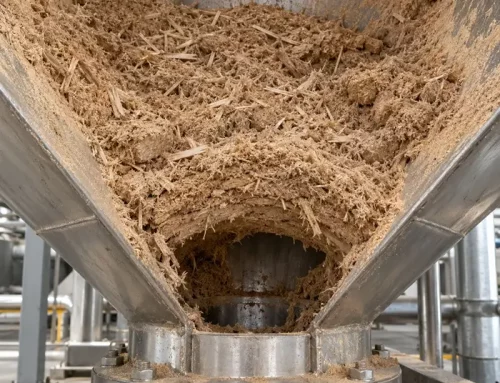
Electrostatics show up in very familiar ways. Powders cling to hopper walls after mixing. Silos empty unevenly, leaving pockets of material behind. Pneumatic lines start to crackle as charges build along the walls.
These symptoms link directly to bigger risks.
-
Safety: Discharge sparks can ignite dust clouds. Even small shocks unsettle operators.
-
Product quality: Charged particles cling to equipment or to each other. Flow changes, segregation worsens, and dosing accuracy drops.
-
Equipment reliability: Static build-up promotes blockages and raises cleaning times. In some plants it even accelerates surface wear.
I have seen systems run smoothly for months, only to fail when the weather shifts. In one food plant, sugar conveyed easily during summer. When winter came, humidity dropped, particles charged heavily, and blockages forced unplanned downtime. Situations like this explain why electrostatic troubleshooting in powder handling is not optional. Small changes in air or process conditions can cascade into safety incidents or lost production.
Fundamentals of Electrostatic Charging in Powders
Charges build when two surfaces contact and then separate. In powders, every collision counts. Inside a mixer or a conveying line, billions of particles hit each other and the equipment walls. Each contact transfers a few electrons. Over time, those small transfers accumulate.
Particle properties
Certain particle traits increase risk:
-
Size and surface area: Fine powders hold stronger charges. Their high surface-to-volume ratio creates more opportunity for electron transfer.
-
Shape: Irregular particles have more edges and asperities. They collide more often and charge more easily than smooth spheres.
-
Surface chemistry: Hydrophobic surfaces hold charge longer. Hydrophilic surfaces dissipate charge faster, especially under humid air.
Environmental conditions
Humidity changes everything. Above 40% RH, thin moisture films help dissipate charge. Below 25%, the same powder may behave unpredictably. Operators often see stable flow one season, then unexplained sticking or segregation the next.
Temperature plays a role too. Warm process air lowers relative humidity. Heated powders lose moisture films, and charges build faster.
Equipment interactions
Powders rarely interact with each other alone. They strike metal, polymer liners, filter fabrics, and flexible hoses. Some of these materials sit high on the triboelectric scale, which makes them strong charge generators.
We once checked a conveying system where every section was stainless steel and grounded — except one polymer hose near the filter. That single link held charges, produced sparks, and caused adhesion downstream. Replacing it with a conductive section fixed the issue.
Electrostatics always result from powder, environment, and equipment working together. Miss one of these, and the problem usually returns.
Recognising Electrostatic Issues
Electrostatics are not always measured first. They show themselves in process behaviour. Typical signs include:
-
Powders sticking to hopper or silo walls.
-
Segregation of fine and coarse fractions after mixing.
-
Irregular dosing or filling weights.
-
Audible crackling in conveying systems.
-
Operator shocks during discharge.
-
Analytical tests producing variable results due to poor dispersion.
When operators say, “the powder is sticking,” it is often more than a flowability problem. In many cases, it is electrostatics creating invisible forces inside the system.
Measuring Electrostatic Behaviour
Troubleshooting needs numbers, not only symptoms. Several techniques help quantify electrostatic behaviour.
Faraday pail
Powder dropped into a conductive pail connected to an electrometer reveals its total charge. Dividing charge by mass gives a charge-to-mass ratio (nC/g). This is one of the most practical ways to compare different powders or processing conditions.
Charge decay
Powders charged in a controlled way are monitored for how quickly they lose their charge. Some materials dissipate in seconds, others hold charge for hours. The difference is critical when predicting real process behaviour.
Tribocharge testing
Passing powders through tubes made of steel, PTFE, or glass shows how different surfaces influence charge. This method predicts which equipment materials will increase or reduce static build-up.
Environmental conditioning
Running the same tests under different humidity and temperature conditions often reveals thresholds. A powder may behave perfectly above 40% RH, then become difficult below 25%.
Process trials
Sometimes small pilot trials tell more than instruments. Filling a test hopper, running a short pneumatic loop, or simulating blending highlights charging in a way that operators recognise immediately.
Each method alone is limited. Together, they give a full picture of how powders behave in real systems.
Electrostatic Troubleshooting in Powder Handling: Mitigation Strategies
No single measure eliminates electrostatics. In practice, stability comes from combining several controls.
Grounding and conductivity
The starting point is always grounding. Every part of the system should be bonded. We often see problems caused by a single insulative hose or a painted flange. Replacing those weak points with conductive connections usually delivers quick results.
Environmental control
Humidity is a hidden variable. Powders that flow reliably at 45% RH may block lines at 20%. In one chemical plant, pneumatic conveying failed each winter until a humidification system was installed. Where humidity control is impossible, ionisers or neutralisers are effective alternatives.
Powder modification
Sometimes the material itself must change. Adding flow aids like fumed silica reduces contact area and lowers charge. Approved antistatic coatings help in food and pharma. In one case, simply removing excess fines resolved severe sticking — they carried most of the charge.
Equipment design
Conveying systems with sharp bends or high-velocity impact points produce more charge. Redesigning with smooth radii often helps. Inside hoppers, polished conductive surfaces outperform plastic liners. Over-mixing can be another culprit. More time in a blender often means more charge, not better homogeneity.
Process management
Troubleshooting does not end with equipment. Operators should learn to recognise static symptoms early. QA teams should include static checks in routine testing. We always advise linking electrostatics directly with dust explosion hazard assessments. It keeps safety and process reliability tied together.
In the end, electrostatic troubleshooting in powder handling is about layering controls. Grounding, humidity control, and powder treatment together solve problems that none could fix alone.
Industry Cases of Electrostatic Troubleshooting in Powder Handling
Pharmaceuticals
Carrier-based inhalation powders are sensitive to static. Fine APIs stick to lactose carriers, reducing dose uniformity. By conditioning humidity and treating carrier surfaces, reproducibility improved in one plant we supported.
Additive manufacturing
In laser powder bed fusion, static charges prevent uniform spreading of fine metal powders. This creates streaks and part defects. Switching to conductive recoater blades and grounding feed systems stabilised layer uniformity.
Food processing
Sugar and flour accumulate charge during pneumatic transport. Operators report crackling and see product stuck on filters. Installing conductive hoses and maintaining higher humidity reduced both safety risks and quality losses.
Chemical catalysts
Catalyst beads segregate when charged during transfer. In one case, a packed bed showed poor performance due to uneven particle distribution. Conductive linings and controlled neutralisers corrected the issue.
These examples prove that electrostatic troubleshooting in powder handling is not abstract. It is a practical necessity across industries.
Best Practices
Years of field work highlight several best practices:
-
Treat electrostatics as a powder property, not just a process effect.
-
Combine laboratory tests with real process trials.
-
Monitor humidity and temperature continuously.
-
Train staff to recognise static problems early.
-
Include electrostatics in hazard assessments and QA reviews.
Plants that act early spend far less time fighting recurring problems.
Closing Insight
Charges will never vanish from powder systems; every collision between particles and equipment transfers electrons. What separates reliable plants from unreliable ones is how well they control that reality.
Electrostatic troubleshooting in powder handling is not about eliminating charge. It is about managing it. Measurement, structured observation, and layered controls ensure powders remain safe and processes remain stable.
For a practical tool, the companion Electrostatic Troubleshooting Guide (PDF) provides a checklist and control matrix for quick reference in daily operations.