

SUBJECT
Aerospace Industry
PUBLICATIONS
Browse publications
Explore PTI articles, Insights, Know How, and technical publications related to this subject.
 5 September 2026
GRCop-42 and the Copper Powder Feedstock Problem in Laser Powder Bed Fusion
Copper reflects most near-infrared laser light and conducts absorbed heat away faster than almost any other engineering metal. GRCop-42's move into commercial powder catalogs shows how feedstock morphology, oxide content, and particle size distribution are being engineered around that problem rather than worked around it.
Feature Article
 8 August 2026
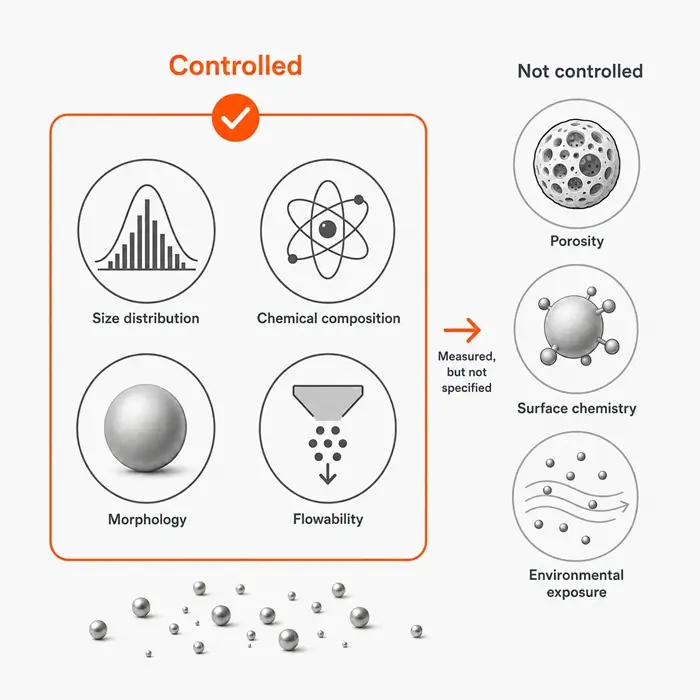
SAE AIR7359: Why Some Metal Powder Feedstock Properties Are Left Out of AM Specifications
AIR7359 explains why AMS-AM metal powder feedstock specifications leave certain properties uncontrolled, citing limited applicability and immature standardized inspection methods, and what that gap means for aerospace AM qualification programs.
Insights
 1 August 2026
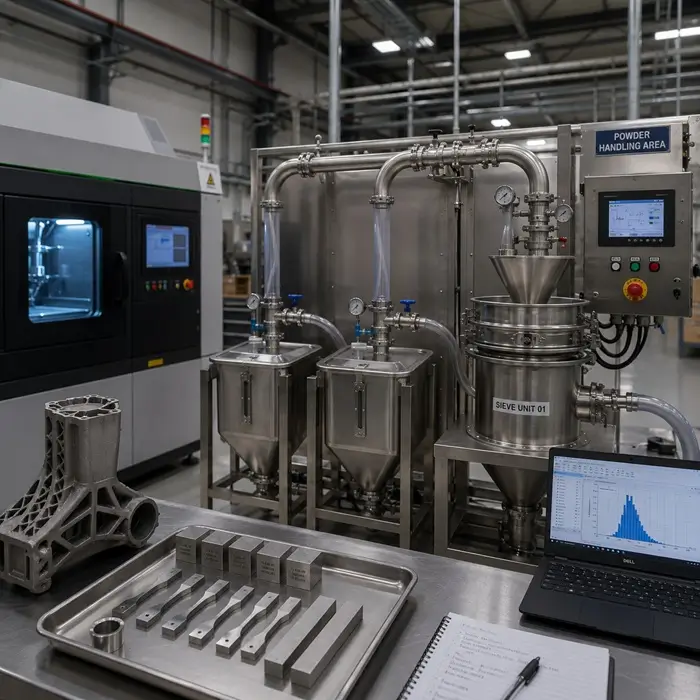
Virgin-to-Reused Powder Blend Ratios in Aerospace PBF-LB Qualification: Where the Decision Actually Sits
As aerospace metal additive manufacturing capacity expands, more reused powder is going back into qualified builds. The virgin-to-reused blend ratio decision depends on PSD shift, satellite formation, and morphology drift, and cannot be settled by a single powder check disconnected from the part's stress state.
Feature Article
 14 February 2026
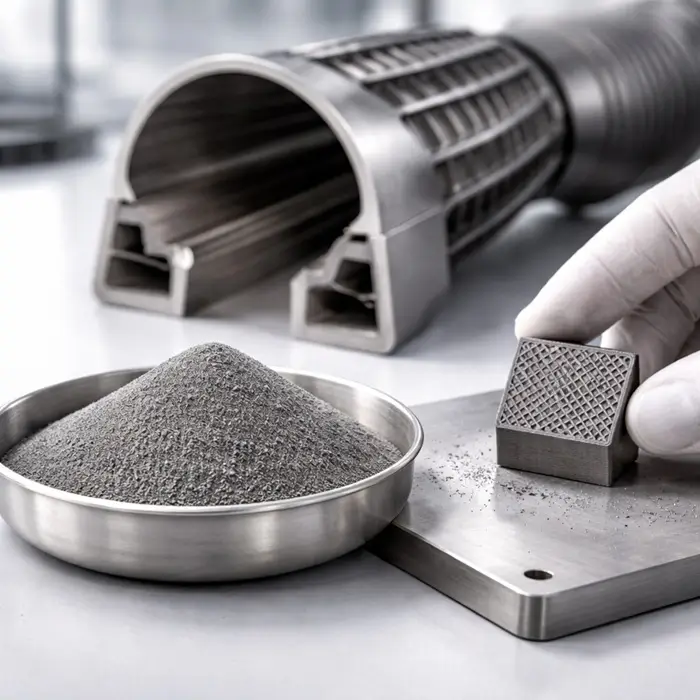
Concentrated Refractory Alloy Powders for Rocket Propulsion
Concentrated refractory alloy powders for rocket propulsion only create value when you [...]
Feature Article
 6 December 2025
Additive Manufacturing Integration and the Rise of Smart Powder Processing
Smart powder processing in additive manufacturing links engineered powders, real-time sensor data, [...]
Feature Article
 4 October 2025
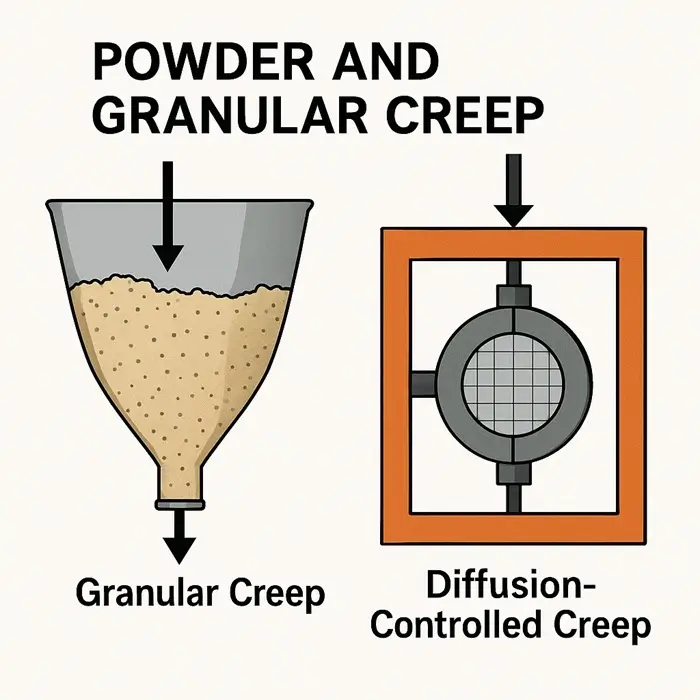
Powder and Granular Creep: Mechanisms, Testing, and Control
Powder creep mechanisms occur in various ways; powders creep in bins. Sintered [...]
Feature Article
 9 August 2025
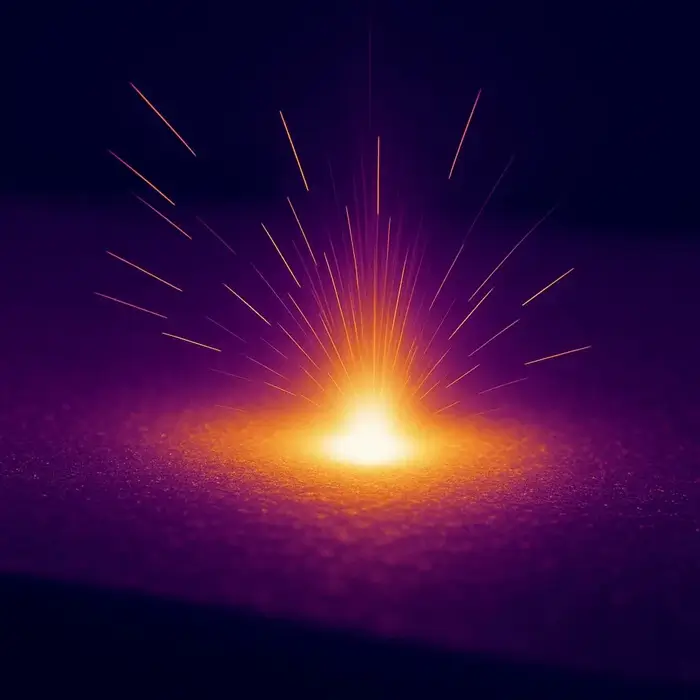
Affordable Powders, Reliable Results: AI Monitoring in Metal Additive Manufacturing
AI monitoring in additive manufacturing makes affordable powders viable in metal AM. [...]
Insights
 2 August 2025
Laser Spheroidization of Titanium Powders
Laser spheroidization turns irregular titanium powders into dense, spherical feedstock with excellent [...]
Feature Article
 17 May 2025
Case Study: Mitigating Spatter-Induced Powder Contamination in Laser-Powder-Bed-Fusion (LPBF) Production of Inconel 718 Aerospace Components
LPBF spatter contamination mitigation - Treating spatter as both a fluid-dynamic and [...]
 7 April 2025
Sustainable High Entropy Material Set to Reshape Advanced Manufacturing
High-Performance Alloys from Recycled Feedstocks: Sustainable High Entropy Powders Material A new [...]
 9 March 2025
Antimony in Modern Industry: From Ancient Alchemy to Advanced Applications
Table of Contents Antimony (Sb), number 51 on the Periodic [...]
 17 February 2025
Powder Recyclability in Manufacturing: Sustainable Approaches
In today’s manufacturing environment, sustainability is not only a goal—it’s a necessity. Industries [...]
Insights