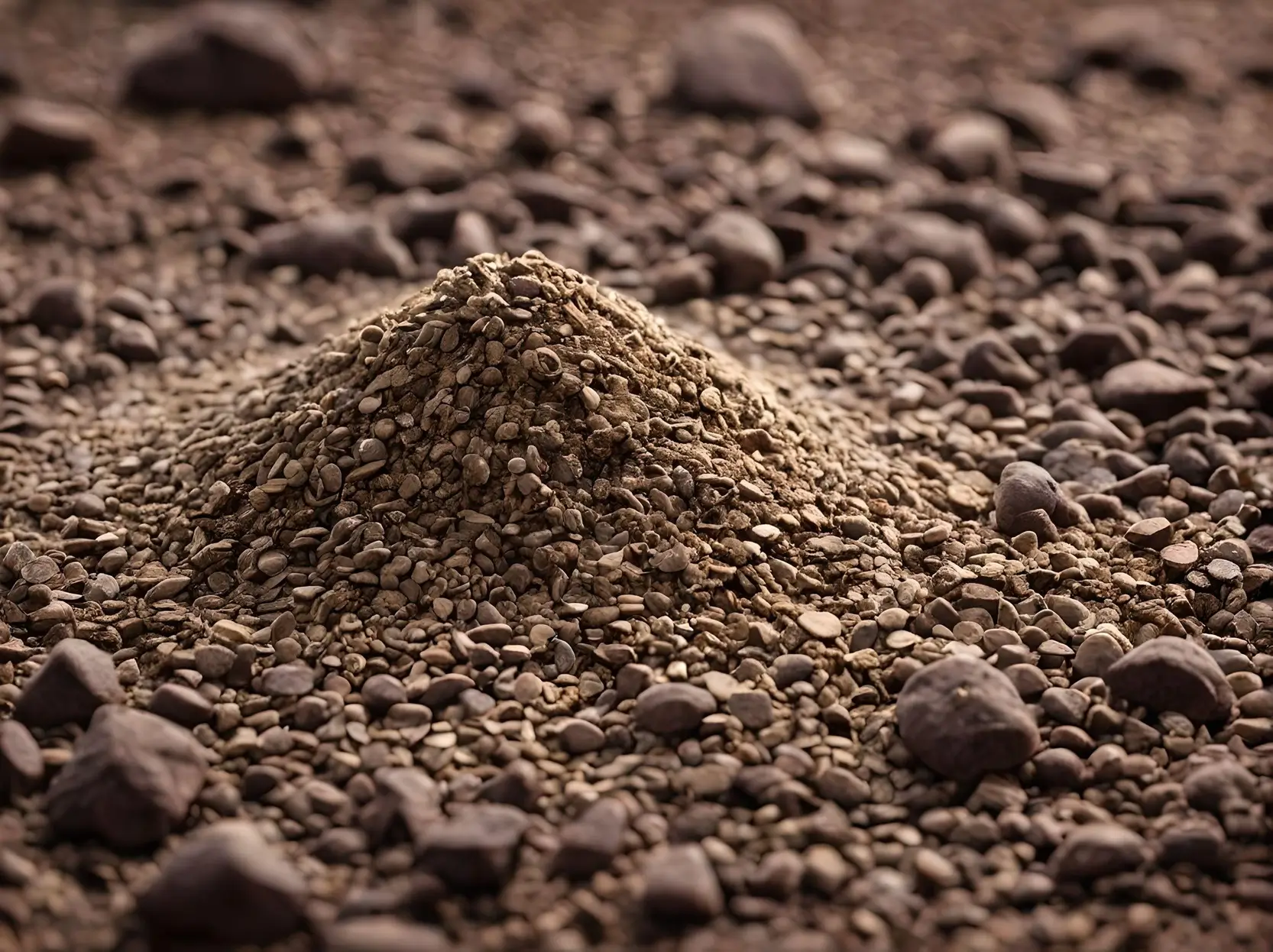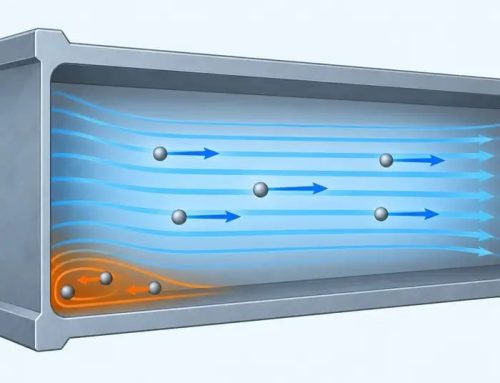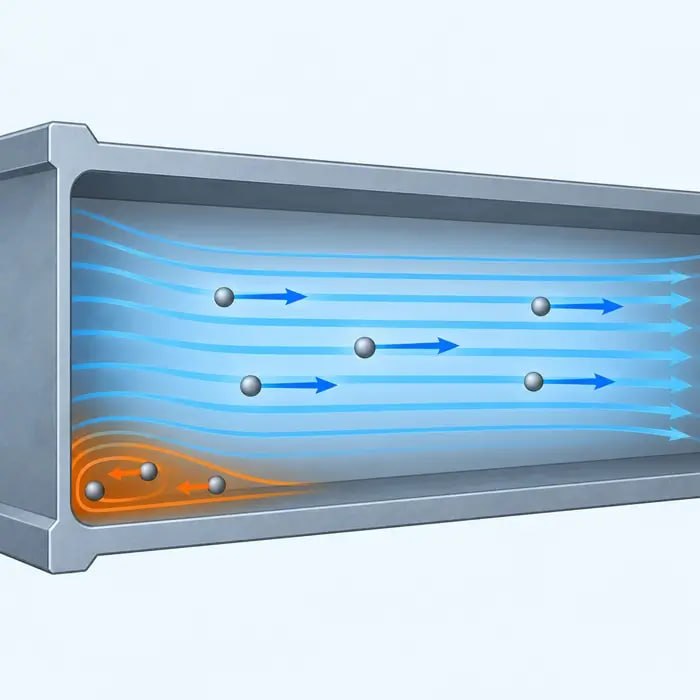

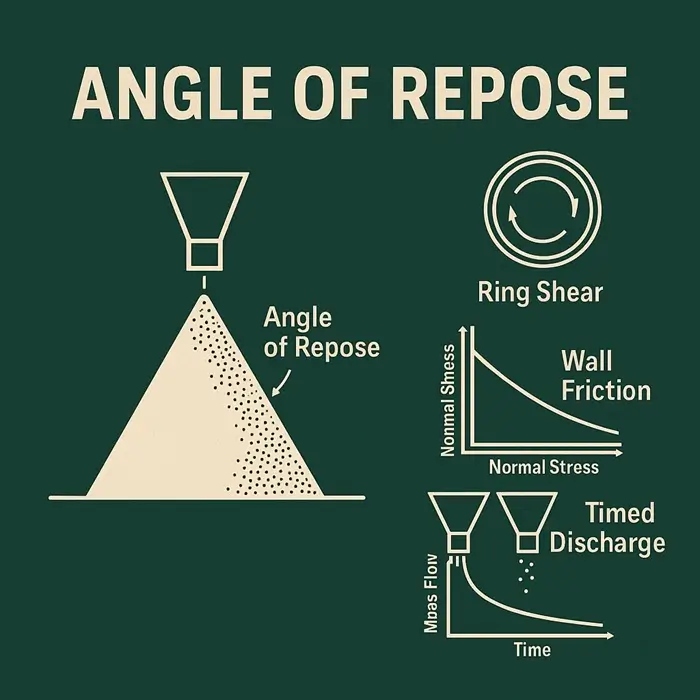
The angle of repose and flowability feel linked because a cone seems intuitive. However, small method changes shift the result significantly. Funnel size alters the slope. Drop height changes impact energy. Operator pace changes packing. Air currents disturb the surface. Moreover, humidity lifts cohesion and raises the angle. Surface charging skews readings further. Most critically, the test samples a low-stress free surface. Plants operate under confinement and wall contact, so behaviour diverges.
What Real Flow Looks Like in Plants
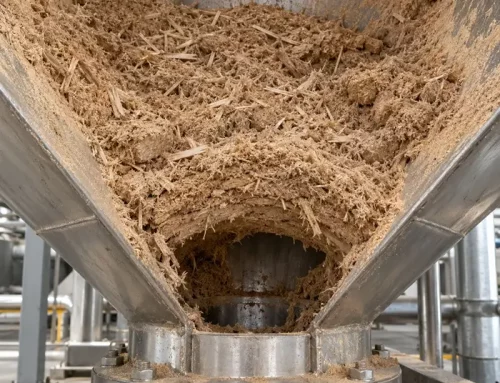
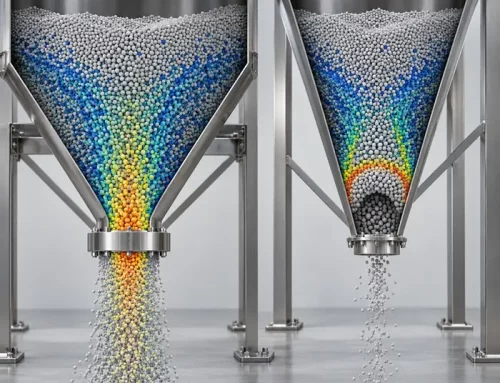
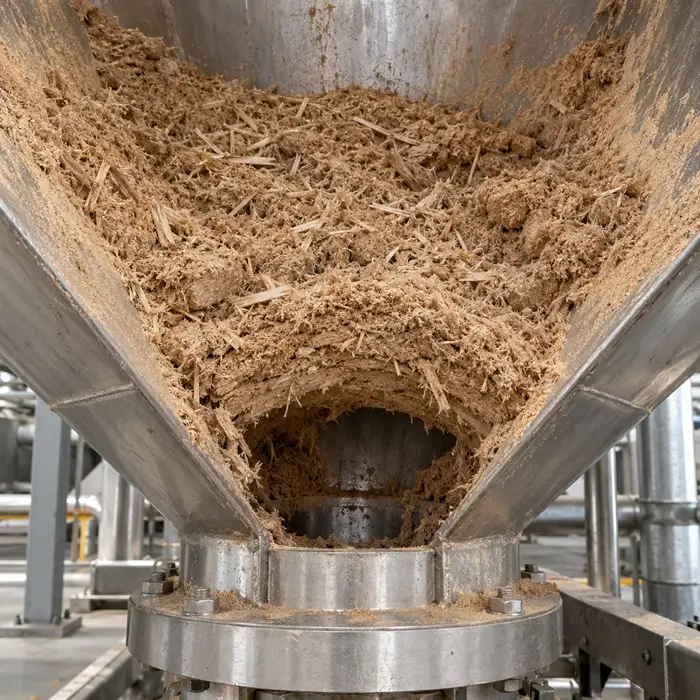
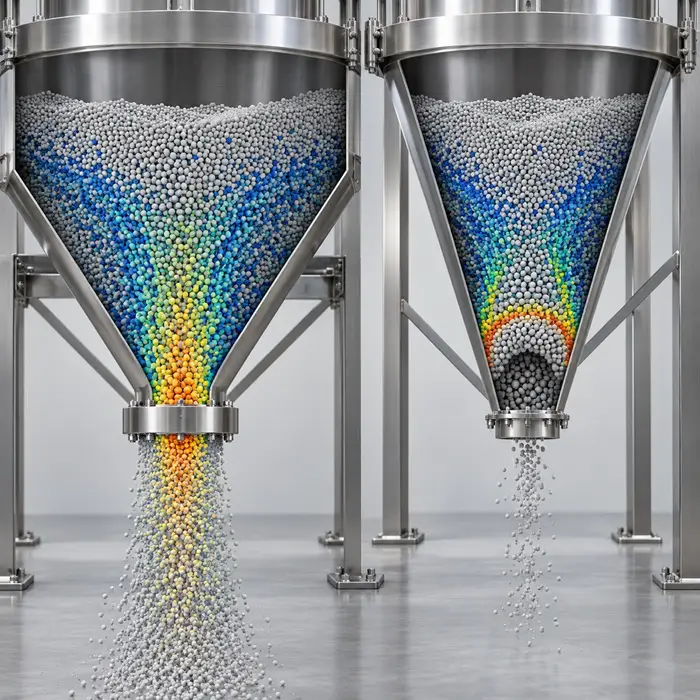
Hoppers, screws, and feeders impose evolving stress paths. Consolidation history matters; powders remember prior loads. Wall friction governs mass flow versus funnel flow. Moisture and fines increase cohesion and time-dependent strength. Consequently, a neat cone cannot predict discharge without context. It says little about arching, ratholing, or strength growth over time.
A Minimal, Useful Data Set
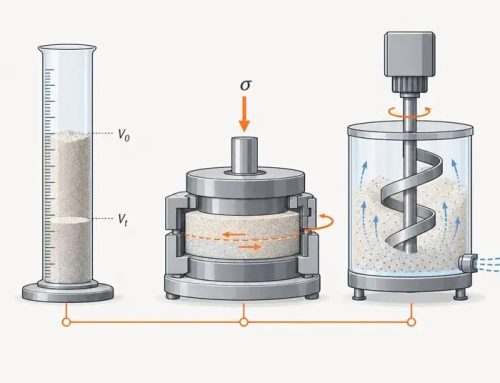
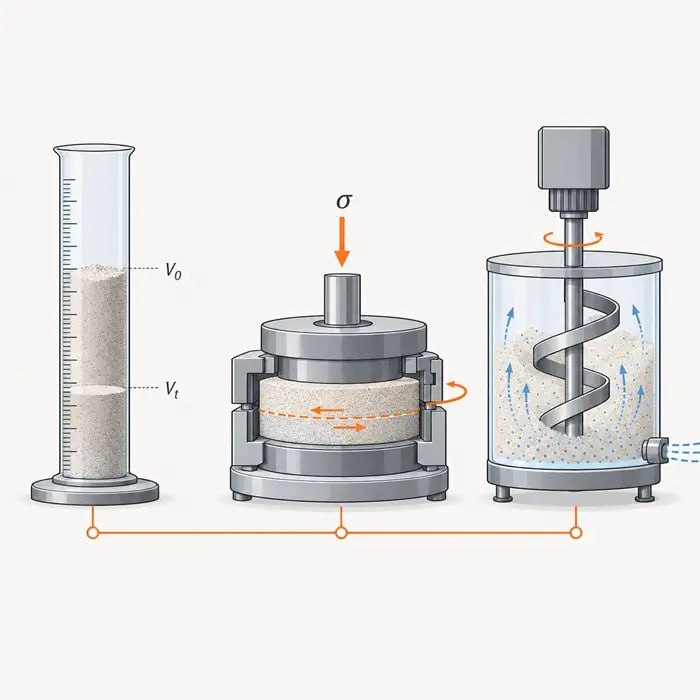
Start with bulk and tapped density, then compute Hausner ratio and Carr index. Those numbers screen compressibility quickly, yet they are not design inputs. Next, run a timed orifice discharge with fixed head and fixed geometry. Record mass versus time and note stalls or accelerations. Then add ring shear data at relevant normal stresses to obtain unconfined yield strength. Finally, measure wall friction against the actual steel or liner to choose hopper angles confidently.
Method Control If You Must Report the Angle
When reporting angle of repose, lock the method firmly. Fix funnel type, orifice, pour rate, drop height, and ambient humidity. Also ground the rig to reduce charging. Measure at least three cones and report mean and standard deviation. Always include full method details, because the value depends on them.
Link Tests to Decisions
Tie test outputs to actions that change outcomes. To stabilise feeders, compare shear data before and after flow aids. To select a liner, use wall friction maps across humidity levels. To set a specification, link density ratios and shear parameters to discharge time. Finally, confirm in the real unit under matched stress and humidity to avoid costly retrofits.