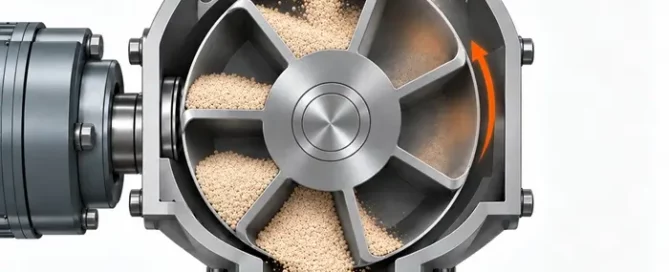
Rotary Valve Failure Modes: How Powder Properties Drive Leakage, Wear, and Jamming

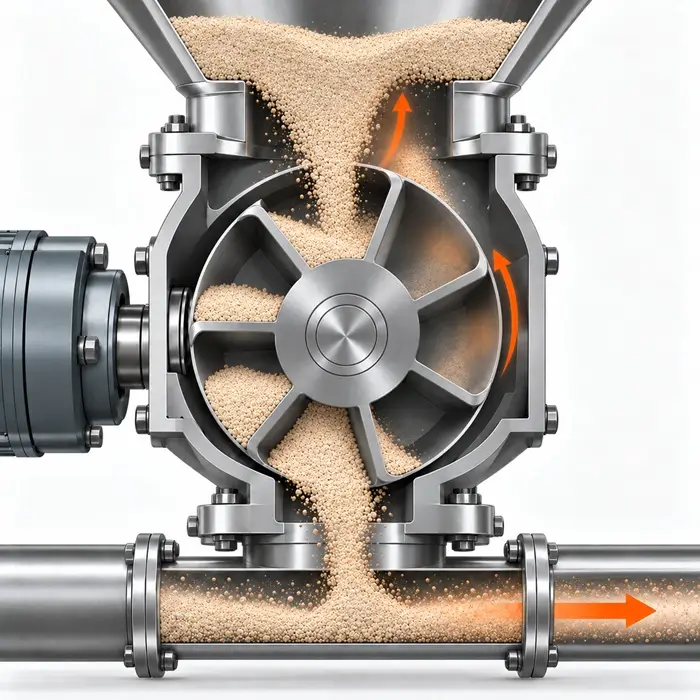
When a rotary airlock valve leaks, wears, or jams, the cause usually lies in the powder rather than the equipment. This insight maps cohesion, abrasiveness, bulk density, and particle size distribution to distinct failure patterns and explains what each pattern tells you about the powder state.
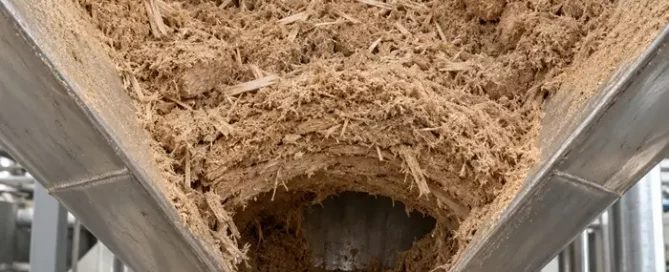
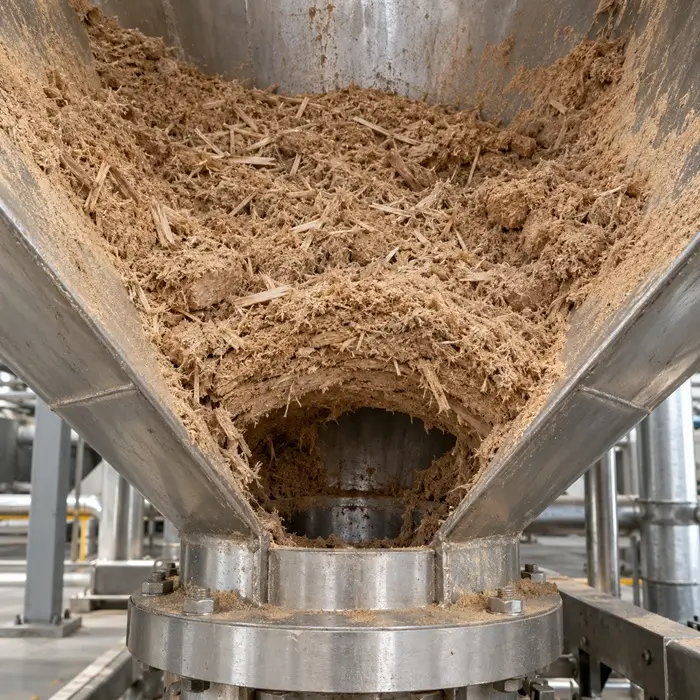
Wood Powder Feeding Problems: Separating Moisture Effects From Particle Interlocking

Wood powder can bridge because fibrous particles mechanically [...]

Why Hopper Fill Level Changes Powder Discharge

Do not diagnose a feeder as if the [...]

Powder Deaeration: Flushing, Surging, and Air Retention

Powder instability after conveying, filling, or transfer [...]

Powder Operating Window: Why a Good Powder Fails in the Wrong Process

A powder operating window defines the process [...]

Why Powder Flow Often Fails After a Short Shutdown in Hoppers and Feeders

Powder flow after a short shutdown often fails [...]

Loss in Weight Feeder Drift After Refill: The Refill Shock Mechanism and How to Diagnose It

Loss in weight feeder drift often starts at [...]

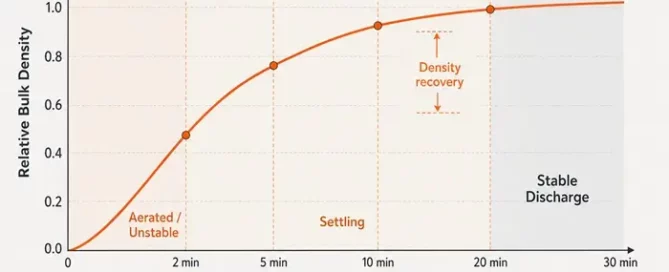
Deaeration lag, why “easy flowing” powders still surge

Deaeration lag in powders creates a timing mismatch [...]

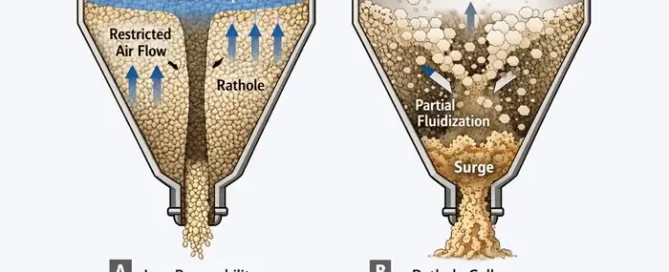
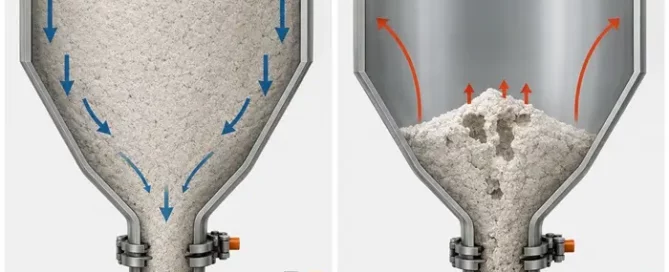
Permeability Collapse in Hopper Discharge Causes “Random” Ratholes and Sudden Flooding

Permeability collapse in hopper discharge often triggers instability [...]

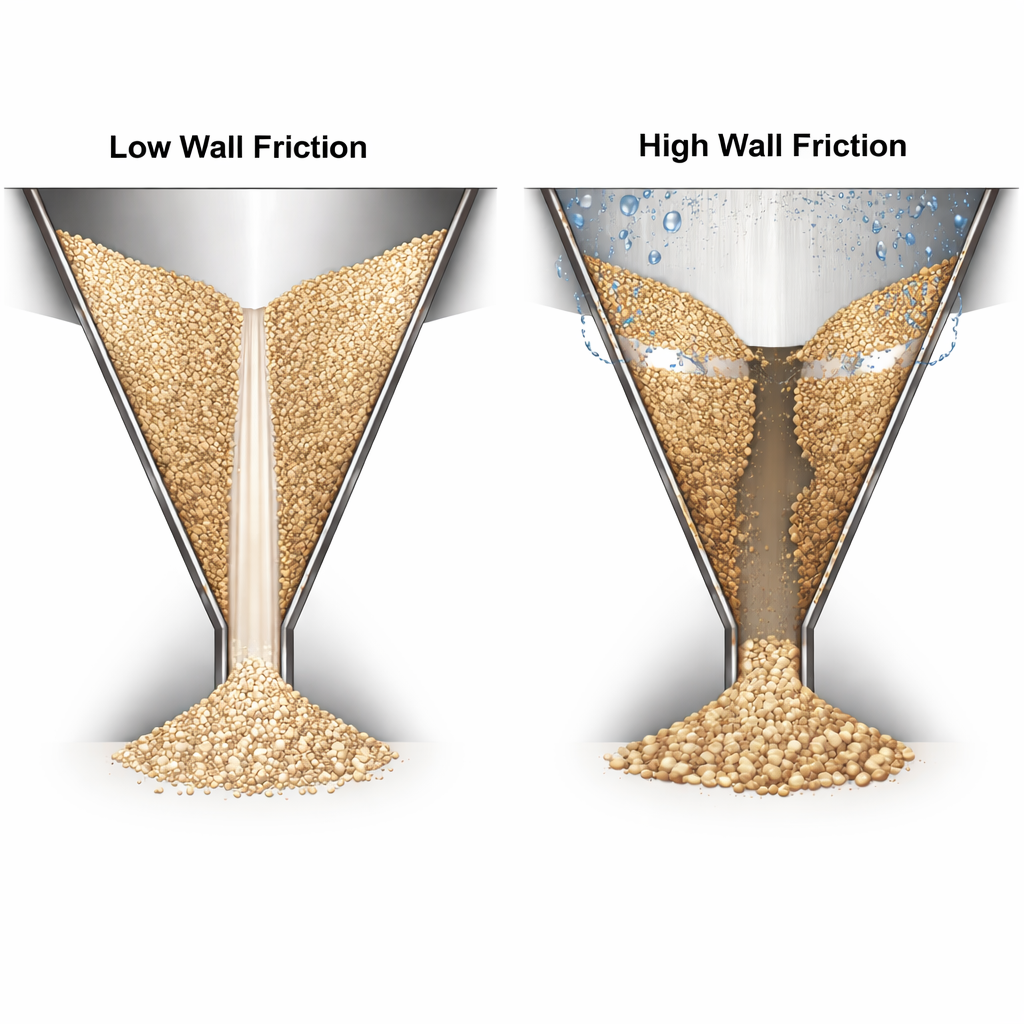
Wall Friction Drift in Hoppers: Why Discharge Degrades Over Time

Many hopper issues are boundary-limited. Wall friction drifts [...]

Go to Top