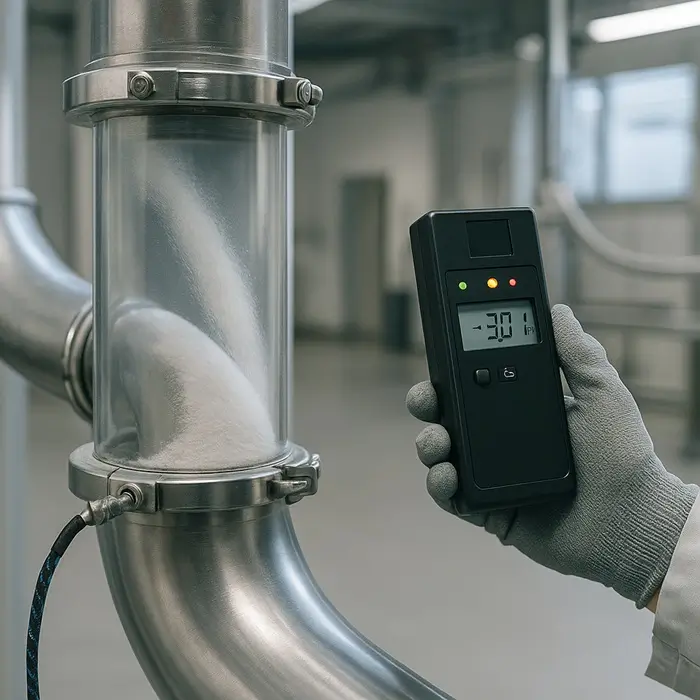

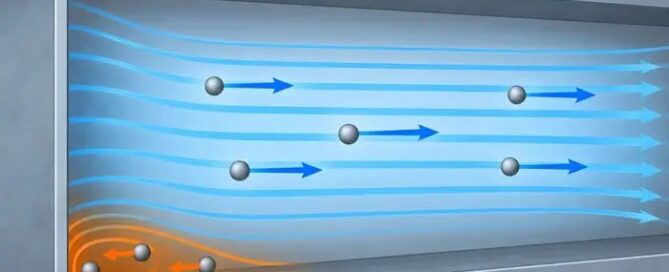
Triboelectric Particle Back-Flow in Pneumatic Conveying: Why Charged Particles Migrate Upstream at Duct Corners

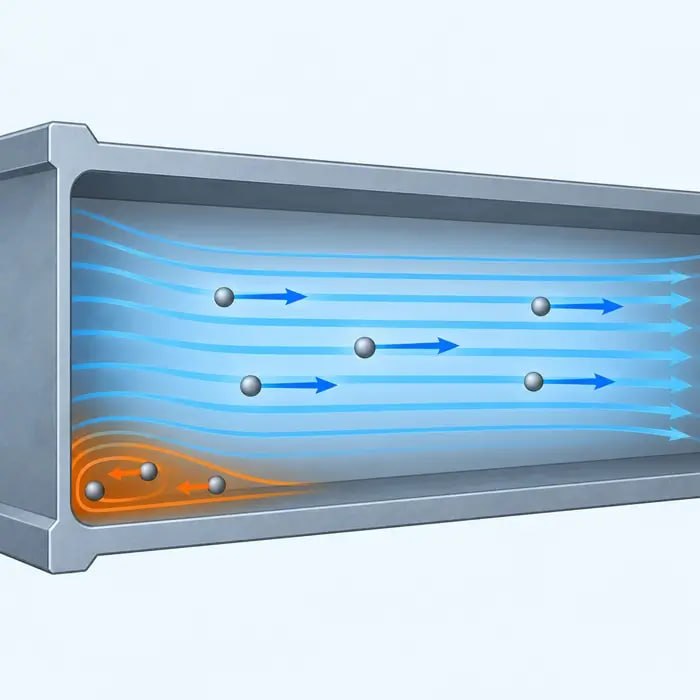
CFD-DEM simulations show triboelectrically charged particles can reverse direction in low-drag duct corner zones during pneumatic conveying, with the delay between feed pulses driving the effect more than pulse length.
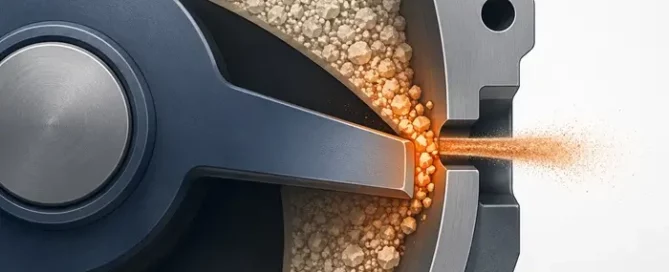
What Rotary Airlocks Actually Do to Powder

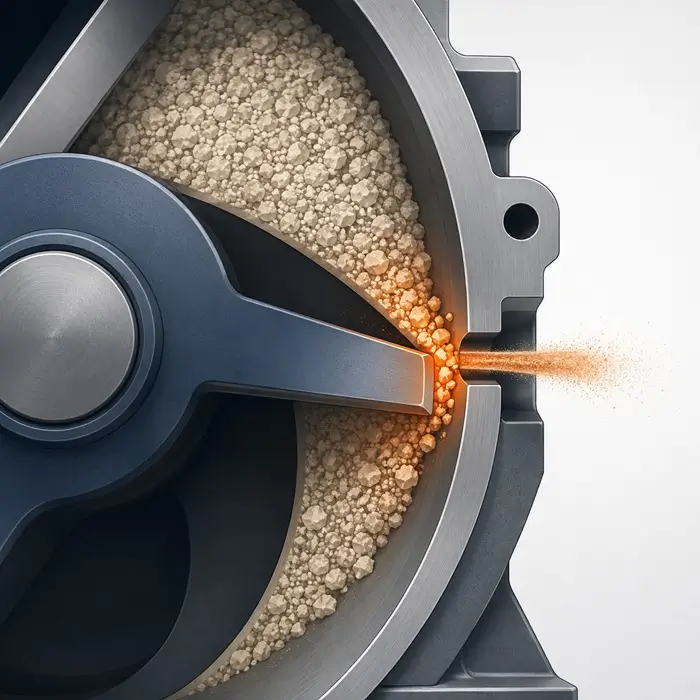
Rotary airlocks function as pressure boundaries as much as metering devices. The rotor tip clearance governs particle attrition at the nip zone and the rate of fine-particle bypass under differential pressure. As clearance widens through wear, the downstream particle size distribution shifts in a pattern frequently misread as upstream process variation.

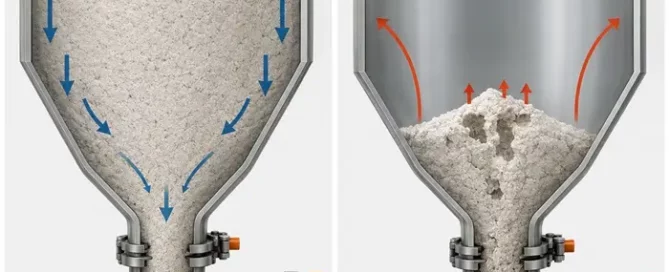
Why Hopper Fill Level Changes Powder Discharge

Do not diagnose a feeder as if the [...]

Powder Deaeration: Flushing, Surging, and Air Retention

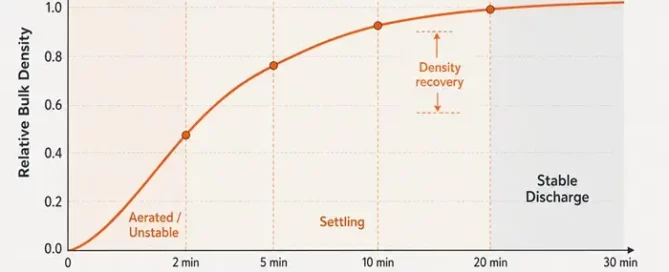
Powder instability after conveying, filling, or transfer [...]

Fine Powder Fluidization in Pneumatic Conveying and Discharge Control

Fine powder fluidization can support controlled pneumatic conveying, [...]

Acoustic Emission for Flow Blockage Prediction

Acoustic emission for flow blockage prediction captures high-frequency [...]

Plastic pellet loss prevention is now a compliance KPI (and a bulk solids design problem)

Regulation (EU) 2025/2365 makes plastic pellet loss prevention [...]

EU Plastic Pellet Loss Regulation: Bulk Plant Compliance

EU plastic pellet loss regulation (EU) 2025/2365 makes [...]

Triboelectric Charging in Powders: The science, failure modes, and industrial controls

Triboelectric charging forms when powders contact and separate, [...]

Electrostatic Troubleshooting in Powder handling

Electrostatic troubleshooting in powder handling addresses particle properties, [...]

Go to Top