Publications

Browse PTI technical publications

Find content by subject, editorial format, or publication date

Find technical publications by the powder behavior, material property, process, or measurement you are working with. You can also browse the latest releases, choose an editorial format, or open the complete publication catalog.


Publications

Browse PTI technical publications

Find content by subject, editorial format, or publication date

Find technical publications by the powder behavior, material property, process, or measurement you are working with. You can also browse the latest releases, choose an editorial format, or open the complete publication catalog.

Browse publications by technical subject

Browse by Subject

Find publications by powder behavior, material property, process, or measurement topic.

Latest PTI publications

Latest Publications

See the newest PTI publications first, regardless of technical subject or editorial format.

Browse publications by editorial format

Browse by Format

Choose Feature Articles, Insights, or Know How according to the depth and type of content you need.

Browse all PTI publications

All Publications

Open the complete PTI publication catalog, newest first, and continue loading older content as needed.

Latest from PTI

Recently published

The four newest PTI publications appear here automatically, regardless of subject or editorial format.
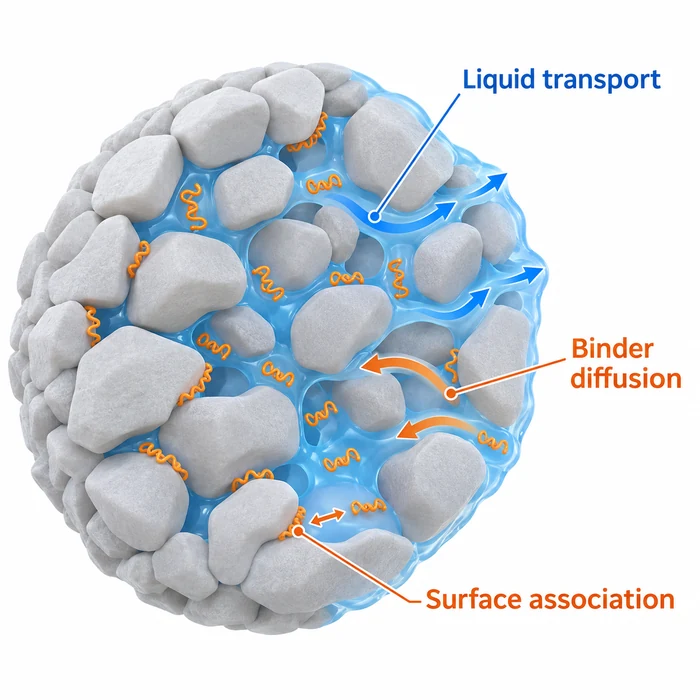
  • Conceptual porous granule cross-section showing outward liquid transport, opposing binder diffusion, and binder associated with particle surfaces.
    7 November 2026

    Binder Migration During Granule Drying: Why Composition Can Vary Within a Granule

    Binder content does not describe where binder sits inside a granule. Evidence from PVA–alumina systems explains why drying and adsorption chemistry deserve investigation, and how to select measurements before changing the formulation or dryer.

    Feature Article

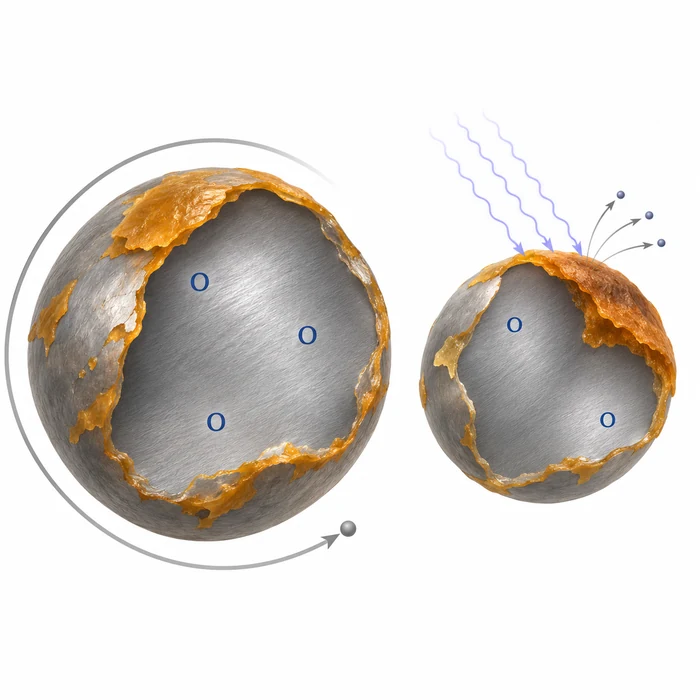
  • Conceptual comparison of oxygen distributed within a Ti-6Al-4V powder particle and oxygen in chemically varied surface regions.
    7 November 2026

    Why Bulk Oxygen Conformity Does Not Establish Equivalent Surface Oxide

    Two powders can satisfy an oxygen limit without having equivalent surfaces. Ti-6Al-4V research shows how to interpret bulk oxygen alongside XPS chemistry and calibrated depth profiles.

    Insights

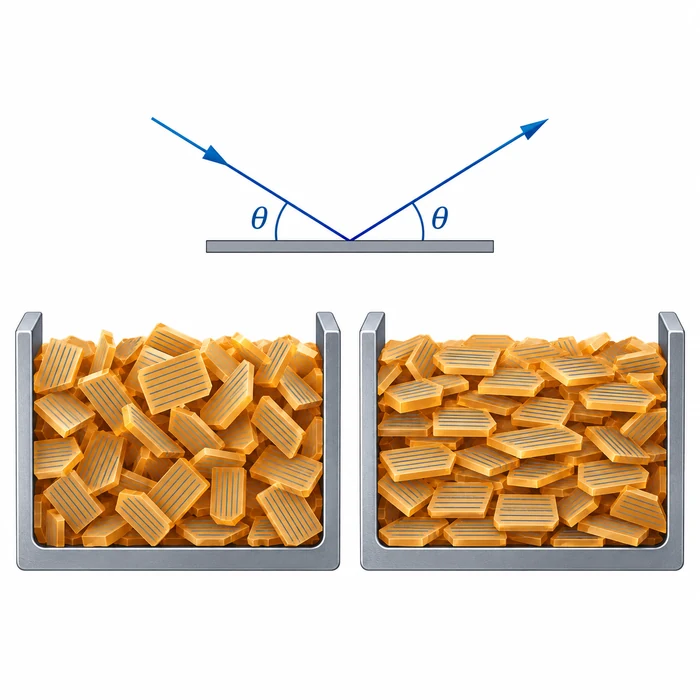
  • Conceptual cross-sections of randomly oriented and surface-aligned plate-like crystallites in flat powder holders.
    6 November 2026

    Why Can XRD Peak Ratios Change When the Same Powder Is Repacked?

    Changed XRD peak ratios after repacking can reflect crystallite alignment or poor particle statistics. Compare independent mounts before interpreting phase conversion.

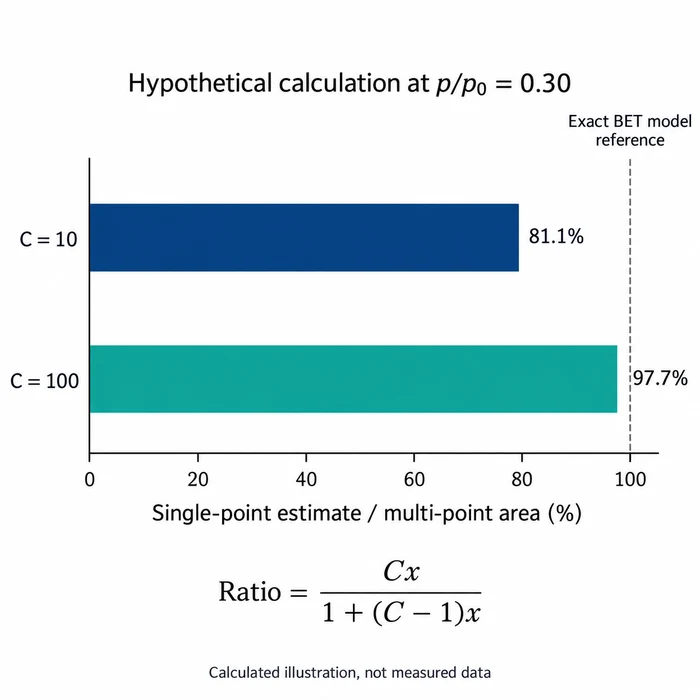
  • Hypothetical BET model comparison at relative pressure 0.30 showing single-point estimates of 81.1% and 97.7% for C values of 10 and 100.
    5 November 2026

    Why Can Single-Point and Multi-Point BET Surface Area Disagree?

    The same idealized BET isotherm can produce different single-point and multi-point surface areas because the single-point shortcut neglects finite-C effects. A controlled comparison shows what the resulting gap can and cannot explain.

Browse by Subject

Find PTI content by technical subject

Choose the powder behavior, material property, process, or measurement behind the question. Each subject opens the corresponding PTI publication category, bringing related technical publications together in one place. Industries are intentionally omitted because PTI already provides dedicated industry pages.

Browse by format

Choose the depth and type of content

Feature Articles, Insights, and Know How are editorial formats within PTI publications. They are not separate technical destinations.

Feature Articles

Long-form technical analysis built around a defined engineering question, comparison, mechanism, process, or application.

Technical Briefs

Concise, practical explanations of focused powder and particle technology questions, mechanisms, measurement issues, and process challenges.

Insights

Focused interpretation of a study, method comparison, process result, standard, or emerging technical development.

Know How

Practical technical guides that go deeper into measurement, interpretation, equipment, and powder-behavior decisions.

Feature Articles

Long-form technical analysis

Recent Feature Articles examine a defined engineering question in greater depth, connecting mechanisms, measurements, process context, and interpretation where the subject requires it.

  • Conceptual porous granule cross-section showing outward liquid transport, opposing binder diffusion, and binder associated with particle surfaces.
    7 November 2026

    Binder Migration During Granule Drying: Why Composition Can Vary Within a Granule

    Binder content does not describe where binder sits inside a granule. Evidence from PVA–alumina systems explains why drying and adsorption chemistry deserve investigation, and how to select measurements before changing the formulation or dryer.

    Feature Article

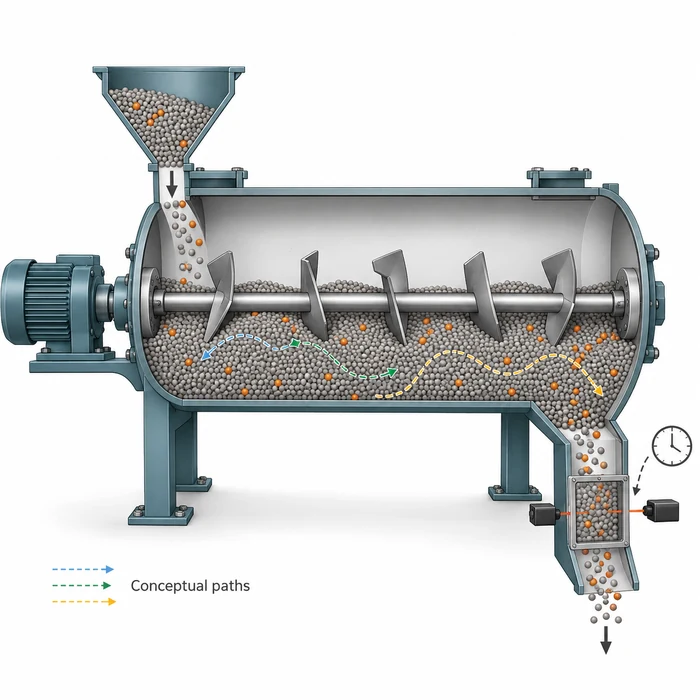
  • Conceptual cutaway of a continuous powder blender showing tracer entry, varied particle paths, and time-resolved outlet detection.
    31 October 2026

    Residence Time Distribution in Powder Processing: Why Average Residence Time Can Mislead

    Mean residence time describes the center of a powder stream's transit-time distribution. It [...]

    Feature Article

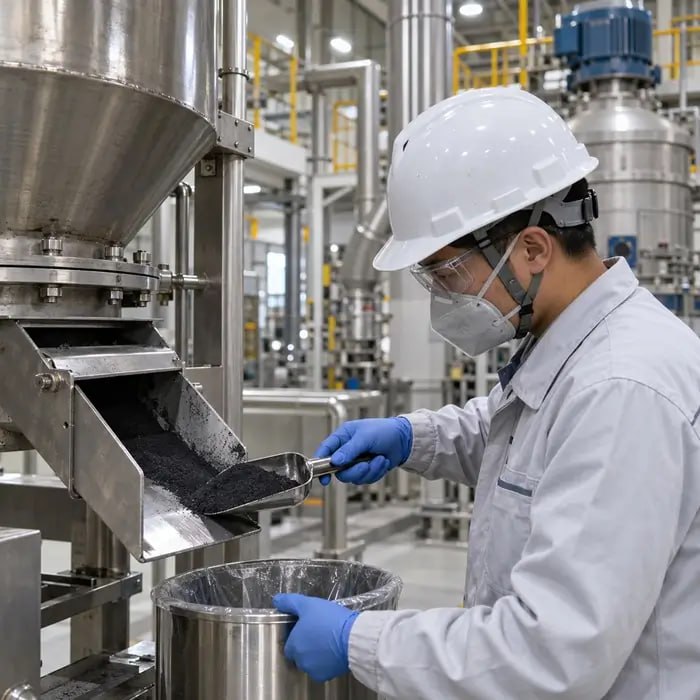
  • Technician checking CMP slurry point-of-use filtration for oversize agglomerates that cause wafer scratch defects
    24 October 2026

    CMP Slurry Abrasive Powders: Why Trace Oversize Agglomerates, Not Median Particle Size, Drive Wafer Scratch Defects

    Median particle size passes QC while wafers still scratch. Here is why a ppm-level population of 1 to 10 micron agglomerates in CMP slurry drives scratch defects, and which measurements actually catch it.

    Feature Article

  • LFP cathode powder sample taken during calcination in a lithium iron phosphate production line
    17 October 2026

    LFP Cathode Powder Production: How Spray-Drying, Calcination, and Pulverization Set Particle Size and Tap Density Targets

    LFP cathode powder quality is built in stages, not inspected at the end. This article follows the precursor-to-powder route and shows why particle size distribution and tap density are the measurements that actually tell you whether the synthesis worked.

    Feature Article

Technical Briefs

Concise answers to focused technical questions

Recent Technical Briefs provide concise, practical explanations of focused powder and particle technology questions, covering specific mechanisms, measurement issues, processing challenges, and interpretation problems.

  • Conceptual cross-sections of randomly oriented and surface-aligned plate-like crystallites in flat powder holders.
    6 November 2026

    Why Can XRD Peak Ratios Change When the Same Powder Is Repacked?

    Changed XRD peak ratios after repacking can reflect crystallite alignment or poor particle statistics. Compare independent mounts before interpreting phase conversion.

  • Hypothetical BET model comparison at relative pressure 0.30 showing single-point estimates of 81.1% and 97.7% for C values of 10 and 100.
    5 November 2026

    Why Can Single-Point and Multi-Point BET Surface Area Disagree?

    The same idealized BET isotherm can produce different single-point and multi-point surface areas because the single-point shortcut neglects finite-C effects. A controlled comparison shows what the resulting gap can and cannot explain.

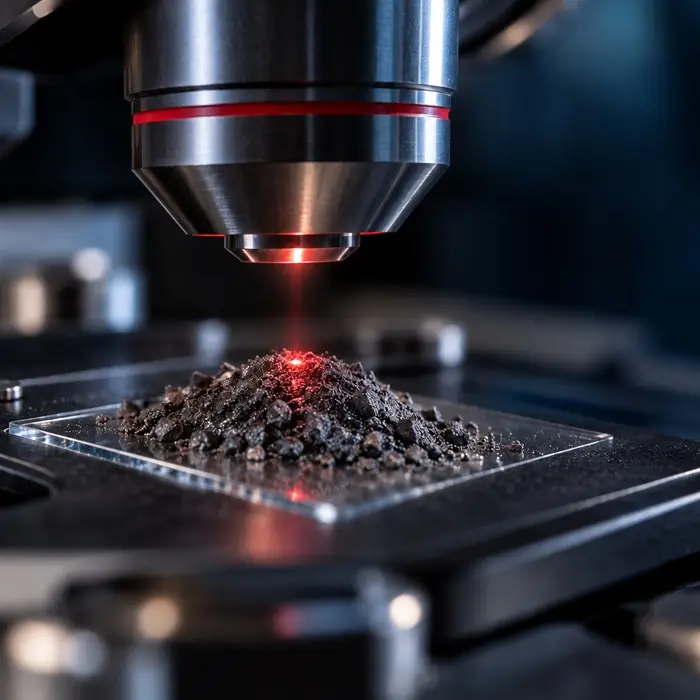
  • Raman microscope objective focused on a dark powder sample with a small red laser illumination spot on the particle surface.
    4 November 2026

    Why Can Raman Laser Power Change a Powder’s Spectrum?

    Higher laser power strengthens Raman signals but can also heat or damage powder [...]

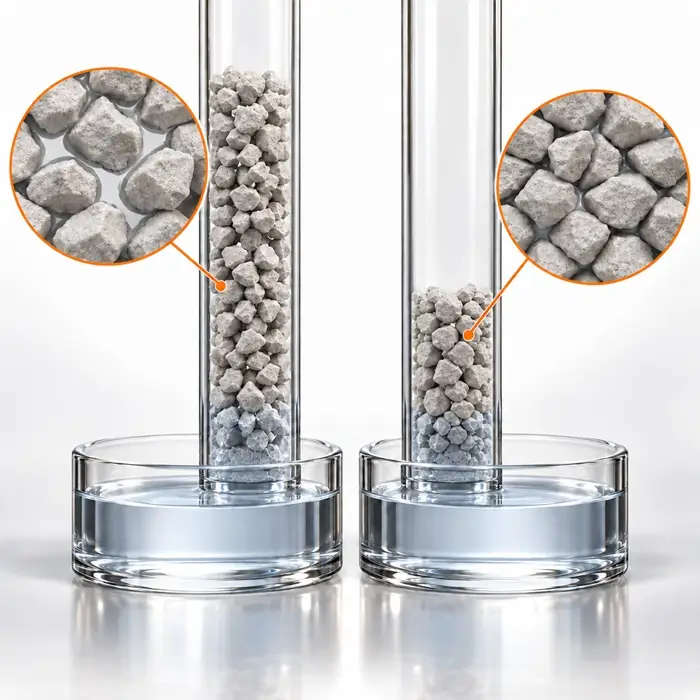
  • Comparison of loosely and densely packed powder beds in Washburn capillary-rise tubes, showing differences in pore geometry.
    3 November 2026

    Why Does Powder Packing Change Measured Contact Angle?

    Powder packing can change a Washburn-derived contact angle even when particle surface [...]

Insights

Focused technical interpretation

Recent Insights examine a study, method, process result, standard, or emerging technical development in a tighter editorial format.

  • Conceptual comparison of oxygen distributed within a Ti-6Al-4V powder particle and oxygen in chemically varied surface regions.
    7 November 2026

    Why Bulk Oxygen Conformity Does Not Establish Equivalent Surface Oxide

    Two powders can satisfy an oxygen limit without having equivalent surfaces. Ti-6Al-4V research shows how to interpret bulk oxygen alongside XPS chemistry and calibrated depth profiles.

    Insights

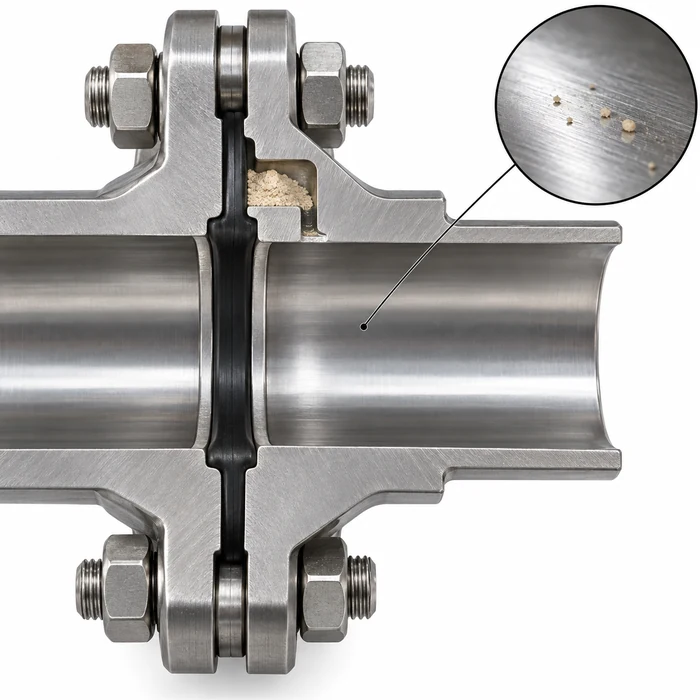
  • Cutaway illustration of a powder-transfer connection showing a visibly clean exposed steel bore, one powder pocket in a recessed gasket groove with an open route to the bore, and a separate magnified inset of sparse particles attached to exposed steel.
    31 October 2026

    Why Powder Lines Still Cause Cross-Contamination After Cleaning

    When a clean-looking powder line still produces contaminated product, compare sample location with when the contaminant appears, then investigate suspected reservoirs with recovery-tested surface or rinse sampling.

    Insights

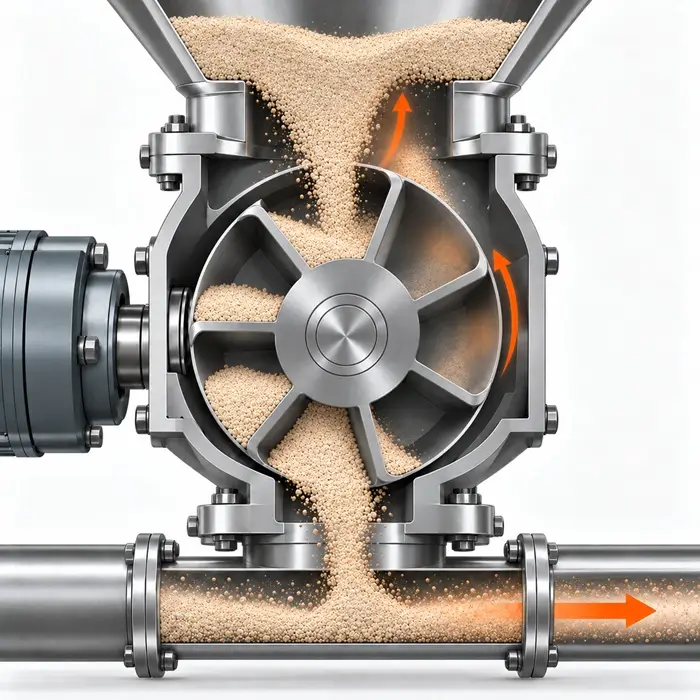
  • Cutaway of a rotary airlock showing partially filled powder pockets, returning gas near the inlet, and discharge into a pneumatic conveying line.
    24 October 2026

    Rotary Valve Failure Modes: How Powder Properties Drive Leakage, Wear, and Jamming

    When a rotary airlock valve leaks, wears, or jams, the cause usually lies in the powder rather than the equipment. This insight maps cohesion, abrasiveness, bulk density, and particle size distribution to distinct failure patterns and explains what each pattern tells you about the powder state.

    Insights

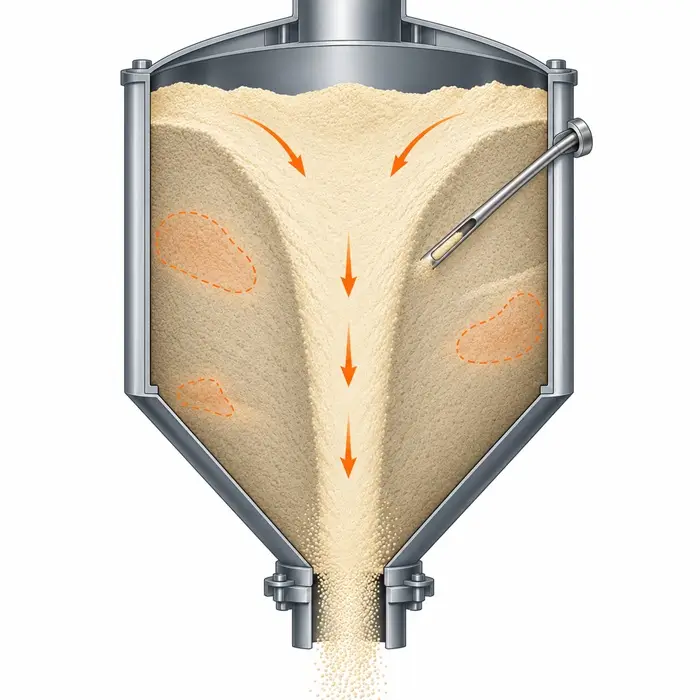
  • Technical illustration of a funnel-flow silo showing localized contamination zones missed by a powder sampling probe.
    17 October 2026

    Why Can a Powder Lot Pass Sampling and Still Be Contaminated?

    September 2026's moringa leaf powder recall, set against a year of Salmonella events touching powdered milk and supergreens blends, shows why bulk powder sampling plans can miss low-prevalence contamination and why low water activity slows but does not eliminate pathogen survival.

    Insights

Know How

Practical technical guidance

Recent Know How publications focus on practical measurement, method selection, interpretation, equipment, and technically useful working guidance.

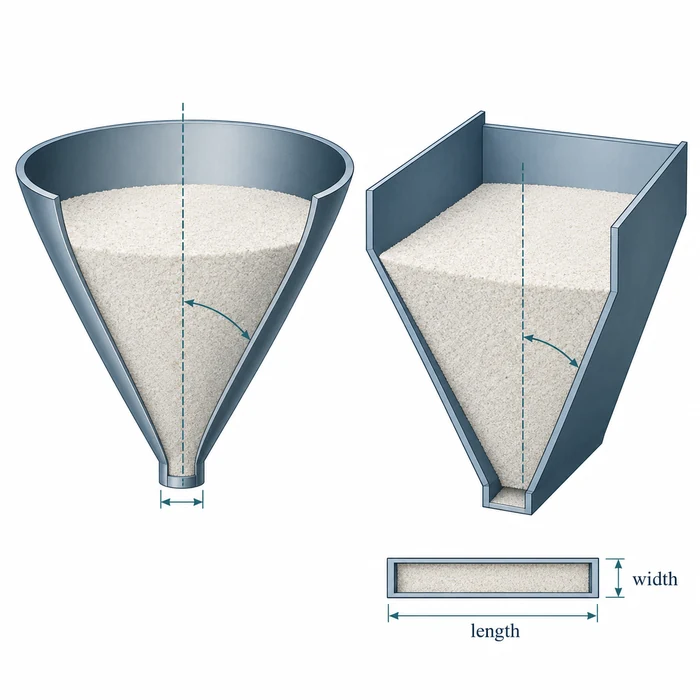
  • Cutaway comparison of a conical hopper with a circular outlet and a wedge hopper with an elongated slot, including an inset top-down view of the slot proportions.
    1 November 2026

    Using Shear-Test Data to Check a Hopper’s Outlet Size and Wall Angle

    Use measured flow functions, wall friction, and defined hopper geometry to check wall-angle suitability and cohesive arching separately, with a recalculated published example and practical decision worksheets.

    Know How

  • Illustration comparing spiral jet milling with fluidized-bed opposed jet milling and particle classification.
    3 October 2026

    Micronization by Jet Milling: How Classification, Milling Intensity, and Time Change Surface Properties

    Jet milling micronization reduces particle size through particle-particle impact controlled by classifier wheel speed and feed rate. Pushing the cut point lower can raise amorphous surface content and hygroscopicity in ways a passing PSD result will not reveal. This guide covers the mechanism and the tests that actually diagnose a changed lot.

    Know How

  • Jenike shear cell vs ring shear tester comparison diagram for hopper design decisions
    5 September 2026

    Jenike Shear Cell vs Ring Shear Tester: Matching the Method to the Hopper or Silo Decision

    Jenike shear cells and ring shear testers measure the same yield locus through different mechanics. Here is how their sample, stress range, and time differences map onto the mass-flow versus funnel-flow hopper design decision, plus a checklist for choosing between them.

    Know How

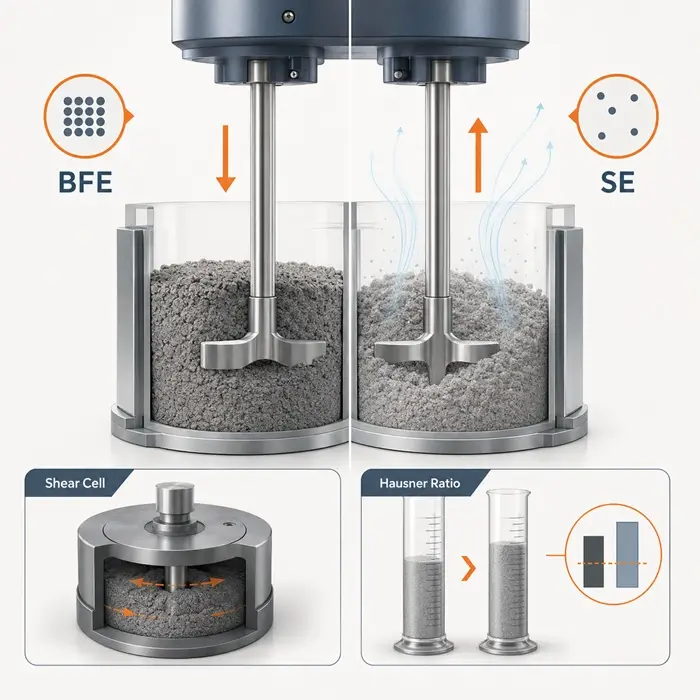
  • Technical illustration of dynamic powder testing, showing a rotating blade moving through a powder bed to compare confined flow energy, low-confinement specific energy, and aeration-sensitive behavior.
    1 August 2026

    Dynamic and Aerated Powder Testing: What Flow Energy Adds Beyond the Shear Cell and Hausner Ratio

    Dynamic and aerated powder testing measures basic flow energy and specific energy to fill the gap between shear cell consolidation data and Hausner ratio screening, particularly for fluidized processing and rapid-refill feeding.

    Know How

All Publications

The complete PTI publication catalog

Browse all published PTI content, newest first. Use the subject index above when you know the technical topic, or the structured PTI hubs when you want a guided route through a problem, property, measurement, process area, or industry.
  • Conceptual porous granule cross-section showing outward liquid transport, opposing binder diffusion, and binder associated with particle surfaces.
    7 November 2026

    Binder Migration During Granule Drying: Why Composition Can Vary Within a Granule

    Binder content does not describe where binder sits inside a granule. Evidence from PVA–alumina systems explains why drying and adsorption chemistry deserve investigation, and how to select measurements before changing the formulation or dryer.

    Feature Article

  • Conceptual comparison of oxygen distributed within a Ti-6Al-4V powder particle and oxygen in chemically varied surface regions.
    7 November 2026

    Why Bulk Oxygen Conformity Does Not Establish Equivalent Surface Oxide

    Two powders can satisfy an oxygen limit without having equivalent surfaces. Ti-6Al-4V research shows how to interpret bulk oxygen alongside XPS chemistry and calibrated depth profiles.

    Insights

  • Conceptual cross-sections of randomly oriented and surface-aligned plate-like crystallites in flat powder holders.
    6 November 2026

    Why Can XRD Peak Ratios Change When the Same Powder Is Repacked?

    Changed XRD peak ratios after repacking can reflect crystallite alignment or poor particle statistics. Compare independent mounts before interpreting phase conversion.

  • Hypothetical BET model comparison at relative pressure 0.30 showing single-point estimates of 81.1% and 97.7% for C values of 10 and 100.
    5 November 2026

    Why Can Single-Point and Multi-Point BET Surface Area Disagree?

    The same idealized BET isotherm can produce different single-point and multi-point surface areas because the single-point shortcut neglects finite-C effects. A controlled comparison shows what the resulting gap can and cannot explain.

  • Raman microscope objective focused on a dark powder sample with a small red laser illumination spot on the particle surface.
    4 November 2026

    Why Can Raman Laser Power Change a Powder’s Spectrum?

    Higher laser power strengthens Raman signals but can also heat or damage powder [...]

  • Comparison of loosely and densely packed powder beds in Washburn capillary-rise tubes, showing differences in pore geometry.
    3 November 2026

    Why Does Powder Packing Change Measured Contact Angle?

    Powder packing can change a Washburn-derived contact angle even when particle surface [...]

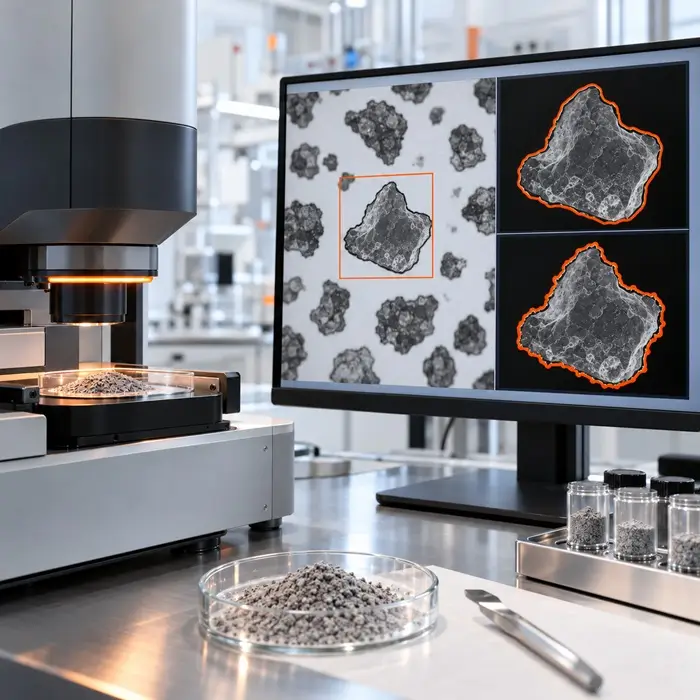
  • Particle image analysis showing different segmentation outlines for the same powder particle
    2 November 2026

    Why Do Circularity Results Differ for the Same Powder?

    Different circularity results do not necessarily indicate different particle shapes. Thresholding, perimeter [...]

  • Cutaway comparison of a conical hopper with a circular outlet and a wedge hopper with an elongated slot, including an inset top-down view of the slot proportions.
    1 November 2026

    Using Shear-Test Data to Check a Hopper’s Outlet Size and Wall Angle

    Use measured flow functions, wall friction, and defined hopper geometry to check wall-angle suitability and cohesive arching separately, with a recalculated published example and practical decision worksheets.

    Know How

  • Conceptual cutaway of a continuous powder blender showing tracer entry, varied particle paths, and time-resolved outlet detection.
    31 October 2026

    Residence Time Distribution in Powder Processing: Why Average Residence Time Can Mislead

    Mean residence time describes the center of a powder stream's transit-time distribution. It [...]

    Feature Article

  • Cutaway illustration of a powder-transfer connection showing a visibly clean exposed steel bore, one powder pocket in a recessed gasket groove with an open route to the bore, and a separate magnified inset of sparse particles attached to exposed steel.
    31 October 2026

    Why Powder Lines Still Cause Cross-Contamination After Cleaning

    When a clean-looking powder line still produces contaminated product, compare sample location with when the contaminant appears, then investigate suspected reservoirs with recovery-tested surface or rinse sampling.

    Insights

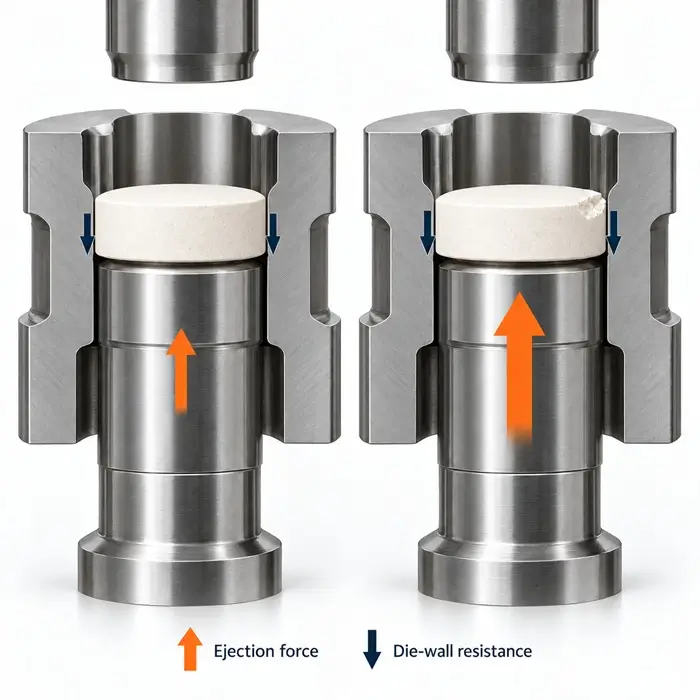
  • Side-by-side cross-section of tablet ejection tooling showing lower and higher ejection forces, opposing die-wall friction, and localized tablet-edge chipping.
    30 October 2026

    Why Can Tablet Ejection Force Rise Without a Loss of Hardness?

    A tablet can meet its hardness specification while requiring more force to [...]

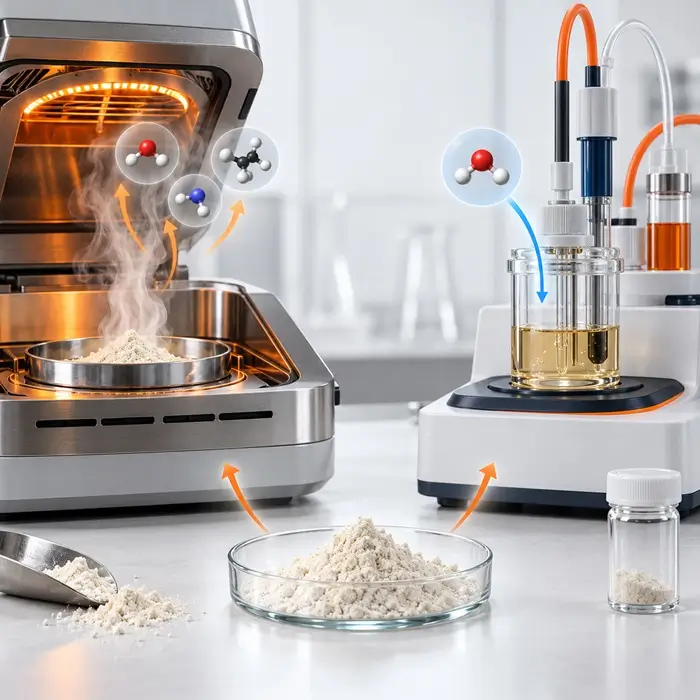
  • Laboratory comparison of loss on drying and Karl Fischer titration, showing total volatile mass loss versus selective water determination in a powder sample.
    29 October 2026

    Why Can Loss on Drying Read Higher Than Karl Fischer?

    Loss on drying measures mass lost under specified conditions; Karl Fischer (KF) [...]

Testing support

Need the measurement, not just the article?

If the publications help narrow the technical question but the decision still depends on measured powder behavior, Delft Solids Solutions can help define an appropriate test plan and interpret the result. Explore Delft Solids Solutions testing support →


Delft Solids Solutions logo