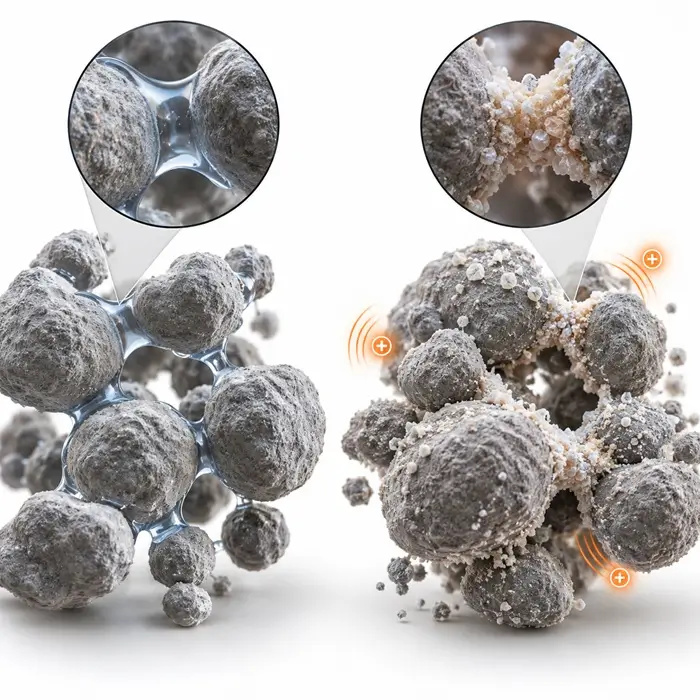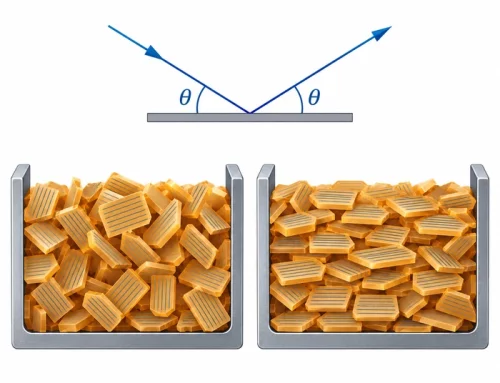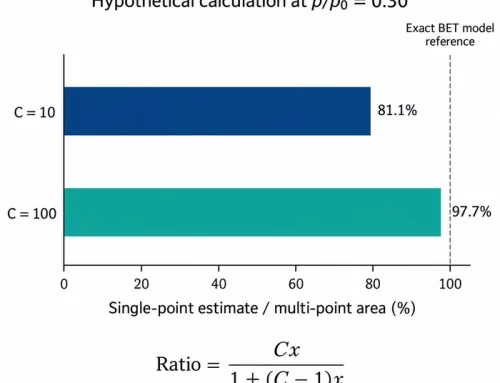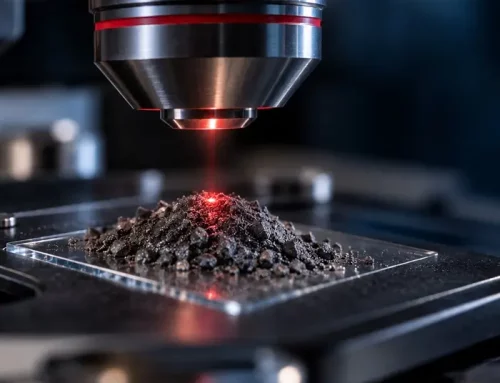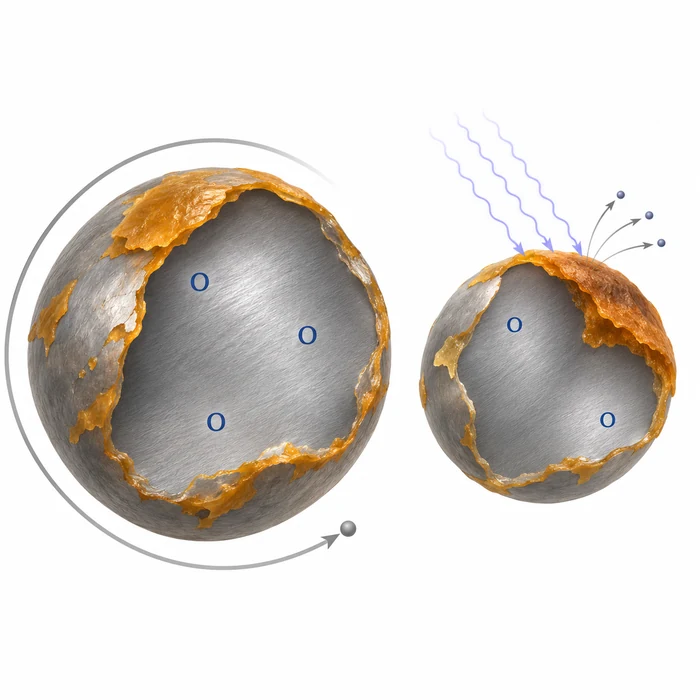
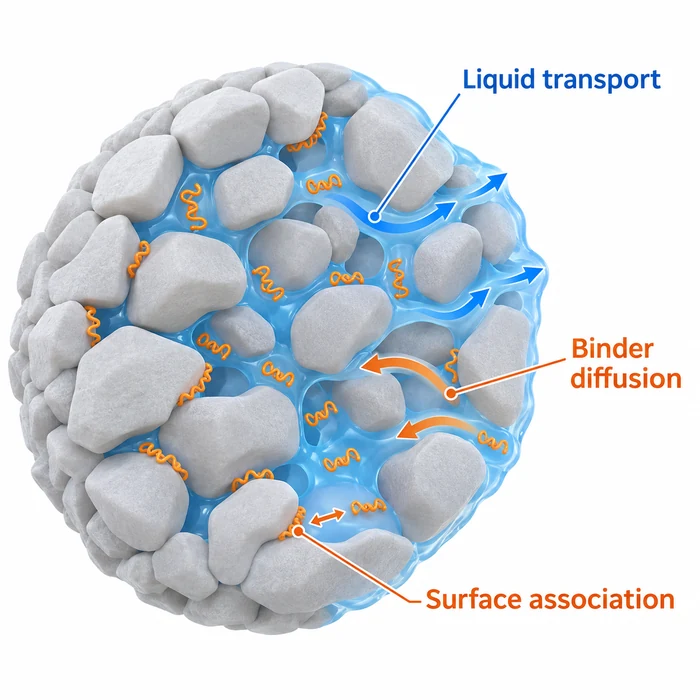
Liquid transport, opposing binder diffusion, and surface association compete during drying. Conceptual schematic; arrows do not represent measured rates.
Two granule lots pass the same moisture, particle-size, and binder-content checks. One survives transfer; the other generates fines. Increasing the binder dose looks reasonable, but it may address the wrong variable. The batches can contain the same amount of binder in different places.
Drying is a composition-forming step as well as a water-removal step. Dissolved material travels with the liquid, diffuses through it, and interacts with solid surfaces until the structure becomes immobilized. Understanding those movements gives engineers a better starting point than treating the final moisture result as a complete description of the granule.
The competition between liquid flow and diffusion
When evaporation removes solvent at an exposed surface, connected liquid pathways can supply replacement liquid from the interior. Dissolved binder travels with that flow. Enrichment near the drying surface creates a concentration gradient, which drives diffusion back toward less concentrated regions. Adsorption onto the primary particles reduces the freely transported binder fraction.
Zhang and colleagues modeled PVA transport in a PVA–water–alumina system and compared the calculation with measurements. Their explanation linked surface segregation to capillary transport and opposing back-diffusion [1]. This is a transport competition, rather than evidence that every binder follows the solvent in the same way.
The useful organizing concept is the Péclet number: Pe = UL/D, where U represents a characteristic transport velocity, L the relevant distance, and D the binder diffusion coefficient. At fixed geometry and diffusivity, stronger outward transport raises Pe and favors surface enrichment. Faster diffusion lowers Pe and smooths the concentration profile. Font and colleagues used the same competition to explain binder accumulation in drying electrode films [2].
For granules, use this as a framework for interpreting changes rather than a universal numerical cutoff. The liquid pathways, binder mobility, and effective transport distance evolve during drying. A high inlet temperature is therefore not, by itself, a measured Péclet number.
A binder-rich shell is an observed granule structure
The strongest evidence comes from examining granules themselves. Baklouti, Chartier, and Baumard investigated PVA distribution in spray-dried alumina agglomerates. In their formulation, only 6% of the added PVA was adsorbed onto the alumina. The remaining mobile fraction redistributed during drying, and the researchers identified a polymer-rich outer layer containing about half of the introduced binder [3].
That result makes the spatial question concrete. The measured binder addition did not describe the composition at every point in the granule. It also demonstrates why adsorption belongs in a drying investigation: the amount available for transport differed sharply from the total amount added.
An enriched surface concentrates polymer at contacts between granules, while interior bonding depends on what remains within them. Whether that shell deforms, fractures, or wets readily also depends on polymer properties and conditioning. An image of a shell identifies a structure; the handling or pressing test establishes its practical consequence. The broader agglomeration framework helps connect binder location with pores, particle contacts, and breakup.
Additive chemistry changes how much binder can move
Changing a dispersant can change binder distribution without changing the nominal binder dose. Hidber, Graule, and Gauckler studied citric acid and PVA in aqueous alumina systems. Citric acid reduced PVA adsorption, and the displaced polymer segregated more strongly during drying of centrifugally cast compacts [4].
The practical variable is the dissolved, mobile binder pool. A formulation with more binder attached to solids offers less freely dissolved material for transport, provided that association persists under the drying conditions. Competitive adsorption can reverse the intended effect of a formulation change.
When a distribution problem follows an additive substitution, inspect the formulation history before adjusting dryer temperature. Compare binder and dispersant identity, concentration, addition sequence, and liquid chemistry. Then use an adsorption or supernatant measurement suited to that system to test whether the mobile fraction changed. This is a proposed diagnostic comparison, not a requirement to assume adsorption is always the cause.
Migration also occurs through the granule bed
A drying problem has at least two spatial scales: redistribution within a granule and redistribution between regions of a wet bed. In static drying, liquid-connected material can develop an enriched drying boundary and a depleted interior. A bulk sample assembled from the whole bed can average away that positional difference.
Warren and Price investigated drug migration through tablet-granulation beds. Increasing binder-solution viscosity reduced migration of the dissolved drug. In their tested system, migration became insignificant above approximately 90 cP, equivalent to 90 mPa·s. The threshold belongs to that experiment, not a general granulation specification [5].
They also reported greater tablet-to-tablet drug-content variation from a high-migration granulation, even after the dried material had been thoroughly mixed. Drug migration is not direct proof of polymer-binder migration, but it establishes that drying can create consequential solute gradients in a granulated bed.
For tray-dried material, preserve top, middle, and bottom samples separately during the investigation. Otherwise, a whole-tray assay can answer whether the average composition is correct while missing where the enriched material formed.
Dryer type changes the exposure history
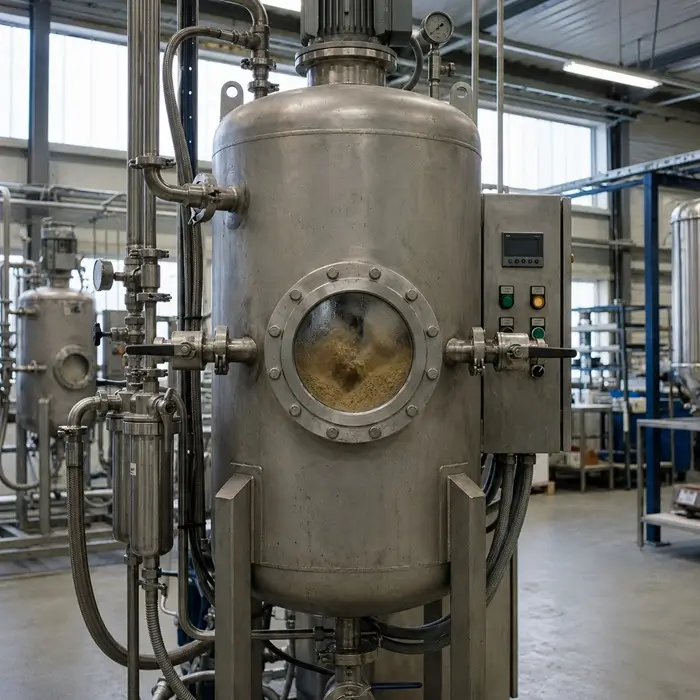
A fluid bed repeatedly redistributes particles and exposes different surfaces to the drying gas. A static tray maintains a more persistent relationship between material position and the drying boundary. Those differences change heat transfer, liquid pathways, and the time spent in particular moisture states. The fluidized-bed processing guide explains how these operating features interact with powder behavior.
Poutiainen and colleagues directly compared fluid-bed and oven-tray drying using microscopy, X-ray microtomography, and mechanical testing. They found significant differences between methods in intragranular solute distribution, granule structure, and mechanical properties; drying temperature had only a marginal effect in their study [6].
That finding supports comparing drying methods as material-formation processes. It does not establish that fluidization eliminates migration inside individual granules. Bed mixing and internal solute transport are different mechanisms, and both deserve attention when changing equipment.
Choose a control lever from the transport mechanism
The useful question is which variable changes the mobile fraction, the transport rate, or the liquid network. These levers interact, so a promising direction should become a controlled trial with a defined performance response.
| Variable | Expected influence | What to check |
|---|---|---|
| Drying rate | Stronger evaporation-driven transport can favor enrichment when diffusion cannot keep pace. | Measure the product drying history; temperature alone does not define transport. |
| Binder solution viscosity | Higher viscosity reduced solute migration in specific pharmaceutical studies. | Measure at relevant concentration and temperature; do not transfer a published threshold directly. |
| Binder molecular weight | Changes chain mobility, solution rheology, and potentially adsorption. | Do not treat molecular weight as an independent migration-control setting. |
| Adsorbed binder fraction | Persistent adsorption reduces the freely mobile binder pool. | Check competitive additives and association under the formulation conditions. |
| Pore and liquid connectivity | Determines which paths remain available for liquid transport. | Distinguish connected wet pathways from final dry porosity. |
| Dryer configuration | Changes bed mixing, exposure, and internal drying histories. | Compare spatial composition and functional performance, not endpoint moisture alone. |
Viscosity is a particularly useful example of why a single directional slogan fails. It can impede liquid flow while also reducing diffusive mobility. In tray-dried riboflavin–lactose formulations, Kiekens and colleagues found that PVP-containing granulation liquid suppressed intergranular migration, while avoiding intragranular migration required a different viscosity condition [7]. The two scales did not respond identically.
Kapsidou and colleagues likewise found that liquid viscosity, diluent properties, and agglomeration state influenced drug migration. Conventional-oven migration increased between their pendular and funicular states, whereas microwave drying gave lower migration [8]. These observations make liquid connectivity and drying mode meaningful experimental variables.
Do not replace this evidence with an automatic recommendation for slower drying. Warren and Price found no significant intergranular migration effect across their tested 40–80 °C range [5], while the Kiekens study also found no drying-temperature effect on the investigated distributions [7]. Rate, temperature, and mechanism must be distinguished.
Turn a handling complaint into a discriminating comparison
Consider an illustrative complaint: two lots meet the same moisture and size limits, but one generates more fines during conveying. No binder map has yet been measured. The first task is to reproduce the damage under a controlled transfer or abrasion test and retain material before that test.
Next, compare binder distribution across representative granules from both lots. If the weaker lot has a surface-enriched profile, that supplies a candidate explanation to test alongside internal porosity and moisture conditioning. If the distributions agree, pursue other explanations rather than forcing the complaint into a migration narrative.
The decisive follow-up is a drying comparison from a common wet batch. Split the material between selected conditions, record their drying histories, and compare the resulting structure and damage response. An endpoint difference between unrelated lots cannot establish that drying created it. This scenario is an investigation design, not reported production data.
Measure location, structure, and performance together
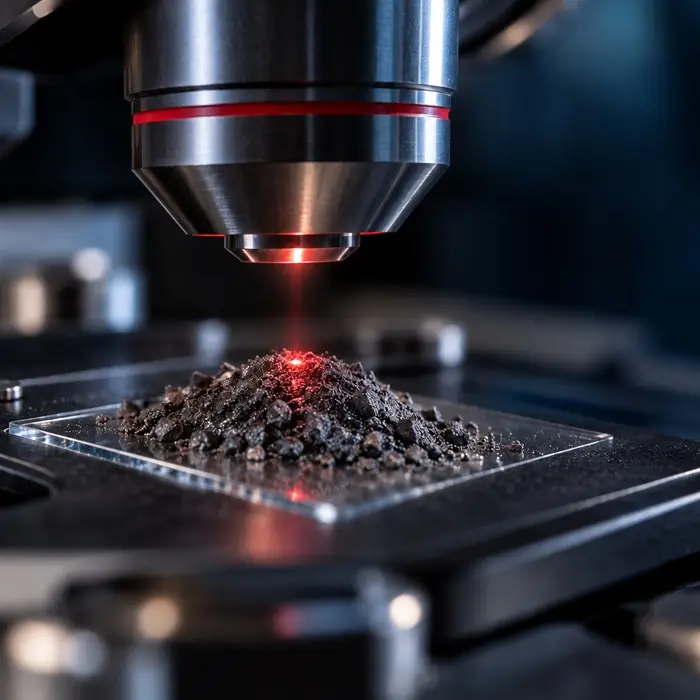
Use a spatial technique that can distinguish the binder from the surrounding constituents. Raman or infrared mapping may supply chemical contrast; microscopy and microtomography can reveal associated structural changes. Establish whether the chosen signal represents binder concentration, relative enrichment, or presence. A visually distinct shell is not automatically a quantitative polymer measurement.
Match the sampling scale to the question. For an intragranular problem, examine surface-to-interior variation across multiple granules and size classes. For a bed problem, retain position. Preserve a wet starting-state sample where preparation can be shown to retain the distribution. Embedding, sectioning, or continued drying must not create the contrast attributed to the process.
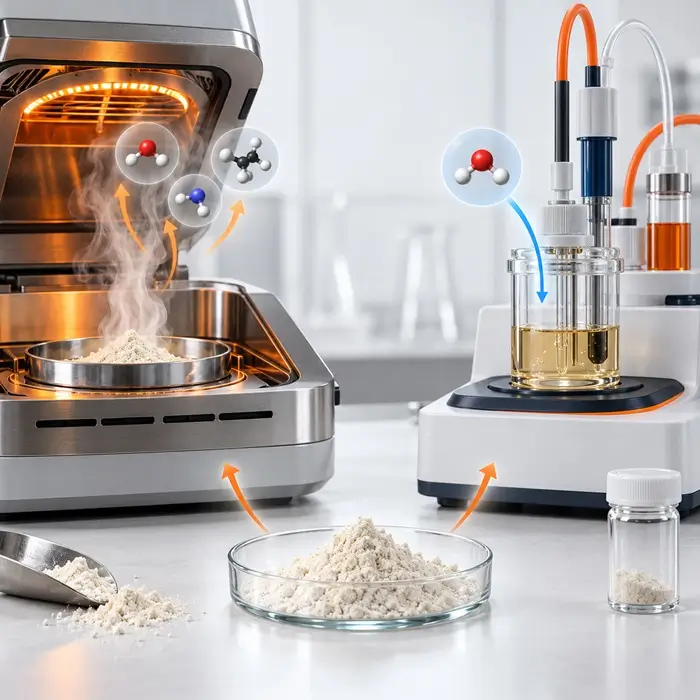
Moisture and pore structure remain essential controls, but need not dominate the article or the test plan. Use a consistent moisture method and conditioning history. Loss on drying and Karl Fischer measurements can represent different quantities; resolve that distinction before treating two moisture numbers as equivalent.
- Reproduce the actual failure and define the response: fines generation, pressing behavior, wetting, or another relevant outcome.
- Compare representative wet material and dried material, retaining granule-size and bed-position information where relevant.
- Measure binder location alongside moisture and internal structure, with controls for preparation artifacts.
- Change the implicated formulation or drying variable in a split-batch trial, then repeat the same performance test.
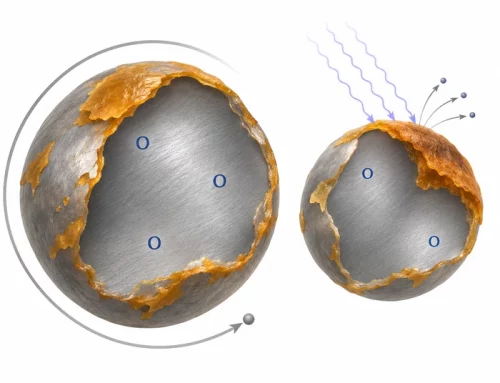
If the map changes but performance does not, the new distribution may be acceptable for the application. If performance changes without a detected distribution change, reassess method sensitivity and other mechanisms. Solid bridges, retained charge, and generated fines are alternative routes to poorer handling after drying.
The objective is a drying condition that delivers the required granule behavior. Keep the binder dose fixed in the first drying comparison, measure where the binder ends up, and use the performance result to decide whether redistribution needs controlling.
Frequently Asked Questions
Technical Basis / Sources
- [1] Zhang, Y.; Tang, X.-X.; Uchida, N.; Uematsu, K. (1993). Mathematical Simulation for Segregation of PVA during Drying. Journal of the Ceramic Society of Japan, 101(1170), 180–183.
- [2] Font, F.; Protas, B.; Richardson, G.; Foster, J. M. (2018). Binder migration during drying of lithium-ion battery electrodes: modelling and comparison to experiment. arXiv:1801.01580.
- [3] Baklouti, S.; Chartier, T.; Baumard, J. F. (1998). Binder Distribution in Spray-Dried Alumina Agglomerates. Journal of the European Ceramic Society, 18(14), 2117–2121.
- [4] Hidber, P. C.; Graule, T. J.; Gauckler, L. J. (1995). Competitive adsorption of citric acid and poly(vinyl alcohol) onto alumina and its influence on the binder migration during drying. Journal of the American Ceramic Society, 78(7), 1775–1780.
- [5] Warren, J. W.; Price, J. C. (1977). Drug migration during drying of tablet granulations II: effect of binder solution viscosity and drying temperature. Journal of Pharmaceutical Sciences, 66(10), 1409–1412.
- [6] Poutiainen, S.; Honkanen, M.; Becker, J.; Nachtweide, D.; Järvinen, K.; Ketolainen, J. (2012). X-ray microtomography analysis of intragranular drug migration during fluidized bed and oven tray drying. Journal of Pharmaceutical Sciences, 101(4), 1587–1598.
- [7] Kiekens, F.; Zelkó, R.; Remon, J. P. (2000). Influence of drying temperature and granulation liquid viscosity on the inter- and intragranular drug migration in tray-dried granules and compacts. Pharmaceutical Development and Technology, 5(1), 131–137.
- [8] Kapsidou, T.; Nikolakakis, I.; Malamataris, S. (2001). Agglomeration state and migration of drugs in wet granulations during drying. International Journal of Pharmaceutics, 227(1–2), 97–112.