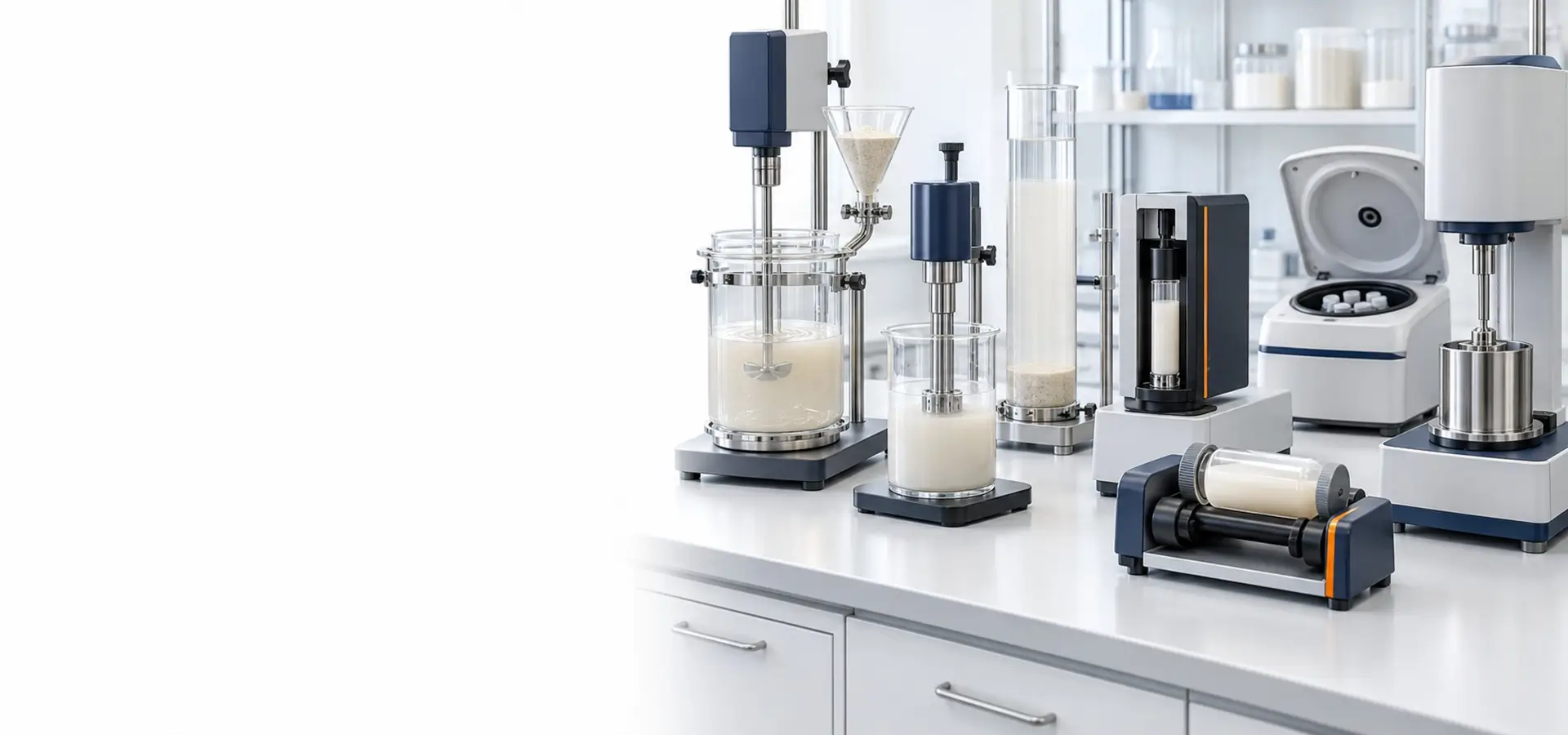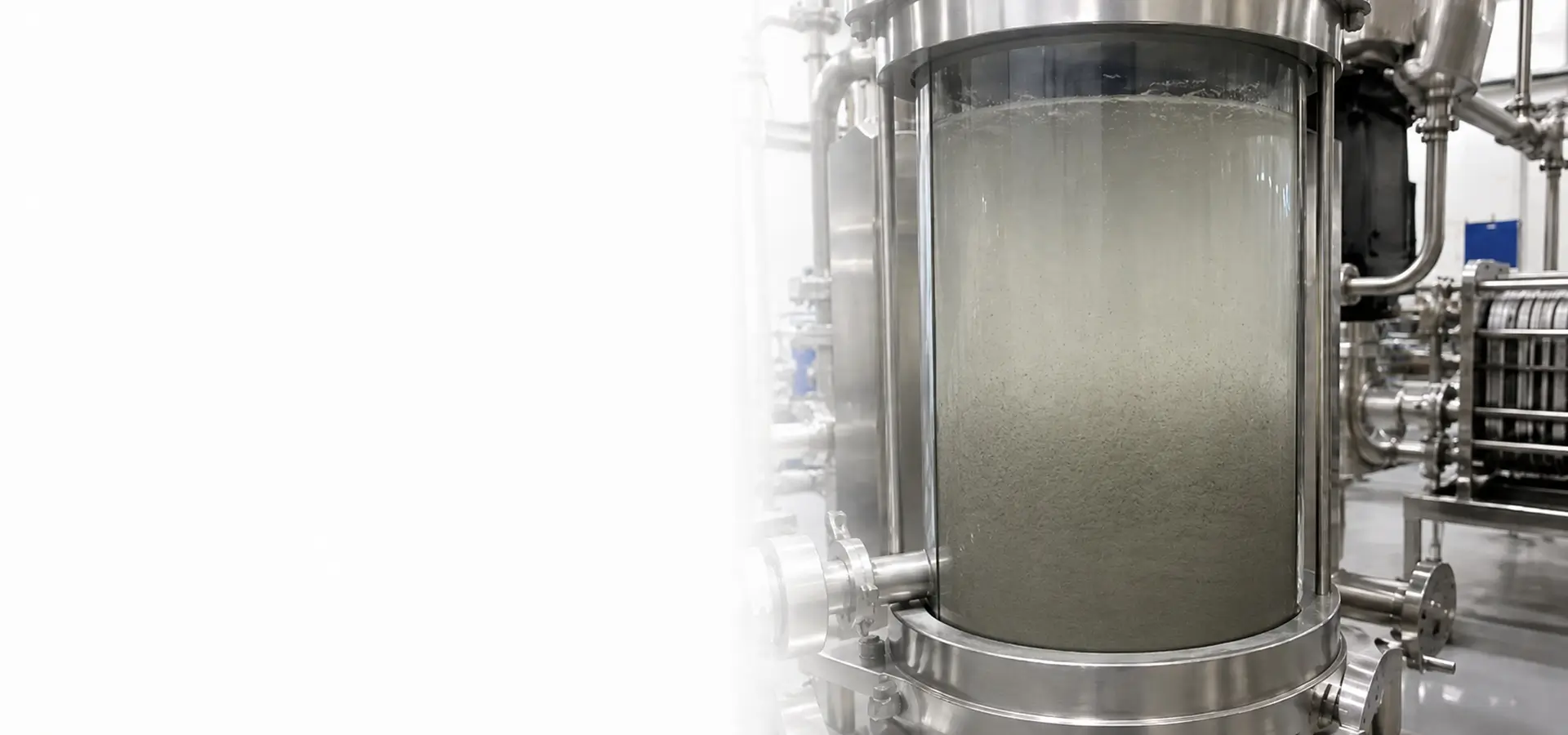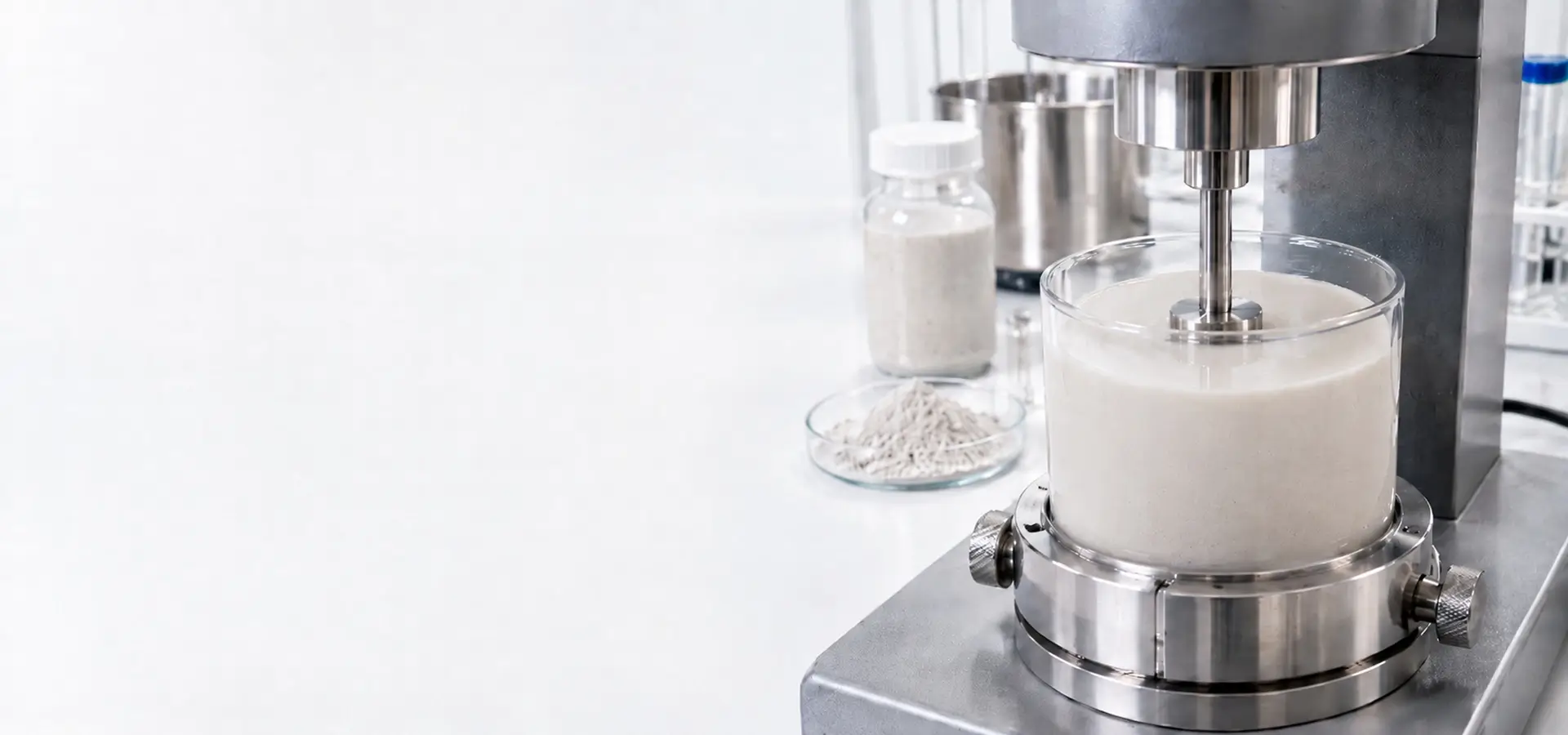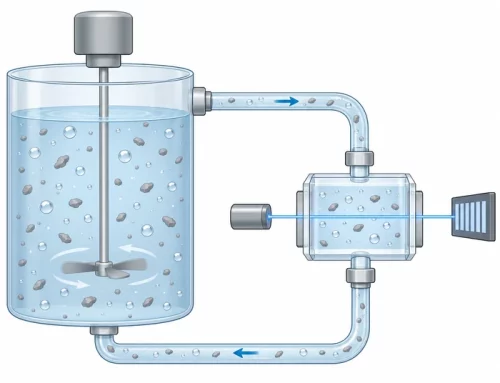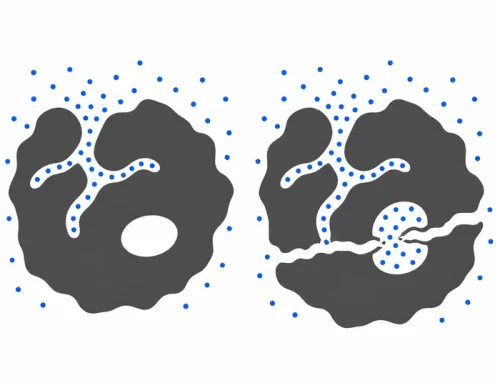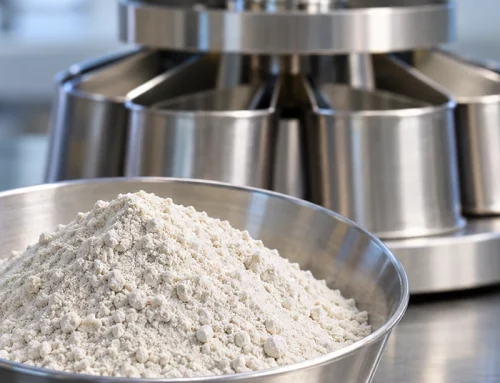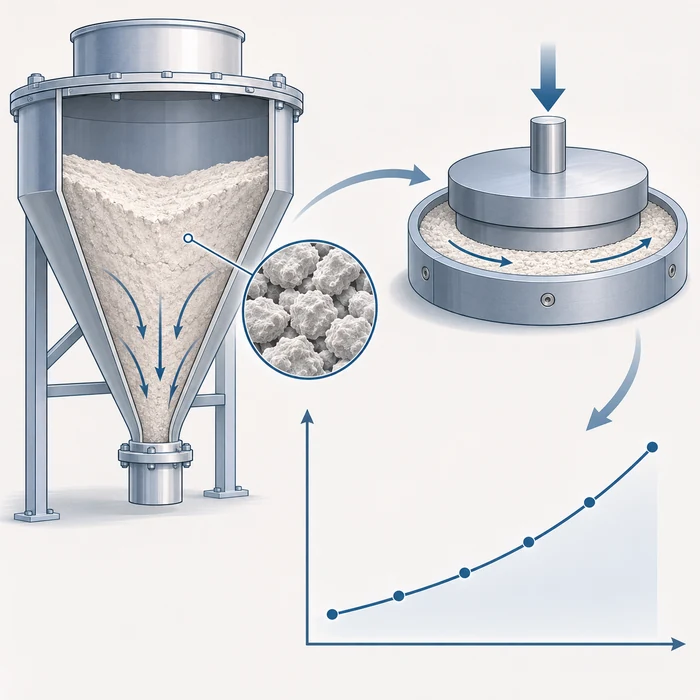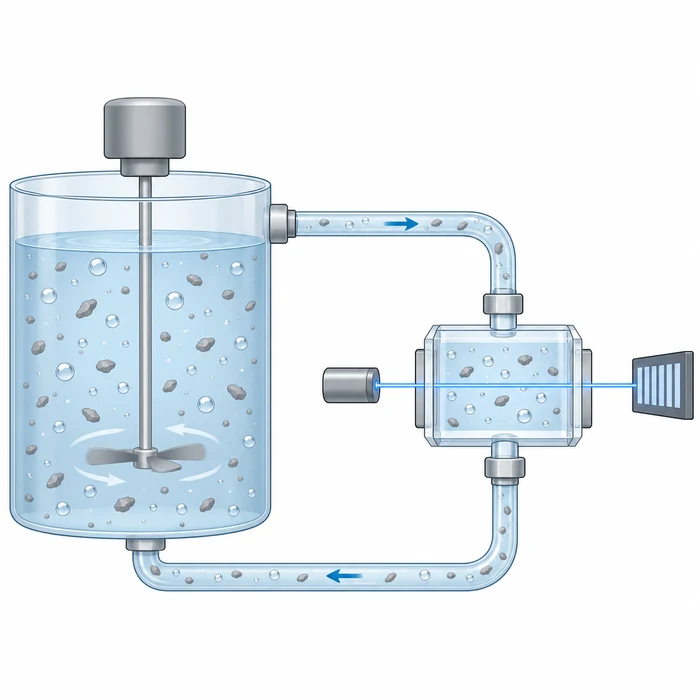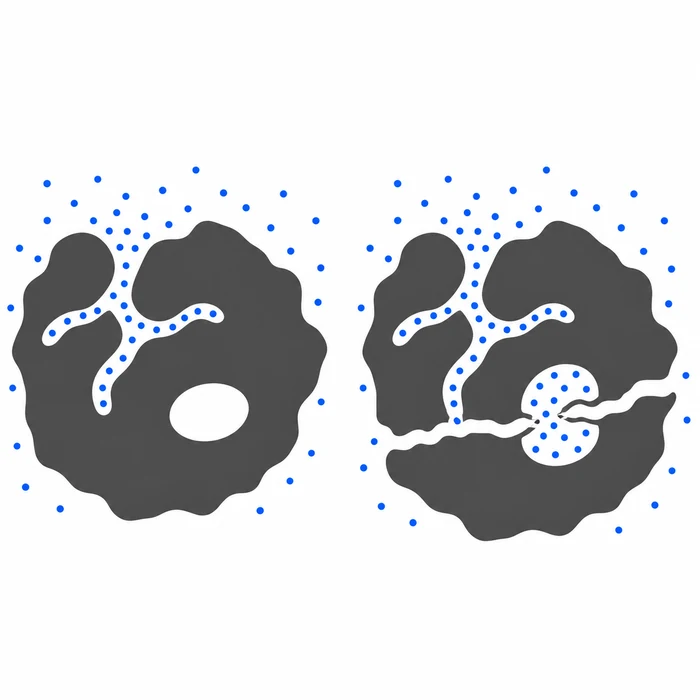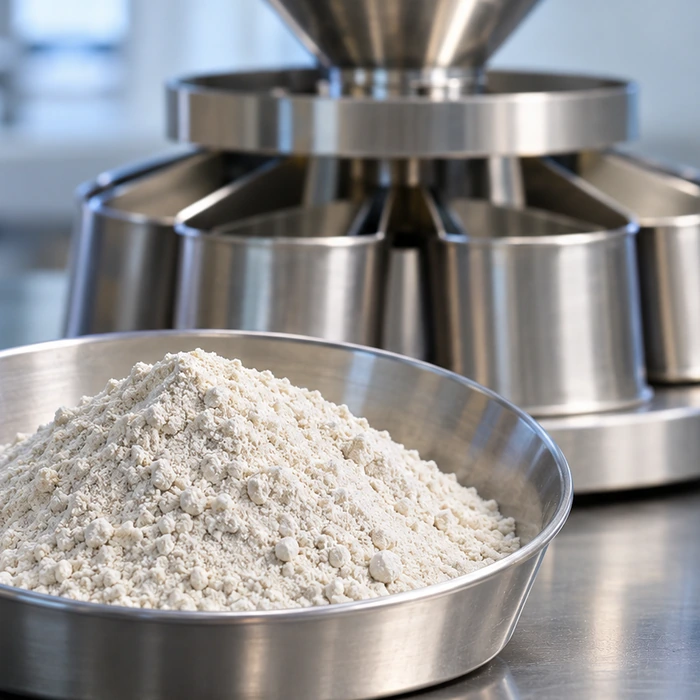
Conceptual investigation views: torque measurement and solids-distribution assessment provide complementary information. No experimental data are shown.
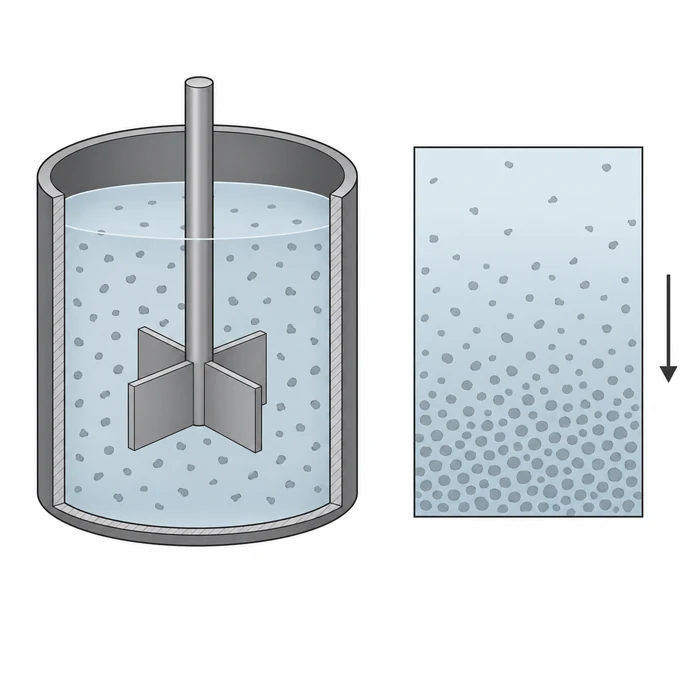
A suspension produces a falling torque signal while the imposed rotational speed remains constant. The immediate question is whether the material is losing structure or whether the measurement is sampling an evolving suspension state. That distinction affects whether the trace can support a formulation decision.
Vane torque measures the resistance the suspension offers to rotation at the imposed speed. A falling trace at constant speed means that resistance is decreasing, which can happen because the suspension’s internal structure is breaking down, or because gravitational or flow-induced redistribution changes the material the vane is sampling. The redistribution effect does not have a fixed direction: whether it raises or lowers torque depends on the resulting particle distribution and the vane and vessel geometry, since the vane can end up sampling a more concentrated, more dilute, or differently structured suspension depending on how particles have moved relative to its position.
What the published example establishes
Crawford, Stickel, and Sprague studied negatively buoyant, non-Brownian α-cellulose particles using vane-in-cup and vane-in-beaker setups, using vane torque to investigate particle distribution during settling and resuspension. The abstract reports a transition between settling-dominant and suspension-dominant regimes as vane speed changed, and suggests that secondary flows were needed to maintain full suspension. This is a relevant example of torque being investigated alongside suspension state, but the accessible abstract does not establish whether torque rises or falls during a specified constant-speed hold, so it cannot supply a directional rule for interpreting the falling trace in this investigation.
First establish a comparable signal
Compare replicate torque histories over their common observation interval. Assess the drift against applicable method precision and uncertainty, including the instrument’s usable torque range. Resolution alone does not establish whether a change is meaningful. Inspect actual speed, temperature, loading times, fill, and instrument-event records before selecting a mechanism test.
Use matched specimens from the same characterized formulation and material population. Match preparation, mixing, preparation-to-loading delay, loading procedure, preshear, rest, geometry, gap, surfaces, and evaporation control. These controls reduce differences already present when measurement begins. PTI’s liquid-phase measurement selection guidance explains why concentration, preparation, imposed motion, and observation time belong in the comparison.
Compare torque with solids distribution
A proposed investigation is to stop independently prepared matched specimens at different durations and assess their solids distributions using a geometry-appropriate observation or sampling method. Compare the torque histories before the earlier stop: disagreement during that shared interval weakens the endpoint comparison. Validate that stopping and sampling do not substantially rearrange the material being assessed.
Reproducible redistribution accompanying reproducible torque drift supports further investigation of a settling contribution when the distribution is consistent with gravitational separation. It does not allocate a fraction of torque to settling. Longer runs also accumulate more deformation, so endpoint differences alone cannot separate redistribution from structural evolution or shear-induced migration.
Use the slurry troubleshooting selector to choose the complementary measurement. Its settling-profile route tracks interfaces, clarity, and solids distribution; its rheology-and-recovery route examines time-dependent flow response after controlled shear. Choose the route that addresses the unresolved observation. A quiescent settling vial provides supporting context but does not reproduce redistribution under imposed motion.
Resolve the leading alternative
Select one targeted check for the leading remaining explanation, such as slip, evaporation, or temperature drift. Change one justified factor while preserving material history and recording changed boundary conditions. A surface or geometry change also changes the measurement conditions, so interpret its effect rather than treating agreement as automatic validation.
Repeat the selected protocol with independent distribution checks. Report whether the combined evidence supports structural interpretation, indicates mixed contributions, or remains unresolved. Use that result to decide whether to retain the time-sweep method or revise its preparation and measurement conditions before comparing formulations.