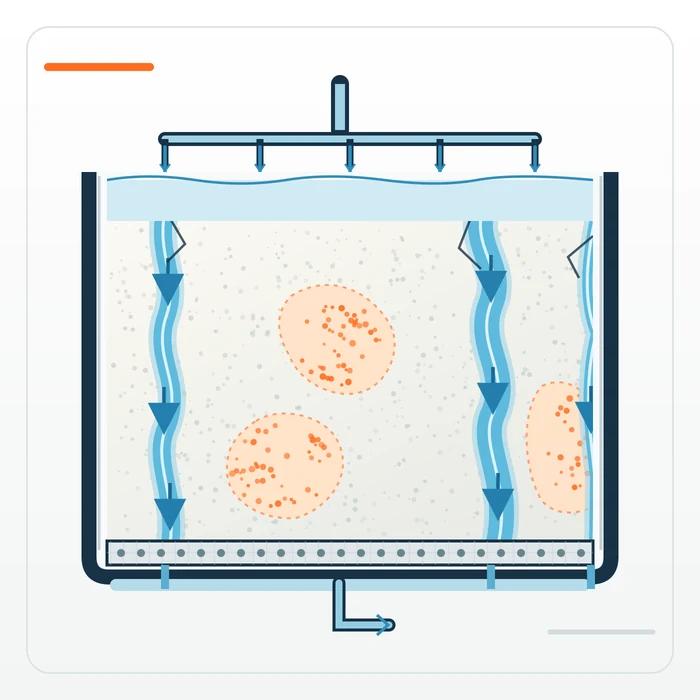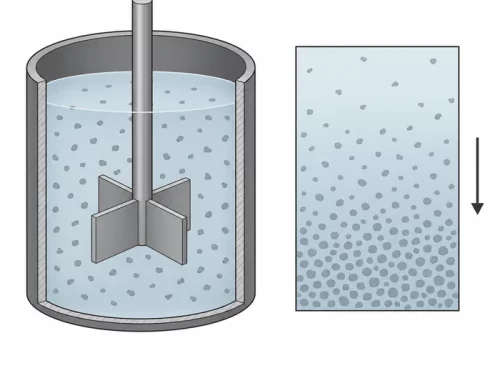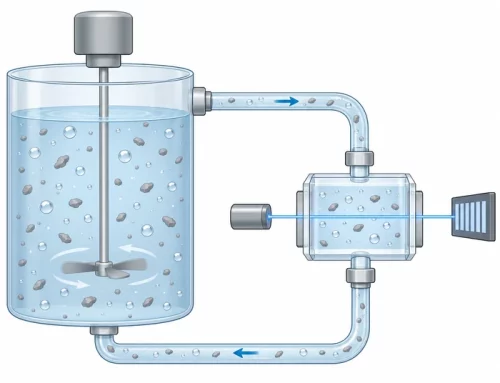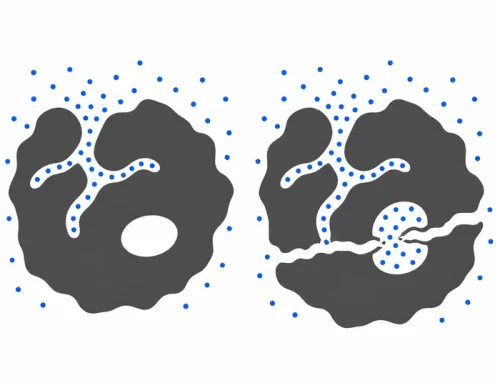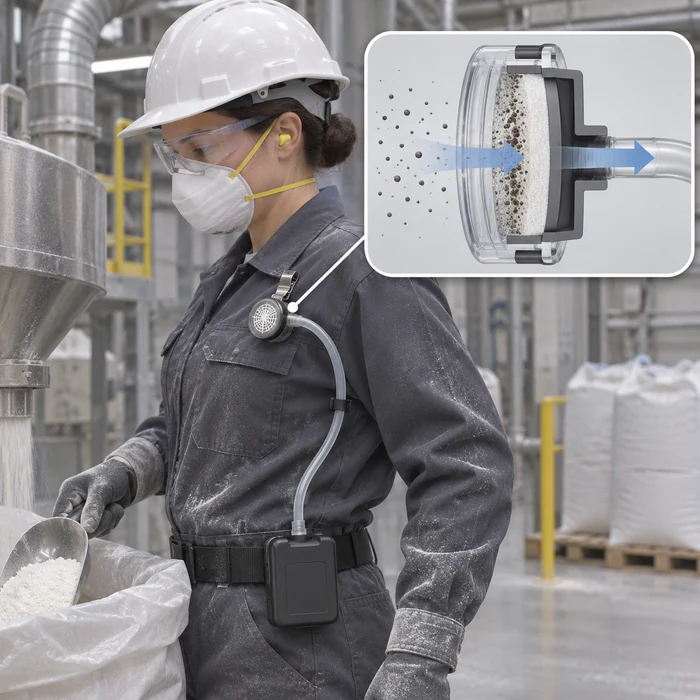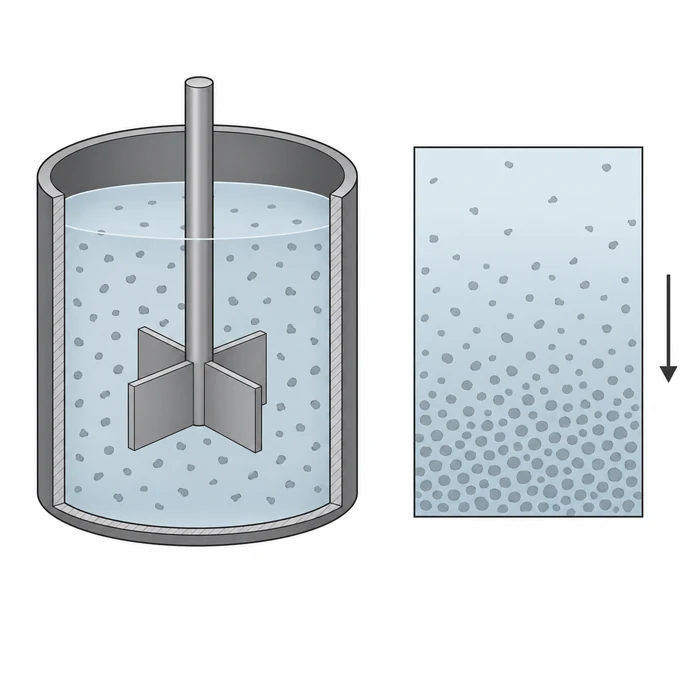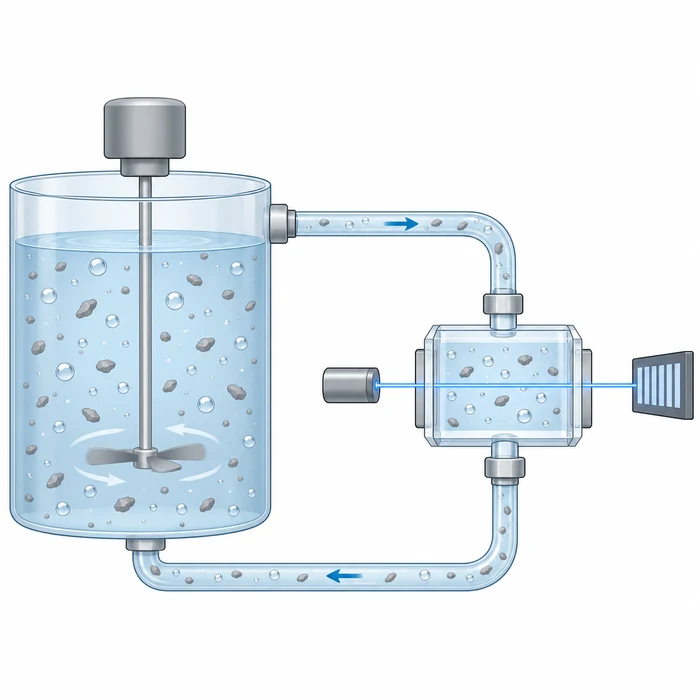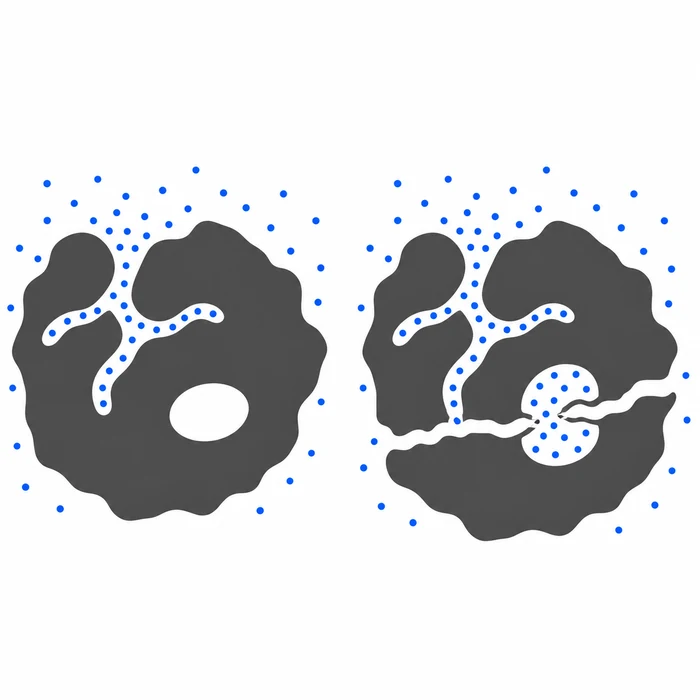
A crack observed after filtration carries a history that must be reconstructed. Illustration, not experimental data.
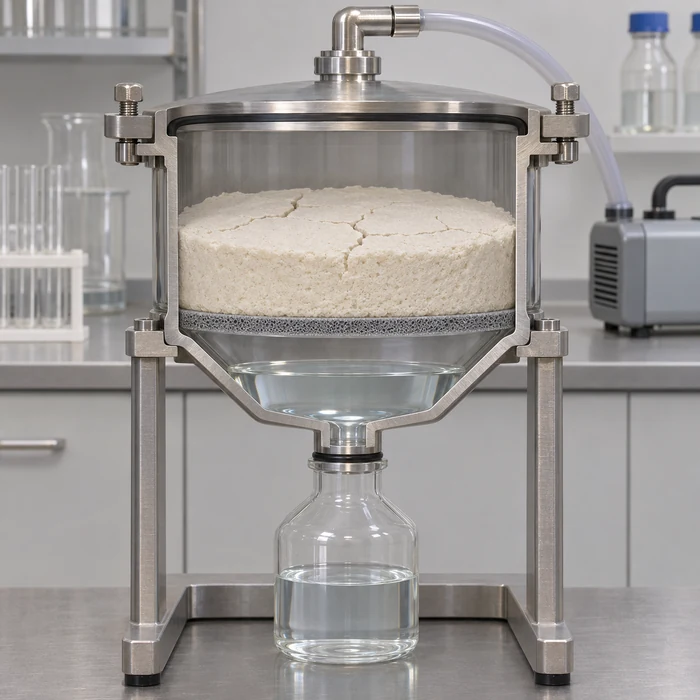
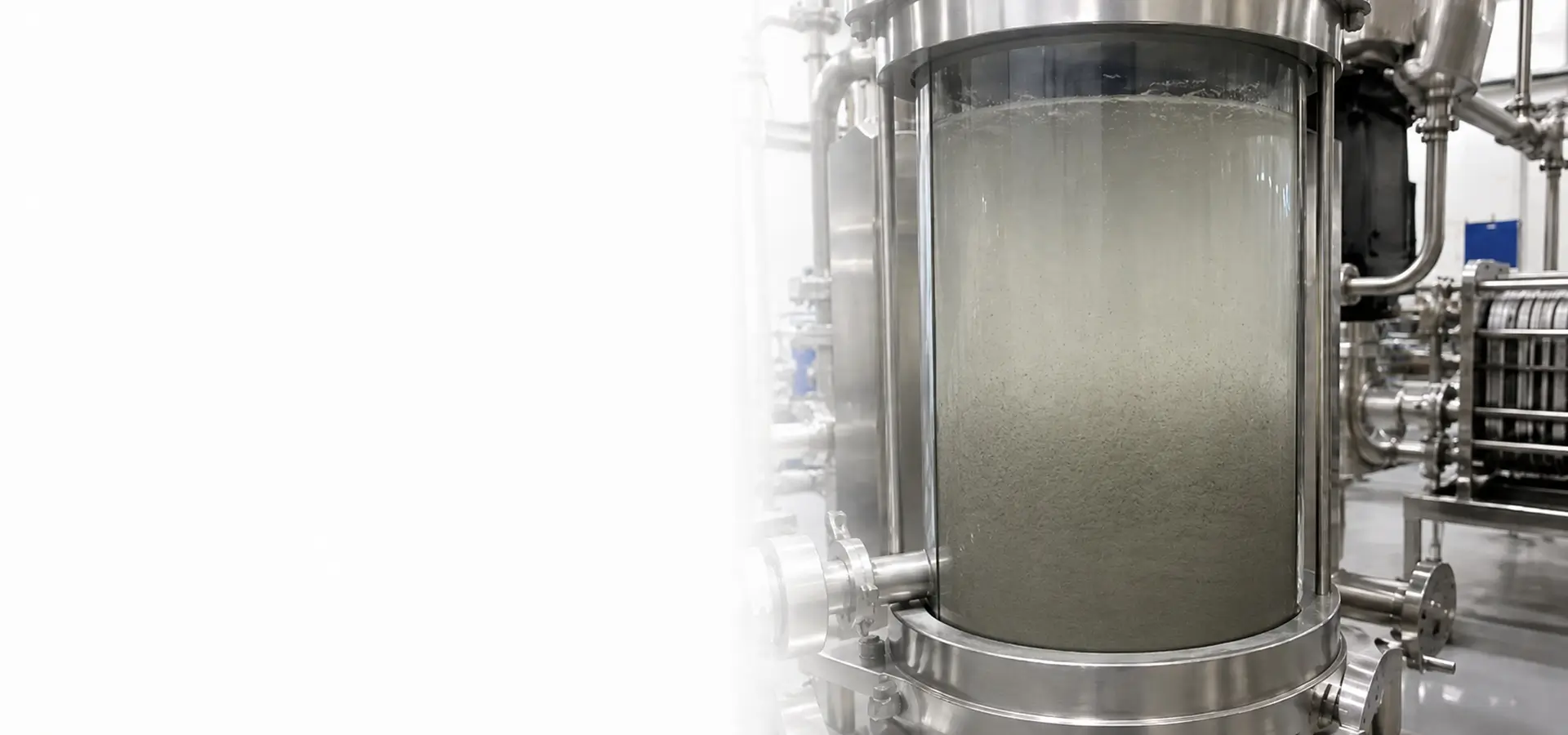
A filter cake looks cracked at discharge. That observation alone does not say when the damage occurred: filter cake cracking can start at the end of formation, develop during gas deliquoring or washing, or appear later during handling.
The timing matters because it decides what to investigate. A photograph taken at discharge documents the final condition, not the moment cracks first became visible. Reconstructing the process history and comparing cakes at defined stage boundaries locates that moment, and filtration research points to one stage in particular: the onset of deliquoring itself.
Cracks start at the onset of desaturation
Strubel and colleagues combined image analysis with laser displacement measurements during laboratory vacuum filtration of precipitated calcium carbonate and polyvinylpyrrolidone (PVP) cakes. Crack onset occurred while the cake was still shrinking, specifically at the onset of cake desaturation, when saturation was close to 100%. The detailed cracking investigation used a vessel that restrained cake shrinkage at the circumference, and the result comes from a single conference paper on compressible, vacuum-filtered cakes. [1]
Why crack onset coincides with desaturation
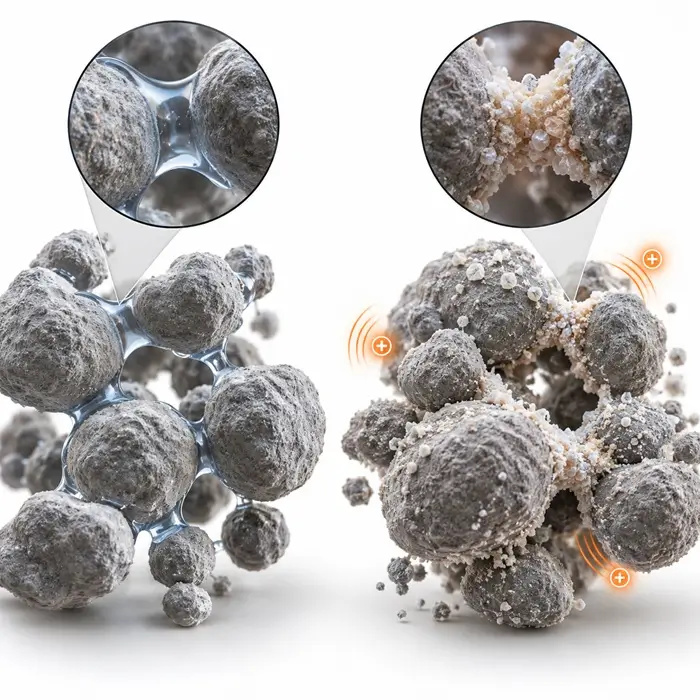
The link between desaturation and cracking follows from how liquid removal stresses the cake. While the cake is saturated, there is no gas-liquid interface inside the pores. Once gas begins entering the surface pores, the menisci that form there pull particles together and the cake shrinks. Strubel and colleagues attribute the resulting tension to this shrinkage being hindered by the filter medium and the vessel wall: shrinkage that cannot occur freely builds tensile stress instead, and cracking follows once that stress exceeds the cake’s tensile strength. [1] The same cakes also showed why compressibility matters: the more compressible PVP material cracked roughly 50 times faster and reached about 1.75 times the final crack area of the calcium carbonate cakes. [1]
Locating crack onset in your process
Start with the batch record: formation, the start of the gas blow, washing, subsequent dewatering, discharge and handling, each with a timestamp. On vacuum and pressure filters, mark two distinct points on that timeline. The first is desaturation onset: once the applied pressure exceeds the cake’s capillary entry pressure, the supernatant disappears, the cake surface changes from glossy to matte, and the filtrate rate shifts from the formation trend to the deliquoring trend. That is the stage the cited evidence identifies as crack onset, and the one worth checking first. The second is gas breakthrough: an early, sudden jump in gas flow, or a sudden loss of vacuum or pressure differential, which indicates that a crack has already opened a preferential gas path through the cake rather than marking the start of desaturation. If the filtration response itself changed, the slurry and dewatering diagnostic route helps connect pressure, flux and cake-thickness data to the same timeline.
Bracket visible cracking with consistent inspections at the same stage boundaries, or with matched cakes stopped at an earlier and a later point, keeping material, formation conditions and geometry as close as practicable. One matched comparison at the bracketed stage is usually enough to decide whether that interval deserves a process trial; run a second comparison only if the first is inconclusive.
What to change
Three levers are directly supported by the cited evidence. Raising the applied filtration or deliquoring pressure reduced, and in some conditions removed, cracking in laboratory Nutsche-filter trials with calcium carbonate; the mechanism is a denser particle packing reached before gas enters the pores, not a gentler or ramped gas blow, which was not itself tested. [2] Barua tested this on calcium carbonate, a relatively incompressible material; on a highly compressible cake, higher pressure also compresses the cake further, so verify the effect on your own material before raising pressure. Lowering the surface tension of the suspending liquid, whether by switching solvent or adding a surfactant, reduced or removed cracking across the same trials, consistent with a lower capillary pressure in the pores. [2] Strubel and colleagues separately suggest that filter media with a high capillary entry pressure might be a valid option, linked to their finding that shrinkage hindered by the filter medium and the vessel boundary builds the tension that drives cracking. [1] This is a property of the medium itself, governing how readily gas passes through the medium; it is distinct from the cake’s own capillary entry pressure, which governs when desaturation begins inside the cake. Confirm each lever against your own material, equipment and throughput requirement before adopting it.
Why the timing of cracking matters
The consequence extends beyond appearance. In gas deliquoring, cracks can give gas a preferential path: once a channel opens, gas flows through it instead of displacing liquid from the surrounding pores, leaving more liquid in the cake and raising residual moisture. Whether that matters in a given run depends on the crack geometry and the operating conditions. [2] Cracks can create the same kind of preferential path for wash liquid, so a cake already cracked at the start of washing is a candidate for uneven liquid distribution rather than a simple volume shortfall; the washing-curve and liquid-distribution guide covers how that unevenness limits impurity removal.
Frequently Asked Questions
Technical Basis / Sources
- Strubel, S., Anlauf, H., and Nirschl, H. (2014). Cracking behavior of compressible filter cakes. European Conference on Fluid-Particle Separation (FPS) 2014, Lyon, France, October 15–17, 2014. https://doi.org/10.5445/IR/1000050326
- Barua, A. (2014). Experimental study of filter cake cracking during deliquoring (PhD thesis). Imperial College London. https://spiral.imperial.ac.uk/entities/publication/32547005-de81-4d16-8f8e-2e847b300f44