
Powder property
Dustiness
Airborne release depends on the material and the handling conditions
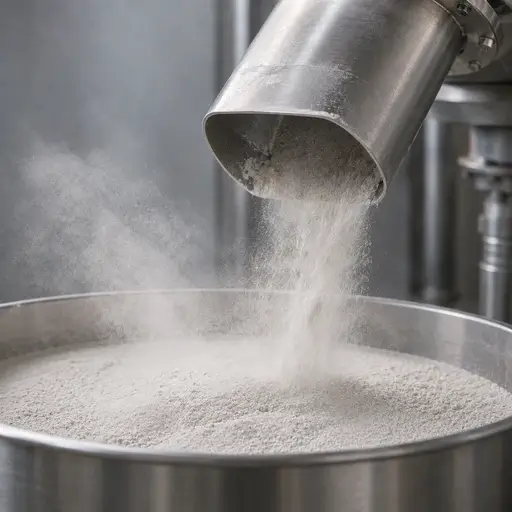
Dustiness is the tendency of a bulk material to release airborne particles during a defined handling or mechanical disturbance. It depends on the available fine fraction, particle cohesion, moisture, electrostatics, agglomerate strength, and the energy and airflow applied by the process or test.
Powder property
Dustiness
Airborne release depends on the material
and the handling conditions
Dustiness is the tendency of a bulk material to release airborne particles
during a defined handling or mechanical disturbance. It depends on the available
fine fraction, particle cohesion, moisture, electrostatics, agglomerate strength,
and the energy and airflow applied by the process or test.




Core concept
Dustiness is a material response to a defined disturbance
A powder can contain fine particles without releasing them readily if cohesion, moisture, or agglomerate structure keeps them attached. Another material with the same fine fraction may release substantially more airborne material under the same disturbance. Dustiness testing applies a defined mechanical energy and collects the released aerosol. It ranks release propensity under that test condition. It does not directly reproduce workplace exposure, which also depends on equipment containment, ventilation, task duration, operator position, and operating scale. Interpret the released mass and size fractions together with the handling mechanism that creates the aerosol. A single total-dust value can hide an important shift in the respirable or nanoscale fraction.
What controls it
Six groups of variables govern dustiness
Airborne release reflects whether particles are available, detachable, transportable by air, and exposed to enough energy to leave the bulk material.
States and interpretation
The same powder can produce different dustiness results
Match the test energy, aerosol collection, and reported fraction to the handling and health question.
| Measurement view | What it represents | Main limitation | Best decision use |
|---|---|---|---|
| Total released mass | All collected airborne material under the test condition | Does not distinguish deposition region or particle-size fraction | Comparative release screening |
| Inhalable fraction | Particles capable of entering the nose and mouth | Sampler and test configuration influence capture | Task-related inhalable dust potential |
| Respirable fraction | Particles capable of reaching the gas-exchange region | Low collected mass requires sensitive and controlled analysis | Comparing deep-lung-relevant release |
| Nanoscale release | Number or mass of very small released particles and agglomerates | Background aerosol and agglomeration complicate interpretation | Nanomaterial release investigation |
How to measure it
Choose a measurement route based on the release question
Different apparatuses apply different energies and collect different aerosol fractions, so results are method-specific.
Where it matters
Dustiness becomes a containment, quality, and exposure constraint
Release occurs where material is accelerated, dropped, impacted, aerated, broken, or exposed to moving air.
Go deeper
Three practical routes into powder dustiness
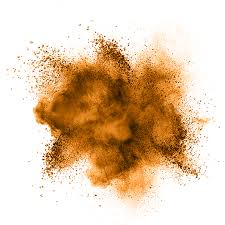
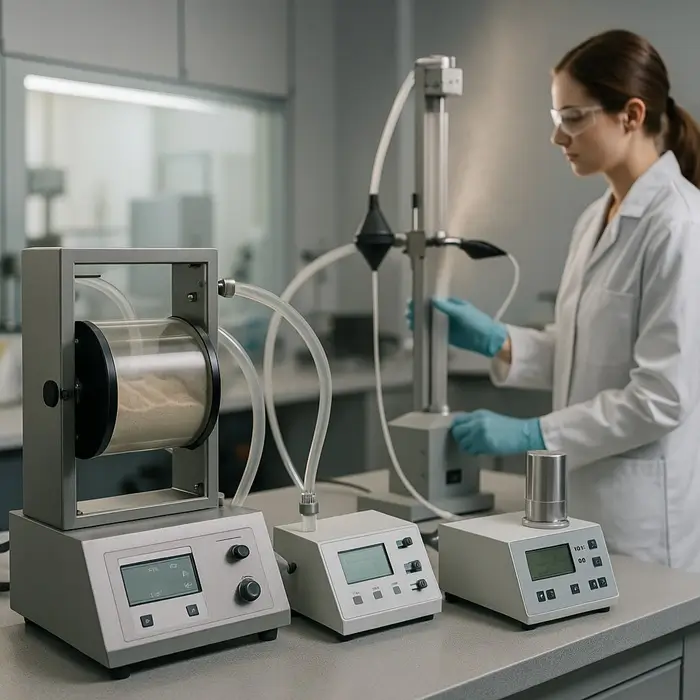
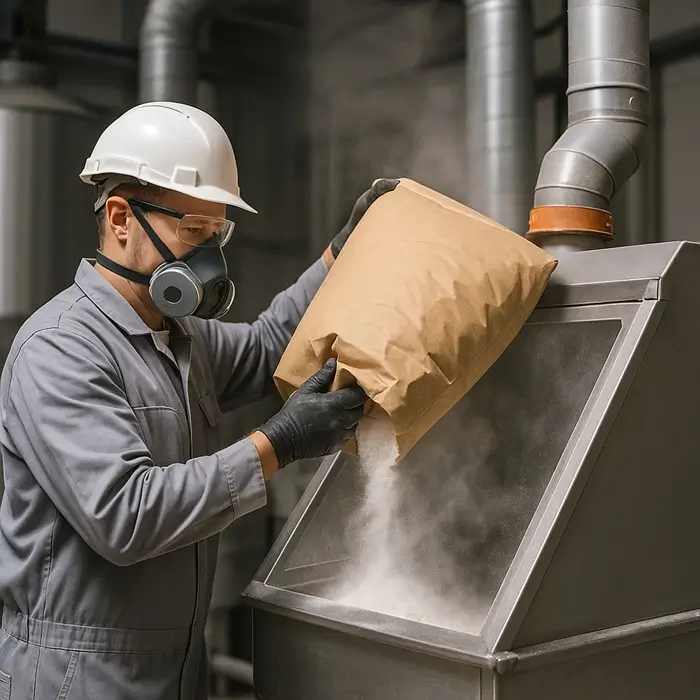
Explore the fundamentals of release propensity, the differences between standardized test routes, and the controls used in operating plants.
Need the measurement, not just the guidance?
If the remaining uncertainty concerns dustiness ranking, inhalable or respirable release, nanoscale aerosol generation, handling-energy effects, or process containment, select the measurement around the material state and process decision. PowderTechnology.info can help define the test sequence, sample conditions, and interpretation route. For laboratory support, explore our Delft Solids Solutions partner page or visit Delft Solids Solutions directly.