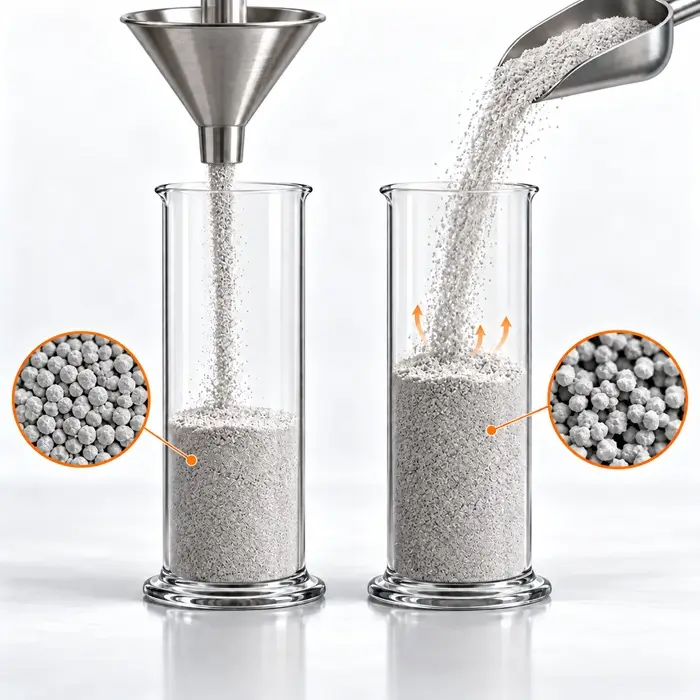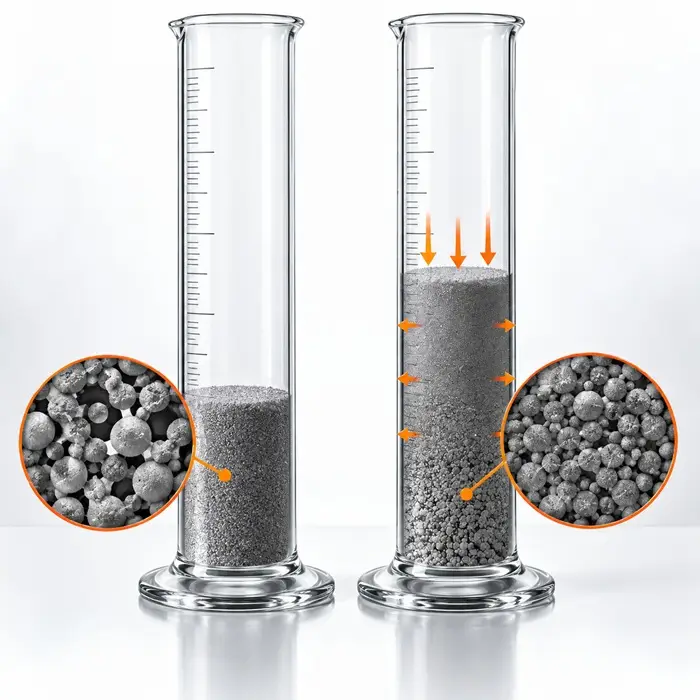
Why Does Pouring Method Change Bulk Density?
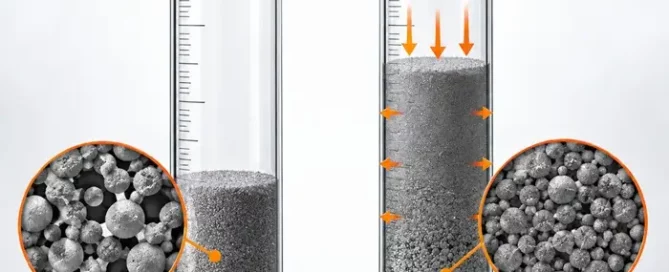
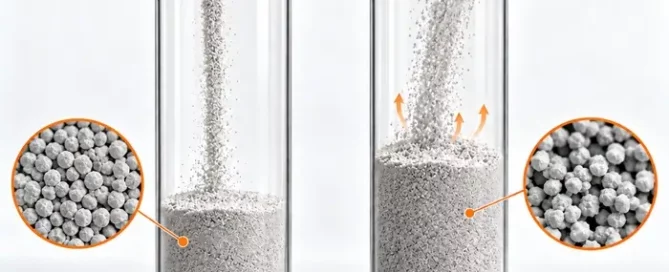
Loose bulk density depends on how powder enters [...]
Loose bulk density depends on how powder enters [...]
Increasing fill mass can raise or lower measured [...]
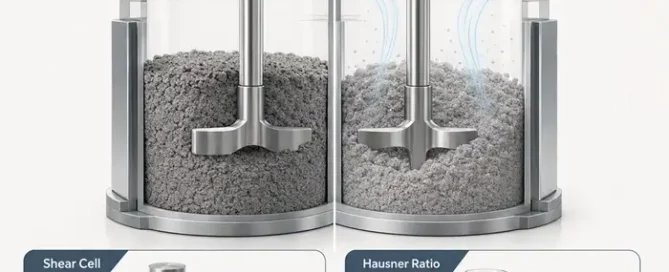
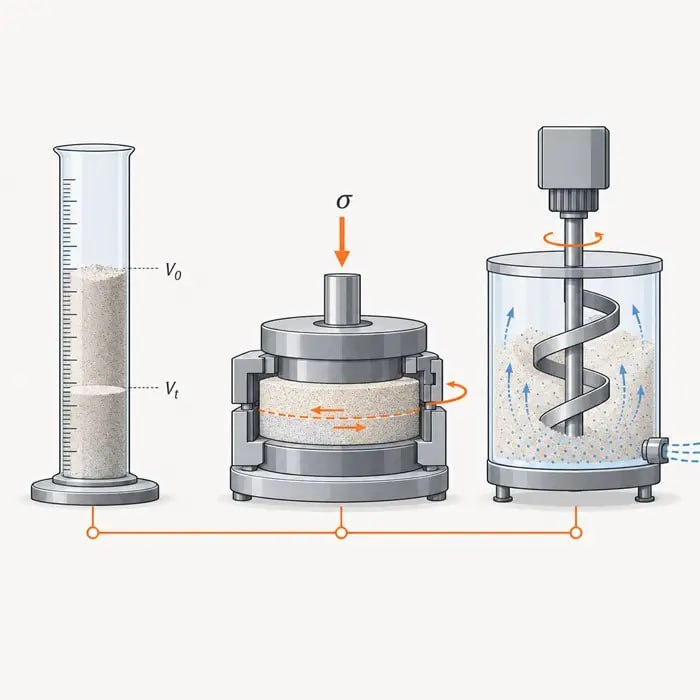
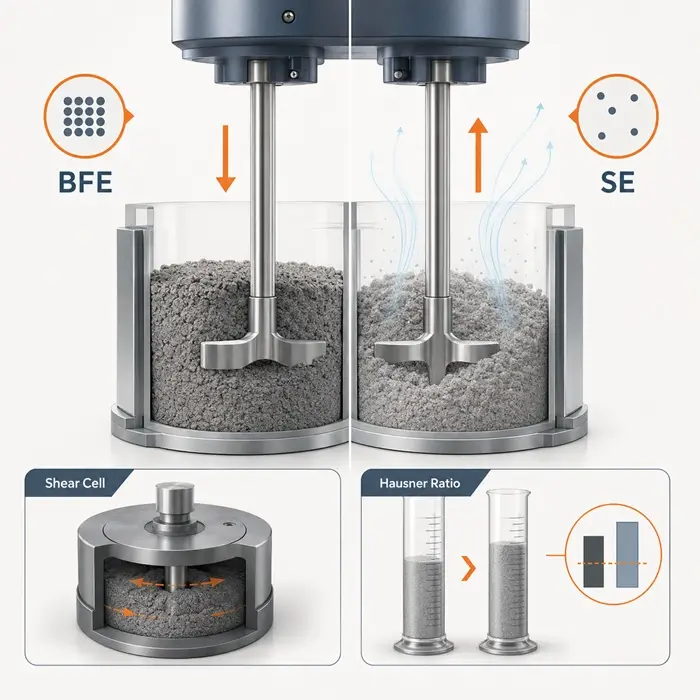
Hausner ratio, shear cell, and dynamic flow energy results on the same PBF powder lot rarely agree exactly. That disagreement is a decision input, not proof that a method or lab got it wrong.

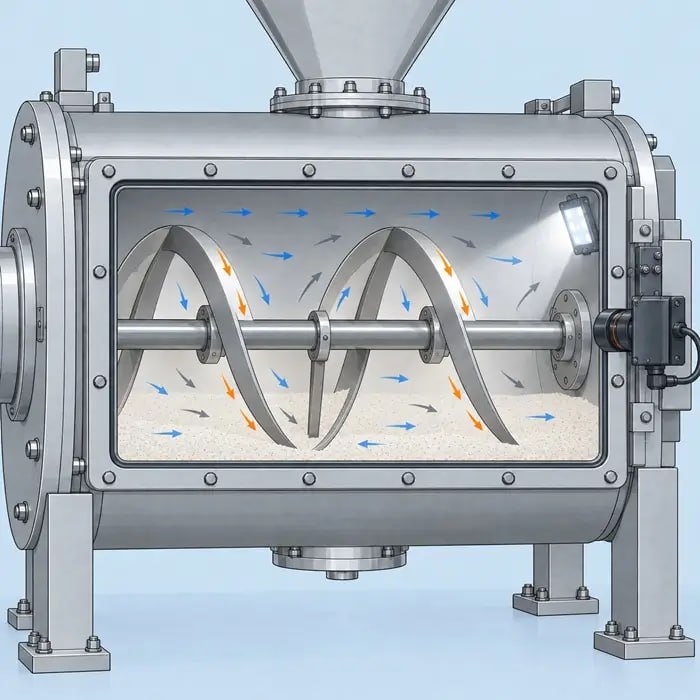
LED-based particle image velocimetry (PIV) images the velocity field inside a moving powder bed during blending, adding spatial resolution that static angle of repose, Hausner ratio, and shear cell tests cannot provide. Here is what that resolution can and cannot support for a process decision.
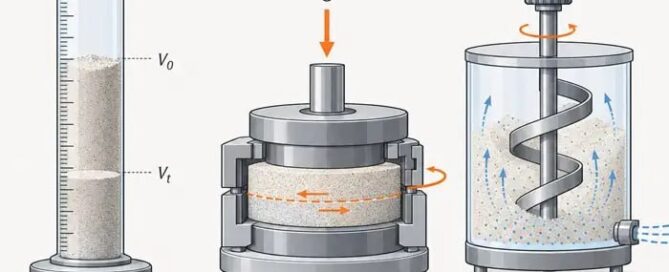
Dynamic and aerated powder testing measures basic flow energy and specific energy to fill the gap between shear cell consolidation data and Hausner ratio screening, particularly for fluidized processing and rapid-refill feeding.
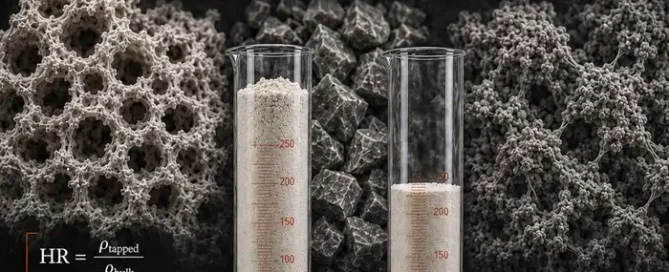
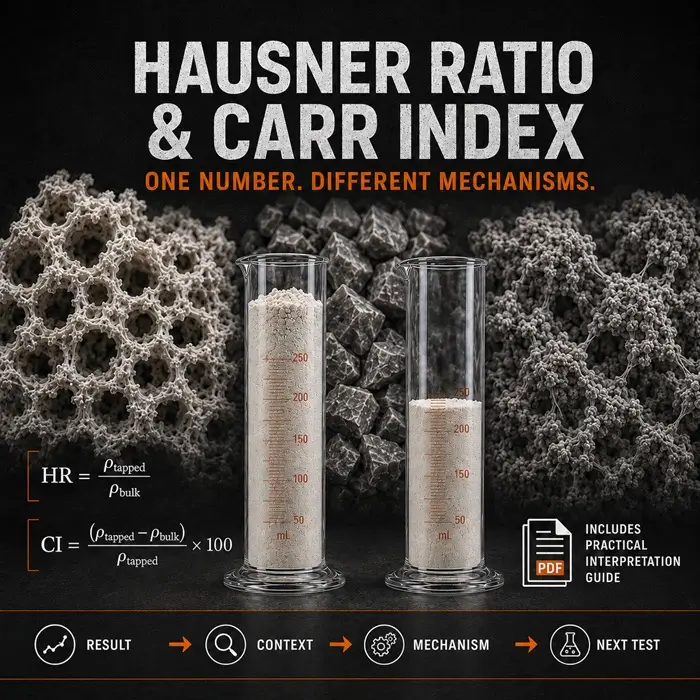
Both the Hausner Ratio and Carr Index reduce bulk and tapped density to a single number. The mechanism behind that number, whether aeration, particle shape, or surface cohesion, determines whether it supports a process decision or actively misleads one.
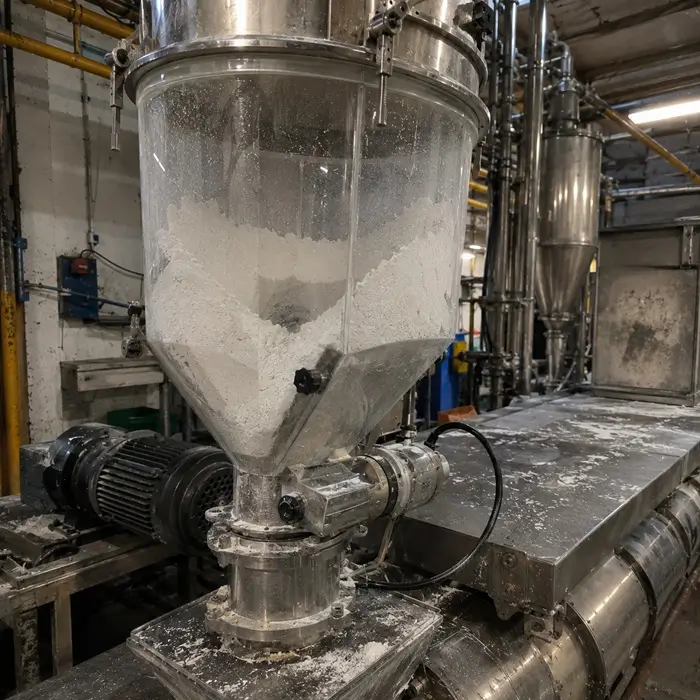
The same screw feeder at the same speed can deliver consistently on one powder and drift by several percent on another. The difference lies in compressibility, wall friction, and cohesion, and in how bulk density shifts as the hopper empties.
Dust suppression oil can reduce airborne calcium carbonate [...]
Powder flowability is not one fixed property. A [...]
Powder flowability is critical to efficiency, quality, and [...]

Practical powder science for engineers, scientists, and process specialists.
Connect powder behavior to relevant measurements and better process decisions.
© 2026 PowderTechnology.info. All rights reserved.