
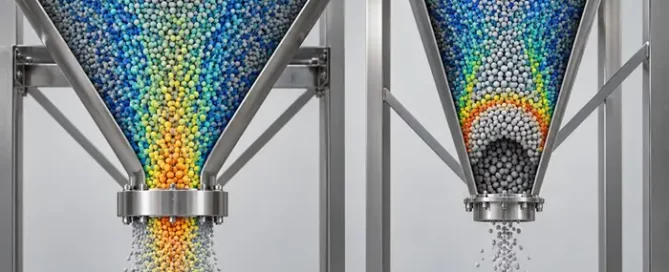
DEM Calibration: Why a Model That Reproduces One Bulk Test Can Still Fail in a Different Hopper Geometry

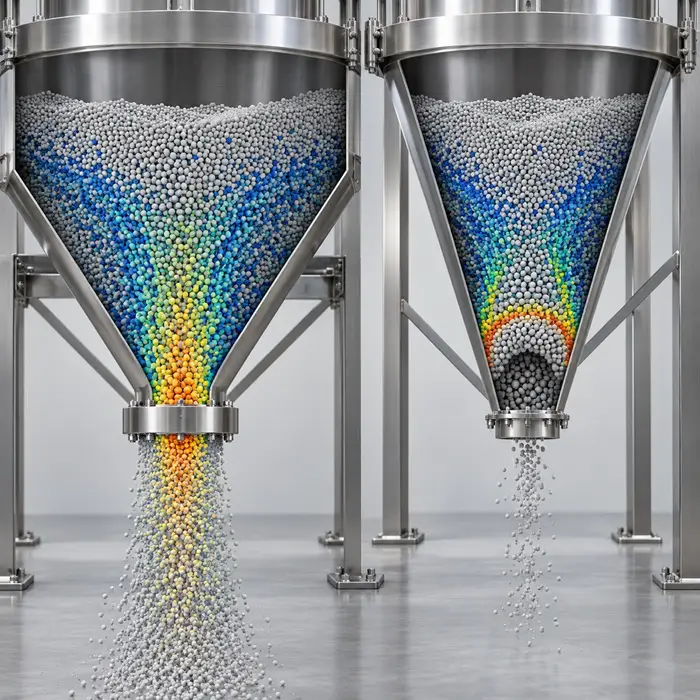
DEM input parameters are fitted to match a bulk observable, not derived from first principles. A parameter set calibrated against an angle of repose test constrains one point in a multi-dimensional parameter space. When the hopper geometry changes, the stress state changes, and unconstrained parameters become the dominant source of prediction error.
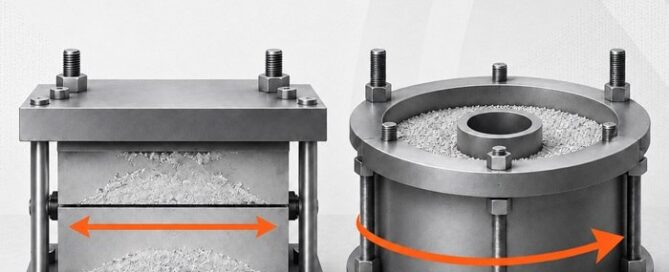
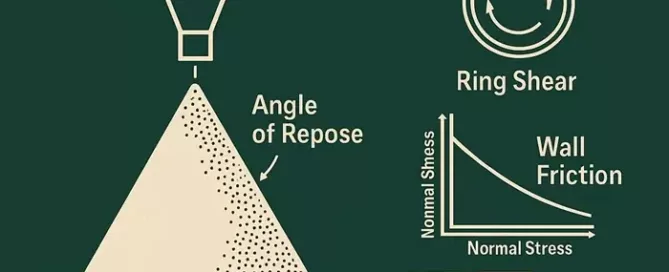
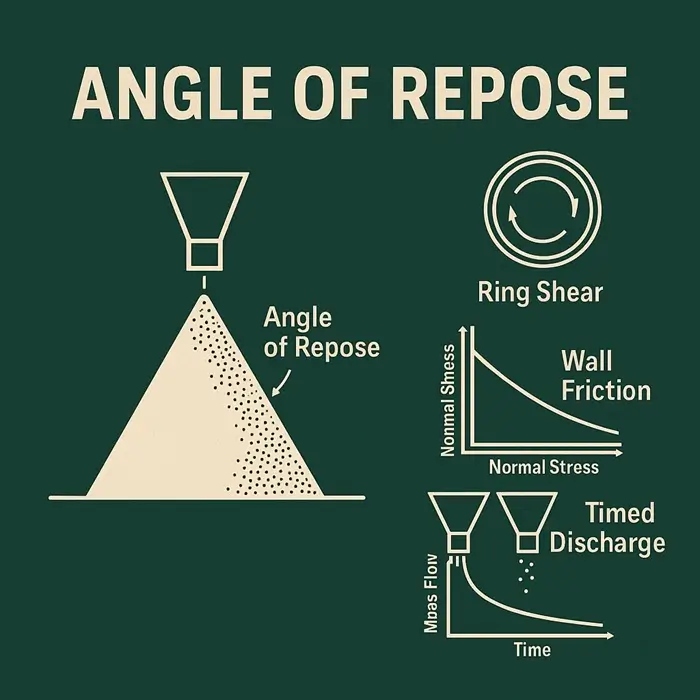
Jenike Shear Cell vs Ring Shear Tester: Matching the Method to the Hopper or Silo Decision

Jenike shear cells and ring shear testers measure the same yield locus through different mechanics. Here is how their sample, stress range, and time differences map onto the mass-flow versus funnel-flow hopper design decision, plus a checklist for choosing between them.

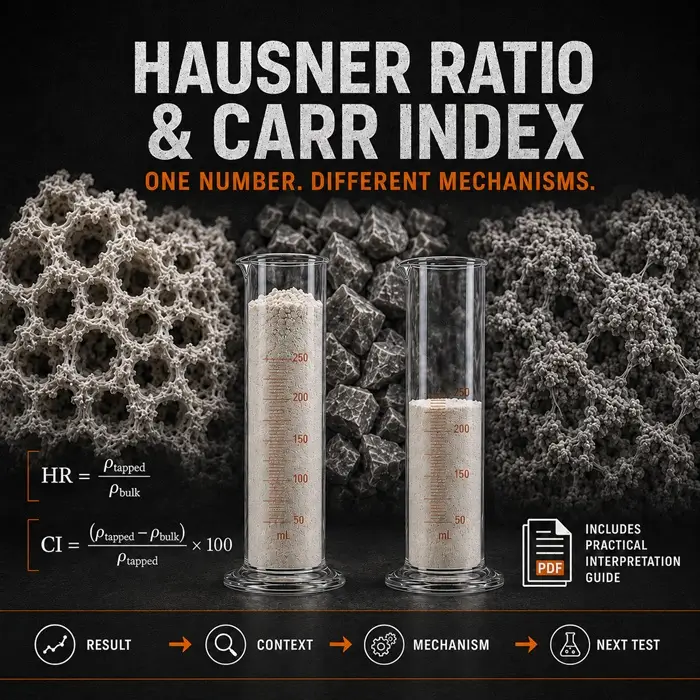
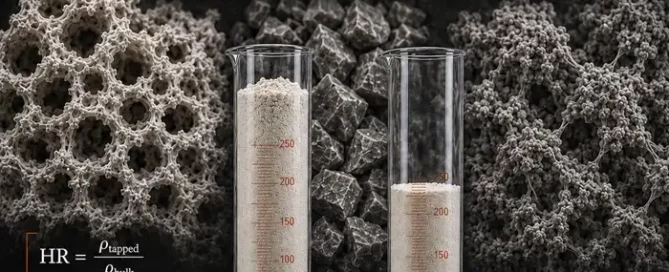
Hausner Ratio and Carr Index: What the Numbers Tell You and Where They Break Down

Both the Hausner Ratio and Carr Index reduce bulk and tapped density to a single number. The mechanism behind that number, whether aeration, particle shape, or surface cohesion, determines whether it supports a process decision or actively misleads one.

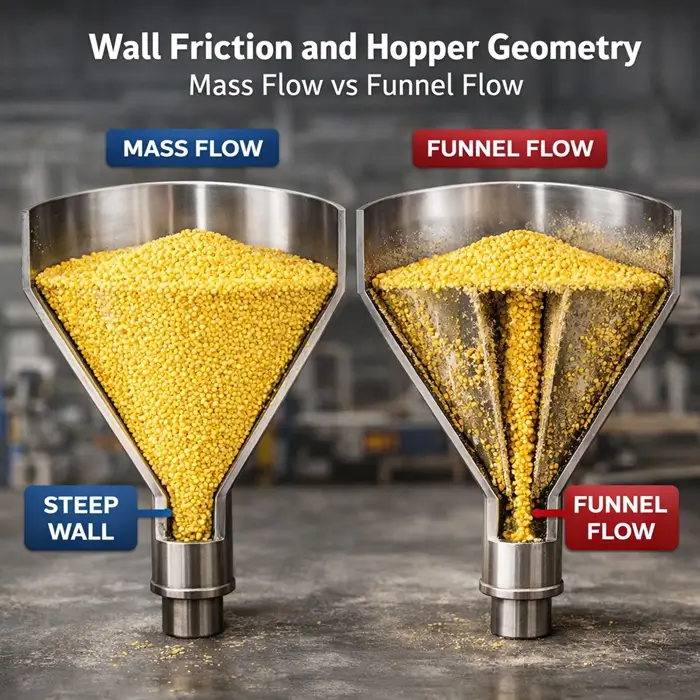
Wall Friction and Hopper Geometry: Why Some Bins Mass Flow and Others Funnel Flow

Mass flow requires hopper walls that are steep [...]

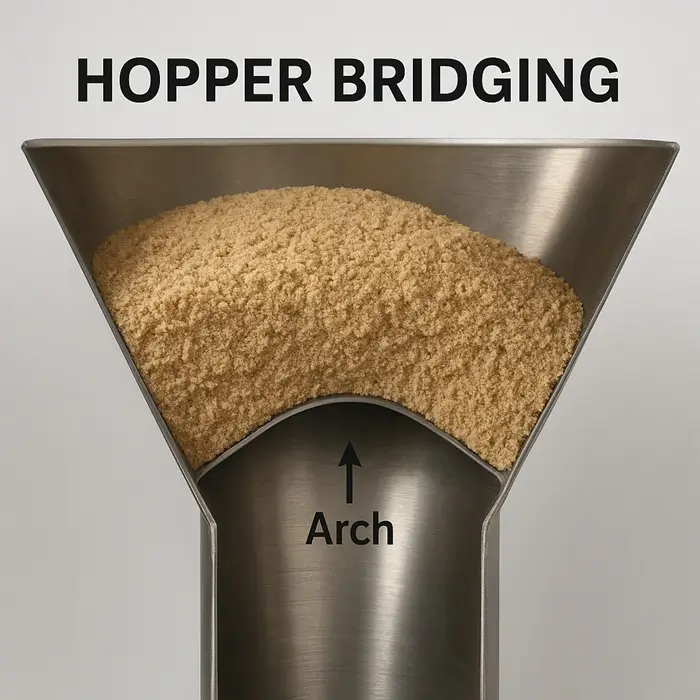
Hopper Bridging: Why One Hopper Always Bridges First

Hopper bridging is rarely random. It points to [...]

Powder Caking Prevention: Causes, Testing Methods, and Proven Fixes

Powder caking can be predicted and, in most [...]

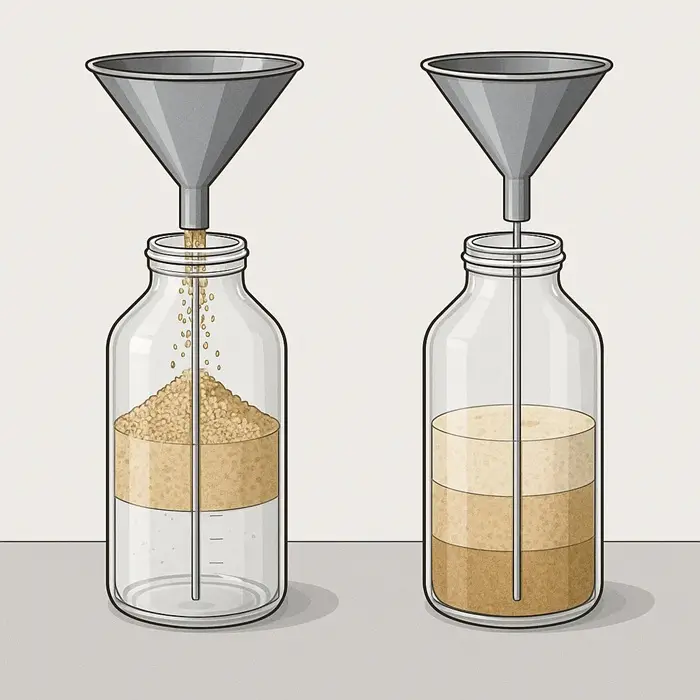
Powder Segregation Test: The 20 Minute Bottle Method

Most blend failures start with segregation during transfer. [...]

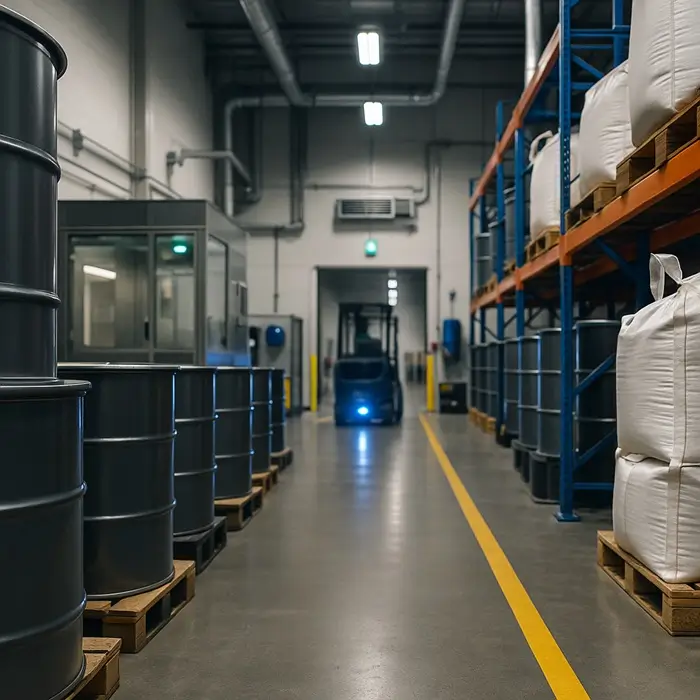
Black Mass Powder Handling: NFPA 660, 2025 Safety Regulations

Black mass is fine, conductive, and often cohesive. [...]

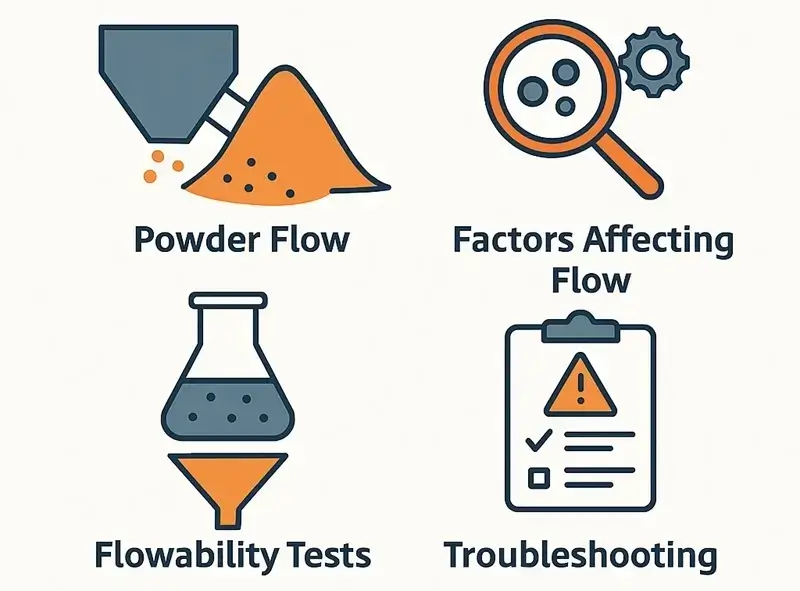
The Ultimate Guide to Powder Flow and Flowability Testing

Powder flowability is critical to efficiency, quality, and [...]

Go to Top