

SUBJECT
Additive Manufacturing
PUBLICATIONS
Browse publications
Explore PTI articles, Insights, Know How, and technical publications related to this subject.
 10 October 2026
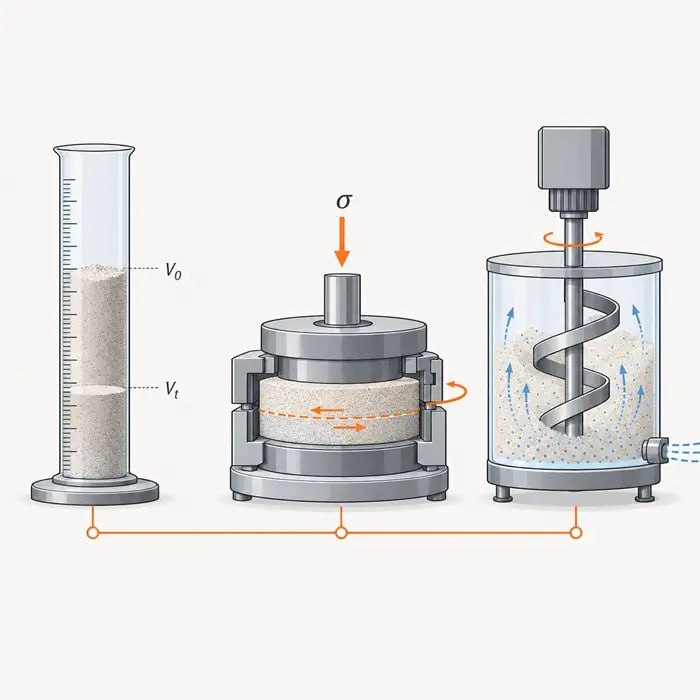
PBF Powder Flowability Testing: Why Different Methods Disagree and What the Results Mean
Hausner ratio, shear cell, and dynamic flow energy results on the same PBF powder lot rarely agree exactly. That disagreement is a decision input, not proof that a method or lab got it wrong.
Insights
 12 September 2026
Powder-Fed Laser Cladding: Why Stable Feed Rate Does Not Guarantee Stable Deposition
In powder-fed laser cladding, a stable feeder setpoint and an in-spec particle size distribution do not guarantee a stable deposit. Catchment efficiency and stream divergence sit between the feeder and the melt pool, and both can drift independently of the powder's PSD.
Insights
 5 September 2026
GRCop-42 and the Copper Powder Feedstock Problem in Laser Powder Bed Fusion
Copper reflects most near-infrared laser light and conducts absorbed heat away faster than almost any other engineering metal. GRCop-42's move into commercial powder catalogs shows how feedstock morphology, oxide content, and particle size distribution are being engineered around that problem rather than worked around it.
Feature Article
 29 August 2026
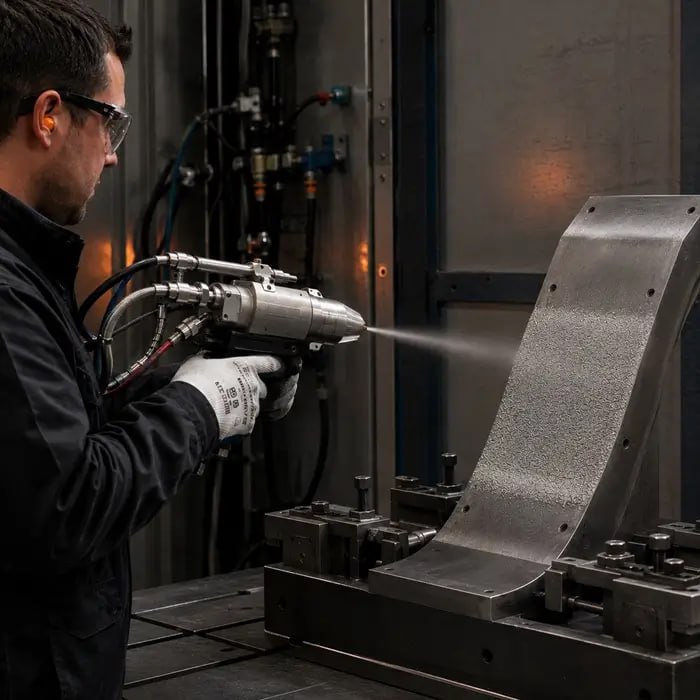
Cold Spray Powder Deposition: Particle Velocity, Oxide Layers, and Why Some Powders Won’t Bond
Cold spray coatings form only when particles clear a critical impact velocity, a threshold set by material properties, particle size and morphology, and native oxide condition. This article looks at what powder-side QC can flag before a spray trial, and where it stops short of predicting deposition efficiency.
Feature Article
 8 August 2026
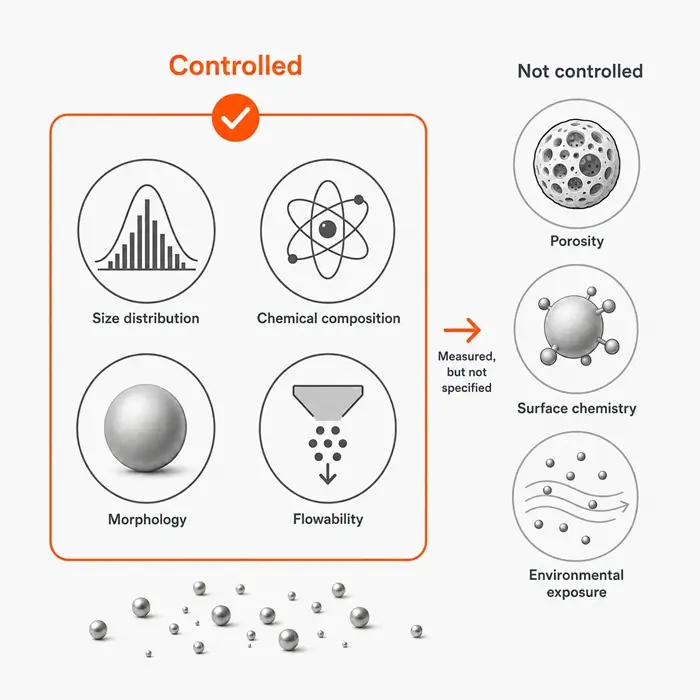
SAE AIR7359: Why Some Metal Powder Feedstock Properties Are Left Out of AM Specifications
AIR7359 explains why AMS-AM metal powder feedstock specifications leave certain properties uncontrolled, citing limited applicability and immature standardized inspection methods, and what that gap means for aerospace AM qualification programs.
Insights
 8 August 2026
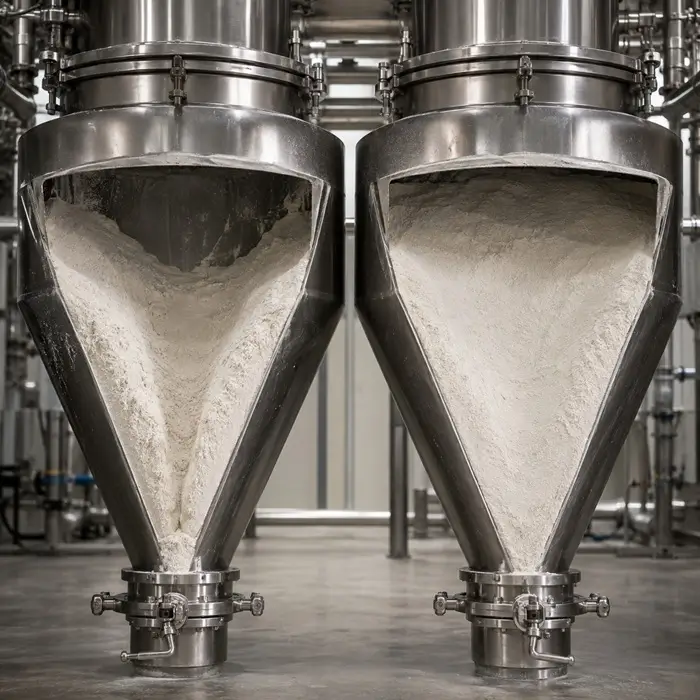
Powder Spreading in Powder Bed Fusion: What Recoater Interaction Reveals About Layer Defects
Powder spreading in powder bed fusion is a recoater-powder interaction shaped by cohesion, particle size distribution, and particle shape. This article maps streaking, short-feeding, and layer non-uniformity back to their underlying mechanisms and separates powder-driven causes from blade wear and spreading speed.
Feature Article
 1 August 2026
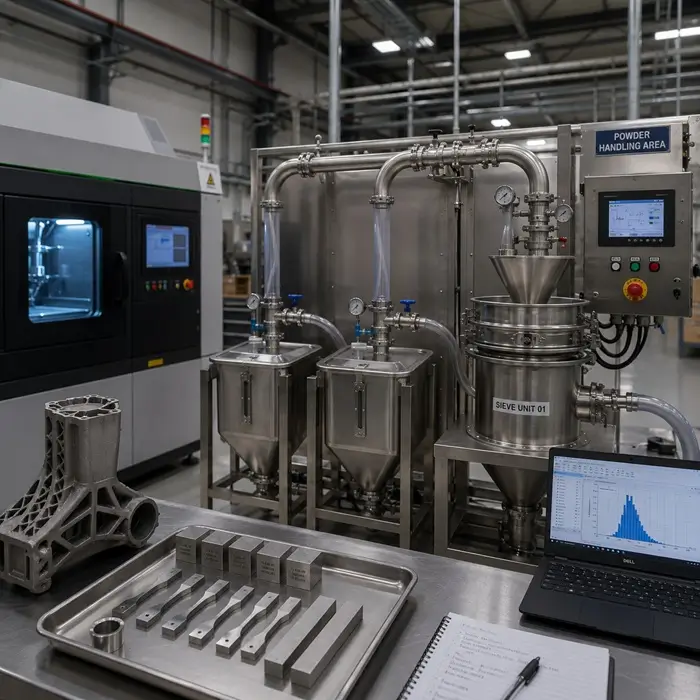
Virgin-to-Reused Powder Blend Ratios in Aerospace PBF-LB Qualification: Where the Decision Actually Sits
As aerospace metal additive manufacturing capacity expands, more reused powder is going back into qualified builds. The virgin-to-reused blend ratio decision depends on PSD shift, satellite formation, and morphology drift, and cannot be settled by a single powder check disconnected from the part's stress state.
Feature Article