Energy materials and fuels

Fuel, sorbent, catalyst
and residue behavior across solid fuel and thermal energy processes

Coal, lignite, coke, biomass, pellets, recovered fuels, sorbents, catalysts and ash are not one category

Particle size, moisture, cohesion, bulk density, grindability, pellet durability, porosity, reactivity, fuel chemistry and ash composition decide whether a material discharges, mills to the right fineness, feeds a burner steadily, resists self-heating in the pile, converts cleanly and leaves a residue you can reuse. This page connects what you are seeing on the plant to the mechanism behind it and the measurement that settles it.

Icon representing energy material and fuel routes

By material type

Pulverized coal, lignite, petroleum coke, biomass, pellets, torrefied fuels, recovered fuels, blends, sorbents, catalysts, ash, char, biochar.

Icon representing recurring energy material and fuel behavior routes

By observed behavior

Flow, caking, dust, fuel-feed variation, segregation, pellet breakage, moisture sensitivity, self-heating, attrition, bridging, oxidation, and fines generation rates.

Icon representing energy material and fuel measurement routes

By measurement route

The test that clearly separates one likely mechanism from another under realistic fuel, storage, handling, conversion, and operating process conditions.

Icon representing process area routes

By process area

Receipt, drying, milling, classification, storage, feeding, blending, densification, conveying, conversion, combustion, residue recovery, and recycling.

Find your route

Start with the material, then the behavior

Energy materials and fuels do not behave as one category. Pick the coal, lignite, coke, biomass, pellet, torrefied fuel, recovered fuel, blend, sorbent, catalyst, ash or char class, then the behavior you are seeing in the process. The result names the mechanisms worth separating, the measurement to start with, and where in the process it usually shows up. It is a triage route, not a diagnosis.

  1. 1Material
  2. 2Behavior
  3. 3Route

Step 1  What are you handling?

Step 2  What are you seeing?

Step 3  Your route

Material routes

Coal, biomass, recovered fuels, sorbents, catalysts, chars and residues

Energy and fuel processes handle fine coal powders, moist lignite, hard petroleum coke, fibrous biomass, densified pellets, brittle torrefied materials, heterogeneous recovered fuels, co-firing blends, reactive sorbents, porous catalysts, ash and recovered carbon products with very different particle sizes, densities, moisture sensitivities, mechanical strengths, chemistries and thermal behaviors. Each class has its own behavior profile, so the most useful route starts with the material before moving to the visible process problem.

Fine matte-black pulverized coal in a shallow stainless-steel sample dish

Pulverized coal and solid fossil fuels

Fine coal powders vary in moisture, ash, rank, and grindability. Cohesion, dust, segregation, and combustion reactivity affect milling, feeding, conveying, and burner stability.

FinenessFlowCombustion
Dark brown lignite and low-rank solid fuel in a shallow stainless-steel sample dish

Lignite and low-rank solid fuels

Low-rank fuels retain more moisture and can cake, smear, or self-heat. Drying history, particle strength, oxidation, and storage conditions affect flow and safe handling.

MoistureCakingStability
Hard black petroleum coke granules in a shallow stainless-steel sample dish

Petroleum coke and carbonaceous fuels

Petroleum coke and related carbon fuels can be dense, abrasive, and difficult to ignite. Size, hardness, fines, sulfur, and moisture affect milling and combustion.

HardnessFinesReactivity
Tan fibrous biomass powder in a shallow stainless-steel sample dish

Biomass powders and milled feedstocks

Milled wood and agricultural biomass are fibrous, elastic, and low in bulk density. Moisture, particle shape, bridging, and dust affect feeding and thermal conversion.

MoistureBridgingFeeding
Tan wood pellets and densified biomass in a shallow stainless-steel sample dish

Wood pellets and densified biomass

Pellets and briquettes must retain strength through storage, transfer, and dosing. Moisture, density, fines generation, and durability directly affect flow and conversion consistency.

DurabilityFinesDensity
Dark torrefied biomass and biochar fragments in a shallow stainless-steel sample dish

Torrefied biomass and biochar

Thermally treated biomass is brittle, porous, and often highly hydrophobic. Particle size, dust, attrition, oxidation, and pore structure affect handling, storage, and reactivity.

PorosityAttritionReactivity
Mixed refuse-derived and recovered fuel fragments in a shallow stainless-steel sample dish

Refuse-derived and recovered fuels

Recovered fuels contain mixed plastics, paper, textiles, wood, and mineral fragments. Composition, particle size, contaminants, density, and segregation affect feeding and combustion.

CompositionSortingFeeding
Mixed coal and biomass co-firing fuel blend in a shallow stainless-steel sample dish

Fuel blends and co-firing mixtures

Blends combine materials with different sizes, densities, moisture levels, and reactivities. Segregation, uneven dosing, and variable burn behavior can reduce process stability.

UniformityDosingCo-firing
White combustion sorbent and emission-control powder in a shallow stainless-steel sample dish

Combustion sorbents and emission-control powders

Limestone, dolomite, hydrated lime, and sorbent powders must disperse and react quickly. Fineness, moisture, purity, and injection behavior affect pollutant capture.

ReactivityDispersionCapture
Beige porous gasification and reforming catalyst granules in a shallow stainless-steel sample dish

Gasification and reforming catalysts

Catalyst powders, pellets, and supports require controlled size, porosity, strength, and surface condition. Attrition, poisoning, fouling, and thermal cycling affect activity and life.

PorosityActivityDurability
Fine gray boiler ash and combustion residue in a shallow stainless-steel sample dish

Boiler ash and combustion residues

Fly ash, bottom ash, slag, and unburned carbon vary in fineness and chemistry. Moisture, agglomeration, leachability, and carbon content affect handling and reuse.

FinenessChemistryReuse
Black pyrolysis char and recovered carbon granules in a shallow stainless-steel sample dish

Pyrolysis char and recovered carbon

Chars and carbon products vary in porosity, ash, volatiles, and particle size. Classification, deagglomeration, contamination control, and activation affect consistency and value.

PorosityPurityValue

Quick comparison

Material route, common risk, first measurement

The same symptom points to different mechanisms depending on the material class, particle size, moisture, density, mechanical strength, chemistry, reactivity, thermal history and process step. This is the fast bridge between energy material and fuel behavior and the most useful first measurement route. The rows follow the same order as the cards above.

Energy material and fuel routes, the handling or processing risk each one carries most often, and the measurement worth running first.

Material routeCommon handling or processing riskUseful first measurement
Pulverized coal and solid fossil fuelsDusting, caking, segregation, feeder variation, unstable ignition, and inconsistent burnoutParticle size, moisture, flowability, bulk density, and proximate analysis
Lignite and low-rank solid fuelsHigh moisture, smearing, caking, self-heating, drying variation, and poor storage stabilityMoisture, self-heating tendency, caking, flowability, and thermal behavior
Petroleum coke and carbonaceous fuelsAbrasion, dusting, milling variation, feeder wear, segregation, and inconsistent conversionParticle size, hardness, moisture, grindability, bulk density, and volatile content
Biomass powders and milled feedstocksBridging, low density, moisture uptake, dusting, segregation, and feeding instabilityParticle size, moisture, bulk density, flowability, particle shape, and compressibility
Wood pellets and densified biomassBreakage, fines generation, moisture uptake, caking, density variation, and poor feedingPellet durability, moisture, bulk density, crushing strength, and fines content
Torrefied biomass and biocharAttrition, oxidation, dusting, segregation, self-heating, and variable reactivityParticle size, moisture, surface area, volatile content, dustiness, and thermal behavior
Refuse-derived and recovered fuelsHeterogeneity, oversize, contaminants, bridging, segregation, and unstable feedingComposition, particle size, moisture, bulk density, calorific value, and contaminant content
Fuel blends and co-firing mixturesSegregation, moisture migration, density mismatch, feeder bias, and unstable conversionBlend uniformity, particle size, bulk density, moisture, and segregation tendency
Combustion sorbents and emission-control powdersCaking, poor dispersion, feeding variation, incomplete reaction, and excessive consumptionParticle size, moisture, reactivity, surface area, flowability, and composition
Gasification and reforming catalystsAttrition, fouling, poisoning, pressure drop, activity loss, and thermal degradationParticle size, surface area, pore structure, strength, composition, and activity
Boiler ash and combustion residuesDusting, caking, variable carbon content, leaching, poor flow, and inconsistent recovery qualityParticle size, moisture, carbon content, composition, leachability, and flowability
Pyrolysis char and recovered carbon productsVariable ash, moisture, volatiles, contamination, agglomeration, and inconsistent reuse qualityParticle size, surface area, ash, moisture, volatile content, and purity

One risk per row is the one most often reported, not the only one that occurs. Use the selector above to work a specific combination through to a route.

Recurring problems

Start from the behavior you can see

These eight come from your own route card and continue block: flow, caking, dust, fuel-feed variation, segregation, pellet breakage, moisture sensitivity and self-heating. Each is one idea rather than three, so the card and the mechanism list line up. Combustion instability is an outcome rather than a powder behavior, so this page routes to it through the material and measurement sections instead of a card of its own.


Icon representing poor flow and discharge

Poor flow or discharge

Arching · Bridging · Feeding

Icon representing caking and consolidation

Caking or consolidation

Moisture · Load · Storage

Icon representing dust and airborne release

Dust and airborne release

Fines · Handling · Explosivity

Icon representing fuel-feed variation

Fuel-feed variation

Density · Refill · Burner

Icon representing segregation

Segregation

Size · Density · Motion

Icon representing attrition and pellet breakage

Attrition and pellet breakage

Durability · Transfer · Fines

Icon representing moisture sensitivity

Moisture sensitivity

Humidity · Drying · Milling

Icon representing self-heating and oxidation

Self-heating and oxidation

Oxidation · Heat · Storage

Measurement routes

The test that answers your question

Energy material and fuel behavior rarely resolves to one number. Particle size, morphology, moisture, self-heating tendency, cohesion, bulk density, grindability, pellet durability, dustiness, porosity, fuel chemistry, calorific value, ash composition and blend uniformity can all contribute to the same visible process symptom. Pick the method by the question, not by the symptom.

Particle size and morphology

Particle size distribution
Mill fineness, classifier cut, fines content, oversize, pellet fines, and burner feed consistency.

Microscopy and morphology
Particle shape, fiber length, aspect ratio, surface texture, char structure, and unburned carbon in ash.

Moisture, self-heating, and storage stability

Moisture content and sorption behavior
Total and surface moisture, equilibrium moisture, sorption isotherms, drying endpoint, and safe storage limits.

Self-heating and thermal analysis
Low temperature oxidation, heat release onset, ignition behavior, volatile release, and stockpile stability.

Flow, density, and fuel feeding

Flowability and shear testing
Cohesion, consolidation under storage load, wall friction, arching and rathole tendency, and feeder discharge.

Bulk and tapped density
Packing, aeration, deaeration, volumetric feed accuracy, silo capacity, and density variation between deliveries.

Grindability, durability, and dust

Grindability, durability, and attrition
Mill energy demand, pellet durability, fines generation at transfer, and degradation through handling.

Dustiness testing
Dust release at transfer and free fall, respirable fraction, explosivity screening input, and housekeeping load.

Porosity, fuel chemistry, and calorific value

Porosity and surface area
Pore structure of chars, sorbents, and catalysts, reactive surface area, sorbent capacity, and catalyst life.

Fuel chemistry and calorific value
Carbon, hydrogen, nitrogen, sulfur, chlorine, trace metals, heating value, and contaminant screening.

Ash chemistry, blend uniformity, and segregation

Ash chemistry and loss on ignition
Ash yield, unburned carbon, slagging and fouling indicators, leachable content, and reuse specification.

Blend uniformity and segregation testing
Co-firing ratio consistency, sampling, segregation during transfer and reclaim, and batch to batch variation.

Compare every method All test methods on the site, grouped by the question they answer.

Process routes

Where the behavior actually shows up

The same fuel, sorbent, catalyst or residue behaves differently depending on where it sits in the process. Receipt, drying, milling, storage, feeding, blending, densification, conversion, sorbent injection, conveying and residue recovery each expose a different property, a different safety concern and a different failure mode.

01

Raw-material receipt and preparation

Delivery variability, sampling, screening, drying and pre-crushing set the moisture, size distribution and contaminant load that every later step inherits.

02

Drying, milling, and classification

Dryer duty, mill selection, grindability, classifier cut and fines return determine fineness, mill throughput, heat input and the dust load carried forward.

03

Bulk storage and fuel feeding

Silo and stockpile geometry, residence time, consolidation, ventilation, feeder type and refill pattern determine discharge reliability, feed rate stability and self-heating risk.

04

Fuel blending and co-firing preparation

Size and density contrast, addition order, mixing time, reclaim pattern and sampling determine blend uniformity, co-firing ratio accuracy and combustion consistency.

05

Pelletizing and densification

Moisture, binder, die geometry, compression, cooling and screening determine pellet density, durability, fines generation and storage behavior.

06

Combustion, gasification, and pyrolysis

Particle size, moisture, volatile content, reactivity, residence time and temperature profile determine burnout, carbon in ash, slagging and product gas quality.

07

Sorbent injection and catalyst contact

Sorbent fineness, dispersion at the injection point, contact time, catalyst porosity and poisoning or fouling exposure determine capture efficiency and catalyst life.

08

Handling, conveying, and transport

Transfer height, chute design, conveyor type, drop points and loading and unloading cycles determine attrition, fines generation, dust release and segregation.

09

Residue recovery and beneficial reuse

Ash collection, conditioning, classification, carbon content, leachability and specification testing determine whether a residue is disposed of or sold.

Go deeper

Guides and articles for energy materials and fuels

Longer reads that work through the mechanisms behind these routes, from the visible handling problem to material properties, measurement choice and interpretation.
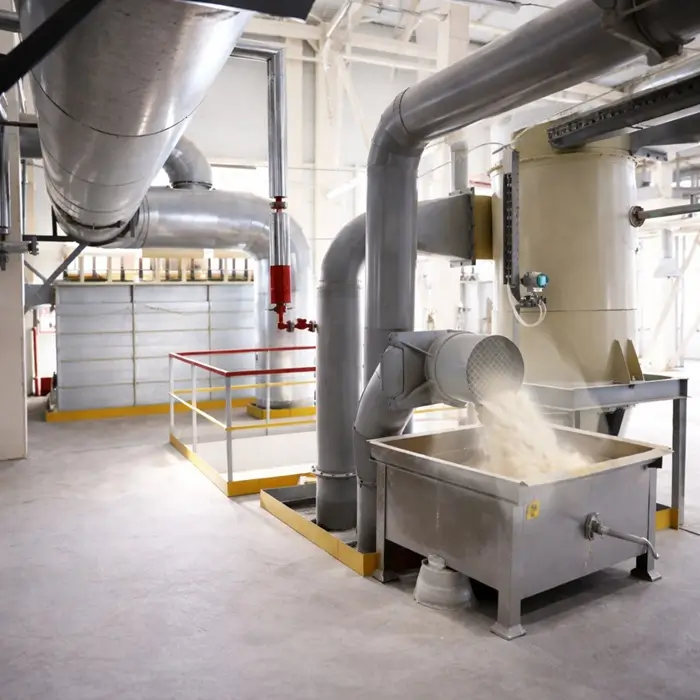
Combustible dust sample being assessed against explosivity screening criteria

Universal dust explosivity criteria

Why fines content and particle size decide whether a coal, biomass or char dust is explosible, and which screening measurements come first.

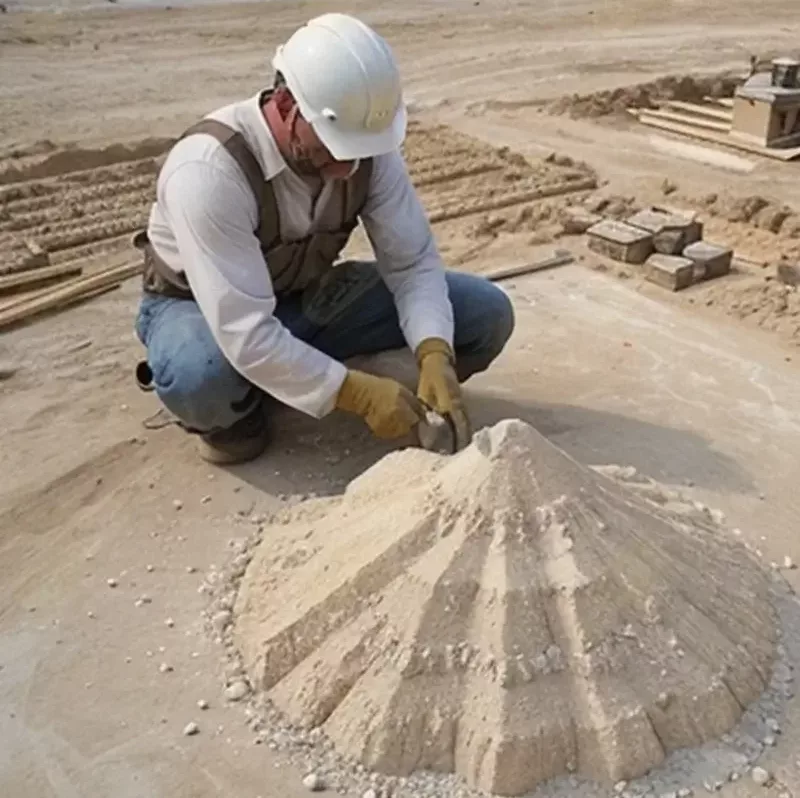
Limestone being processed for use as a combustion sorbent and industrial mineral

Limestone, from geological formation to applications

How limestone and hydrated lime work as flue gas desulfurization sorbents, and why fineness and purity set capture efficiency.

Refinery hydrotreating and hydrocracking unit where supported catalysts remove sulfur

Hydrotreating and hydrocracking in modern refining

What supported catalysts do in a refinery, how porosity and surface condition govern activity, and why poisoning and attrition end catalyst life.

Define the material operating window

A fuel, sorbent or catalyst can meet its delivery specification and still fail when moisture, temperature, fineness, storage load, residence time, feed rate or blend ratio move outside the range where it behaves reliably.

Choose the test that matches the failure mode

Characterization tests answer different questions. Match the method to the material state, process step, fuel class and conversion route rather than treating processability as universal.

Watch moisture, fines, and fuel variability

A small change in moisture, fines content or delivery source can alter flow, mill throughput, dust release, feed stability, burnout and carbon in ash even when the median particle size barely moves.

Treat storage history as a material property

Time in the pile, humidity, rainfall, oxidation, self-heating and repeated handling can alter flow, durability, calorific value and reactivity long before any obvious change appears in the material itself.

FAQ

Energy material and fuel questions

The most important distinction is usually not the visible symptom itself but the mechanism behind it. Similar symptoms can result from cohesion, moisture, particle size variation, caking, segregation, pellet breakage, dust generation, self-heating, contamination, fouling, equipment interaction, or delivery and storage history.
Fuel behavior depends on the conditions acting on it. Source, rank, moisture, time in the stockpile, rainfall, oxidation, drying history, mill setting, transfer height and ambient humidity can shift how the same nominal fuel discharges, mills, feeds, blends and burns.
The useful method depends on the question. Particle size, grindability and durability measurements may help with mill throughput or fines generation, while moisture, flowability, self-heating tendency, dustiness, porosity, fuel chemistry, calorific value, ash chemistry or blend uniformity may be more relevant for other symptoms. A useful test program starts with the suspected mechanism rather than a standard list of measurements.
Start with the information you already have. Use the material route when the fuel, sorbent, catalyst or residue class is known, the behavior route when a visible handling or process symptom is driving the investigation, and the measurement route when you already know which property or test family needs evaluation.
Laboratory testing is useful when the symptom does not reveal the controlling mechanism, when several causes are plausible, or when a new fuel source, blend ratio, co-firing strategy, sorbent, catalyst, mill setting or storage arrangement needs evaluation before implementation. Test conditions should reproduce the relevant moisture, load, temperature, residence time and storage environment as closely as practical.
Yes. Poor discharge, unstable burner feed, high carbon in ash, pellet fines, dust release, segregation of a co-firing blend, or a hot spot in a stockpile can result from several interacting factors. Complementary measurements can help separate effects such as particle size, moisture, cohesion, density, durability, reactivity, fuel chemistry and material history.

Need the measurement, not just the guidance? PowderTechnology.info works closely with Delft Solids Solutions,
a contract research organization specializing in the physical behavior of powders and granules. DSS provides
contract testing and characterization, with its laboratory working in accordance with ISO 17025.
Contact Delft Solids Solutions.

Delft Solids Solutions logo