
Plastics and polymers

Powder and bulk solid behavior in
plastics and polymer processing

Powders, pellets, fillers and additives are not one category

Particle size, shape, moisture, cohesion, bulk density, surface treatment, electrostatic behavior,
and particle strength decide whether a polymer material flows, segregates, doses evenly, conveys,
disperses, or breaks down. This page connects what you are seeing on the line to the mechanism
behind it and the measurement that settles it.

By material type icon

By material type

Polymer powders, pellets, masterbatches, fillers, fibers, recycled material.

By observed behavior icon

By observed behavior

Flow, caking, dust, dosing, segregation, breakage, moisture, static.

By measurement route icon

By measurement route

The test that clearly separates one likely mechanism from another.

By process area icon

By process area

Storage, drying, transfer, dosing, blending, compounding, molding.

Find your route

Start with the material, then the behavior

Polymer materials do not behave as one category. Pick the material class, then the behavior you are seeing in the process. The result names the mechanisms worth separating, the measurement to start with, and where in the process it usually shows up. It is a triage route, not a diagnosis.

  1. 1Material
  2. 2Behavior
  3. 3Route

Step 1  What are you handling?

Step 2  What are you seeing?

Step 3  Your route

Material routes

Polymer material and additive types

The same site may handle polymer powders, virgin pellets, masterbatches, mineral fillers, fibers, processing aids, recycled flakes, elastomer crumbs, expandable beads, and reactive or high-performance systems. Each class has its own behavior profile, so the most useful route starts with the material.

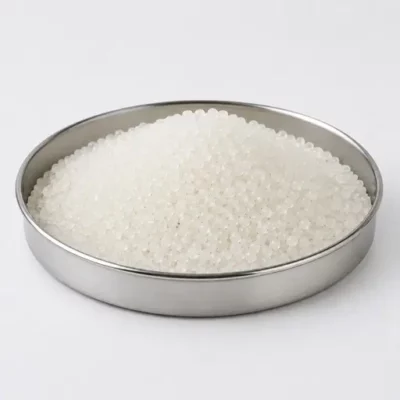
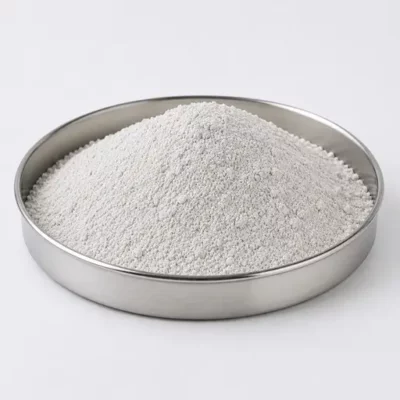
Fine white polymer powder with resin fines in a stainless steel sample dish

Polymer powders and powdered resin systems

Fine polymer powders often retain trapped air, compact under load, and change flow as particle size, moisture, and consolidation history vary.
Flow Aeration Feeding
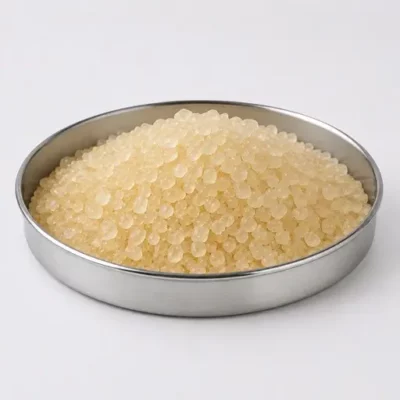
Virgin polymer pellets and molding granules in a stainless steel sample dish

Virgin polymer resin pellets and molding granules

Virgin pellets can segregate, abrade, or absorb moisture during handling, affecting conveying, drying, storage, and overall downstream feed consistency.
Flow Drying Feeding
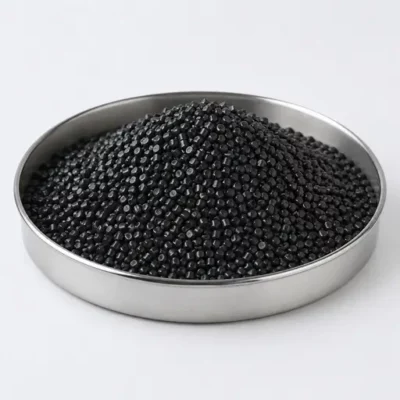
Black masterbatch and additive concentrate pellets in a stainless steel sample dish

Masterbatches and additive concentrates

Masterbatch pellets require accurate dosing and uniform distribution, while differences in size, density, or surface condition can cause segregation.
Dosing Mixing Uniformity
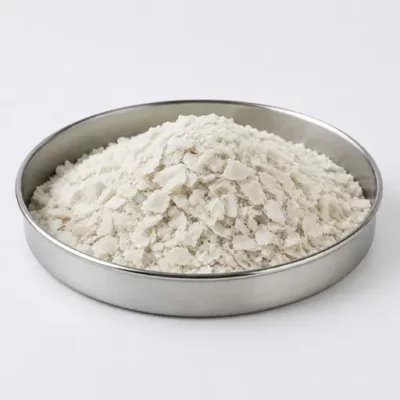
Mineral filler powder for plastics compounding in a stainless steel sample dish

Mineral fillers, additives, and functional extenders

Fine mineral powders are usually cohesive and dusty, and they can entrain air, which makes gravimetric feeding harder to hold consistently steady.
Dust Feeding Dispersion
High-performance and reactive polymer material in a stainless steel sample dish

High-performance, reactive, and sensitive polymers

High-performance and reactive polymers may require controlled drying, temperature history, contamination control, and careful transfer to prevent degradation or premature reaction.

Moisture Heat Stability
Pigment, stabilizer and lubricant powders used as processing aids, in a stainless steel sample dish

Pigments, stabilizers, lubricants, and processing aids

Low-dose additives can be difficult to feed consistently and disperse uniformly, especially when particle size, density, cohesion, or electrostatic behavior differs from the base polymer.
Dosing Dispersion Electrostatics
Recycled polymer regrind and recyclate flakes in a stainless steel sample dish

Recycled polymers, regrind, flakes, and fines

Recycled polymers and regrind can vary widely in particle size, shape, bulk density, and contamination level, which can affect flow, bridging, feeding consistency, and overall process stability.
Variation Feeding Quality
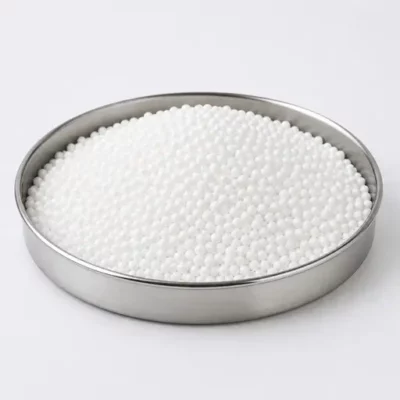
Expandable polymer beads used in foaming compounds, in a stainless steel sample dish

Expandable beads and foaming compounds

Low-density beads and foaming compounds can segregate, charge, deform, or abrade during storage, transfer, and handling. Temperature and pressure also affect stability and feeding consistency.
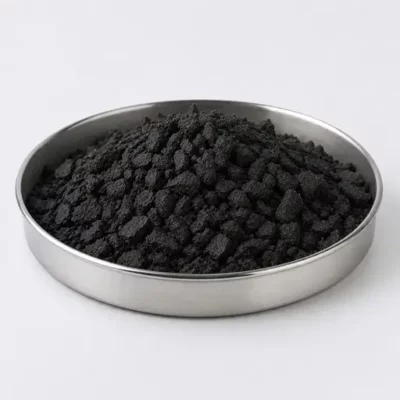
Static Segregation Temperature
Elastomer crumb and rubber powder in a stainless steel sample dish

Elastomer crumbs and rubber powders

Elastic or irregular particles can interlock, compact, charge, and feed unpredictably during storage, transfer, handling, mixing, conveying, and downstream processing.
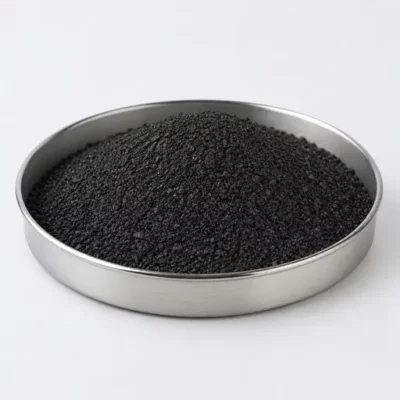
Flow Compaction Static
Carbon black and conductive filler powder in a stainless steel sample dish

Carbon black and conductive fillers

Carbon black and conductive fillers are fine, cohesive, and highly dust-forming. Low bulk density, agglomeration, and electrostatic charging can disrupt storage, transfer, feeding, and dispersion.

Dust Static Dispersion
Chopped fibers and lightweight reinforcement additives in a stainless steel sample dish

Fibers and lightweight reinforcements

Fibrous reinforcements can bridge, interlock, break, and segregate during storage, transfer, and feeding. Fiber length, aspect ratio, and bulk density influence flow, dosing, and dispersion.

Bridging Breakage Dispersion
Compounded polymer pellets and a dry blend in a stainless steel sample dish

Compounded pellets and dry blends

Compounded pellets and dry blends can segregate during transfer and feeding when component size, density, shape, proportion, or overall material concentration differs significantly.

Segregation Dosing Uniformity

Quick comparison

Material route, common risk, first measurement

The same symptom points to different mechanisms depending on the material class, formulation, and process step. This is the fast bridge between polymer material behavior and measurement route.

Plastics and polymer material routes, the handling or processing risk each one carries most often, and the measurement worth running first.

Material routeCommon handling or processing riskUseful first measurement
Polymer powders and powdered resinsCohesion, aeration, compaction, dust release, and inconsistent feedingBulk and tapped density, followed by flowability or shear testing
Virgin polymer resin pellets and molding granulesMoisture uptake, pellet segregation, conveying variation, and inconsistent feed rateMoisture content and particle size or shape assessment
Masterbatches and additive concentratesDosing variation, segregation from the base resin, and uneven distributionParticle size and bulk density comparison between components
Mineral fillers and functional extendersDustiness, cohesion, abrasion, poor feeding, and incomplete dispersionParticle size distribution and bulk density assessment
High-performance, reactive, and sensitive polymersMoisture sensitivity, thermal degradation, contamination, and premature reactionMoisture analysis and controlled thermal characterization
Pigments, stabilizers, lubricants, and processing aidsLow-dose feeding errors, electrostatic charging, adhesion, and poor dispersionParticle size distribution and electrostatic or flow assessment
Recycled polymers, regrind, and flakesVariable size and shape, contamination, bridging, and unstable feedingParticle size and shape assessment with bulk density measurement
Elastomer crumbs and rubber powdersInterlocking, compaction, high friction, electrostatic charging, and irregular flowBulk density measurement and flowability testing
Expandable beads and foaming compoundsSegregation, electrostatic charging, deformation, and temperature sensitivityParticle size distribution and bulk density assessment
Carbon black and conductive fillersExtreme dustiness, low bulk density, agglomeration, charging, and poor dispersionBulk density, particle or agglomerate size, and dustiness assessment
Fibers and lightweight reinforcementsBridging, interlocking, breakage, segregation, and inconsistent feedingFiber length distribution and bulk density assessment
Compounded pellets and dry blendsComponent segregation, dosing variation, and inconsistent formulation deliveryParticle size, shape, and bulk density comparison between components

One risk per row is the one most often reported, not the only one that occurs. Use the selector above to work a specific combination through to a route.

Recurring problems

Start from the behavior you can see

These eight cover what actually gets reported in compounding and converting plants. Each one runs back to the mechanisms worth separating and forward to the measurement that confirms which one is governing.

Icon representing poor flow and discharge

Poor flow or discharge

Arching · Bridging · Discharge

Icon representing caking or hardening

Caking or hardening

Moisture · Load · Storage

Icon representing dust formation

Dust formation

Fines · Handling · Containment

Icon representing dosing variation

Dosing variation

Density · Aeration · Feeding

Icon representing segregation

Segregation

PSD · Density · Uniformity

Icon representing particle breakage

Particle breakage

Attrition · Fines · Damage

Icon representing moisture sensitivity

Moisture sensitivity

Humidity · Stickiness · Stability

Icon representing electrostatic behavior

Electrostatic behavior

Charging · Adhesion · Buildup

Measurement routes

The test that answers your question

Polymer material behavior rarely resolves to one number. Particle size, moisture, cohesion, wall friction, density, permeability, friability, electrostatic behavior and dustiness can all sit behind the same visible symptom. Pick the method by the question, not by the symptom.

Particle and morphology

Particle size distribution
Fines, segregation, dispersion, packing, dustiness, and compound consistency.

Microscopy and morphology
Particle shape, surface condition, agglomeration, breakage, and dispersion.

Moisture and thermal condition

Moisture content and sorption behavior
Moisture response, drying history, caking, sticking, and hydrolysis-sensitive processing.

Water activity
Water availability, caking onset, storage stability, and conditioning targets.

Feeding and transfer stability

Flowability and shear testing
Cohesion, consolidation, hopper discharge, arching, ratholing, and storage load.

Wall friction testing
Hopper design, discharge limits, wall material choice, and sticking behavior.

Air, dust, and electrostatics

Dustiness testing
Airborne fines, conveying losses, dust capture, worker exposure, and housekeeping.

Electrostatic charge testing
Charging, adhesion, dust attraction, wall buildup, and unstable transfer or feeding.

Strength and processing response

Permeability and deaeration
Air retention, bulk density change, unstable feeding, settling behavior, and refill effects.

Attrition and friability testing
Pellet or granule damage, fines generation, reinforcement breakage, and handling cycles.

Density and packing

Bulk and tapped density
Feed weight, aeration, compressibility, feeder behavior, and refill consistency.

Compare every method
All test methods on the site, grouped by the question they answer.

Process routes

Where the behavior actually shows up

The same polymer material behaves differently depending on where it sits in the process. Each step exposes a different property and a different failure mode.

01

Storage and silos

Storage time, compaction, moisture, temperature and electrostatic charging alter bulk density, flow behavior and later discharge consistency.

02

Drying and conditioning

Moisture removal, residence time, temperature history, and overdrying affect feeding stability, melt behavior, and final polymer quality during processing.

03

Material transfer

Mechanical and pneumatic transfer can cause segregation, attrition, fines generation, charging, pellet damage and unstable downstream feeding.

04

Dosing and feeding

Bulk density, refill behavior, cohesion, pellet shape and segregation act directly on feed rate stability and dosing accuracy.

05

Premixing and blending

Particle size, density, shape, surface condition and additive dosage drive blend uniformity, segregation and component distribution.

06

Compounding

Feeding stability, dispersion, moisture condition, thermal history, and residence time govern compound uniformity and properties.

07

Pelletizing and size reduction

Cutting, grinding, pelletizing and screening change particle size, fines content, shape and downstream feeding behavior.

08

Molding and forming

Material condition, moisture, feed consistency and additive distribution influence molding stability, defect formation and final part quality.

09

Recycling and reprocessing

Regrind shape, contamination, fines content, bulk density, and thermal history influence reuse, blending, feeding, and consistency.

Go deeper

Guides and articles for plastics and polymer behavior

Longer reads that work through the mechanisms behind these routes, from the visible process problem to material properties, measurement choice and interpretation.
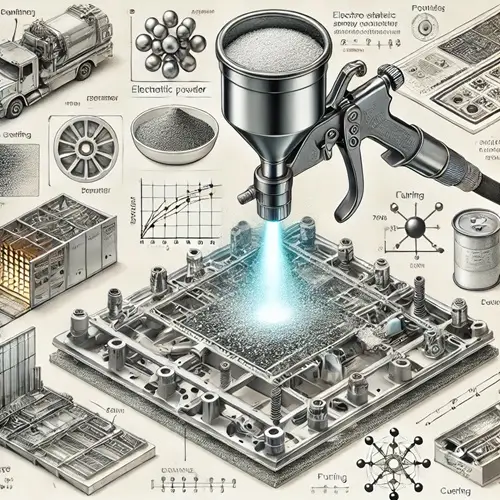
Powder coating being applied to a metal part in an industrial coating line

Powder coatings, applications and advantages

Where powder coatings replace liquid paint, and which powder properties decide whether the finish comes out even.

Recovered powder being reconditioned for reuse in a manufacturing process

Powder recyclability in manufacturing

Mechanical separation, thermal reconditioning and the quality checks that decide how much recovered material can go back in.

Static charge building on powder during transfer through a handling system

Electrostatic effects in powder handling

How charge accumulates during processing, why it disturbs flow and feeding, and the practical ways to control it.

Define the powder operating window

A powder can meet specifications and still fail when humidity, consolidation, aeration, temperature, or residence time exceeds its reliable operating conditions.

Choose the test that matches the question

Flow tests answer different questions. Match the method to the process condition, stress state and failure mode instead of treating flowability as one universal property.

Know when the fine fraction takes over

A small increase in fines changes cohesion, air retention, dust formation, packing and segregation even when the median particle size barely moves.

Watch moisture before visible changes appear

Moisture alters cohesion, caking, surface condition, dissolution, flow behavior, and storage stability long before anything looks visibly wet in normal handling.

FAQ

Polymer material behavior questions

The most important distinction is usually not the visible symptom itself but the mechanism behind it. Similar problems can result from cohesion, moisture, electrostatics, segregation, density variation, attrition, temperature, or interaction between the material and the equipment.
Polymer material behavior depends on the conditions acting on the feedstock. Moisture, drying history, consolidation, vibration, temperature, handling, electrostatic charge, and stress state can all shift how the same material flows, feeds, segregates, or generates fines.
The useful method depends on the question being investigated. Particle size analysis may help with fines or segregation, while flow testing, wall friction, moisture analysis, bulk density, electrostatic testing, thermal characterization, or attrition testing answer different process questions. A useful test programme starts with the suspected mechanism rather than a standard list of measurements.
Start with the information you already have. Use the material route when the polymer form or additive class is known, the behavior route when a visible symptom is driving the investigation, and the measurement route when you need to decide which test can answer a specific process question.
Laboratory testing is most useful when the symptom alone does not reveal the controlling mechanism, when several causes are plausible, or when a process change needs to be evaluated before implementation. The test conditions should reflect the actual material history and process conditions as closely as practical.
Yes. A visible symptom such as unstable feeding or segregation can result from several interacting factors. Combining complementary measurements can help separate effects such as moisture, cohesion, bulk density variation, particle size, attrition, temperature sensitivity, or electrostatic behavior.

Need the measurement, not just the guidance? PowderTechnology.info works closely with Delft Solids Solutions,
a contract research organization specializing in the physical behavior of powders and granules. DSS provides
contract testing and characterization, with its laboratory working in accordance with ISO 17025.
Contact Delft Solids Solutions.

Delft Solids Solutions logo