
Water and environmental
Adsorbent, chemical, media and residue behavior across water and environmental processes
Activated carbon, treatment chemicals, resins, filtration media, reactive minerals, sludges and recovered solids are not one category
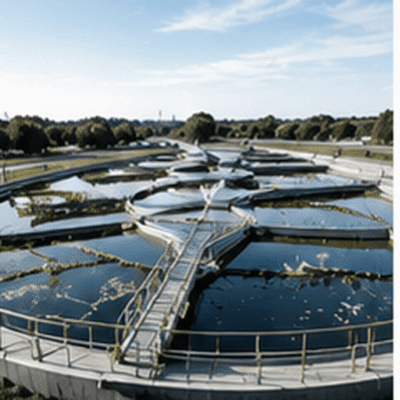
Particle size, pore structure, surface area, moisture, cohesion, bulk density, granule strength, adsorption capacity, reactivity and dewaterability decide whether a material discharges, doses accurately, hydrates, holds its capacity, survives backwash and releases its water. This page connects what you are seeing on the plant to the mechanism behind it and the measurement that settles it.
Water and environmental
Adsorbent, chemical, media
and residue behavior across water
and environmental processes
Activated carbon, treatment chemicals, resins, filtration media, reactive minerals, sludges and recovered solids are not one category
Particle size, pore structure, surface area, moisture, cohesion, bulk density, granule strength, adsorption capacity, reactivity and dewaterability decide whether a material discharges, doses accurately, hydrates, holds its capacity, survives backwash and releases its water. This page connects what you are seeing on the plant to the mechanism behind it and the measurement that settles it.



Find your route
Start with the material, then the behavior
Water and environmental materials do not behave as one category. Pick the adsorbent, treatment chemical, resin, filtration medium, reactive mineral, remediation powder, sludge, biosolid or recovered residue class, then the behavior you are seeing in the process. The result names the mechanisms worth separating, the measurement to start with, and where in the process it usually shows up. It is a triage route, not a diagnosis.
- 1Material
- 2Behavior
- 3Route
Step 1 What are you handling?
Step 2 What are you seeing?
Step 3 Your route
Material routes
Adsorbents, treatment chemicals, filtration media, sludges and recovered solids
Water and environmental processes handle fine adsorbent powders, strong treatment chemicals, porous carbon media, ion exchange resins, graded filter media, reactive minerals, remediation amendments, wet sludges, dried biosolids and recovered residues with very different particle sizes, densities, pore structures, surface chemistries, moisture sensitivities, reactivities and contaminant loads. Each class has its own behavior profile, so the most useful route starts with the material before moving to the visible process problem.

Powdered activated carbon
Fine activated carbon offers high adsorption capacity but can dust, agglomerate, float, or feed inconsistently. Particle size, moisture, and surface area affect dosing and removal.

Granular activated carbon
Granular carbon must retain pore structure and strength during storage, backwashing, transport, and reuse. Size distribution and attrition affect pressure drop and service life.

Ion-exchange and adsorbent resins
Resin beads require controlled size, swelling, moisture, and mechanical integrity. Breakage, fouling, and mixed grades affect hydraulic resistance, exchange capacity, and regeneration.

Coagulant and flocculant powders
Powdered coagulants and polymers can absorb moisture, cake, dust, or hydrate unevenly. Feeding, wetting, charge density, and solution preparation affect treatment consistency.

Lime and alkaline treatment powders
Lime, soda ash, and alkaline powders can bridge, dust, react with moisture, and dissolve unevenly. Purity, particle size, and feed stability affect consistent pH control.

Ferric and aluminum treatment salts
Ferric and aluminum salts can cake, corrode equipment, segregate, and hydrolyze during storage. Crystal form, moisture, purity, and dissolution affect coagulation performance.

Filtration media and supports
Sand, anthracite, garnet, and support media require controlled gradation, shape, cleanliness, and density. Fines, wear, or mixing alter capture efficiency and pressure drop.

Zeolites and specialty adsorbents
Zeolites, activated alumina, and specialty media depend on pore structure, surface chemistry, and granule strength. Moisture, fouling, and attrition reduce adsorption performance.

Phosphate binders and mineral media
Reactive mineral media remove phosphorus, metals, or other contaminants through adsorption, precipitation, or ion exchange. Composition, porosity, and exhaustion determine useful life.

Soil and sediment remediation powders
Clays, carbonaceous sorbents, and amendments must disperse and contact contaminated solids. Moisture, agglomeration, dust, and segregation affect field performance.

Dried sludge and biosolid granules
Dried sludge and biosolids vary in moisture, organics, ash, density, and strength. Caking, odor, dust, and breakage directly affect long-term storage, transport, handling, and safe reuse.

Recovered fines and treatment residues
Filter-cake fines, ash, precipitates, and recovered residues vary in composition, moisture, and contaminants. Dewatering and classification directly govern safe reuse.
Quick comparison
Material route, common risk, first measurement
The same symptom points to different mechanisms depending on the material class, particle size, pore structure, surface chemistry, moisture condition, contaminant loading and process step. This is the fast bridge between water and environmental material behavior and the most useful first measurement route. The rows follow the same order as the cards above.
Water and environmental material routes, the handling or processing risk each one carries most often, and the measurement worth running first.
| Material route | Common handling or processing risk | Useful first measurement |
|---|---|---|
| Powdered activated carbon | Dusting, poor wetting, agglomeration, feeding variation, airborne exposure, and inconsistent dispersion | Particle size, moisture, bulk density, dustiness, wettability, and surface area |
| Granular activated carbon | Attrition, fines generation, segregation, fouling, pressure-drop increase, and uneven bed loading | Particle size, hardness, attrition resistance, bulk density, moisture, and adsorption capacity |
| Ion-exchange and adsorbent resins | Bead breakage, swelling variation, fouling, mixed-grade separation, pressure drop, and capacity loss | Bead-size distribution, moisture, swelling, mechanical strength, exchange capacity, and fouling condition |
| Coagulant and flocculant powders | Moisture uptake, caking, dusting, poor hydration, feeding variation, and incomplete solution preparation | Moisture, particle size, bulk density, flowability, wettability, and hydration behavior |
| Lime and alkaline treatment powders | Bridging, dusting, moisture reaction, inconsistent feeding, poor dissolution, and variable pH control | Purity, particle size, moisture, flowability, reactivity, and dissolution behavior |
| Ferric and aluminum treatment salts | Caking, hydrolysis, corrosion, contamination, poor dissolution, and unstable chemical feeding | Composition, purity, moisture, particle size, solubility, and hydrolysis behavior |
| Filtration media and supports | Fines release, poor gradation, abrasion, contamination, uneven packing, and excessive pressure drop | Particle-size distribution, shape, cleanliness, hardness, bulk density, and permeability |
| Zeolites and specialty adsorbents | Attrition, fouling, moisture uptake, uneven loading, capacity loss, and pressure-drop increase | Particle size, porosity, surface chemistry, moisture, adsorption capacity, and attrition resistance |
| Phosphate binders and reactive mineral media | Attrition, precipitation, pore blockage, hydraulic resistance, uneven exhaustion, and capacity loss | Particle size, porosity, composition, surface chemistry, contaminant uptake, and hydraulic conductivity |
| Soil and sediment remediation powders | Dusting, agglomeration, poor field distribution, moisture variation, incomplete mixing, and inconsistent reactivity | Particle size, moisture, bulk density, dispersibility, surface area, and reactivity |
| Dried sludge and biosolid granules | Moisture variation, caking, dusting, odor, microbial instability, breakage, and storage deterioration | Moisture, organic content, ash, bulk density, particle strength, and microbiological condition |
| Recovered fines and treatment residues | Variable composition, residual reagents, contamination, moisture, poor dewatering, and uncertain reuse suitability | Particle size, moisture, composition, contaminant content, leachability, and residual reactivity |
One risk per row is the one most often reported, not the only one that occurs. Use the selector above to work a specific combination through to a route.
Recurring problems
Start from the behavior you can see
These eight come from your own route card and continue block: flow, caking, dust, chemical-feed variation, segregation, media breakage, moisture or reactivity shifts and poor dewatering. Each is one idea rather than two, so the card and the mechanism list line up. Each card runs back to the mechanisms worth separating and forward to the measurement that confirms which one is governing.






Measurement routes
The test that answers your question
Water and environmental material behavior rarely resolves to one number. Particle size, morphology, moisture, solids content, cohesion, bulk density, pore structure, surface area, adsorption capacity, granule strength, dustiness, composition, contaminant loading, permeability and rheology can all contribute to the same visible treatment or handling symptom. Pick the method by the question, not by the symptom.
Compare every method All test methods on the site, grouped by the question they answer.
Process routes
Where the behavior actually shows up
The same water treatment or environmental material behaves differently depending on where it sits in the process. Receipt, preparation, storage, chemical feeding, blending, activation, contact, filtration, dewatering, drying, transport, recovery and disposal each expose a different property, a different contamination pathway and a different failure mode.
Go deeper
Guides and articles for water and environmental materials
Longer reads that work through the mechanisms behind these routes, from the visible treatment or handling problem to material properties, measurement choice and interpretation.

FAQ
Water and environmental material questions
Need the measurement, not just the guidance? PowderTechnology.info works closely with Delft Solids Solutions,
a contract research organization specializing in the physical behavior of powders and granules. DSS provides
contract testing and characterization, with its laboratory working in accordance with ISO 17025.
Contact Delft Solids Solutions.