
Test methods
Composition, Contaminants and Leachability
Separate what is present from what a procedure releases
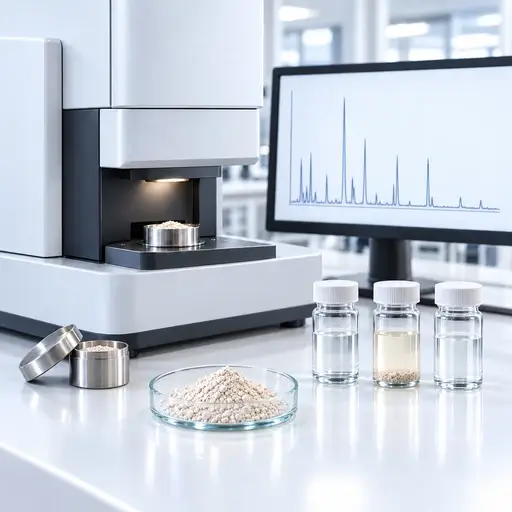
Elemental composition, chemical identity, trace contamination, and leachable content answer different questions. Choose the analytical route by the target constituent, sample matrix, required reporting limit, and preparation or extraction conditions. An instrument name alone does not define the result.
Test methods
Composition, Contaminants and Leachability
Separate what is present from what a procedure releases
Elemental composition, chemical identity, trace contamination, and leachable content
answer different questions. Choose the analytical route by the target constituent, sample
matrix, required reporting limit, and preparation or extraction conditions. An instrument
name alone does not define the result.




Select a method
Choose the constituent and preparation route
Eight routes separate direct solid analysis, solution measurement, chemical identification, and controlled release into a liquid.
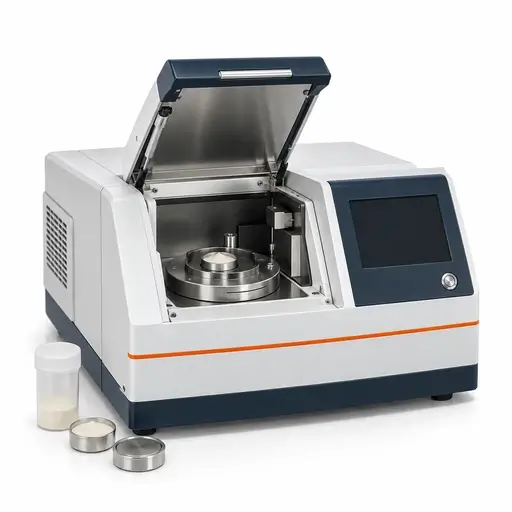
X-ray fluorescence
Characteristic X-ray emission from a prepared solid is measured to determine suitable elemental constituents.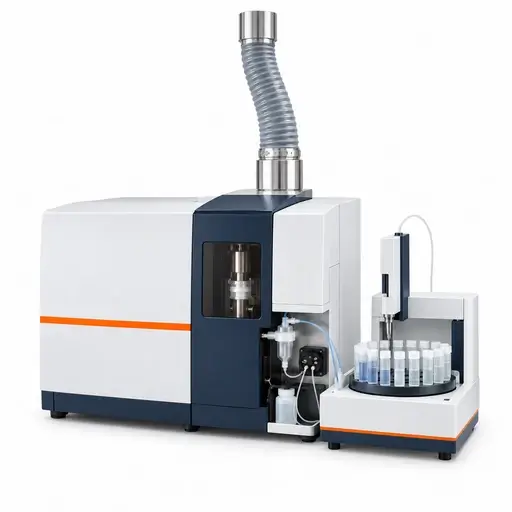
ICP elemental analysis
A prepared solution is introduced into an inductively coupled plasma and elements are measured by optical emission or mass spectrometry.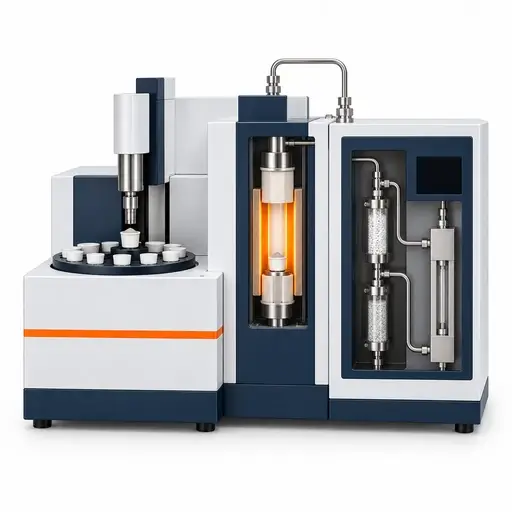
Combustion elemental analysis
A weighed solid is combusted under controlled conditions and selected evolved gases are quantified.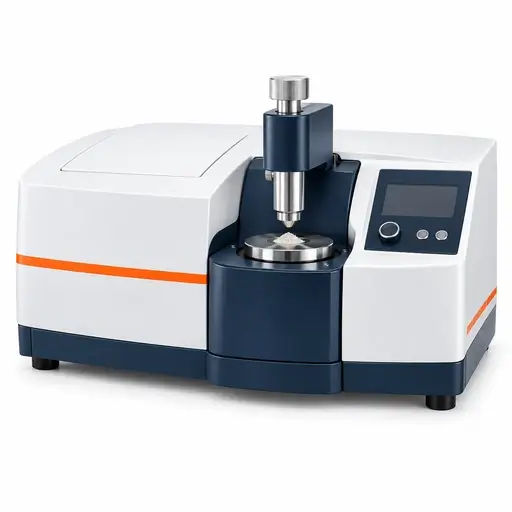
FTIR chemical identification
Infrared absorption is recorded from a powder, for example through an ATR accessory, to investigate molecular vibrations.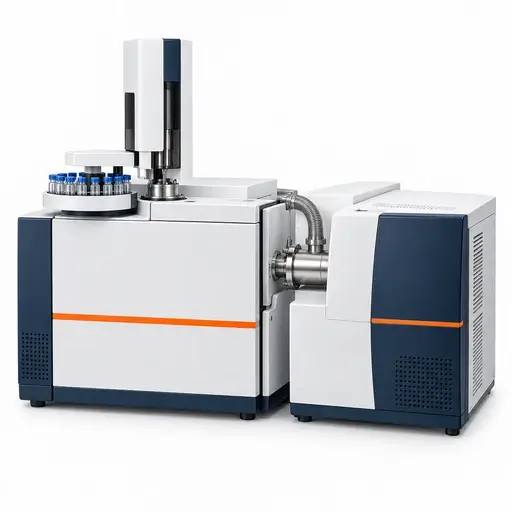
GC-MS organic contaminants
Suitable compounds are introduced into a gas chromatograph, separated, and examined by mass spectrometry.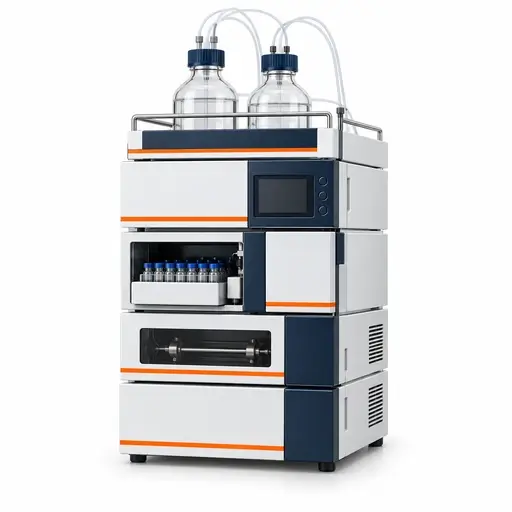
Liquid chromatography
Dissolved constituents are separated on a column and measured with a detector suited to the target analytes.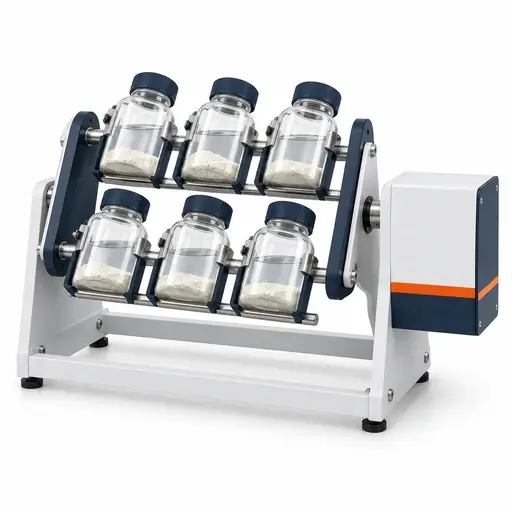
Batch leaching and extraction
A solid contacts a defined liquid under controlled mixing before the liquid phase is separated and analyzed.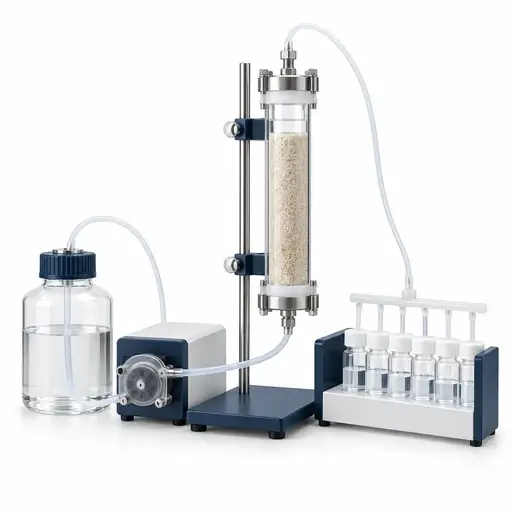
Column percolation leaching
Liquid passes through a packed solid and successive eluate fractions are collected for analysis.Core concept
The preparation defines the claim
Composition describes the constituents measured in a sample. A contaminant is a constituent that matters against a defined product, process, or use requirement. Neither a broad elemental scan nor a spectral library match establishes the absence of every unwanted substance.
Solid analysis, acid digestion, solvent extraction, and leaching do not necessarily access the same material fraction. A digestion may leave resistant phases undissolved. A leaching procedure measures release into a chosen liquid under specified conditions. Elemental analysis generally does not identify oxidation state or chemical species, and an oxide-equivalent result does not prove that the named oxide phase is present.
Key takeaway
Specify the constituent and the material fraction
Use XRF or appropriately prepared ICP analysis for elemental content, a suitable combustion method for selected light elements, FTIR for chemical identification, and validated GC-MS or liquid chromatography for target organic compounds. Use batch extraction or column percolation when the decision concerns release under defined liquid-contact conditions. Require representative sampling, matrix-appropriate calibration, preparation controls, and reporting limits that support the decision. Do not equate an acid-extractable result with total content, a non-detect with absence, or a laboratory leachate concentration with unrestricted field release.
What controls it
Six decisions define a defensible chemical test
Agree on the analytical question and acceptance basis before choosing the instrument.
Selection and interpretation
Compare the same constituent on the same basis
Separate concentration in the original solid, concentration in an extract, and released mass per solid mass. Converting mg/L to mg/kg requires the appropriate volumes, masses, and corrections. For a column, calculate cumulative release from the individual collected fractions rather than multiplying one concentration by the final volume. A result below the quantification limit is not a measured zero.
Engineering question | Primary route | Useful output | Critical boundary |
|---|---|---|---|
| What elements are present in the prepared solid? | XRF | Elemental or oxide-equivalent composition | Matrix and preparation affect accuracy; no phase identification |
| How much target element is in a digest or extract? | ICP-OES or ICP-MS | Solution concentration and calculated sample content | Recovery defines whether the result represents total or extracted content |
| What is the selected carbon or sulfur content? | Combustion analysis | Element mass fraction | Element coverage and furnace suitability are method-specific |
| Does the sample match a chemical identity? | FTIR | Spectrum and supported identification | Mixtures and contact effects limit inference; not universal purity |
| Which suitable organic compounds are present? | GC-MS | Target concentrations and qualified identity evidence | Extraction and volatility bound coverage |
| How much of a suitable dissolved compound is present? | Liquid chromatography | Calibrated target concentrations | Separation and detector selectivity must fit the analyte |
| What enters a liquid under defined batch conditions? | Batch leaching or extraction | Extract concentration and method-defined release | pH, liquid ratio, time, and phase separation define the result |
| How does release evolve with percolation? | Column leaching | Fraction concentrations and cumulative release | Packing, flow, and liquid-to-solid ratio control interpretation |
How to measure it
Select the complete analytical route
The preparation, measurement, quality controls, and reporting basis together determine what each result can establish.
Test method 01
X-ray fluorescence
Measurement principle: Characteristic X-ray emission from a prepared solid is measured to determine suitable elemental constituents.
Suitable sample state: A representative powder prepared as a suitable cup, pressed pellet, or fused specimen.
Sample preparation: Control sampling, particle size, homogeneity, moisture, thickness, binder or flux additions, and the calibration matrix. Document preparation that can lose volatile constituents.
Test method 02
ICP elemental analysis
Measurement principle: A prepared solution is introduced into an inductively coupled plasma and elements are measured by optical emission or mass spectrometry.
Suitable sample state: A compatible digest, dissolved sample, extract, or leachate with a defined preparation history.
Sample preparation: Choose dissolution appropriate to the matrix and target elements. Control reagent purity, blanks, residual solids, dilution, calibration, internal standards where appropriate, and spectral or matrix interference.
Test method 03
Combustion elemental analysis
Measurement principle: A weighed solid is combusted under controlled conditions and selected evolved gases are quantified.
Suitable sample state: A representative solid suitable for the chosen furnace, element, and concentration range.
Sample preparation: Control sample mass, crucible and accelerator blanks, combustion conditions, calibration, reference materials, and completeness of gas release. Follow the material-specific method.
Test method 04
FTIR chemical identification
Measurement principle: Infrared absorption is recorded from a powder, for example through an ATR accessory, to investigate molecular vibrations.
Suitable sample state: A representative solid with adequate sampling contact and a suitable infrared response.
Sample preparation: Control sampling, accessory, contact pressure, background, contamination, moisture, spectral range, and comparison references. Use multiple sampling locations for heterogeneous material.
Test method 05
GC-MS organic contaminants
Measurement principle: Suitable compounds are introduced into a gas chromatograph, separated, and examined by mass spectrometry.
Suitable sample state: An appropriate extract, headspace sample, or other validated preparation for the target compounds.
Sample preparation: Choose preparation by volatility and matrix. Control recovery, preservation, blanks, cleanup, internal standards or surrogates, calibration, and carryover. The image shows a liquid-injection configuration.
Test method 06
Liquid chromatography
Measurement principle: Dissolved constituents are separated on a column and measured with a detector suited to the target analytes.
Suitable sample state: A compatible prepared extract or solution with controlled particulates and matrix loading.
Sample preparation: Specify extraction, filtration compatibility, recovery, column, mobile phase, detection, calibration, blanks, and stability. Check adsorption losses and carryover.
Test method 07
Batch leaching and extraction
Measurement principle: A solid contacts a defined liquid under controlled mixing before the liquid phase is separated and analyzed.
Suitable sample state: Representative material prepared to the particle-size and moisture requirements of the selected extraction procedure.
Sample preparation: Specify liquid chemistry, liquid-to-solid ratio, dry-mass basis, particle size, contact time, temperature, agitation, pH, phase separation, preservation, and analytical method. Follow special provisions for volatile analytes.
Test method 08
Column percolation leaching
Measurement principle: Liquid passes through a packed solid and successive eluate fractions are collected for analysis.
Suitable sample state: A granular solid that can be packed and percolated within the selected method requirements.
Sample preparation: Control particle-size preparation, packing, dry mass, saturation, flow direction and rate, eluent, cumulative liquid-to-solid ratio, collection intervals, pH, preservation, and analysis. Check channeling and blockage.
Conditional routes
When composition needs a companion method
Add a targeted route when bulk composition does not resolve the identity, location, or decision requirement.
Chemical species or phase is the uncertainty
Total element concentrations do not establish oxidation state or mineral form. Use an appropriate speciation or diffraction method with preparation that preserves the property of interest. Compare solid-state methods.
Oxygen, nitrogen, or hydrogen in metals is the target
Select an appropriate inert-gas-fusion or other validated method for the element and material. Do not assume the illustrated carbon-sulfur combustion analyzer provides these results.
Rare foreign particles or surface residues dominate
Use targeted microscopy and local chemical analysis, such as SEM-EDS where suitable, alongside representative bulk sampling. A local spectrum does not establish whole-lot concentration.
Microbiological quality or a specific compliance decision matters
Add the required microbiological or application-specific testing. Define the jurisdiction, material use, analyte list, and prescribed method before interpreting a result against a limit; this page does not establish universal acceptance thresholds.
Process relevance
Connect the result to the material decision
A useful chemical result states what was measured, which material it represents, and how it informs the specified decision.
Technical FAQ
Common questions about composition and leaching
Keep analyte identity, recovery, reporting limits, and liquid-contact conditions explicit.
Go deeper
Continue into contamination and material specifications
These published PTI articles provide process and application context. They are not substitutes for the analytical procedures or leaching references below.


Technical basis
Sources and scope boundaries
These are scoped examples and technical references, not a universal compliance package. Use the complete applicable procedure, current requirements for the intended use, and demonstrated matrix performance. XRF and FTIR also require an appropriate validated preparation and interpretation protocol.
- EPA 6010D: ICP-OES within its stated scope.
- EPA 6020B: ICP-MS within its stated scope.
- EPA 3051A: microwave-assisted acid extraction; not a claim of total decomposition.
- ISO 15350:2000: a material-specific carbon and sulfur combustion example for steel and iron.
- EPA 8270E: semivolatile organic compounds by GC-MS.
- EPA 8310: selected PAHs by HPLC in the specified matrices.
- EPA 1311: TCLP, a defined waste extraction. EPA identifies it as a method-defined parameter for RCRA use.
- EPA LEAF methods and guidance: distinguishes pH-dependent, percolation, tank, and batch liquid-to-solid-ratio assessments; these address different release questions.
- EPA 1314: up-flow percolation for granular materials.
Need the measurement, not just the guidance?
If the remaining uncertainty concerns composition, contamination, or release into a liquid, define the target constituents, matrix, preparation, reporting limits, and decision before commissioning work. Agree the analytical scope and any need for a separate specialist laboratory. For guidance on the appropriate testing route, learn about Delft Solids Solutions and contact the laboratory to confirm capabilities and scope.