Troubleshooting
Contamination and purity problems
Foreign material, cross-contact, wear debris, and in-process transformation require different investigations
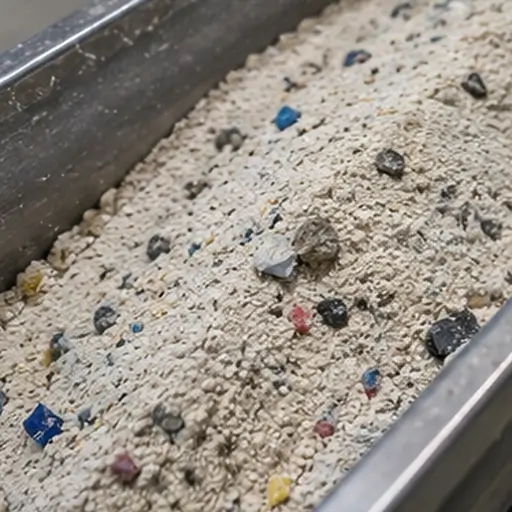
Protect the evidence before cleaning or adjusting the line. Confirm the contaminant identity, map its concentration through time and location, and distinguish incoming material, carryover, airborne ingress, wear, maintenance, and reaction products.
Troubleshooting
Contamination and purity problems
Foreign material, cross-contact, wear debris, and in-process transformation require different investigations
Protect the evidence before cleaning or adjusting the line. Confirm the contaminant identity,
map its concentration through time and location, and distinguish incoming material,
carryover, airborne ingress, wear, maintenance, and reaction products.



Find your route
Start with the observed failure, then add context
Protect the evidence before cleaning or adjusting the line. Confirm the contaminant identity, map its concentration through time and location, and distinguish incoming material, carryover, airborne ingress, wear, maintenance, and reaction products.
- 1Observation
- 2Change or context
- 3Route
Step 1 What are you seeing?
Step 2 What changed, or when does it happen?
The same purity failure can arise from incoming material, retained product, equipment wear, open handling, or an impurity formed in process. Use the event history to narrow the route.
Step 3 Your diagnostic route
Quick diagnostic comparison
Separate the leading routes before changing the process
Use the pattern and event history to select the first discriminating measurement. The table is a triage aid, not a substitute for reproducing the failed state.
Use the observed pattern and the change that preceded it to select the first discriminator. The pattern does not prove the mechanism.
| What you observe | What changed | Likely mechanism | Measurement that separates it |
|---|---|---|---|
| Visible foreign particles or specks appear | With a changed batch, composition, package, or recycle fraction | Incoming raw-material contamination | Identity and composition: Does the contaminant match an incoming component, package, or retained reference? |
| Purity or composition drifts without visible debris | After changeover or restart | Cross-contact and retained heel | Time-resolved sampling: Does the shift peak at startup and decay as retained material clears? |
| Metal content increases through the line | After transfer, contact surfaces, or operating conditions changed | Equipment wear | Identity and source matching: Does the metal signature match contact parts, tools, coatings, or incoming material? |
| Bioburden or organic contamination appears | After cleaning, open handling, or a longer hold | Airborne or maintenance ingress / retained heel | Time- and location-resolved sampling: Does the signal appear after exposure or increase during hold? |
| A new impurity appears only after processing | After heat, moisture, reaction, or residence time changed | In-process reaction or degradation | Process chemistry: Does the impurity form under the process conditions that reproduce the failure? |
Use preserved samples and reproduce the material state and process conditions that produced the failure.
Likely mechanisms
Separate incoming contamination, carryover, wear, ingress, and material formed in process
Contamination is a source-tracing problem. Preserve the failed state, identify what the foreign material actually is, and use where and when it appears to separate an incoming source from plant-generated contamination.
Measurement routes
Identify the contaminant, then map where it enters the process
The most useful test is the one that links identity to source. Combine composition and morphology with time- or location-resolved sampling, then add wear or reaction testing only when the evidence points in that direction.
Process context
Where the contaminant first appears determines what to inspect next
Keep the product sequence, equipment contact history, cleaning state, maintenance events, and sample location attached to the investigation. A contaminant that appears after one unit has a different source map from one already present at receipt.
Go deeper
Guides and articles for contamination and purity investigations
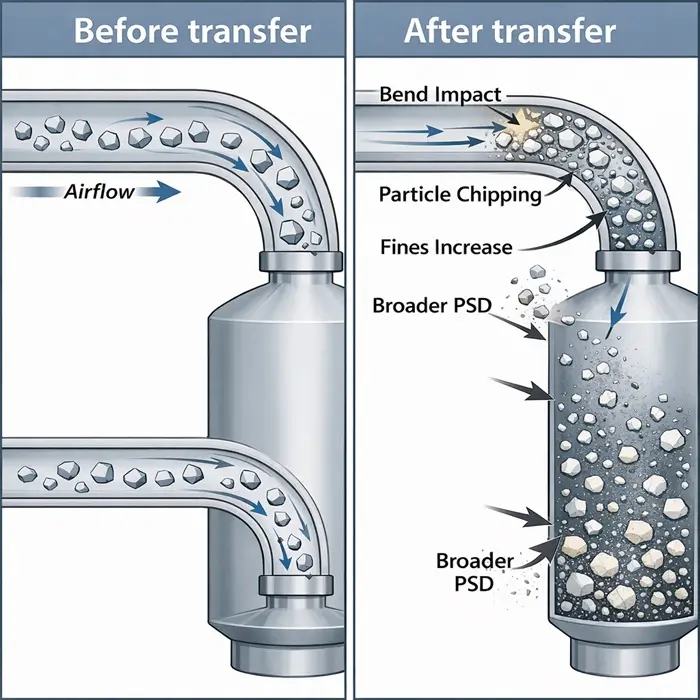
Use the deeper technical material to separate maintenance ingress, transfer-related material change, and cross-contact from other contamination routes before changing equipment or cleaning strategy.


FAQ
Contamination and purity questions
Independent diagnostic support
Need the measurement, not just the guidance?
PowderTechnology.info works closely with Delft Solids Solutions, a contract research organization specializing in the physical behavior of powders and granules. DSS provides contract testing and characterization, with its laboratory working in accordance with ISO 17025. Contact Delft Solids Solutions.