
Table of contents

Why you need a powder release protocol
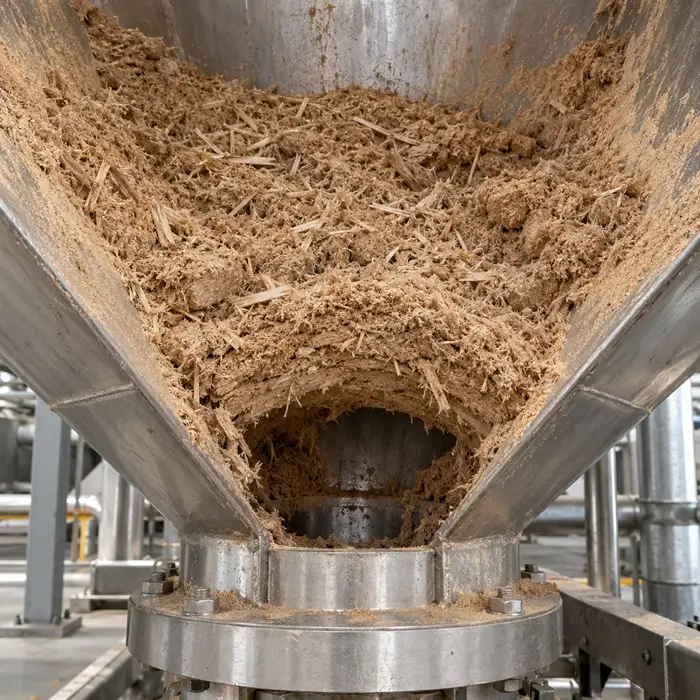
Most plants do not fail because a powder is bad. They fail because a lot is different in a way that matters, and the shift is detected too late. At first, the signals look harmless. The feeder average still looks fine, yet it becomes jumpy after a refill. A hopper that normally behaves bridges after a weekend hold. Filters load faster than usual. Product performance drifts, even though routine checks still pass.
That gap is exactly where a powder release protocol earns its keep. Incoming inspection often confirms identity and a few legacy metrics. A powder release protocol is narrower and sharper. It links a small set of measurements to the failure modes your line actually suffers from, then turns the results into a documented decision before production starts.
It also reduces commercial friction. Many disputes are not about testing; they are about sampling, handling, and inconsistent reporting. A controlled release gate gives you a shared language with suppliers and internal teams.
What the protocol must deliver
A usable powder release protocol delivers three outcomes.
First, it produces a decision that does not change depending on who reads the report. Second, it produces a record that holds up under audit, customer scrutiny, or internal escalation. Third, it produces a path for borderline results that is defined in advance.
If you miss any of these, the release becomes ritual. People still test, but they do not control.
Define the release decision
Before you choose tests, define what you are releasing the lot for. Keep it to one sentence.
This lot is released for Product Y on Line X, at Rate Z, within Operating Window W.
That sentence forces alignment between QA and operations. It also prevents scope creep. A release for a pilot line is not a release for full throughput. A release for a short gravity-fed route is not the same as a release for a long pneumatic line.
Next, define the decision outcomes. Use three outcomes, not two.
Released
The lot runs under standard settings and standard monitoring.
Conditional Release
The lot can run, but only with predefined mitigations and a verification check.
Hold
The lot does not reach the line until risk is reduced through rework, retest, or supplier escalation.
Once these outcomes exist, acceptance criteria can be designed to produce them reliably.
Link failure modes to measurements
The fastest way to overbuild a release panel is to start with a list of tests. Instead, start with the failures you want to prevent, then choose measurements that reduce uncertainty for those failures.
For example, suppose your recurring pain is unstable feeding after refills and short stops. In many plants, that signature is linked to aeration sensitivity, compressibility drift, fines tail growth, and cohesive behavior that appears only after stress and settling.
With that in mind, your test choices become purposeful. Bulk and tapped density can flag changes in packing behavior, provided you control how the test is run. Particle size distribution with a tails rule can catch fines growth that a D50 hides. Moisture can be essential, depending on the material class and storage. Finally, you choose one handling metric that matches the dominant risk, which might be shear testing in one context, and a simpler stability proxy in another.
This mapping keeps the panel lean. More importantly, it makes your criteria defensible because each metric has a clear rationale.
Minimum release test panel
Most plants should start with a minimum panel and expand only when the line proves it needs more. The goal is not to measure everything. The goal is to prevent the failures that cost you time, yield, and credibility.
Identity and contamination screen
Confirm identity and flag foreign matter. Define the sample mass and inspection method so results are comparable across operators and across lots.
Moisture with method control
Moisture is a common driver for cohesion shifts, wall friction changes, and dust behavior. Choose one method and lock down sample mass, conditioning, and time to test. If you mix methods, you need a documented correlation.
Particle size distribution with a tails rule
A powder can hit its D50 target and still behave differently because the fines tail moved. Tail growth often drives dustiness, filtration load, permeability drift, and segregation risk. Define a tails rule that matches your failure modes, not a generic particle size target.
Bulk density and tapped density with controlled handling
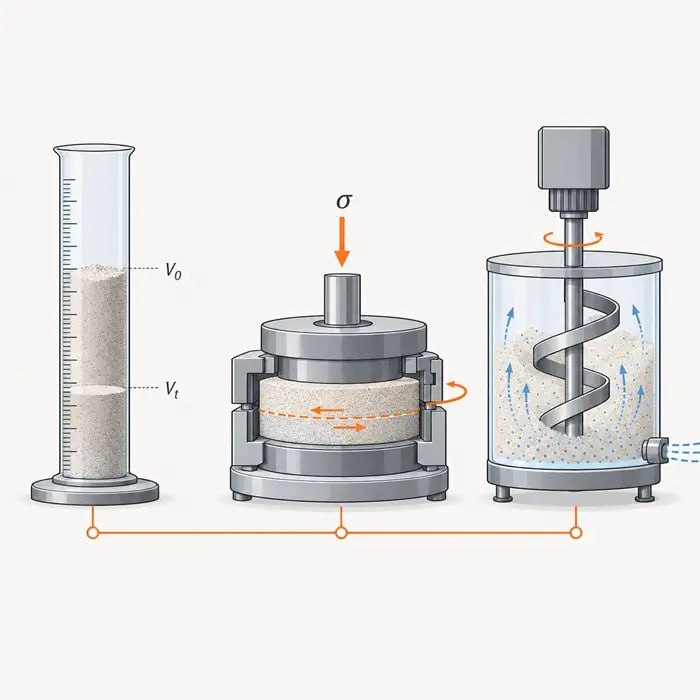
Density metrics are sensitive to filling technique. Specify the fill method, replicate count, and conditioning time. Otherwise, you measure the operator as much as the powder.
One handling metric tied to your dominant risk
Pick one metric that matches the failure signature that hurts you most. Depending on your line, that may be shear testing, wall friction, compressibility, deaeration sensitivity, or a stable proxy that correlates with feeder behavior.
If your powders carry significant safety consequence, extend the panel with targeted checks that protect compliance. Keep the scope tied to risk rather than habit.
Set enforceable acceptance criteria
Acceptance criteria fail for predictable reasons. Limits do not match the operating window, they ignore measurement variability, or they ignore supply reality. A good powder release protocol accounts for all three.
Anchor limits in the operating window
Start from what the line can tolerate. If the process becomes unstable above a certain moisture level, the acceptance limit must sit below the point where instability begins, not below what looks tight on paper.
Account for sampling and method variability
If repeatability is poor, tight limits will create false rejects. In that case, widen the limit temporarily and add an escalation step, or improve the method so it can support tighter limits.
Match supplier capability
If you cannot enforce a limit, you will waive it. Waivers destroy trust in the gate. Start with enforceable limits, then tighten after you stabilize method control and supply variation.
Use bands with defined actions
Bands turn borderline results into managed reality.
Release band
Runs under standard settings.
Conditional release band
Runs only with predefined mitigations and a verification check.
Hold band
Stops the lot until risk is reduced.
The critical detail is that conditional release must be tied to actions you already accept. If the action is invented each time, conditional release becomes a waiver with a nicer label.
Standardize sampling
Sampling is where most release protocols succeed or fail. It is also where most supplier disputes start.
Prefer moving stream sampling
When possible, sample from a moving stream during transfer. Take timed increments and combine them into a composite sample. This reduces segregation bias and better represents what enters the process.
If you must sample static containers, define the pattern
Do not allow grab sampling from the top. Define positions and depths, then take multiple increments with a consistent tool and increment mass. Without a pattern, two people sampling the same container will produce two different powders.
Define sample reduction and splitting
If you split samples, specify the tool and method. A riffle splitter or rotary divider improves repeatability. Hand splitting introduces bias, especially with broad particle size distributions.
Define retention rules
Retained samples are dispute insurance. They also shorten investigations because you can retest without trying to reconstruct what happened.
Lock conditioning rules
Powders respond to handling. If you sieve, tumble, dry, or deagglomerate samples, write it down. If you do not condition, write that down too. Comparability depends on it.
Sampling record, minimum fields
Keep the record short, but complete enough to defend.
Lot ID and container IDs
Sampling date, time, and location
Increment count and increment mass
Composite method and reduction method
Sample storage conditions and time to test
Sampler, tester, approver
Control test methods
Even good sampling cannot save you if method settings drift. Without method control, you will see trends that are not real, then change limits for the wrong reasons.
Method control checklist
Document instrument configuration, calibration status, and reference checks. Document sample conditioning and environmental controls where relevant. Document reporting rules, including units, rounding, and how replicates are handled.
Lock PSD settings
Specify dispersion pressure, ultrasound use, dispersant, and reporting basis. Small changes here can create artificial tails shifts.
Lock moisture method details
Specify method type, sample mass, temperature program, and time to result. Avoid mixing methods without correlation.
Lock density fill rules
Specify funnel, pour height, leveling rule, and replicate count. Density results are not comparable without fill control.
Build the one page lot data pack
The one-page lot data pack is what makes the release operational. It is the artifact that lets people act quickly without misreading a long report. If you cannot fit it on one page, it will not be used.
Header
Product, lot ID, supplier, received date, container count, total mass.
Decision
Released, Conditional Release, or Hold.
Reason code
Use codes you actually apply, such as Moisture High, Fines Tail High, Bulk Density Drift.
Results snapshot
For each metric, show value, limit, band, and method ID. Keep units consistent.
Conditional release actions
List the mitigation, the owner, and the verification step.
Retained sample reference
Sample ID, storage location, retention end date.
Sign off
QA release, operations acknowledgement, date, and time.
Add change control triggers
Release limits are not permanent. If you do not define triggers, people update the protocol in their heads, and you lose comparability.
Common requalification triggers
Supplier changes raw material source or processing route
Packaging changes, including liners or drying steps
Conveying route changes
Hopper geometry changes
Feeder type changes
Line rate changes beyond a defined threshold
A critical test method changes
Two consecutive conditional releases occur for the same metric
One production event is linked to a released lot
Triggers only help if you define what happens next. Keep the response simple. Identify who reviews impact, what extra testing is required, and when limits must be updated.
When a released lot still causes issues
If a lot passes the gate and the line struggles, the gate is not automatically wrong. In practice, one of three things is usually true.
The gate missed the driver
You tracked central PSD but ignored tails, or you tracked moisture but ignored packing behavior. Add the metric that matches the failure signature.
Sampling was not representative
Segregation gradients biased the sample. Shift toward moving stream sampling, or tighten the static container pattern.
The operating window shrank
Ambient conditions shifted, filters loaded, wear increased, or settings drifted. Verify operating conditions and recalibrate mitigations before rewriting the protocol.
Escalation workflow
ull the retained sample and a fresh sample, then retest the key metric with method controls verified. Compare results to the previous three lots, not memory. If the differences are real, decide whether to update acceptance limits or update operating mitigations. Document the decision in the lot data pack, even if the lot has already run.
Monthly Know How PDF pack
This article explains the logic and decision chain. The PDF should be a field pack that turns the powder release protocol into action. It should not be a copy of the article.
PDF contents
Page 1, Release panel builder
Failure mode, driver, test, limit, band, action.
Page 2, Sampling plan template
Increment rules, container patterns, composite logic, and splitting method.
Page 3, Chain of custody and retention log
Sample IDs, storage, timing, signatures.
Page 4, Method control sheet
Instrument, settings, calibration check, conditioning, reporting template.
Page 5, Change control triggers
Trigger list, required response, owner, review notes.
Page 6, One-page lot data pack template
Fillable release sheet for each lot.