
Table of contents
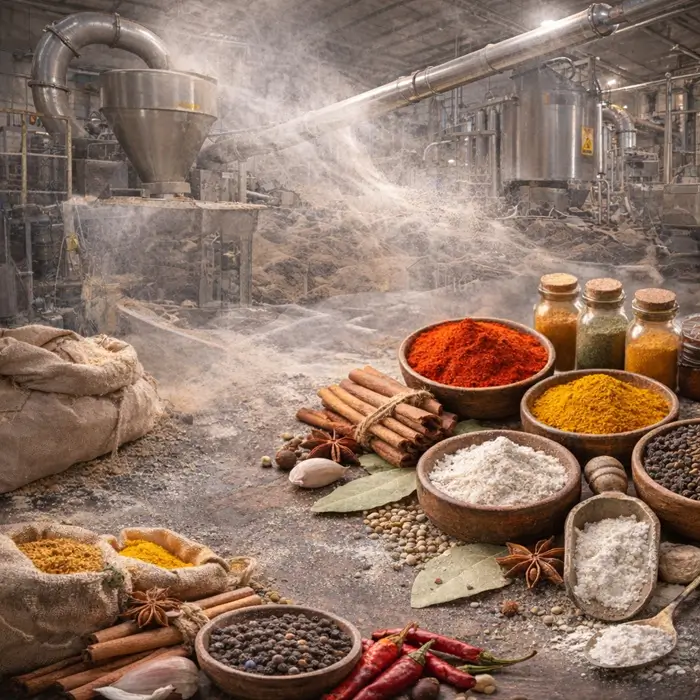
Let’s take a closer look at hidden additives in food supply chains. Today, a simple packet of curry powder or taco mix can contain a mix of agents that never appear on a label. This pattern started with industrial food processing in the twentieth century. After the Second World War, large-scale spice grinding, spray drying, and pneumatic handling became common. Processors then faced constant clumping in silos and transport drums. As a result, they adopted flow aids like silicon dioxide, calcium silicate, and rice flour to keep powders free-flowing for automated machinery.
Meanwhile, global trade in pre-ground spices expanded. Buyers shifted from whole spice importation to bulk powder purchases. Over time, regulators created definitions for compound ingredients and processing aids. Those definitions now allow additives to move across several production tiers without disclosure. In practice, the system evolved around industrial convenience, not transparency.
Our handling and processing guide explains how storage, conveying, and feeder design shape powder stability across the chain.
Origins and regulatory context of food blend labeling loopholes
Food processing expanded across continents during the mid century period. Supply chains lengthened, and manufacturers outsourced more intermediate steps. Once companies began sourcing pre-processed ingredients, labeling became harder to standardize. Think ground turmeric, ground cumin, blended spice bases, or dehydrated onion powder.
Regulators tried to keep labels simple and uniform. Therefore, many jurisdictions differentiate between direct ingredients and incidental additives. Direct ingredients usually require declaration. In contrast, processors can omit some incidental additives or processing aids. In the United States, 21 CFR 101.100 describes key food labeling exemptions, including cases that cover incidental additives and similar carry-through situations.
Compound ingredients and generic descriptors
In the United States, Europe, and other jurisdictions with similar structures, the law allows a compound ingredient to appear by name. A curry blend, spice base, or seasoning mix can be listed without declaring each internal component. That applies when the compound has a recognized name or meets a standard of identity.
Spice and flavor rules also permit generic descriptors. Labels can use terms like “spices,” “natural flavor,” or “artificial flavor.” That approach reduces label complexity. However, it also reduces visibility for consumers.
Processing aids and “incidental additive” exemptions
Many frameworks also define an “incidental additive.” In simple terms, this category can exclude a substance added earlier in the chain. The exemption often applies when regulators consider the substance minor or functionally inactive in the final food.
That structure created a pathway that permits additives to move without disclosure. A spice mill can add silicon dioxide during grinding. That addition can then follow the turmeric powder through every downstream step. If regulators treat the additive as incidental, the final producer may not need to list it.
Codex Alimentarius reflects a similar principle through its carry-over concept. Codex allows additives to carry over from raw materials into final foods when used under good practice. It also applies when the additive has no technical function in the finished product.
The European Union follows comparable principles through Regulation (EC) No 1333/2008 on food additives and Regulation (EU) No 1169/2011 on food information to consumers. As a result, a powder produced with a processing aid can move through the chain under a generic label.
How mixing and blending magnify hidden additive accumulation
The layering effect becomes clear inside a standard industrial workflow.
A raw ingredient processor receives whole turmeric fingers. The processor dries them, grinds them, and adds a flow aid to prevent caking. That processor sells the product as turmeric powder. Yet the label may not show the additive, depending on how the framework classifies it.
In parallel, a cumin mill may use calcium silicate. A coriander supplier may use rice flour to stabilize moisture. Each supplier justifies its own additive as a practical requirement for mechanical systems that handle thousands of kilograms per hour.
Read tip: Powder Caking Prevention: Causes, Testing Methods, and Proven Fixes
What happens at the blend manufacturer
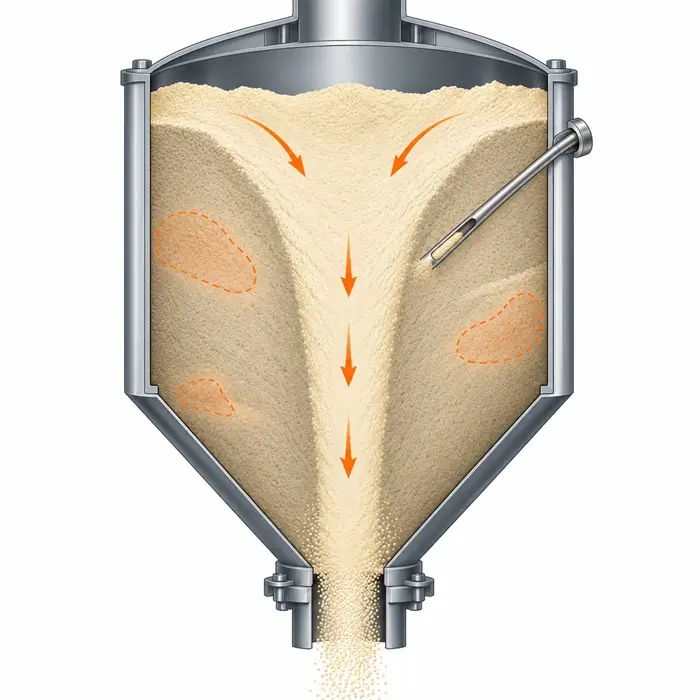
Next, a spice blend manufacturer receives these pre-treated powders. During blending, differences in moisture profile and particle size distribution can trigger new agglomeration behavior. Hoppers can bridge. Feeders can rat hole. Packaging lines can choke. Therefore, blenders often add an additional anti-caking agent, such as magnesium carbonate, to stabilize flow.
The final curry powder label may list turmeric, cumin, coriander, chili, salt, and spices. However, upstream additives may not appear. Even so, the chemistry explains why these agents persist.
-
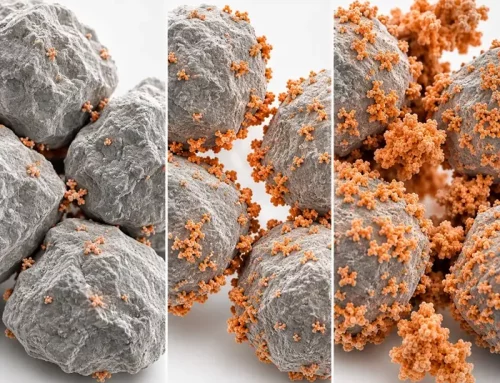
Silicon dioxide has very high surface area. It binds moisture and reduces particle fusion.
-
Calcium silicate absorbs several times its weight in water. It creates a dry boundary around particles.
-
Magnesium carbonate traps thin moisture films. It reduces capillary bridges that drive caking.
-
Rice flour can alter flow through starch granules that space particles apart.
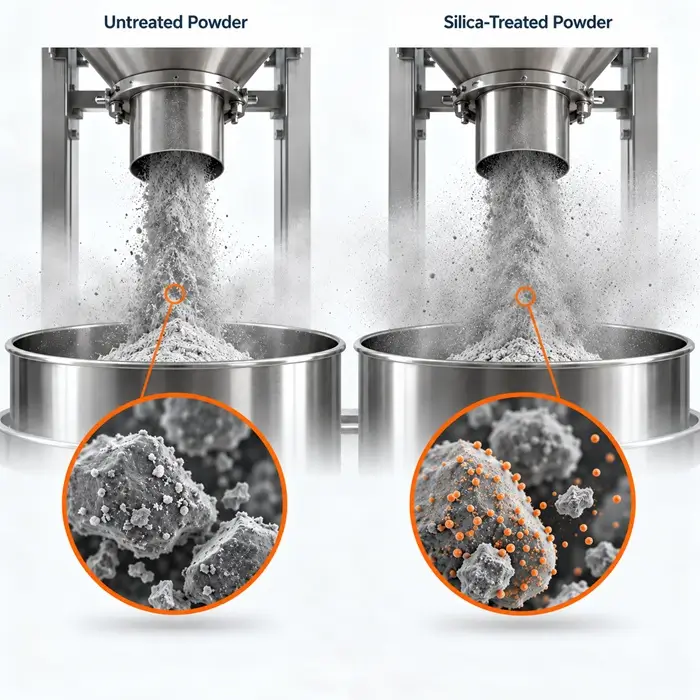
Once these agents enter the powder matrix, they continue to influence flow and hydration. They can also affect agglomeration behavior later in the chain. Therefore, the claim that they have “no function” in the final food often clashes with how surfaces behave.
A food scientist at a small batch producer might explain it bluntly. High throughput industrial mills depend on consistent flow. If powders stop moving, shear rises and heat spikes. Equipment jams, and throughput collapses. As a result, mills add flow aids. Downstream blenders then inherit those additives and may add more.
Why powder flow chemistry forces additives upstream
Upstream processors add anti-caking agents, flow aids, carriers, and moisture regulators for one reason. Raw plant powders behave poorly during storage and mechanical handling.
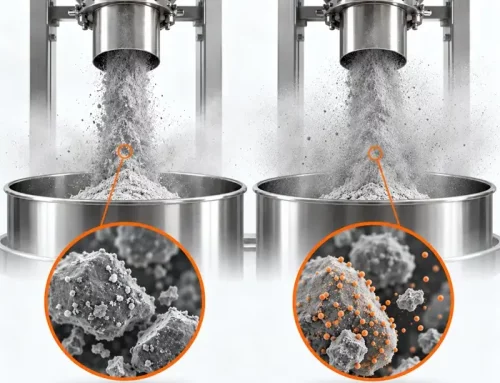
Many plant powders attract moisture fast through capillary uptake. High surface area particles pull in ambient water. Hydrogen bonding then locks particles together. Once the powder cakes, dense clusters, resist pneumatic transport. Mills block. Sifters blind. Feeders choke. Blenders stall. Packaging lines stop.
If upstream suppliers avoided these agents, many powders would ship as compacted bricks. Few spice companies could run stable lines. Bakery mix producers would lose batching control. Beverage manufacturers would see constant downtime.
Factories cannot spend hours breaking stuck masses before every batch. Output depends on powders that behave predictably under airflow. That means stable moisture content, predictable flow angles, and limited agglomeration.
You can only manage that if you measure it, so use our powder flow and flowability testing guide to pick the right tests and interpret results
Why the supplier stage matters most
The upstream supplier manages the highest risk point for clumping. They sit closest to raw plant material. At that stage, powders still contain oils, natural sugars, and volatiles that pull water. If suppliers wait until the end of the chain, the damage often becomes irreversible.
Once powders cake in shipping containers or silo bags, most end users cannot repair flow. Blenders rarely have the tools to rebuild powder microstructure. Therefore, upstream suppliers treat powders early because it is the only point where stabilization still works.
This creates the central tension. Legislators want transparency. Food technologists want flow control. Manufacturers need powders that meter through feeders at steady mass rates.
Regulators also face climate driven variation. Moisture sorption depends on particle size, oil content, surface area, and humidity. Suppliers in tropical climates often need more flow control than suppliers in arid climates. That variability makes one global rule hard to apply cleanly.
Legal rationale for non-disclosure and what regulators allow
The legal basis rests on how frameworks define “technical function” in the final food. Many statutes allow omission of incidental additives or processing aids that have no technological role in the finished product.
In practice, this creates a contradiction. Anti-caking agents added upstream can still influence final powder behavior. Even so, regulators often classify them based on entry point and declared intent. That designation can then travel with the ingredient through the chain.
Codex carry-over principles reflect this logic. The EU applies similar exemptions for additives present in compound ingredients when used under good manufacturing practice. Other national systems include comparable carry-over provisions.
These frameworks aimed to simplify labels and protect proprietary formulations. However, they also enable a system that can obscure the full composition of many processed foods.
Hidden additive cocktails, unpredictable exposure, and quality concerns
This structure produces real concerns for consumers and producers.
Consumers often cannot determine the full additive profile of a spice blend. That matters for people with sensitivities. It also matters for those who want strict dietary control.
Exposure can vary across batches. Suppliers may change the additive level based on season, humidity, crop variation, and equipment performance. Therefore, one curry blend may behave differently from the next.
Quality can shift as well. These agents can change hydration behavior and volatile release. That can influence aroma delivery and perceived intensity. Some consumers describe commercial blends as “flat” or “processed.” In many cases, formulation and processing drive that impression.
For producers, traceability becomes harder. A small manufacturer blending spices from several mills may not know what each upstream batch contained. If a customer reports a reaction, the producer may struggle to identify the driver quickly. Meanwhile, regulators periodically increase enforcement on spice quality and labeling compliance. Those efforts highlight how complex and sometimes fragile the spice supply chain can be.
Regulatory gaps and limited visibility on upstream processing
Regulators usually evaluate additive safety as single substances. They assess toxicology profiles and set limits. Many additives also receive GRAS style acceptance or equivalent approvals. However, regulators often spend less effort on mixture behavior across multi-tier supply chains.
Cumulative effects are difficult to model. Synergistic effects are even harder. At the same time, frameworks rarely require full upstream disclosure of every processing aid used during drying, milling, or intermediate handling.
As a result, downstream producers rely on trust and supplier documentation. Consumers rely on simplified labels. Few studies quantify total additive accumulation in spice blends across global trade flows. Long-term effects of chronic low-dose exposure to combined agents also remain less characterized than single additive exposure.
Implications for quality, transparency, and consumer choices
This structure has direct implications for transparency. Consumers cannot verify the full composition of blends labeled as “spices” because the label often reflects only final-stage additions.
People who want total traceability often shift to whole ingredients. Grinding whole turmeric, cumin, or coriander at home removes unknown upstream inputs. Similarly, producers who pursue full disclosure must source from mills that avoid processing aids. That usually requires tighter supplier agreements and a higher cost.
True traceability requires control over each stage, from farm through drying and grinding.
Hidden additive accumulation remains a structural issue in food blends
The legal framework for labeling permits structural opacity. Blends and composite ingredients can accumulate undisclosed agents from upstream processors, including carriers, flow aids, anti-caking agents, and fillers.
What began as a practical necessity for industrial flow has matured into a systemic loophole. In some cases, it can also enable cost-cutting practices. For example, suppliers can introduce cheap bulking materials upstream, while the final label stays generic.
Consumers then see “spices” on the label. Meanwhile, the true composition may include several functional processing agents introduced at multiple tiers. Without reform that requires disclosure of functional agents regardless of entry point, the system will likely persist. Consumer-driven demand for whole ingredient sourcing can also change behavior. However, that requires effort and cost.
The final label often reveals only part of the story. The remainder sits upstream, shaped by industrial necessity, commercial pressure, and rules that prioritize simplicity over visibility.
FAQ hidden additives in food supply chains
Check out these related articles



Advertisement
[the_ad id=”7029″]