
Table of contents
How to use the companion PDF
Open the PDF while you read. Use it to lock your sampling plan, methods, spec limits, and the one-page lot data pack.
Page 1: Route choice and minimum QA panel
Page 2: Sampling plan and chain of custody
Page 3: Method control and fines metric definition
Page 4: Spec builder and change control
Page 5: One-page lot data pack
Page 6: Release decision and dispute protocol

Black mass powder quality disputes rarely come from one bad test. Most failures trace back to sampling bias, method drift, and specs that ignore the buyer route. This Know How gives you a qualification workflow built for audits and buyer scrutiny. It also includes a companion PDF with reusable templates.
At a glance, route and top rejection drivers
Use this to align your spec with buyer pain before you test anything.
Hydromet leaching and refining
Top reject drivers: Cu, Al, Fe, wide PSD tails, slow leaching fragments, organics, and fluorides.
Must trend: moisture, D10 and D90, span, fines metric, Cu, Al, Fe, magnetic capture mass.
Direct recycling and active material repair
Top reject drivers: cross chemistry mixing, polymers and separators, fines-driven cohesion, residue-driven surface issues.
Must trend: moisture, fines metric, span, Cu, Al, Fe, visual contamination, route-specific chemistry indicators.
Why black mass behaves like a difficult powder
Black mass is a mix of particle populations, not a single powder. Active fragments, graphite, current collector metals, and polymers behave differently. Therefore, a basic assay rarely predicts downstream behavior. Buyers often see instability even when averages look consistent.
Particle populations differ in five ways. Size distribution varies because shredding creates fines and flakes together. Density varies because graphite, oxides, and metals span wide ranges. Shape varies because foils and flakes have high aspect ratios. Surface chemistry varies because residues coat particles unevenly. Moisture uptake varies because porosity and surface area change by fraction.
As a result, black mass segregates during transfer and transport. It also reacts strongly to small process changes. Consequently, qualification must treat it as a powder feedstock, not a vague label.
Step 1, define the buyer route before you write a spec
A spec without a buyer route invites rejection. Buyers qualify black mass against their own process constraints. Therefore, your first decision is commercial and simple.
Declare one intended route per shipment. Choose hydromet leaching and refining, or choose direct recycling and active material repair. Then put that route on every lot data pack.
Hydromet buyers, what they reject first
Hydromet plants dissolve solids, then separate metals in solution. Therefore, they reject impurities that damage selectivity, filtration, or reagent balance. They also reject large fragments that leach slowly and clog filters. In addition, organics and fluorides can raise corrosion risk and control instability. Finally, wide PSD tails often correlate with filtration instability.
Direct recycling buyers, what they reject first
Direct recycling aims to preserve active material value. Therefore, cross-chemistry mixing becomes a hard stop for many buyers. They also reject polymer residues and separator fragments. Meanwhile, excessive fines raise cohesion and increase airborne loss. In addition, surface residues can disrupt the relithiation and coating steps.
Step 2, map black mass failure mechanisms in powder terms
Your spec needs mechanistic depth, not only numbers. You must link powder behavior to buyer failure modes. That link lets you defend limits and justify upgrades.
Mechanism A, why PSD tails drive filtration failures
Filtration rarely fails because the D50 moved slightly. It fails because the tails are shifted. Fines compress, plug pores, and form low-permeability cakes. Coarse fragments also jam screens and create local cake defects.
Fine particles increase surface area and raise drag in porous media. Therefore, a modest fines increase can multiply the pressure drop. Meanwhile, coated fines can form tacky bridges as moisture rises.
Use these signals to predict filter risk. Track mass percent below a defined fines cut. Track PSD span because wide spans often indicate unstable liberation. Track D10 trend because it shifts when fines migrate. Pick one fines cut per buyer route, then freeze it.
Mechanism B, why moisture changes black mass overnight
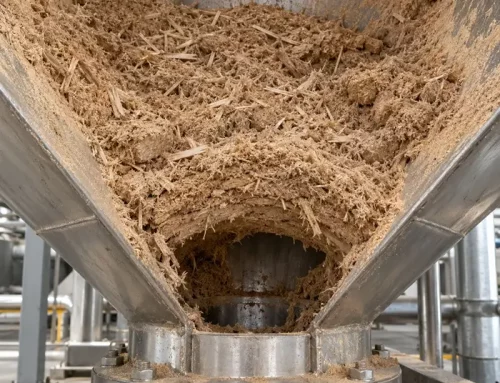
Moisture does more than add mass. Water forms liquid bridges between particles. Those bridges raise cohesion and reduce flow. Consequently, black mass can bridge in bags and rathole in hoppers.
Moisture also shifts electrostatic behavior. Slight moisture can dissipate charge, yet it can also make dust adhere to liners. As a result, yield drops through an invisible holdup. Finally, moisture can interact with residual salts and organics, which can change corrosion risk and gas evolution. Therefore, treat moisture as a handling risk and a chemistry risk.
Mechanism C, why copper and aluminum behave like particle populations
Copper and aluminum often arrive as discrete pieces, not dissolved species. Foils, flakes, and shavings behave as their own particle class. Therefore, a bulk assay can hide a critical risk.
A small mass fraction of large copper flakes can damage separations. It can also bias samples through segregation. Consequently, pair assays with fraction checks and visual screening. Later, add shape separation when foils persist.
Mechanism D, why graphite fraction changes bulk behavior
Graphite changes density, flow, and dusting. It also modifies electrostatic charging. Therefore, graphite variation can shift handling even when PSD looks stable.
Graphite also complicates density interpretation. Higher graphite can lower bulk density and change feeder behavior. Consequently, dosing can drift without obvious causes. Track a graphite indicator if your buyer route cares, and use it as a trend signal.
Step 3, build a sampling plan that survives audits
Sampling decides whether any test matters. Black mass is heterogeneous and segregates. Therefore, you must sample from a moving stream and composite correctly. Check out our article: Representative Powder Sampling.
Sampling goals you should state in writing
State three goals in your SOP. You want a sample that represents the lot average. You also want repeatability across operators and shifts. Finally, you want a method you can defend to buyers.
Where to sample, and why it changes results
Sample at bagging or IBC filling when possible. That point best matches what the buyer receives. Meanwhile, avoid sampling only at a cyclone because it overweights fines.
Avoid sampling only after drying because it hides reabsorption during packing. Also, avoid sampling only from bag tops because segregation biases result. If you must sample from bags, use a defined probe plan and composite across many bags.
Increment strategy, practical rules that work
Take many small increments across time. Do not take one large scoop. Use at least ten increments per lot as a minimum. Use twenty increments for higher value lots or unstable lines, and spread increments evenly across the run.
Composite increments in a sealed container. Mix gently to limit segregation. Then split the composite using a riffle splitter or rotary splitter. Avoid hand quartering for cohesive powders.
Sample mass and particle size, a plain English rule
Coarse and heterogeneous powders need a larger composite mass. Fine powders need careful handling to prevent dust loss. Therefore, increase composite mass when you see foils, flakes, or large fragments. Also, increase mass when you see visible variability across increments, or when buyers reject on sporadic contaminant spikes.
Sample handling and holding time control
Seal samples immediately and record the time. Record testing time and define a maximum holding time. If you ship samples to a lab, ship them sealed and documented. Also record storage conditions because temperature and humidity swings can bias moisture and volatiles.
Step 4, run a minimum viable QA panel with escalation logic
A good QA panel is small, stable, and meaningful. A weak panel is large, inconsistent, and confusing. Therefore, start with a minimum set that catches dominant failure modes, then add tests only when needed.
Minimum QA panel, what to run, and how often
Run these on every lot until you prove stability.
Moisture, plus a volatile indicator method note
PSD with D10, D50, D90, and span
Fines metric below your route-specific cut
Cu, Al, Fe assay using one stable method
Magnetic fraction captured mass trend
Bulk density and tap density
Visual microscopy screen for plastics and foils
Route add ons, chemistry buyers often demand
Many buyers extend chemistry beyond Cu, Al, and Fe. Hydromet flowsheets often care about impurity control tied to separation and corrosion. Direct routes often care about cross-chemistry and residue signals.
Be ready to support these add-ons when a buyer asks. Hydromet add-ons often include Ni, Co, Mn, Li, P, F, and S, and sometimes Cl. Direct add-ons often include cross-chemistry indicators and residue proxies, depending on the process. Do not guess, and do not promise tests you cannot control.
QA panel and escalation logic you can copy into an SOP
Moisture, every lot. Escalate when moisture trends up, or shipment delays occur.
PSD tails and span, every lot. Escalate when D10, D90, or span shifts beyond control limits.
Fines metric, every lot. Escalate when fines exceed the buyer threshold, or trend upward.
Cu, Al, Fe, every lot until control limits are set. Escalate on any spike, or sustained upward trend.
Magnetic captured mass per ton, every lot. Escalate when capture rate rises above baseline.
Bulk and tap density, weekly, then every lot if unstable. Escalate when the Hausner ratio rises.
Microscopy screen, every lot. Escalate when a new particle class appears, or foil and plastics increase.
Escalation means hold the lot, investigate the cause, then retest on the retained composite.
Moisture testing, avoid false confidence
Moisture is not one number. Water can sit on surfaces, inside pores, or inside agglomerates. In addition, volatiles can cause a loss on drying. Therefore, tie results to method and handling.
If you use Karl Fischer, control preparation and holding time. If you use loss on drying, fix mass, temperature, time, and pan geometry. Then trend the method because stability beats prestige.
PSD testing, focus on tails and dispersion discipline
Laser diffraction is fast, yet dispersion can create artificial shifts. Therefore, freeze your dispersion protocol early and treat changes as revalidation events. Always report D10, D50, D90, and span. Also report a fines metric because it predicts dusting and filtration failure. Finally, add a sieve cut for coarse fragments and foils.
Elemental assays, build trust with method control
Pick one method you can run consistently. ICP and XRF can both work, yet method control matters more than method choice. Record preparation steps and calibration references. Then include the method ID and revision on every report.
Dustiness and containment, add when you change the line
Add dustiness testing when you change classification, milling, or transfer design. Add containment checks when exposure control becomes a buyer requirement, or when loss becomes visible. Check out our article Dustiness Tests Compared: EN 15051 Versus EN 17199-4 as well as our article Powder Containment Performance Testing: How to Specify, Measure, and Improve Containment
Step 5, convert data into a spec buyers trust
Buyers want fewer surprises, not more spreadsheets. Therefore, write a short spec, method-linked, and route-specific.
What a buyer-ready spec must include
Include material description and intended route. Include the lot definition and the chain of custody. Include the sampling plan, increment rules, and split method. Include test methods, key parameters, and revision control. Include acceptance limits and reporting format. Finally, include change control triggers and a dispute protocol.
Control limits versus spec limits, do both
Spec limits decide pass or hold. Control limits detect drift before you fail spec. A lot can pass spec yet fail control, and that should trigger an investigation before shipment. Consequently, you prevent disputes instead of managing them.
About the example limits in this article
The limits below are illustrative only. Use them to structure buyer discussions and internal capability work. Do not ship against these example values. Agree on limits with each buyer, then lock them in your spec.
Worked spec template, hydromet version
Material: Black mass powder feedstock
Intended route: Hydromet leaching and refining
Lot definition: One continuous run with constant feed mix and stable settings
Sampling
Sampling point: Bagging discharge, moving stream
Increments: 20 across the run
Composite: Sealed container, gentle mixing
Split: Riffle splitter
Max hold time to test: 24 hours, sealed
Reporting
Moisture method: Method ID M01, parameter set A
PSD method: Method ID P02, dispersion setting B
Cu, Al, Fe: Method ID E03, prep set C
Fines metric: Defined cut, frozen in Method ID P02
Acceptance limits, example only
Moisture: 0.8 wt percent or lower
Fines metric below the defined cut: 18 wt percent or lower
D90: 250 microns or lower
Cu: 0.5 wt percent or lower
Al: 0.8 wt percent or lower
Fe: 0.3 wt percent or lower
Magnetic captured fraction: 0.20 wt percent or lower
Visual flags: No foil fragments above 2 mm
Change control triggers
Rebaseline after dryer endpoint changes, classifier cut changes, or sampling plan changes.
Dispute protocol
Retest once on the retained composite. Resample only with the buyer present, or with an agreed third-party method.
Step 6, upgrade black mass with unit operations, without backfiring
You can often improve quality with simple separations. However, each step changes PSD, dustiness, and yield. Therefore, retest after every major change.
Screening and delumping, the first quality lever
Screening removes coarse fragments and foreign bodies. It also protects equipment. Inspect screens daily because tears create silent failure. Delumping can break soft agglomerates after drying, yet aggressive energy creates fines. Therefore, control energy and retest the fines metric.
Air classification, use it for fines control with discipline
Classification stabilizes fines content and improves filtration behavior. However, it can increase dustiness and loss. Therefore, pair cut changes with dustiness checks and containment review. Rebaseline control limits after any cut change.
Magnetic separation, treat it as quality and maintenance
Magnets protect the buyer and reveal wear trends. Place magnets after high-wear steps and near packaging. Then the trend captured mass per ton. A rising captured fraction signals wear or intrusion, so investigate liners, fasteners, and conveyors before shipment.
Eddy current and density separation, when foils persist
Magnets do not catch aluminum. Therefore, use eddy current separation when aluminum foils drive rejects. Density-based steps can also remove light polymer fractions. These tools need stable feed behavior, so control moisture and fines before investment.
Drying and cooling, stabilize shipment without creating caking
Drying reduces moisture drift, yet it can harden agglomerates. Use a defined endpoint, then cool under controlled humidity. Seal quickly after cooling because reabsorption can be fast. Also validate that drying did not shift your fines metric.
Containment and loss control during upgrading
Exposure control also protects yield. Dust that coats ducts and liners becomes lost product. Therefore, treat containment as yield control, not only safety.
Step 7, packaging and chain of custody that prevents disputes
Packaging can ruin a qualified lot. Therefore, treat packaging as a controlled process step.
Packaging choices that protect powder behavior
Use moisture barrier liners when moisture drives acceptance. Use conductive packaging when static and dust adhesion matter. Avoid excessive headspace because breathing increases moisture exchange. Limit vibration exposure where possible because transport vibration can drive segregation.
Safety and compliance, do not improvise
Classification and shipment rules depend on jurisdiction. Waste codes and export restrictions can also change. Therefore, include packaging choice, labeling, and documentation in the release process. Check out our article Black Mass Powder Handling: NFPA 660, 2025 Safety Regulations
For more information, check out the EU Batteries Regulation (2023/1542).
EU News article –New battery-related waste codes will boost circular management of batteries and their critical raw materials
Chain of custody, keep it short and repeatable
Include a lot data pack in every shipment. Include sampling plan ID and method revisions. Include packaging type and sealing timestamp. Also record deviations and corrective actions when they occur.
Step 8, control plan, trending, and change control
Qualification is a system, not one test. Therefore, build a control plan that catches drift early.
Start with three core trends
Trend moisture because it predicts cohesion and stability. Trend the route-specific fines metric because it predicts filtration and dust loss. Trend Cu Al Fe because it predicts buyer impurity risk. Then add one process health trend, such as magnetic captured mass or screen integrity checks.
Release decision checklist, one page and repeatable
Use this checklist before every shipment.
Buyer route declared, and it matches the lot label.
Sampling plan version matches the SOP, and operators followed it.
Methods and revisions match the spec, with no silent changes.
Spec limits pass, and control limits do not flag drift.
Packaging type and sealing time recorded, with no unlogged delays.
Lot data pack completed, signed, and archived.
Retained composite stored, with a defined holding time.
Change control triggers you should document
Rebaseline when you change the sampling point or increment count. Rebaseline when you change PSD dispersion settings or equipment. Rebaseline when you change the dryer endpoint or cooling conditions. Rebaseline when you change classifier cut points or screen sizes. Rebaseline when you change magnet location or separator settings. Rebaseline when feed chemistry mix rules change materially.
Step 9, troubleshooting by symptom, with fastest tests first
Use the fastest tests first because buyers want speed and clarity.
Buyer reports filter blinding
Check the fines metric and PSD span first. Then check moisture because it changes cake compressibility. Next, review dispersion stability because false PSD shifts waste time.
Hydromet buyer reports higher reagent consumption
Check Cu, Al, Fe trends and magnetic captured mass trends first. Then check the coarse fraction and foil presence. Finally, inspect wear points if metals spike unexpectedly.
Powder bridges in bags or IBCs
Check moisture first, then check fines. Then review cooling and sealing timing because delays often explain sudden drift. Also, check that the packaging did not change without documentation.
Dust and loss increase after an upgrade change
Check classifier settings and cyclone leaks first. Then run dustiness testing to confirm the shift. Finally, improve containment and reconsider the cut if needed.
Conclusion, how to sell black mass with less dispute risk
Black mass powder quality becomes defensible when you control three things. First, declare the buyer route and lock the spec to it. Next, sample from a moving stream and split correctly. Then trend moisture, a route-specific fines metric, and key impurities with stable methods and controlled revisions.
If you do that, buyers see fewer surprises and fewer rejects. You also reduce rework, claims, and dispute time. Use the companion PDF to standardize your SOP, spec builder, and lot data pack across shifts.
FAQ black mass powder quality
Download the companion PDF
Download the companion PDF here.