
Table of contents

A printed conductive trace can pass specification on Monday and fail on Thursday. In many cases, the recipe remained unchanged. Instead, the microstructure changed during mixing, drying, or curing. When a formulation sits close to the powder percolation threshold, the conductive network becomes fragile. Consequently, even slight shifts in particle spacing can trigger significant jumps in resistance.
Percolation is not an academic detail in printed electronics, battery electrodes, or EMI shielding. It is a practical constraint that shapes yield, stability, and reliability. Moreover, it explains why two “identical” batches can behave differently after an innocent process adjustment.
What the powder percolation threshold actually means
Percolation describes the moment a conductive pathway first spans a composite volume. Below the threshold, conductive particles exist as disconnected islands. Above the threshold, they connect into a continuous network. As a result, conductivity rises sharply once enough contacts and near contacts exist.
In real composites, conduction can occur through direct particle contact. It can also occur through very small gaps when tunnelling dominates. In addition, thin surface layers can restrict current even when particles touch. Therefore, “a network exists” does not automatically mean “a good network exists.”
Why percolation matters in production and scale-up
Percolation controls electrical conduction, thermal conduction, EMI shielding, and Joule heating stability. Below the threshold, pathways remain incomplete and resistivity stays high. However, the bigger issue is often variability. Near threshold, small shifts in dispersion or loading create large property swings.
Well above the threshold, networks become denser and less forgiving. High filler fractions can raise viscosity, reduce printability, and increase brittleness. Consequently, many products target a window above threshold that balances stability with processability.
Percolation also explains why aging becomes painful. Oxide growth, moisture uptake, and interface degradation can increase contact resistance over time. Therefore, a part can “drift” out of its conductivity window even after it initially passed.
How conductive networks form in powder based composites
Conductive networks form through the interplay of particle placement, contact physics, and process history. Mixing redistributes particles and breaks agglomerates. Meanwhile, drying and curing freeze a moment in that evolution. Shrinkage can pull particles closer, although skin formation can lock in heterogeneity.
Because of that, two formulations with the same composition can show different conductivity. The difference often comes from shear rate, mixing time, solvent environment, or drying profile. In other words, the network records the process.
Direct contact, near contact, and tunnelling paths
Direct contact tends to dominate when fillers press together, and surface layers are thin. Near contact conduction becomes relevant when particles sit close without touching. Tunnelling becomes important when gaps are extremely small, and barrier conditions allow electron transfer. Therefore, small spacing changes can cause disproportionate conductivity changes near threshold.
Particle morphology, alignment, and excluded volume effects
Particle shape shifts percolation in predictable directions. Spherical particles need higher loadings because contacts occur at points. Flakes often percolate at lower loadings because they overlap and span longer distances. For a practical conductive adhesive perspective, including typical silver flake loading ranges used to achieve stable conductivity, see Gustaf Martensson’s technical note (PDF). Rods and fibers can percolate at even lower loadings, since a small number of long elements bridge gaps efficiently.
Alignment adds another layer. A strongly aligned filler can percolate in one direction and remain weakly connected in the perpendicular direction. Consequently, you can see strong anisotropy in electrical or thermal properties after shearing or coating.
What to watch with high aspect ratio fillers
High aspect ratio fillers can enable low threshold conduction. However, dispersion quality becomes the limiting factor. Agglomerates can create early conduction islands, yet those islands may collapse during printing, drying, or flexing. Therefore, low threshold performance is achievable, but it is not guaranteed.
For a widely cited overview of how dispersion, processing, and polymer choice shift carbon nanotube percolation thresholds, see Bauhofer and Kovacs (2009).
Surface chemistry and contact resistance
Surface chemistry determines contact quality and long-term stability. Metal powders usually carry oxide films, which increase contact resistance. Conductive carbons can carry functional groups that change wetting and adhesion. Furthermore, ceramic surfaces may change charge behavior with humidity.
Surfactants and dispersants can improve uniformity and reduce agglomeration. However, they can also introduce insulating layers that increase spacing at the interface. Consequently, you may gain dispersion while losing contact quality. That trade-off should be explicit in development work.
Processing history is the hidden variable
Conductivity emerges from microstructure created during processing. Therefore, treat mixing and drying as electrical design steps, not only mechanical ones.
Mixing and shear effects
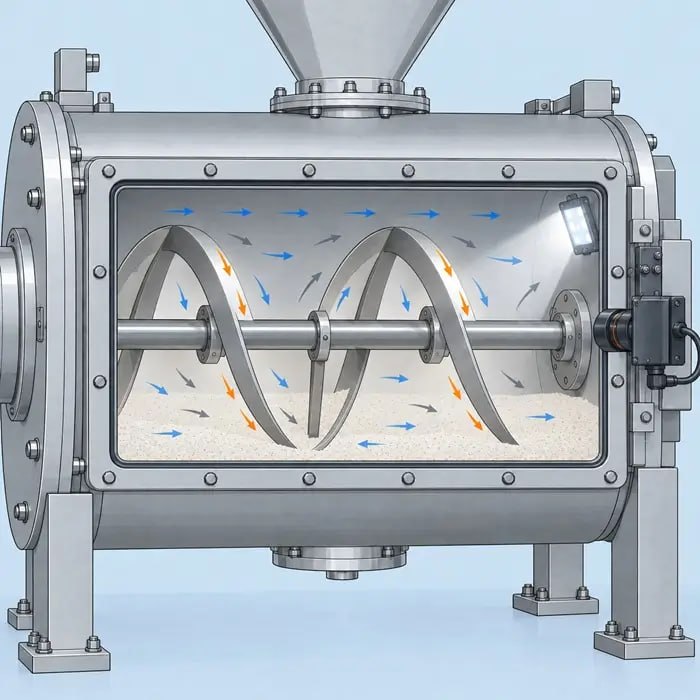
High shear can improve dispersion and reduce large clusters. At the same time, it can shorten fragile fillers and change alignment. Low shear can preserve clusters that percolate early, although those clusters often produce hot spots and spatial variability. Consequently, “more mixing” is not always the best answer.
Drying, curing, and migration effects
Drying rate influences how particles rearrange before the structure locks. Fast drying can trap non-equilibrium structures and freeze heterogeneity. Slow drying can allow rearrangement into lower energy configurations that improve conduction. In droplet-based printing, migration can also create ring-like networks that underperform in the center. Therefore, drying profiles belong in the electrical control plan.
Measurement strategies that reveal network quality
You need measurements that separate real network behavior from test artifacts. Otherwise, you can chase noise for weeks.
-
Four-point probe mapping: This reduces electrode contact effects and supports spatial resistivity maps. Near threshold, map scatter matters as much as the mean value. Real composites often deviate from ideal percolation behaviour because tunnelling and contact resistance distort the transition, see McLachlan (2021).
-
Impedance spectroscopy: Frequency response can separate contact-limited behavior from bulk conduction. It can also expose distributed interfacial processes that indicate weak contacts.
-
Micro CT and image analysis: This reveals connectivity, cluster sizes, dead ends, and bottlenecks. Moreover, it links performance to geometry instead of guesswork.
-
Rheo electrical measurements: This correlates conductivity emergence with shear history during mixing. That link is critical for inks, pastes, and composite melts.
Process knobs that shift the percolation threshold
Treat percolation as a controllable system. These knobs usually move the outcome the fastest.
-
Dispersion quality: Agglomerates can create early conduction and later collapse.
-
Solids loading window: Small fraction changes near threshold drive large conductivity swings.
-
Binder viscosity and wetting: Wetting controls particle spacing after drying and curing.
-
Shear rate and mixing time: These change alignment, break up, and uniformity.
-
Drying rate and skin formation: Fast drying can freeze heterogeneity and isolate pathways.
-
Compaction and calendaring: Pressure increases the contact area and reduces constriction resistance.
-
Oxide and contamination control: Oxide growth and residues raise resistance over time.
-
Hybrid filler strategy: A backbone filler plus a bridge filler adds redundancy.
-
Post treatment: Thermal cure, photonic curing, or sintering can turn contacts into necks.
A practical control window strategy
First, identify the percolation transition range with a loading sweep. Next, choose a target that sits above the threshold with a margin for normal batch variation. Then, validate the margin under humidity cycling, bending, and thermal exposure. Finally, lock the process settings that protect dispersion and drying behavior.
Failure signatures when you sit too close to threshold
If your formulation is under-margined, these symptoms appear quickly.
-
Batch-to-batch scatter increases dramatically, even when average loading seems stable.
-
Resistivity maps show hot spots and strong spatial gradients.
-
Humidity cycling causes drift as the matrix swells and contacts degrade.
-
Bending or vibration triggers step changes, not smooth resistance trends.
-
Aging accelerates because weak contacts self-heat under current.
Applications where percolation control drives performance
Printed electronics and conductive inks
Printed traces depend on continuous pathways that resist cracking and drifting. Therefore, particle size distribution, surface treatment, and drying profile must be tuned together. Hybrid fillers often improve performance because one population bridges gaps that the other cannot.
Battery electrodes and composite current collectors
Battery networks must remain conductive during swelling, cycling, and thermal changes. Consequently, dynamic stability matters more than initial conduction. Formulations often need redundancy and mechanical resilience to stay connected over time.
EMI shielding materials
Shielding depends on connectivity through the thickness of a part. Poor networks reduce shielding effectiveness and increase variability. Therefore, multilayer or gradient designs can be useful when impedance tuning matters.
Sensors, heaters, and antistatic layers
Some products want stable networks, while others want controlled fragility. For example, strain sensors often rely on predictable pathway breakage with deformation. In contrast, printed heaters need networks that survive repeated heating cycles without drifting.
Design strategies for stable conductive networks
Stable percolation starts with the morphology choice. Flakes and rods lower the threshold but raise dispersion sensitivity. Spheres can be more forgiving, although they often require higher loadings. Surface treatments can reduce oxide impact and improve wetting, but they can also add insulating layers. Therefore, validate contact resistance, not only dispersion.
Processing control matters as much as chemistry. Select shear conditions that achieve uniformity without damaging filler geometry. Tune drying to reduce migration and avoid skin locking. Use compaction or post treatments when contact resistance dominates. Above all, design for redundancy with hybrid networks when reliability is critical.
What is next for powder percolation engineering
Percolation engineering is moving from trial and error toward predictive design. Data-driven models can link morphology, dispersion state, and processing history to conductivity outcomes. However, models only help when the process data is reliable and consistent.
Sustainability will also change the playing field. More recycled powders will enter conductive systems, which increases variation in morphology and surface chemistry. Therefore, the winners will treat percolation as a process-controlled property, supported by measurement and margin.
Conductive performance begins at the particle level. When engineers control contacts, spacing, and redundancy, composites become predictable instead of surprising.