
Additive manufacturing

Powder, feedstock, spreading, deposition, and reuse behavior
across additive manufacturing

Powder beds, bound feedstocks, slurries, sand
and reclaimed material are not one category

Particle size, shape, oxygen content, moisture, cohesion, apparent density, surface condition,
rheology, electrostatic charging, binder distribution, and reuse history decide whether a feedstock
feeds evenly, spreads into a flat layer, deposits a stable track, holds green strength, and sinters
to the density you designed for. This page connects what you are seeing on the machine to the
mechanism behind it and the measurement that settles it.

Icon representing additive manufacturing feedstock routes

By material type

Laser and electron beam powders, binder jetting, DED, cold spray, polymers, bound metal, ceramics, composites, sand, construction mixes, reclaimed feedstock.

Icon representing recurring powder behavior routes

By observed behavior

Flow, caking, dust, dosing, segregation, oxidation, contamination, spreading, deposition instability, packing variation, moisture sensitivity, adhesion, and electrostatics.

Icon representing powder measurement routes

By measurement route

The test that clearly separates one likely mechanism from another under realistic material, process, operating, and environmental conditions during production.

Icon representing process area routes

By process area

Production, classification, storage, dosing, blending, spreading, deposition, binding, compaction, sintering, recovery, recycling, and feedstock reclamation.

Find your route

Start with the feedstock, then the behavior

Additive manufacturing feedstocks do not behave as one category. Pick the powder, bound feedstock, slurry, composite, sand, construction mix or reclaimed material class, then the behavior you are seeing in the process. The result names the mechanisms worth separating, the measurement to start with, and where in the process it usually shows up. It is a triage route, not a diagnosis.

  1. 1Material
  2. 2Behavior
  3. 3Route

Step 1  What are you handling?

Step 2  What are you seeing?

Step 3  Your route

Material routes

Powders, bound feedstocks, slurries and reclaimed streams

Additive manufacturing uses spherical and irregular metal powders, polymer powders, powder-loaded filaments and pellets, ceramic particles, printable slurries, composite feedstocks, sand systems, cementitious mixes and reclaimed streams with very different sizes, densities, shapes, surface chemistries, moisture sensitivities, thermal behaviors and rheologies. The same site may handle several feedstock forms and printing routes. Each class has its own behavior profile, so the most useful route starts with the feedstock before moving to the visible symptom or process instability.
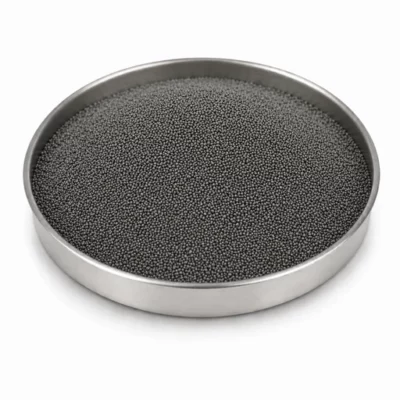
Laser powder-bed fusion metal feedstock in a stainless steel sample dish

Laser powder-bed fusion metal feedstocks

Laser powder-bed feedstocks require controlled size, sphericity, oxygen, and flow. Fines, satellites, and reuse affect spreading, fusion, porosity, and finish.
Spreading Fusion Porosity
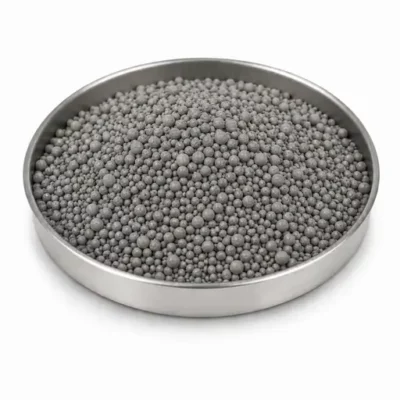
Electron-beam powder-bed fusion feedstock in a stainless steel sample dish

Electron-beam powder-bed fusion feedstocks

Electron-beam feedstocks must spread under vacuum and heat. Charge behavior, preheating, size distribution, and reuse affect raking, fusion, and defects.
Vacuum Preheat Fusion
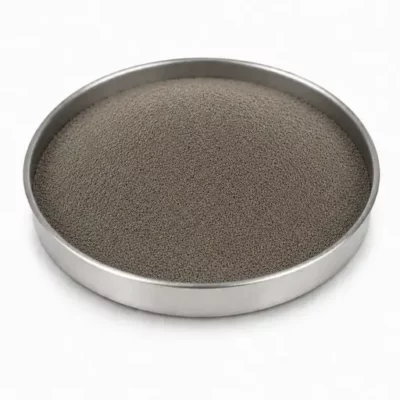
Binder-jetting metal powder feedstock in a stainless steel sample dish

Binder-jetting metal powder feedstocks

Binder-jetting powders rely on packing, wetting, and binder distribution. Particle size, shape, moisture, and layer density influence strength and sintering.
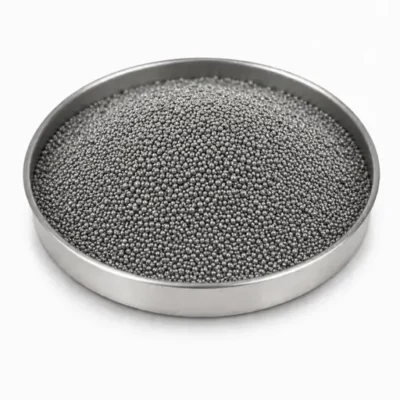
Packing Binder Sintering
Directed-energy deposition metal powder in a stainless steel sample dish

Directed-energy deposition powder feeds

DED powders must feed through nozzles into the melt pool. Size, sphericity, carrier gas, and segregation affect deposition rate and track quality.
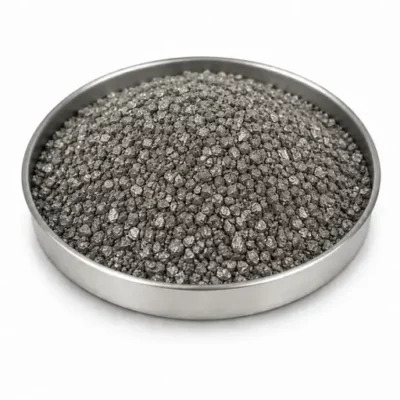
Feeding Melt pool Tracks
Cold-spray and solid-state deposition powder in a stainless steel sample dish

Cold-spray and solid-state powder feeds

Cold-spray powders depend on velocity, shape, oxide condition, and hardness. Size distribution and surface state affect deposition efficiency and particle bonding.

Velocity Oxide Bonding
Polymer powder-bed fusion feedstock in a stainless steel sample dish

Polymer powder-bed fusion feedstock powders

Polymer powder-bed feedstocks must spread, melt, and recrystallize within a narrow window. Aging, moisture, shape, and fines affect curl, density, and reuse.
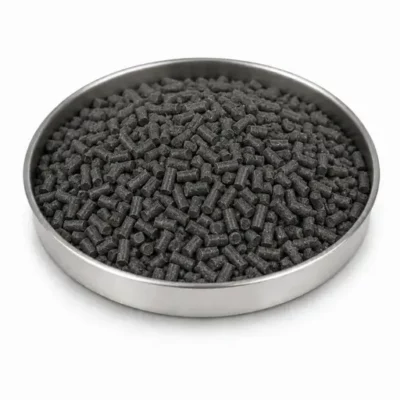
Aging Melting Reuse
Bound-metal filament and pellet feedstock in a stainless steel sample dish

Bound-metal filament and pellet feedstocks

Bound-metal feeds combine metal powder with polymer binder. Powder loading, dispersion, moisture, and thermal history influence extrusion, debinding, and shrinkage.

Loading Debinding Shrinkage
Ceramic additive manufacturing powder in a stainless steel sample dish

Ceramic powders and printable slurry materials

Ceramic AM feedstocks need controlled loading and dispersion. Particle size, agglomeration, binder chemistry, and drying affect shaping, cracking, firing.
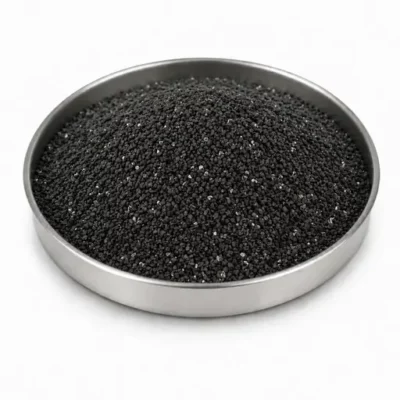
Dispersion Drying Firing
Composite and filled polymer feedstock in a stainless steel sample dish

Composite and filled polymer powders

Filled polymer feeds combine matrix material with fibers, minerals, or conductive particles. Dispersion, viscosity, segregation, and abrasion directly affect final print quality.
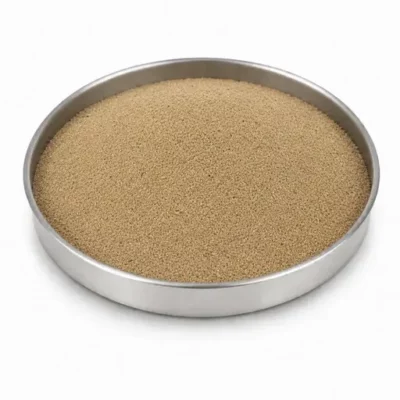
Dispersion Wear Properties
Sand and mold-printing feedstock in a stainless steel sample dish

Sand and mold-printing feedstocks

Printed sand systems depend on grain size, shape, binder distribution, and moisture. Recoat behavior and curing affect permeability, strength, accuracy.
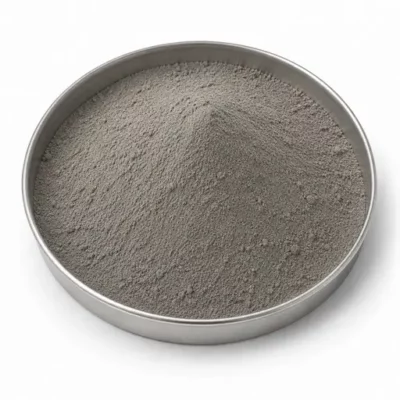
Recoat Curing Accuracy
Cementitious construction-printing feedstock in a stainless steel sample dish

Cementitious construction feedstocks

Construction-printing mixes require pumpability, buildability, and controlled setting. Packing, moisture, admixtures, and shear history affect extrusion stability.
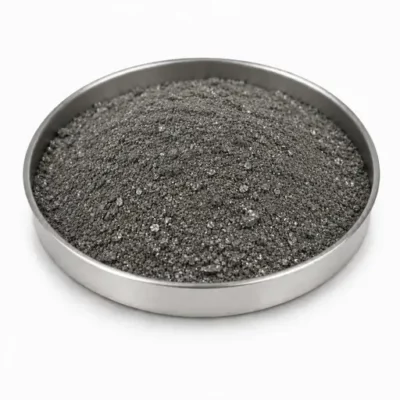
Pumping Buildability Set
Reclaimed and recycled additive manufacturing feedstock in a stainless steel sample dish

Reclaimed and recycled AM feedstocks

Reclaimed feedstocks change through oxidation, contamination, attrition, and size drift. Screening, blending, and reuse limits affect consistency and final quality.

Reuse Screening Quality

Quick comparison

Material route, common risk, first measurement

The same symptom points to different mechanisms depending on the feedstock form, particle morphology, binder system, surface condition, atmosphere and printing route. This is the fast bridge between additive manufacturing behavior and the most useful first measurement route.

Additive manufacturing feedstock routes, the handling or processing risk each one carries most often, and the measurement worth running first.

Material routeCommon handling or processing riskUseful first measurement
Laser powder-bed fusion metal feedstocksPoor spreading, fines accumulation, satellite particles, oxidation, and reuse-related driftParticle size, morphology, oxygen content, and flowability
Electron-beam powder-bed fusion feedstocksCharging, unstable raking, preheat sensitivity, and vacuum-related flow variationParticle size, morphology, charge behavior, and apparent density
Binder-jetting metal powder feedstocksPoor packing, uneven binder wetting, low green strength, and sintering distortionParticle size, packing density, moisture, and wetting behavior
Directed-energy deposition powder feedsUnstable nozzle feeding, segregation, inconsistent deposition rate, and track variationParticle size, morphology, flow rate, and carrier-gas response
Cold-spray and solid-state powder feedsPoor acceleration, oxidation, variable deposition efficiency, and weak particle bondingParticle size, morphology, oxide condition, and hardness
Polymer powder-bed fusion feedstocksPoor recoating, moisture uptake, thermal aging, curl, and inconsistent reuseParticle size, moisture, thermal behavior, and flowability
Bound-metal filament and pellet feedstocksInconsistent powder loading, poor dispersion, moisture, and extrusion instabilityPowder loading, moisture, dispersion, and melt-flow behavior
Ceramic powders and printable slurriesAgglomeration, unstable rheology, drying cracks, and firing defectsParticle size, solids loading, dispersion, and rheology
Composite and filled polymer feedstocksFiller segregation, abrasive wear, unstable extrusion, and property variationFiller content, dispersion, moisture, and melt-flow behavior
Sand and mold-printing feedstocksPoor recoating, uneven binder distribution, low strength, and dimensional errorGrain size, moisture, flowability, and binder distribution
Cementitious construction feedstocksPumping instability, poor buildability, premature setting, and layer collapseParticle packing, rheology, setting time, and moisture
Reclaimed and recycled AM feedstocksOxidation, contamination, size drift, agglomeration, and inconsistent reuse performanceParticle size, oxygen, contamination, and flowability

One risk per row is the one most often reported, not the only one that occurs. Use the selector above to work a specific combination through to a route.

Recurring problems

Start from the behavior you can see

These eight are the ones your own route card and continue block already name: flow, consolidation, dust, dosing, segregation, oxidation, contamination and spreading or deposition instability. Spreading earns a card here that it gets on no other hub, because a layer that does not lie flat turns every other property into a defect. Each card runs back to the mechanisms worth separating and forward to the measurement that confirms which one is governing.

Icon representing poor flow and discharge

Poor flow or discharge

Arching · Bridging · Discharge

Icon representing caking and consolidation

Caking or consolidation

Moisture · Load · Storage

Icon representing dust formation

Dust formation

Fines · Handling · Containment

Icon representing dosing variation

Dosing variation

Density · Refill · Feeding

Icon representing segregation

Segregation

Size · Density · Motion

Icon representing oxidation and moisture pickup

Oxidation or moisture pickup

Oxygen · Humidity · Surface

Icon representing contamination

Contamination

Purity · Wear · Reuse

Icon representing spreading and deposition instability

Spreading or deposition instability

Layers · Feeding · Uniformity

Measurement routes

The test that answers your question

Additive manufacturing behavior rarely resolves to one number. Particle size, morphology, satellites, oxygen content, moisture, cohesion, apparent density, electrostatic behavior, binder response and contamination can all sit behind the same visible process symptom. Pick the method by the question, not by the symptom.

Particle size and morphology

Particle size distribution
Fines, oversize, packing, layer spreading, dustiness, and feedstock consistency.

Microscopy and morphology
Particle shape, sphericity, satellites, surface condition, and foreign particles.

Moisture, oxygen, and surface condition

Moisture content and sorption behavior
Moisture content, uptake rate in storage, caking risk, and storage stability.

Water activity
Available moisture rather than total moisture, which drives surface change and caking.

Flow, spreading, and discharge

Flowability and shear testing
Cohesion, consolidation, hopper discharge, recoater interaction, and layer spreading.

Wall friction testing
Hopper design, discharge limits, wall material choice, refill behavior, and powder adhesion.

Density, aeration, and feeding

Apparent and tapped density
Layer packing, compressibility, feeder behavior, refill consistency, and density limits.

Permeability and deaeration
Air retention in fine powders, deaeration rate, flooding risk, and unstable feeding.

Wear, contamination, and dust

Attrition and friability testing
Particle breakage, fines generation, and wear debris from sieves, mills, and transfer lines.

Dustiness testing
Airborne fines, transfer losses, dust capture, worker exposure, and cross contamination.

Charging and every method

Electrostatic charge testing
Contact charging in dry handling, adhesion to the recoater and build plate, and wall buildup.

Compare every method
All test methods on the site, grouped by the question they answer.

Process routes

Where the behavior actually shows up

The same feedstock behaves differently depending on where it sits in the process. Production, classification, storage, conveying, dosing, spreading, deposition, binding, curing, debinding, sintering and recovery each expose a different property and a different failure mode.

01

Feedstock production

Atomization, milling, granulation, compounding and slurry preparation determine size, shape, composition, binder distribution and feedstock consistency.

02

Sieving and classification

Screen size, classifier settings, particle shape, electrostatics and agglomeration strongly influence fines removal, oversize control and overall usable yield.

03

Storage and conditioning

Atmosphere, humidity, temperature, consolidation and storage time can alter moisture, oxidation, flow, viscosity and later print consistency.

04

Conveying and dosing

Bulk density, cohesion, electrostatics, refill strategy and feeder design influence hopper discharge, dosing stability and consistent material delivery.

05

Powder bed spreading

Size distribution, morphology, packing, recoater speed, layer thickness and machine conditions influence bed uniformity, defects and density.

06

Deposition and extrusion

Powder flow, carrier gas, melt-pool behavior, extrusion pressure, viscosity and nozzle condition influence track geometry, bonding and output.

07

Binding and curing

Binder saturation, wetting, cure kinetics, exposure, drying and layer interaction determine green strength, dimensional accuracy and defects.

08

Debinding and sintering

Binder removal, atmosphere, heating rate, particle contacts and thermal gradients influence distortion, shrinkage, porosity and final properties.

09

Recovery and reuse

Sieving, contamination control, oxidation, breakage, blending and reuse limits determine recovered feedstock consistency and part quality.

Go deeper

Guides and articles for additive manufacturing feedstocks

Longer reads that work through the mechanisms behind these routes, from the visible process problem to material properties, measurement choice and interpretation.

Metal powder being spread into an even layer in a powder bed fusion machine

Powder bed fusion in additive manufacturing

Why layer spreading is a flow problem before it is a laser problem, and which powder properties decide whether the bed is even.

Laser powder bed fusion build chamber showing spatter generated during processing

Spatter contamination in LPBF, an Inconel 718 case study

How spatter puts oxidized, oversized particles back into the powder bed, what it does to reuse, and what the screening step can and cannot remove.

Metal powder feedstock used in an additive manufacturing build

Advances in 3D printing with metal powders

Where feedstock quality sits against machine capability, and which powder properties still set the ceiling on what a build can achieve.

Define the feedstock operating window

A feedstock can meet specification and still fail when atmosphere, moisture, temperature, consolidation, shear, reuse count or layer thickness moves outside the conditions where it behaves reliably.

Choose the test that matches the process question

Flow and material characterization tests answer different questions. Match the method to the process condition, feedstock state, atmosphere, thermal history, and failure mode rather than treating printability universally.

Know when the fine fraction takes over

A small increase in fines can significantly change cohesion, dust formation, oxidation, packing, layer spreading, binder demand, and sintering even when the median particle size remains almost completely unchanged.

Watch what reuse does before it becomes visible

Reuse can alter particle size, morphology, oxygen, moisture, contamination, packing, and melt response well before any obvious visible material change appears in the powder itself during processing or extended storage.

FAQ

Additive manufacturing feedstock questions

The most important distinction is usually not the visible symptom itself but the mechanism behind it. Similar symptoms can result from cohesion, particle morphology, moisture or oxygen exposure, segregation, electrostatics, binder variation, contamination, density variation, or interaction between the feedstock and the equipment.
Feedstock behavior depends on the conditions acting on it. Storage history, atmosphere, consolidation, reuse, temperature, shear, preheating, layer thickness and machine settings can shift how the same material feeds, spreads, deposits, cures, or sinters.
The useful method depends on the question. Particle size and morphology analysis may help with feeding, spreading, packing, or segregation, while oxygen, moisture, apparent density, rheology, thermal analysis, wetting, electrostatics, or reuse trials may be more relevant for other symptoms. A useful test program starts with the suspected mechanism rather than a standard list of measurements.
Start with the information you already have. Use the material route when the process and feedstock form are known, the behavior route when a visible symptom is driving the investigation, and the measurement route when you already know which property or test family needs evaluation.
Laboratory testing is useful when the symptom does not reveal the controlling mechanism, when several causes are plausible, or when a new feedstock, reuse strategy, machine setting, or process change needs evaluation before implementation. Test conditions should reproduce the relevant atmosphere, stress, temperature, shear, layer, curing and thermal environment as closely as practical.
Yes. Unstable feeding, poor spreading, deposition variation, weak green parts, or sintering defects can result from several interacting factors. Complementary measurements can help separate effects such as particle size, morphology, moisture, oxygen, cohesion, density, binder response, contamination and process history.

Need the measurement, not just the guidance? PowderTechnology.info works closely with Delft Solids Solutions,
a contract research organization specializing in the physical behavior of powders and granules. DSS provides
contract testing and characterization, with its laboratory working in accordance with ISO 17025.
Contact Delft Solids Solutions.

Delft Solids Solutions logo