
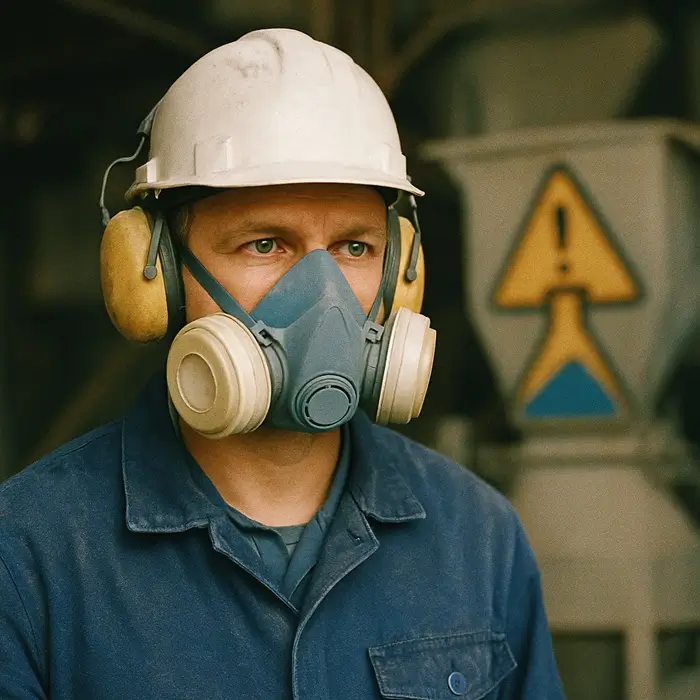
New EU cobalt limits at a glance
The European Commission proposed new OELs for cobalt and its inorganic compounds. The values are very low for cobalt exposure limits in powder manufacturing; the proposed thresholds are 0.01 mg/m³ inhalable and 0.0025 mg/m³ respirable. A transition period gives industries time to adapt.
Who is affected
Battery materials, tool steels, magnet alloys, and hard-metal finishing all sit in scope. Powder handling, milling, blending, sieving, and rework raise exposure. Maintenance and cleaning often drive the worst peaks. Therefore, controls must reach beyond production.
What to do this week
-
Map tasks and hotspots. List every operation that moves or disturbs cobalt powders. Note drop points, bag dumps, bin changes, and clean-downs.
-
Check exposure evidence. Review recent personal and area samples. Confirm methods, flow rates, and calibration. If the data is old, schedule a new campaign.
-
Verify local exhaust. Measure capture velocities at hoods. Inspect duct bonding, filter media, and differential pressure trends.
-
Tighten housekeeping. Ban dry sweeping. Use rated vacuums with conductive hoses. Log dates, areas, and weights.
-
Update training. Focus on donning, doffing, and change-room habits. Reinforce glove checks and skin hygiene.
Sampling that stands up in audits
Use task-based personal sampling across full shifts and high-exposure tasks. Pair with short-term samples during bag changes or dump station work. Document pump calibration, media, and blanks. Keep chain-of-custody and lab reports linked to job roles. Clear evidence speeds decisions later.
Controls that actually move the needle
Start with containment, close open transfers. Fit bag dumps with integral capture. Use sealed connections from drums to hoppers. Keep negative pressure where practical. Then improve LEV. Shorten capture distance, balance airflows. Check filters for the right media. Finally, match PPE to risk. Select tight-fitting respirators, then fit-test and record results. Keep change-room routines strict.
Link to existing safety programs
Fold cobalt controls into your dust and hygiene programs. Align terms and evidence with NFPA 660 where combustible dust applies. Keep one source of truth for procedures, training, and records. Auditors reward consistency.
Cobalt Exposure Limits in Powder Manufacturing: Six-Week Compliance
-
Fresh exposure data for the top five cobalt tasks
-
Verified capture velocities and fixed leaks
-
Updated SOPs and toolbox talks
-
Logged fit-tests and cleaning records
-
A visible action tracker, owned by operations and EHS