

SUBJECT
Insights
Weeksly insights offered by Powdertechnology.info powdered by Delft Solids Solutions
PUBLICATIONS
Browse publications
Explore PTI articles, Insights, Know How, and technical publications related to this subject.
 18 July 2026
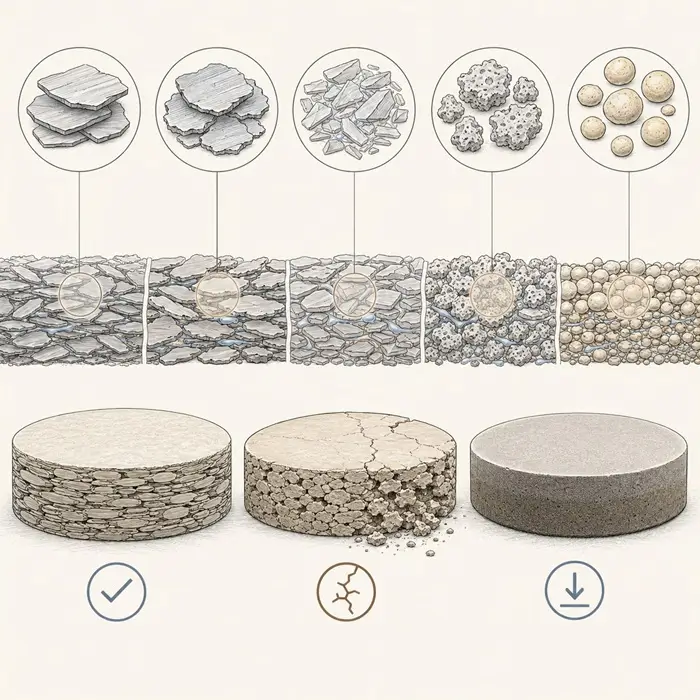
Preparing for an EU Talc Ban: What Mineral and Starch Alternatives Need to Match
Talc's expected EU restriction is forcing cosmetic formulators toward mica, kaolin, silica, and starch. None of them reproduce talc's platelet slip, oil absorption, and low dustiness at the same time, and each substitution changes flow and compaction behavior in pressed powder products differently.
Insights
 11 July 2026
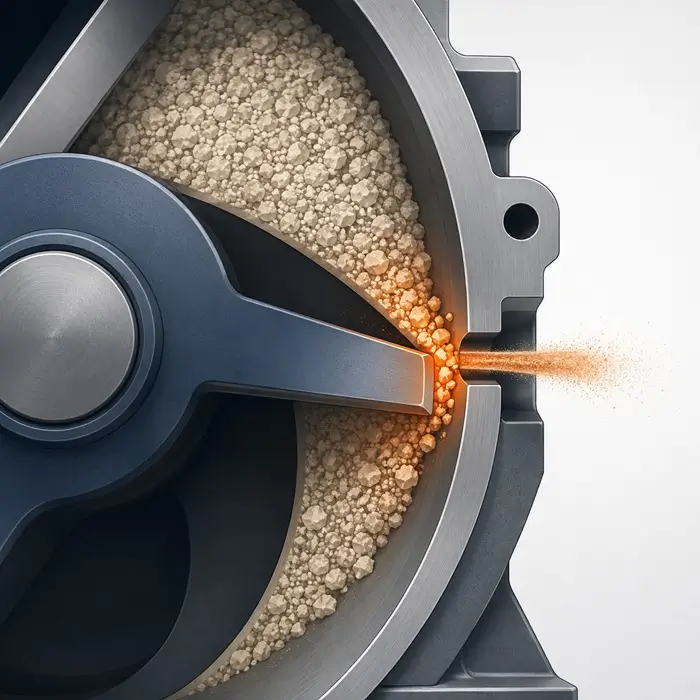
What Rotary Airlocks Actually Do to Powder
Rotary airlocks function as pressure boundaries as much as metering devices. The rotor tip clearance governs particle attrition at the nip zone and the rate of fine-particle bypass under differential pressure. As clearance widens through wear, the downstream particle size distribution shifts in a pattern frequently misread as upstream process variation.
Insights
 4 July 2026
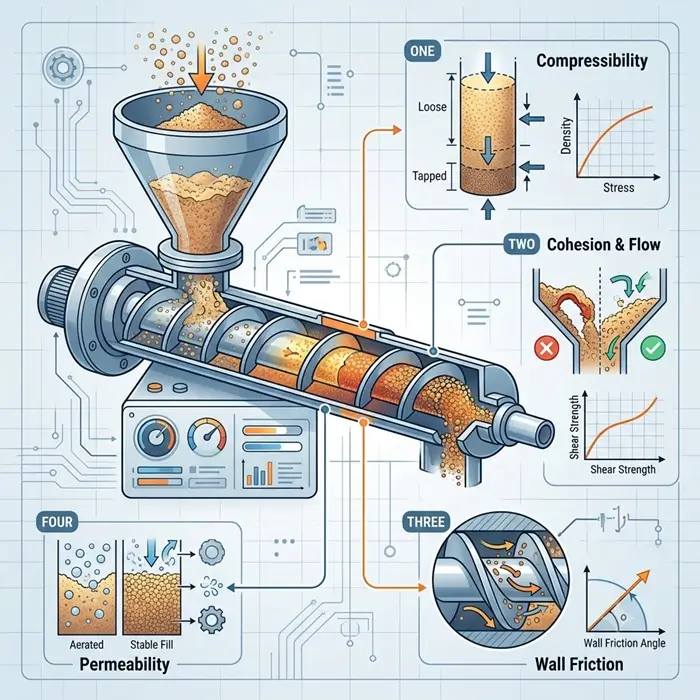
Screw Feeder Dosing Accuracy and Powder Compressibility: Why the Same Screw Behaves Differently on Similar Products
The same screw feeder at the same speed can deliver consistently on one powder and drift by several percent on another. The difference lies in compressibility, wall friction, and cohesion, and in how bulk density shifts as the hopper empties.
Insights
 27 June 2026
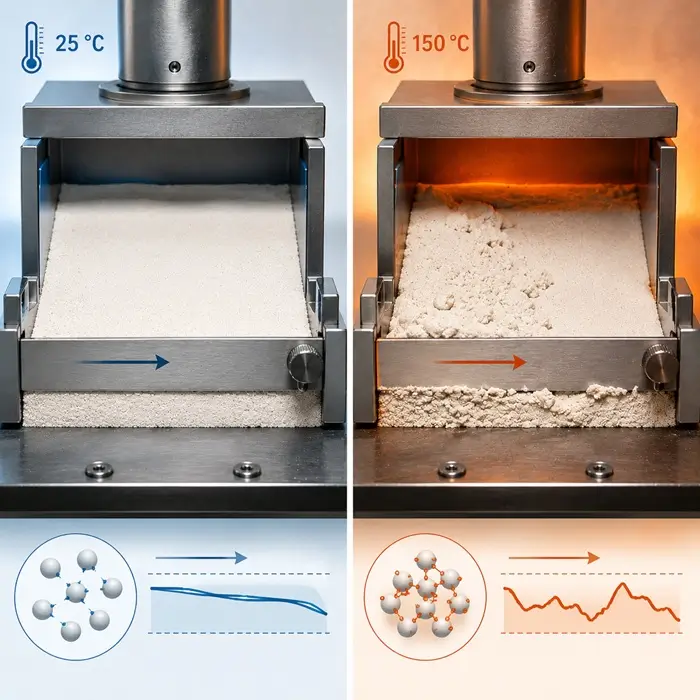
Powder Flowability at Elevated Temperature: Why Room-Temperature Results Don’t Predict Hot-Bed Behavior
Temperature shifts surface energy, contact compliance, and residual moisture state in ways that can reverse a powder's ambient flow behavior. This Insight explains the dominant mechanisms across three temperature ranges and what elevated-temperature testing reveals for SLS powder beds, spray dryer outlets, and heated conveying systems.
Insights
 20 June 2026
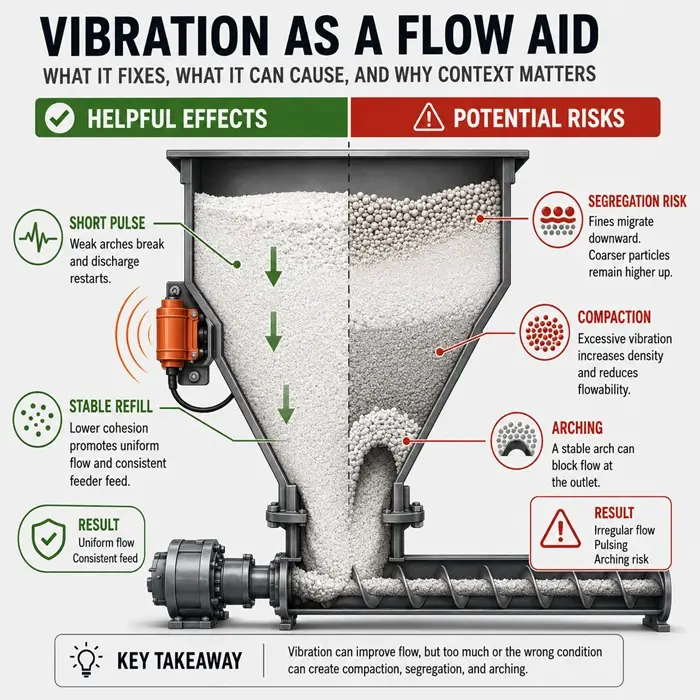
Vibration as a Flow Aid: When It Helps Powder Flow
Vibration can improve powder discharge when it breaks a weak arch or [...]
Insights
 13 June 2026
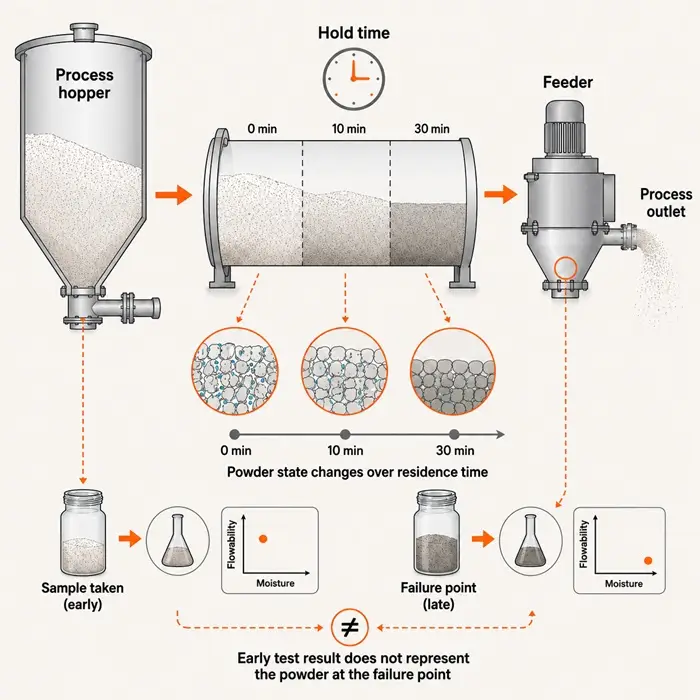
Powder Residence Time Can Make the Test Result Miss the Failure
Powder residence time matters because the sample and the failure often describe [...]
Insights
 6 June 2026
Why Hopper Fill Level Changes Powder Discharge
Do not diagnose a feeder as if the hopper sends it one [...]
Insights
 30 May 2026
Powder Operating Window: Why a Good Powder Fails in the Wrong Process
A powder operating window defines the process conditions in which a [...]
Insights
 23 May 2026
Fines in Powder Behavior: Why Small Amounts Matter
Fines in powder behavior matter because fine particles add surface area, contact [...]
Insights
 16 May 2026
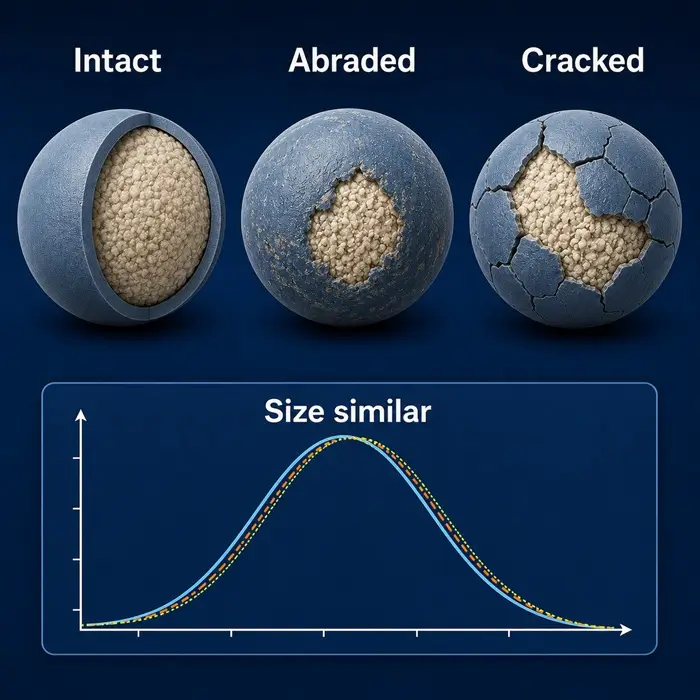
Coated Particle Damage Before Particle Size Changes
Coated particle damage can change performance before particle size distribution shows a [...]
Insights
 9 May 2026
Powder Wettability: Why Powders Float, Clump, or Disperse
Powder wettability controls the first contact between powder and liquid. When liquid [...]
Insights
 2 May 2026
Sieve Blinding: Why Powder Screens Fail Before the Particle Size Spec Does and How to Solve it
Sieve blinding does more than reduce screening capacity. It changes the [...]
Insights