
SUBJECT
Flowability
Publications on powder flow, flowability testing, cohesive behavior, and the material and process factors that influence reliable handling and discharge.
PUBLICATIONS
Browse publications
Explore PTI articles, Insights, Know How, and technical publications related to this subject.
 4 July 2026
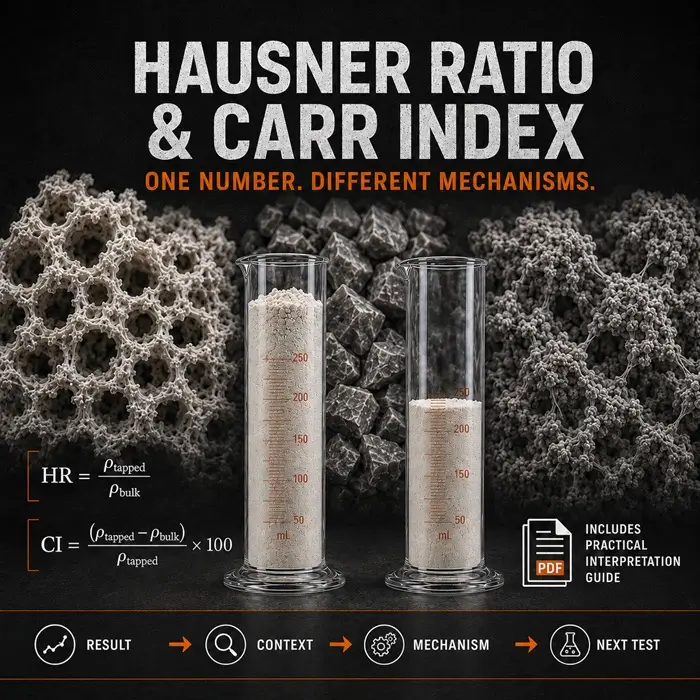
Hausner Ratio and Carr Index: What the Numbers Tell You and Where They Break Down
Both the Hausner Ratio and Carr Index reduce bulk and tapped density to a single number. The mechanism behind that number, whether aeration, particle shape, or surface cohesion, determines whether it supports a process decision or actively misleads one.
Know How
 4 July 2026
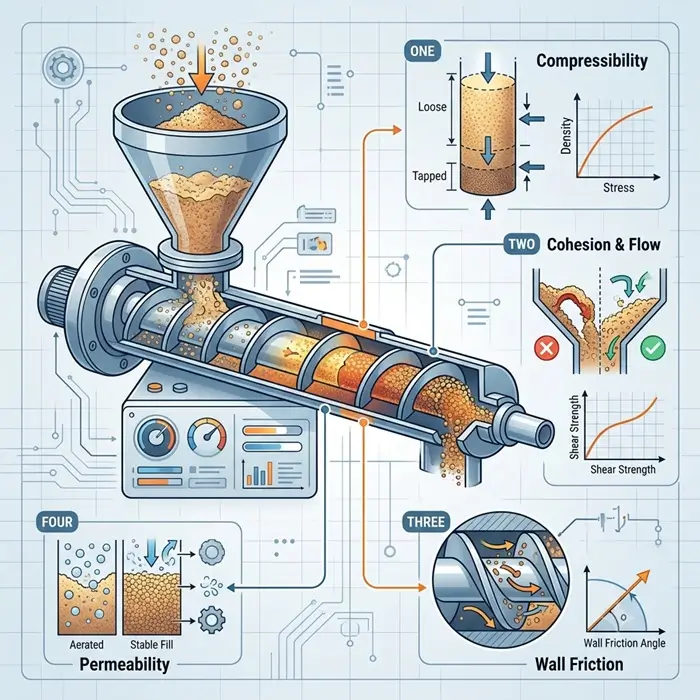
Screw Feeder Dosing Accuracy and Powder Compressibility: Why the Same Screw Behaves Differently on Similar Products
The same screw feeder at the same speed can deliver consistently on one powder and drift by several percent on another. The difference lies in compressibility, wall friction, and cohesion, and in how bulk density shifts as the hopper empties.
Insights
 27 June 2026
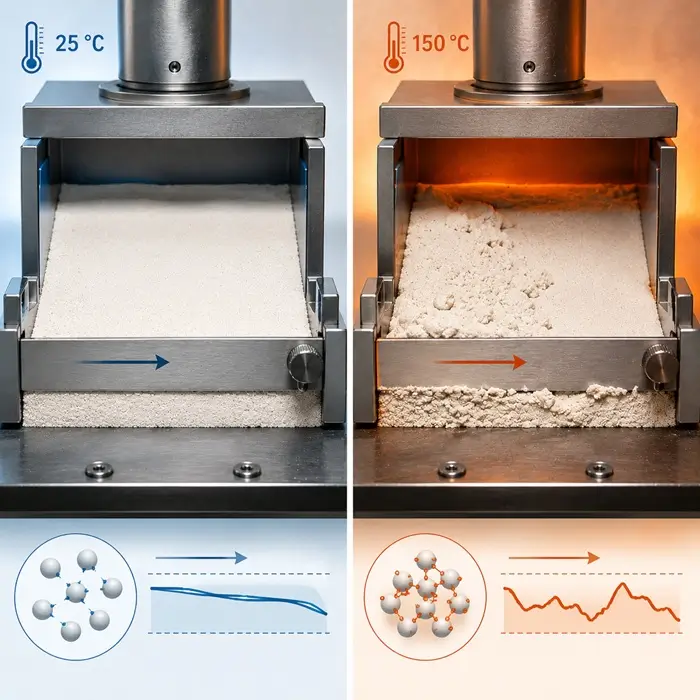
Powder Flowability at Elevated Temperature: Why Room-Temperature Results Don’t Predict Hot-Bed Behavior
Temperature shifts surface energy, contact compliance, and residual moisture state in ways that can reverse a powder's ambient flow behavior. This Insight explains the dominant mechanisms across three temperature ranges and what elevated-temperature testing reveals for SLS powder beds, spray dryer outlets, and heated conveying systems.
Insights
 27 June 2026
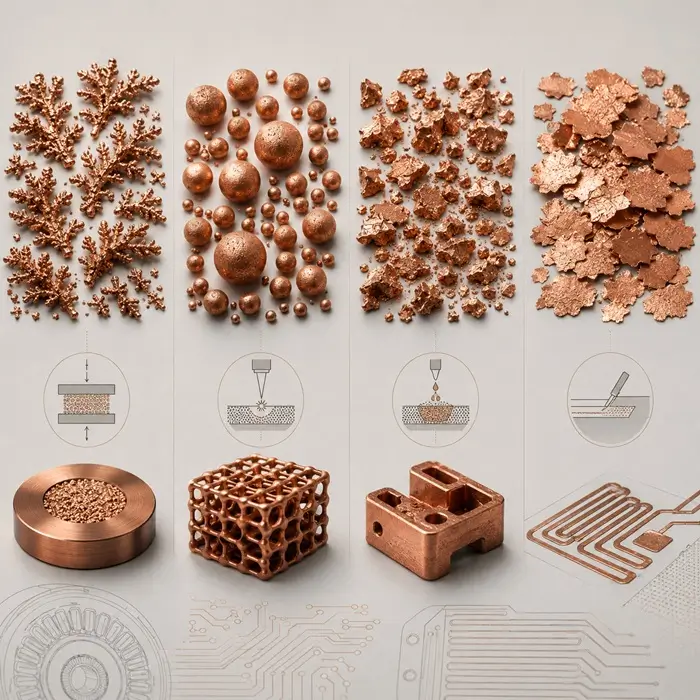
Copper Powder for Electrification: Why Morphology, Purity, and Packing Density Are Now Engineering Variables
Sintered contacts, additive manufactured heat exchangers, EV motor components, and conductive pastes each require a different copper powder. This article explains why morphology, particle size distribution, oxygen content, and packing density are engineering variables, and how to specify them correctly for electrification applications.
Feature Article
 20 June 2026
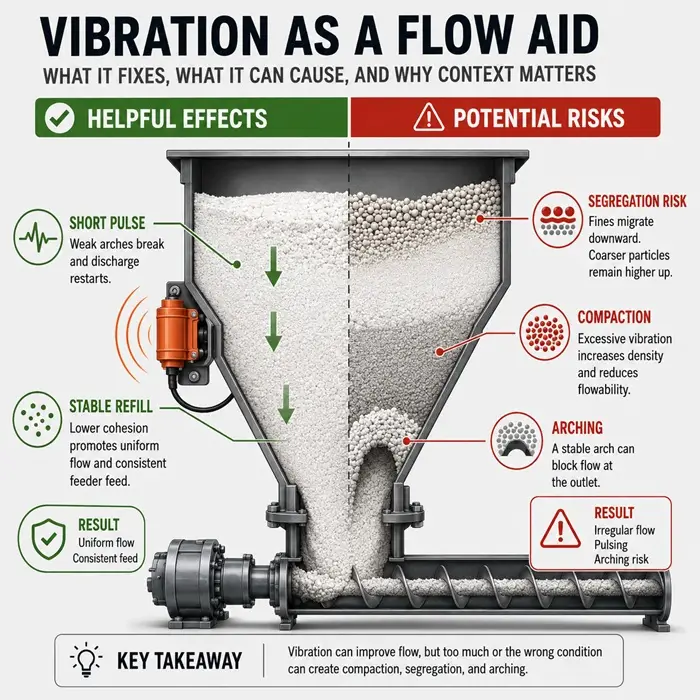
Vibration as a Flow Aid: When It Helps Powder Flow
Vibration can improve powder discharge when it breaks a weak arch or [...]
Insights
 13 June 2026
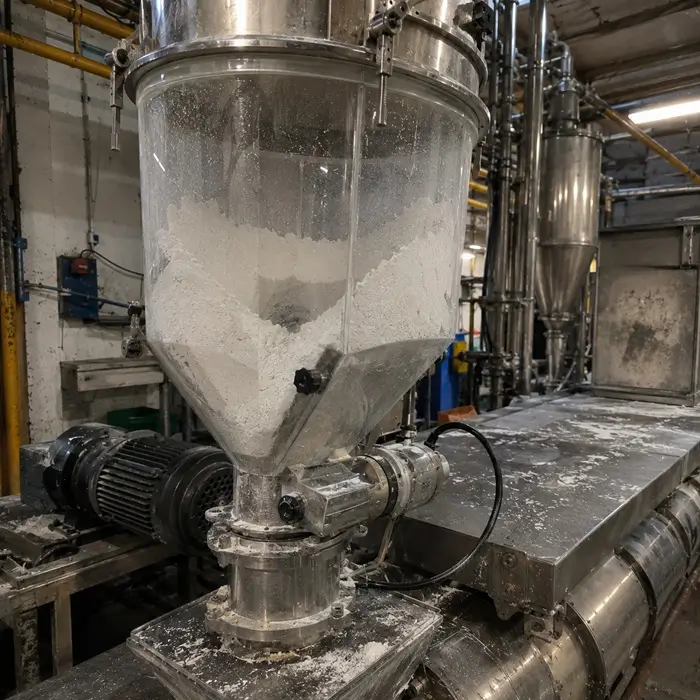
Calcium Carbonate Powder in Polypropylene: Dust Suppression and Dosing Errors
Dust suppression oil can reduce airborne calcium carbonate dust, but it may [...]
Feature Article
 13 June 2026
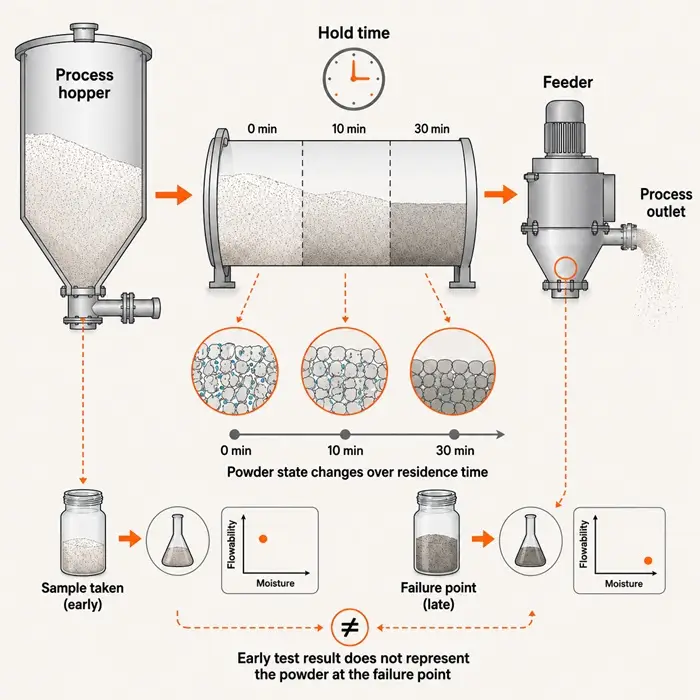
Powder Residence Time Can Make the Test Result Miss the Failure
Powder residence time matters because the sample and the failure often describe [...]
Insights
 6 June 2026
Why Hopper Fill Level Changes Powder Discharge
Do not diagnose a feeder as if the hopper sends it one [...]
Insights
 6 June 2026
Powder Deaeration: Flushing, Surging, and Air Retention
Powder instability after conveying, filling, or transfer is often treated as [...]
Know How
 6 June 2026
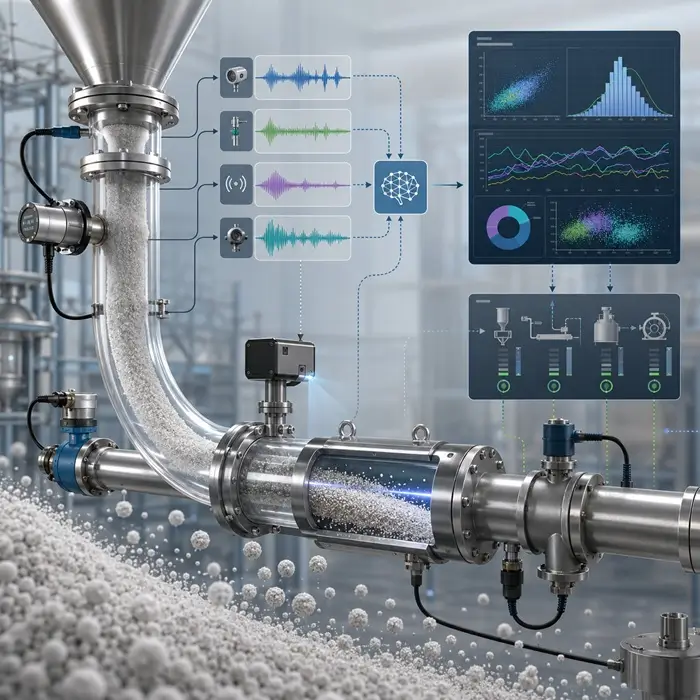
Real-Time Particle Characterization and Process Control
Real-time particle characterization is moving powder processing from delayed laboratory checks toward [...]
Feature Article
 30 May 2026
Fine Powder Fluidization in Pneumatic Conveying and Discharge Control
Fine powder fluidization can support controlled pneumatic conveying, especially in dense phase [...]
Feature Article
 30 May 2026
Powder Operating Window: Why a Good Powder Fails in the Wrong Process
A powder operating window defines the process conditions in which a [...]
Insights