
SUBJECT
Flowability
Publications on powder flow, flowability testing, cohesive behavior, and the material and process factors that influence reliable handling and discharge.
PUBLICATIONS
Browse publications
Explore PTI articles, Insights, Know How, and technical publications related to this subject.
 12 September 2026
Co-Processed Excipients in Continuous Manufacturing: How Particle Engineering Changes Powder Flow and Compaction Performance
Co-processing engineers particle morphology, density, and surface structure into a single composite excipient particle. Flow function and compactibility testing show what that buys formulators on continuous direct compression lines, and where it does not.
Feature Article
 5 September 2026
Jenike Shear Cell vs Ring Shear Tester: Matching the Method to the Hopper or Silo Decision
Jenike shear cells and ring shear testers measure the same yield locus through different mechanics. Here is how their sample, stress range, and time differences map onto the mass-flow versus funnel-flow hopper design decision, plus a checklist for choosing between them.
Know How
 5 September 2026
GRCop-42 and the Copper Powder Feedstock Problem in Laser Powder Bed Fusion
Copper reflects most near-infrared laser light and conducts absorbed heat away faster than almost any other engineering metal. GRCop-42's move into commercial powder catalogs shows how feedstock morphology, oxide content, and particle size distribution are being engineered around that problem rather than worked around it.
Feature Article
 29 August 2026
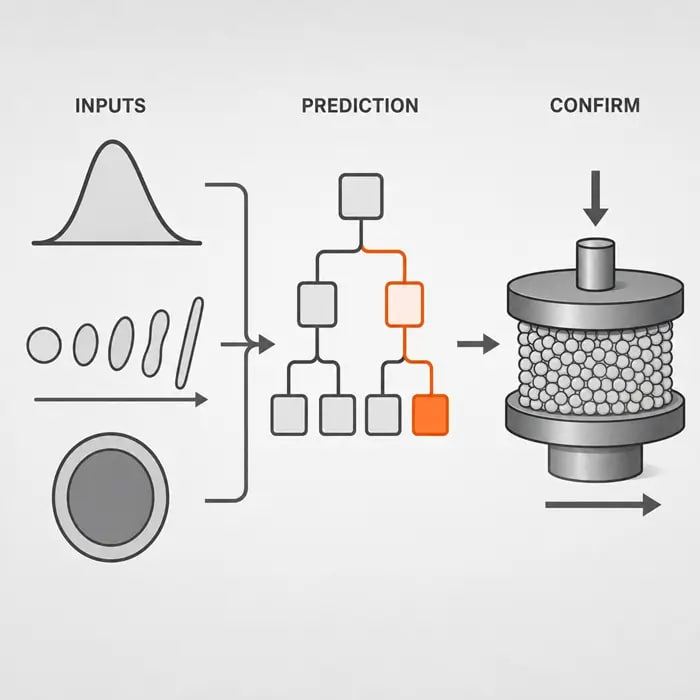
Machine Learning Flowability Prediction: What Constituent-Property Models Can and Can’t Replace
A Pharmaceutical Research study trained Random Forest and XGBoost classifiers on particle size, shape, surface energy, and silica dry-coating data to predict powder blend flowability category. The accuracy holds up as a screening tool and breaks down in specific, predictable places.
Insights
 29 August 2026
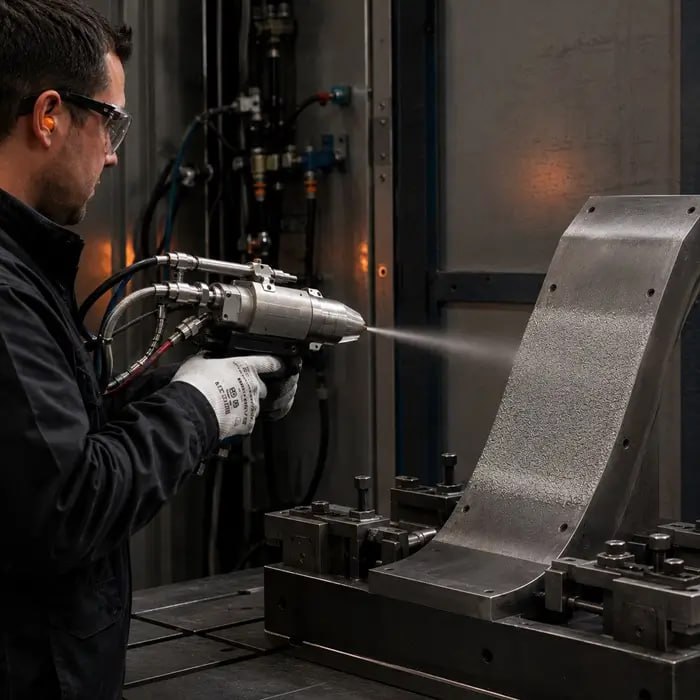
Cold Spray Powder Deposition: Particle Velocity, Oxide Layers, and Why Some Powders Won’t Bond
Cold spray coatings form only when particles clear a critical impact velocity, a threshold set by material properties, particle size and morphology, and native oxide condition. This article looks at what powder-side QC can flag before a spray trial, and where it stops short of predicting deposition efficiency.
Feature Article
 15 August 2026
FDA’s Proposed Hub-and-Spoke Distributed Manufacturing Rule: What It Means for Blend Uniformity and Granulation Consistency
FDA's proposed hub-and-spoke registration rule treats geographically separate manufacturing units as one establishment. The registration paperwork is new; proving that blend uniformity, granulation endpoints, and moisture behavior actually match between sites is the older, harder problem.
Feature Article
 8 August 2026
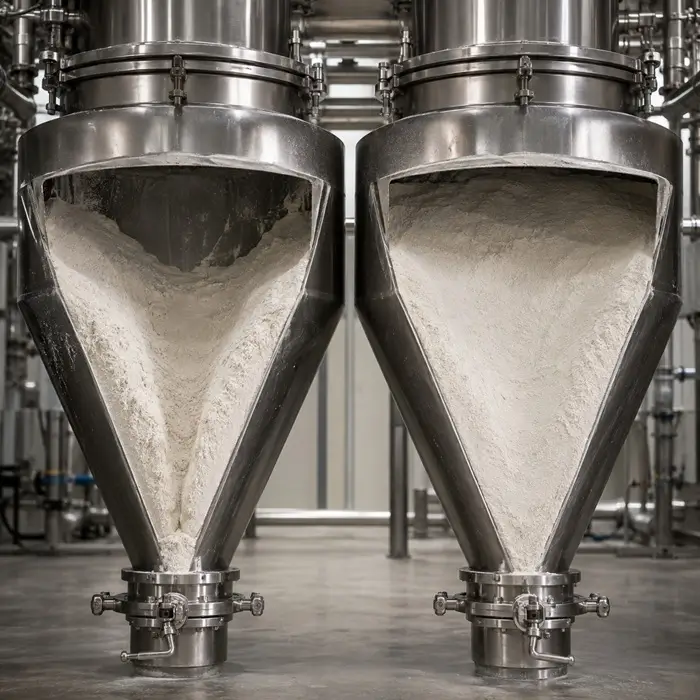
Powder Spreading in Powder Bed Fusion: What Recoater Interaction Reveals About Layer Defects
Powder spreading in powder bed fusion is a recoater-powder interaction shaped by cohesion, particle size distribution, and particle shape. This article maps streaking, short-feeding, and layer non-uniformity back to their underlying mechanisms and separates powder-driven causes from blade wear and spreading speed.
Feature Article
 1 August 2026
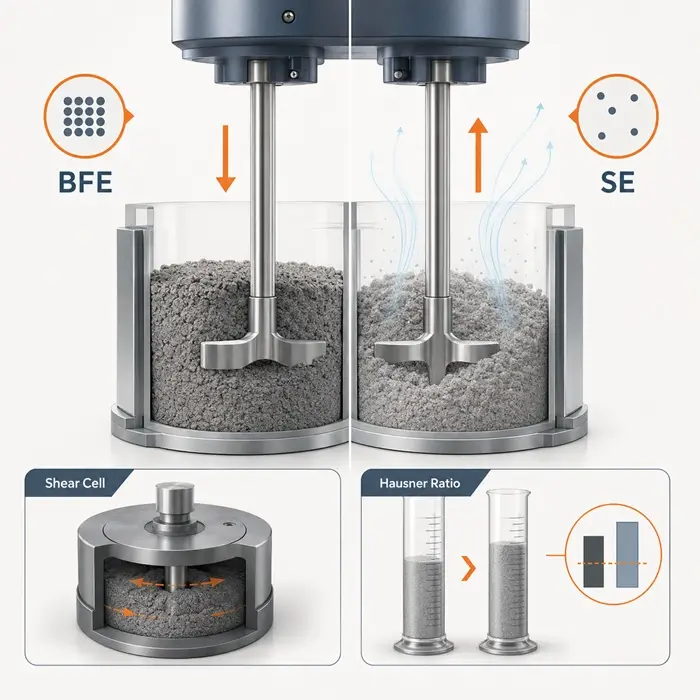
Dynamic and Aerated Powder Testing: What Flow Energy Adds Beyond the Shear Cell and Hausner Ratio
Dynamic and aerated powder testing measures basic flow energy and specific energy to fill the gap between shear cell consolidation data and Hausner ratio screening, particularly for fluidized processing and rapid-refill feeding.
Know How
 1 August 2026
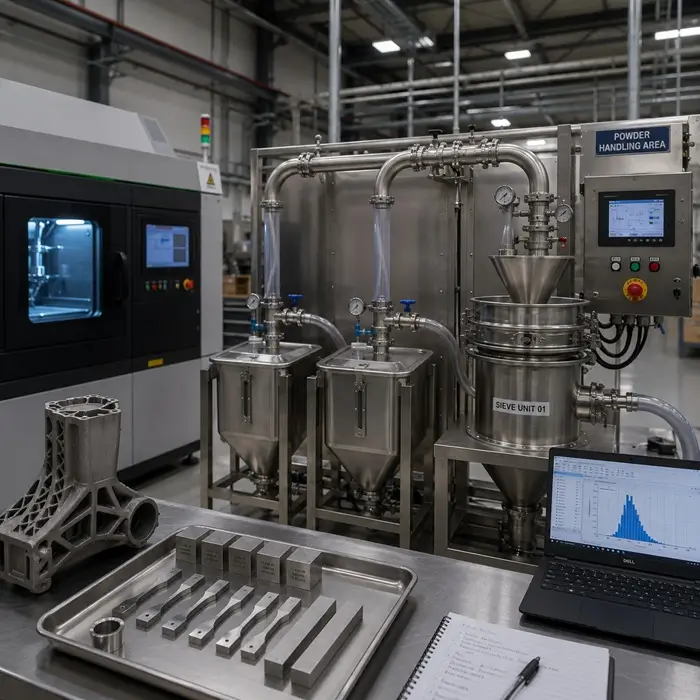
Virgin-to-Reused Powder Blend Ratios in Aerospace PBF-LB Qualification: Where the Decision Actually Sits
As aerospace metal additive manufacturing capacity expands, more reused powder is going back into qualified builds. The virgin-to-reused blend ratio decision depends on PSD shift, satellite formation, and morphology drift, and cannot be settled by a single powder check disconnected from the part's stress state.
Feature Article
 25 July 2026
Roller Compaction Ribbon Solid Fraction: Why the Same Roll Force Can Produce Different Granules
Two lots that pass the same incoming flowability spec can still granulate differently after roller compaction. The reason usually traces to ribbon density, which responds to roll force, gap width, and feed screw speed as an interacting set, not to roll pressure in isolation.
Insights
 18 July 2026
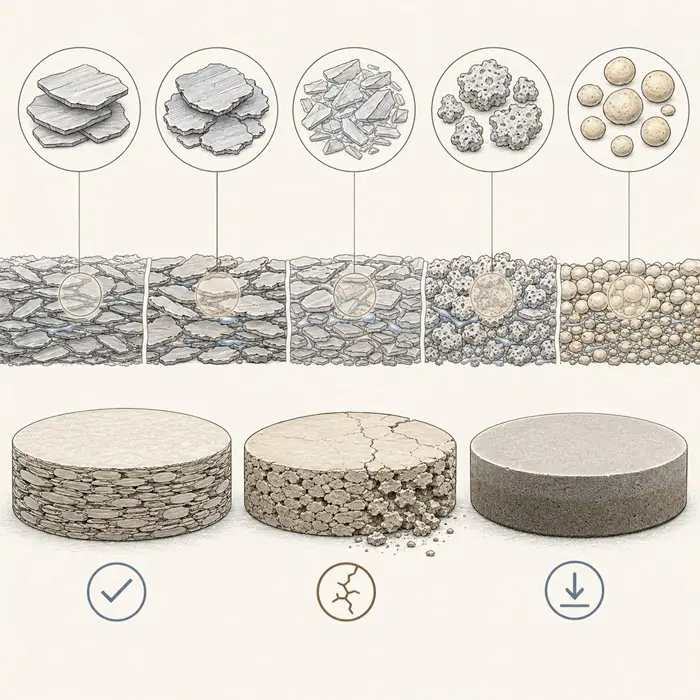
Preparing for an EU Talc Ban: What Mineral and Starch Alternatives Need to Match
Talc's expected EU restriction is forcing cosmetic formulators toward mica, kaolin, silica, and starch. None of them reproduce talc's platelet slip, oil absorption, and low dustiness at the same time, and each substitution changes flow and compaction behavior in pressed powder products differently.
Insights
 11 July 2026
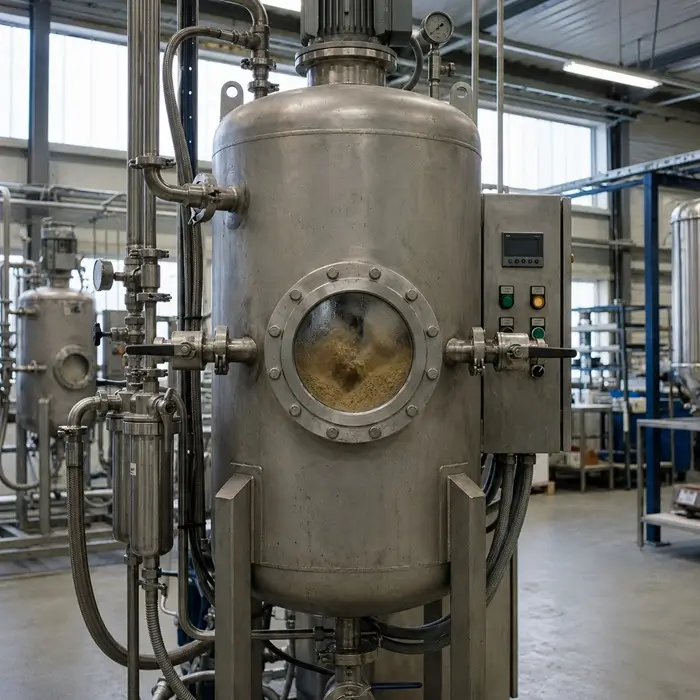
Fluidized Bed Processing in Powder Technology: Granulation, Coating, and Drying Through a Powder Behavior Lens
Geldart classification, minimum fluidization velocity, bubble dynamics, droplet-to-particle size ratio, and permeability all determine whether a fluidized bed process delivers controlled granule growth, uniform coating, or consistent drying at production scale.
Feature Article