
SUBJECT
Bulk Solids Characterization
Publications on the measurement and interpretation of bulk powder properties relevant to flow, storage, handling, processing, and product performance.
PUBLICATIONS
Browse publications
Explore PTI articles, Insights, Know How, and technical publications related to this subject.
 25 July 2026
Dense-Phase vs Dilute-Phase Pneumatic Conveying: Matching Conveying Mode to Attrition and Segregation Risk
Dense-phase and dilute-phase pneumatic conveying create different particle contact mechanics, and the resulting attrition and segregation risk depends on velocity, solids loading ratio, and the powder's own attrition sensitivity, not on a fixed assumption about which mode is gentler.
Feature Article
 18 July 2026
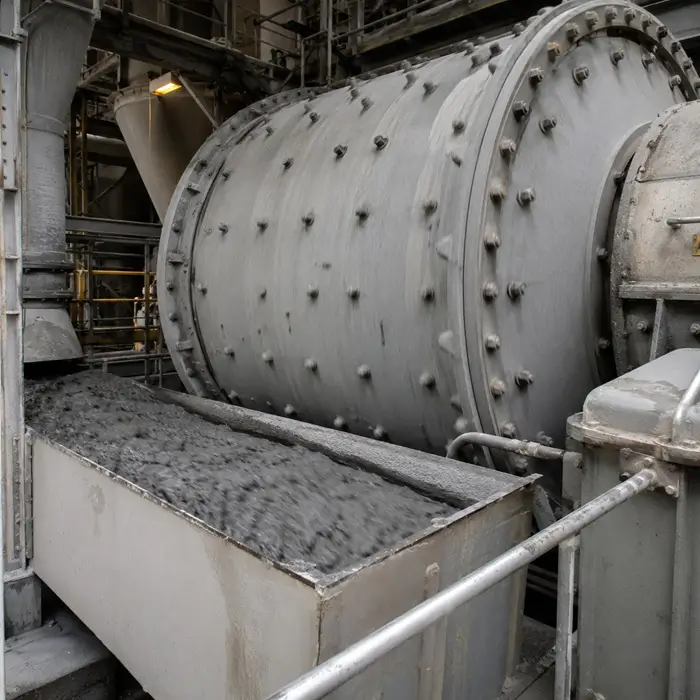
Cement and Concrete Powder Processing: Fineness, Grinding Aids, and Cementitious Reactivity
Cement fineness is not a single number. Blaine surface area, particle size distribution, grinding aid chemistry, and moisture history each pull on hydration reactivity in different ways, and a fineness specification that ignores any one of them will eventually let a bad batch through.
Feature Article
 11 July 2026
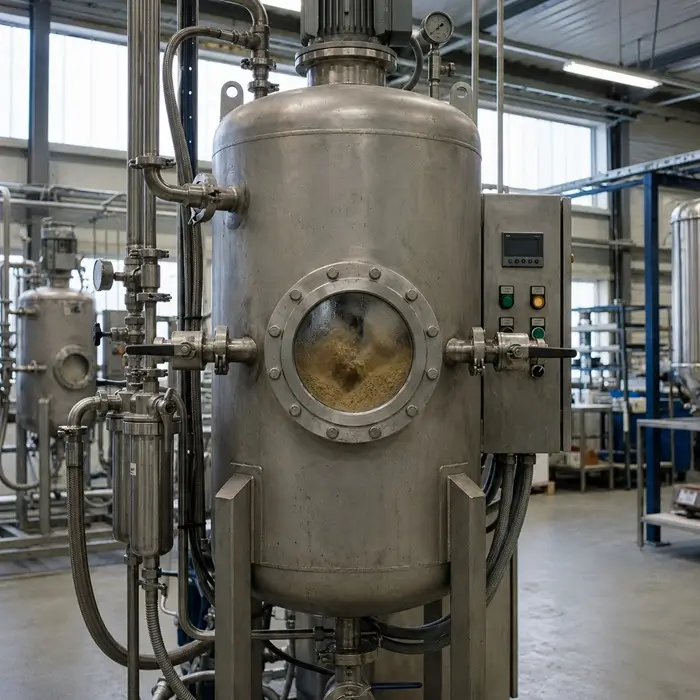
Fluidized Bed Processing in Powder Technology: Granulation, Coating, and Drying Through a Powder Behavior Lens
Geldart classification, minimum fluidization velocity, bubble dynamics, droplet-to-particle size ratio, and permeability all determine whether a fluidized bed process delivers controlled granule growth, uniform coating, or consistent drying at production scale.
Feature Article
 4 July 2026
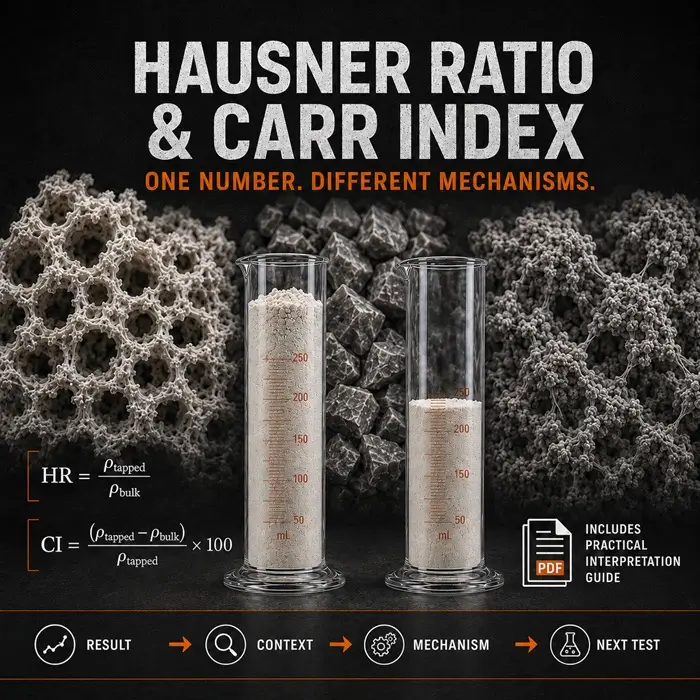
Hausner Ratio and Carr Index: What the Numbers Tell You and Where They Break Down
Both the Hausner Ratio and Carr Index reduce bulk and tapped density to a single number. The mechanism behind that number, whether aeration, particle shape, or surface cohesion, determines whether it supports a process decision or actively misleads one.
Know How
 4 July 2026
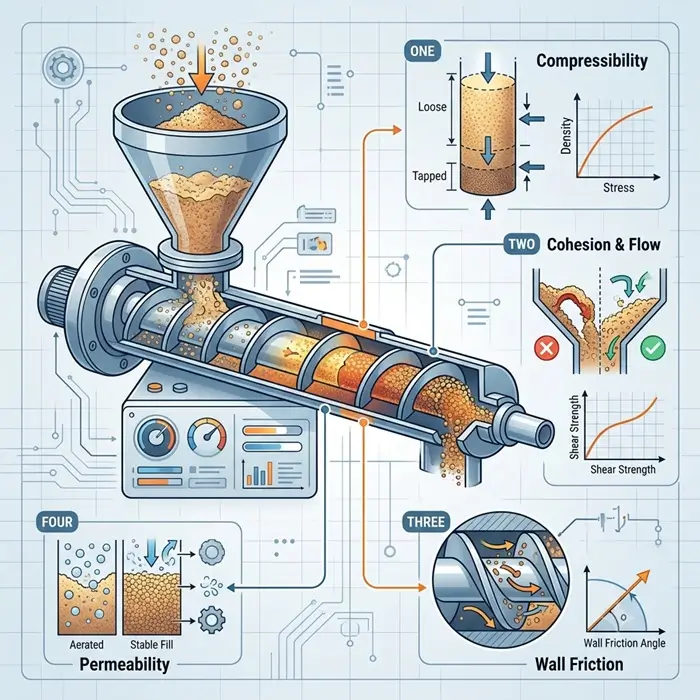
Screw Feeder Dosing Accuracy and Powder Compressibility: Why the Same Screw Behaves Differently on Similar Products
The same screw feeder at the same speed can deliver consistently on one powder and drift by several percent on another. The difference lies in compressibility, wall friction, and cohesion, and in how bulk density shifts as the hopper empties.
Insights
 29 June 2026
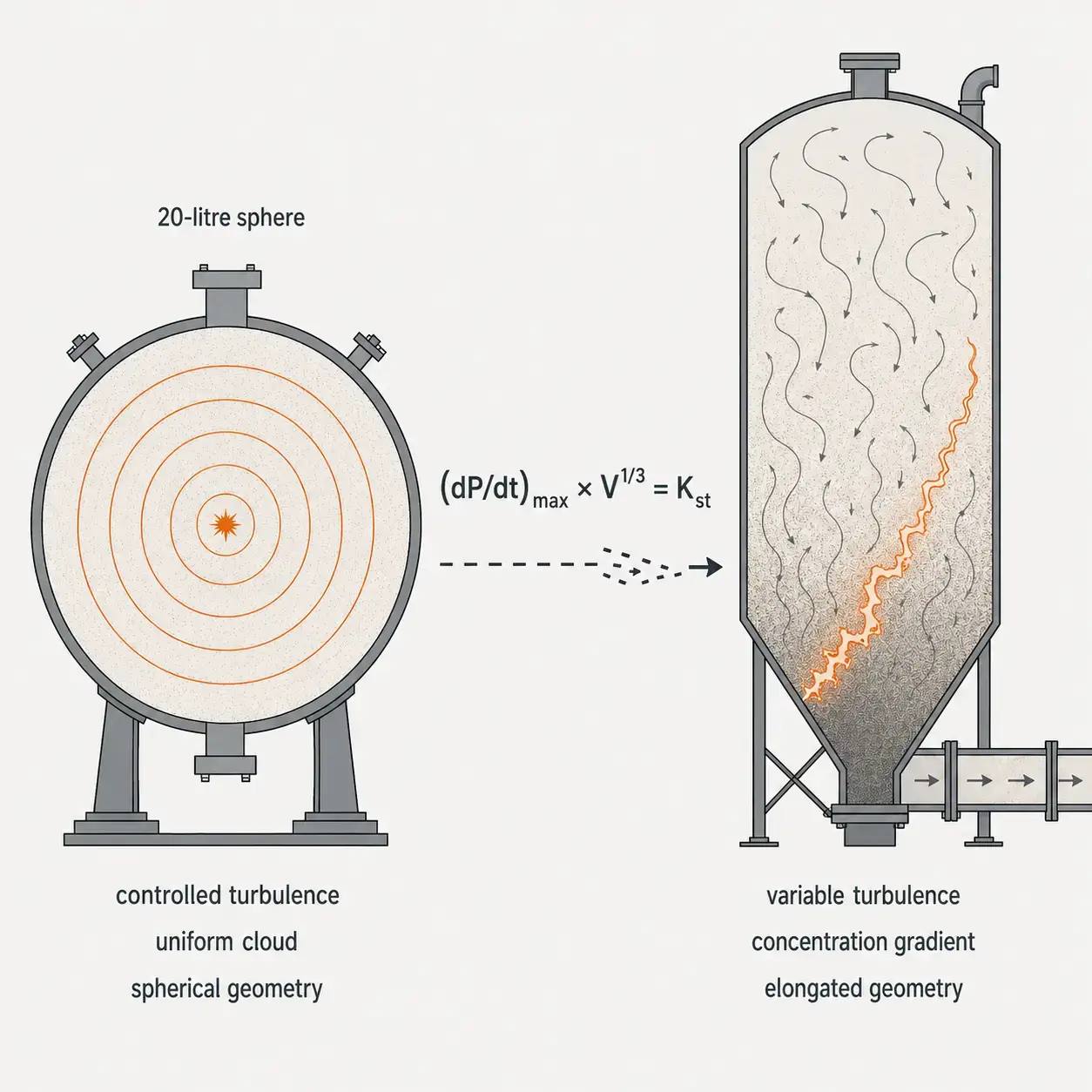
Why Kst Is Not Enough: What the Explosion Index Tells You and What It Misses
Kst quantifies explosion rate-of-pressure-rise under standardized lab conditions. It does not directly describe how an explosion behaves in your vessel, at your turbulence level, or with your ignition scenario. This insight explains what the number means, where the cubic law holds, and when a competent person must go further than the test certificate.
 27 June 2026
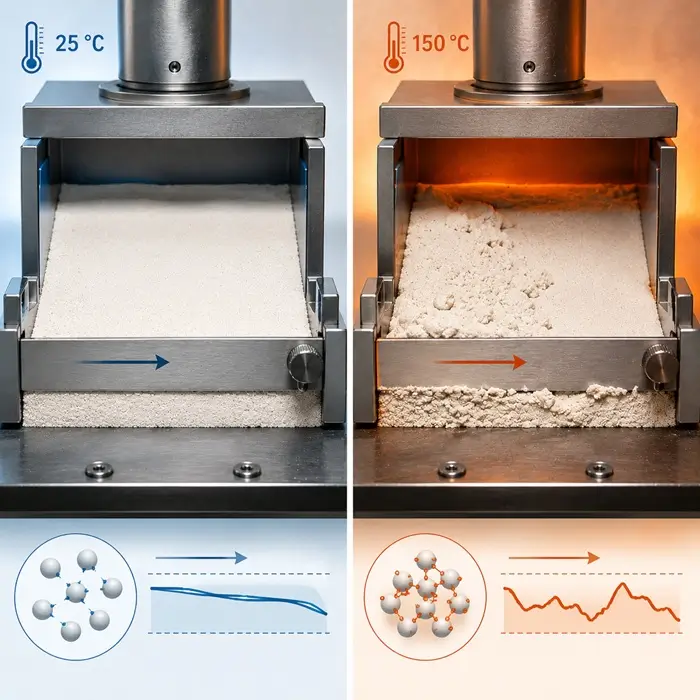
Powder Flowability at Elevated Temperature: Why Room-Temperature Results Don’t Predict Hot-Bed Behavior
Temperature shifts surface energy, contact compliance, and residual moisture state in ways that can reverse a powder's ambient flow behavior. This Insight explains the dominant mechanisms across three temperature ranges and what elevated-temperature testing reveals for SLS powder beds, spray dryer outlets, and heated conveying systems.
Insights
 20 June 2026
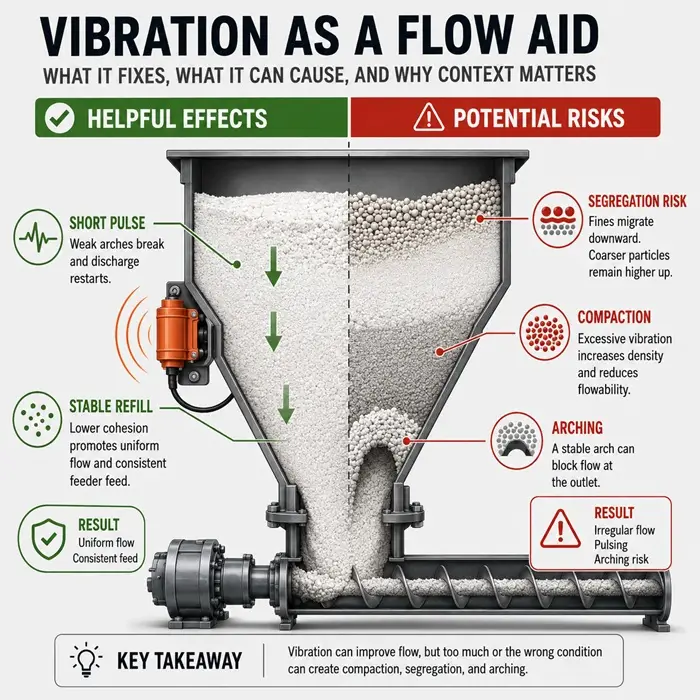
Vibration as a Flow Aid: When It Helps Powder Flow
Vibration can improve powder discharge when it breaks a weak arch or [...]
Insights
 13 June 2026
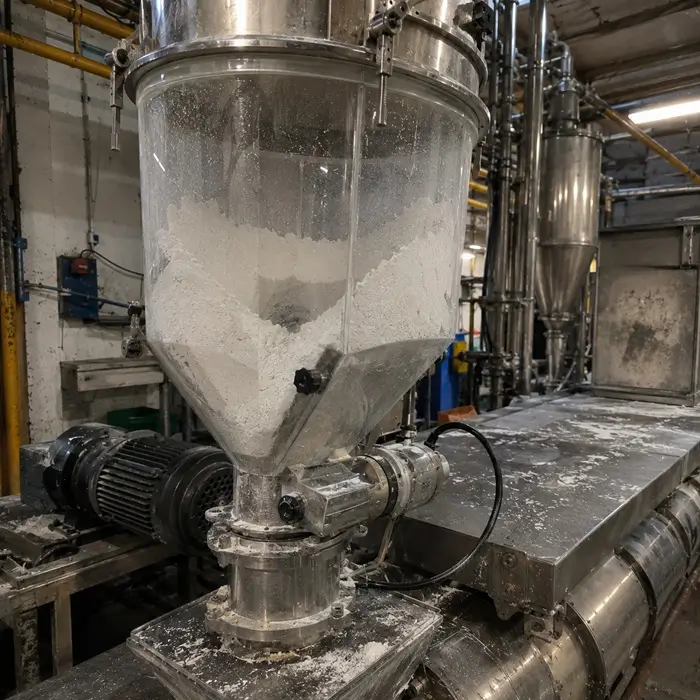
Calcium Carbonate Powder in Polypropylene: Dust Suppression and Dosing Errors
Dust suppression oil can reduce airborne calcium carbonate dust, but it may [...]
Feature Article
 13 June 2026
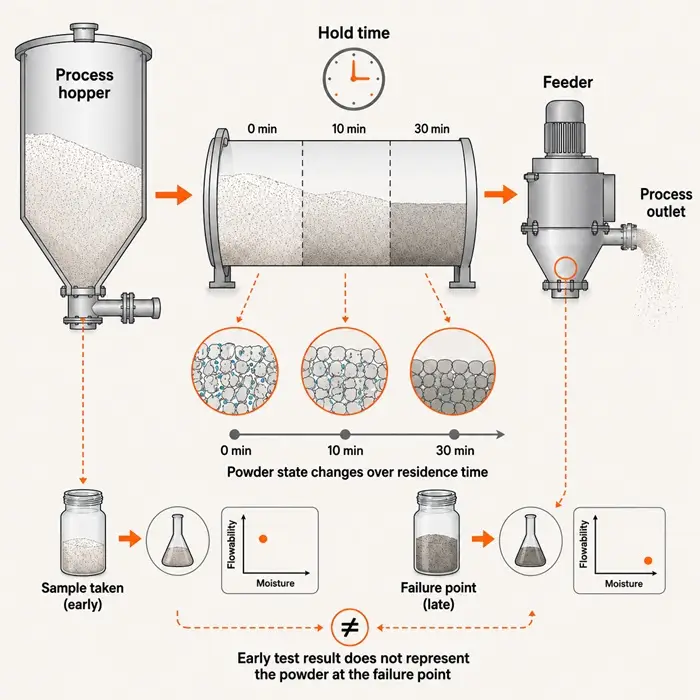
Powder Residence Time Can Make the Test Result Miss the Failure
Powder residence time matters because the sample and the failure often describe [...]
Insights
 6 June 2026
Powder Deaeration: Flushing, Surging, and Air Retention
Powder instability after conveying, filling, or transfer is often treated as [...]
Know How
 30 May 2026
Powder Operating Window: Why a Good Powder Fails in the Wrong Process
A powder operating window defines the process conditions in which a [...]
Insights