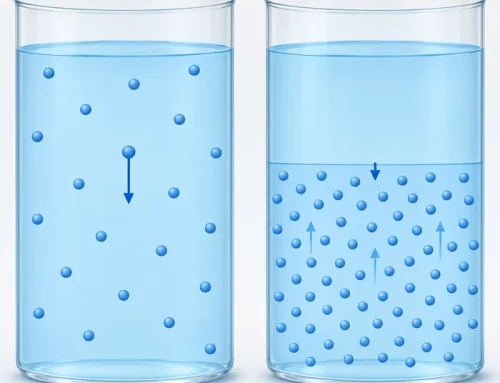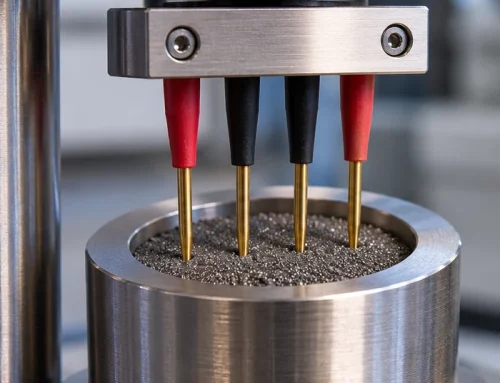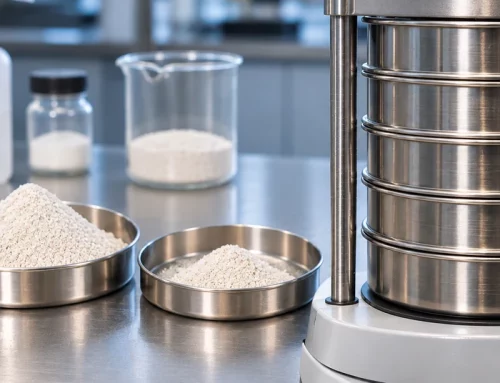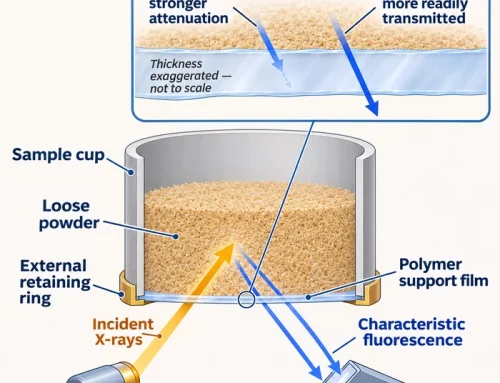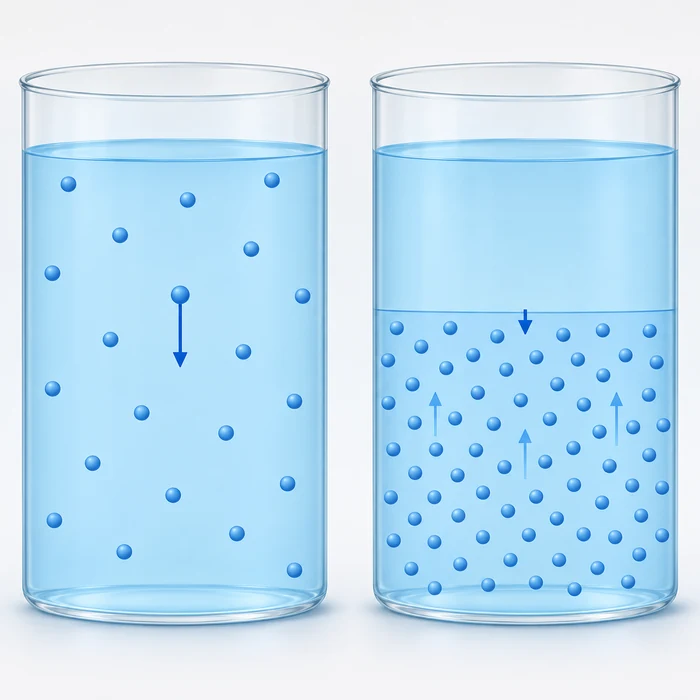
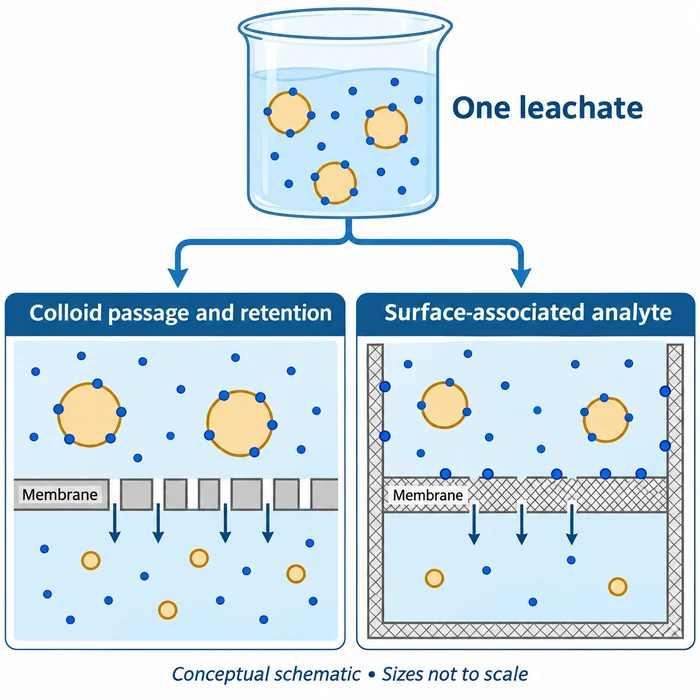
Conceptual mechanisms: metal-bearing colloids can pass or be retained, while dissolved analyte can associate with filtration-system surfaces. Particle sizes and quantities are schematic.
Two portions split from one batch extraction return different metal concentrations after filtration. EPA Method 1316 calls the liquid produced by laboratory extraction the eluate, sometimes called “powder leachate.” Both portions share the same extraction history, so investigate how splitting, subsequent handling, filtration, and analysis produced the difference.
Decide Whether the Difference Needs Investigating
Before explaining the gap, check whether it exceeds the laboratory’s duplicate acceptance criteria or typical variability at that concentration. Reanalyzing the same prepared extract tests analytical repeatability; comparing two separately handled portions also tests preparation variability, and the two are not interchangeable. Near the reporting limit, a large percentage difference can still be ordinary measurement noise, so judge the gap against the laboratory’s actual criteria, not a fixed percentage.
Trace Where the Preparation Paths Diverged
If the gap is significant, request records reconstructing each portion’s handling: mixing before splitting, settling or centrifugation, holding time and air exposure before filtration, membrane material and pore size, processed and discarded volumes, filter changes, preservation timing, digestion, and blank or recovery results. Method 1316 notes that eluate separated from the solid loses its buffering and can be susceptible to pH change from air contact, so unequal holding times are worth checking [1].
Why the Eluate Can Change Between Portions
Filtration itself can explain part of the gap. Small metal-bearing colloids can pass a membrane while larger particles are retained, and as retained material accumulates, clogging can increase colloidal retention; filter type, area, processed volume, and filtration conditions all influence measured trace-element concentrations [2]. Equal nominal pore sizes do not guarantee equal separation.
Dissolved analyte can also adsorb to filtration-system surfaces rather than passing through. Research on prepared aqueous lead and copper solutions reported filter-dependent bias, including dissolved-metal losses [3]. That study used prepared aqueous solutions, not this eluate, and does not quantify losses under the conditions here. A clear, low-concentration filtrate cannot distinguish this loss from colloidal retention.
Before the split, inconsistent mixing, settling, or aliquot withdrawal can give the two portions different suspended-particle loads, changing how each behaves during filtration even though both came from the same extraction. The colloid load presented to the filter, not the extraction chemistry, is what differs here.
Diagnose With Blanks and Matched Additions, Then Repeat
Keep the result required by the applicable extraction procedure separate from any supplementary check. For Method 1316, that result comes from filtration through a polypropylene or equivalent 0.45 µm membrane under pressure or vacuum, followed by immediate preservation consistent with the subsequent analysis [1]. PTI’s distinction between composition and leachable content explains why an unfiltered digestion cannot substitute for it; treat alternative cutoffs and retained-filter analysis as supplementary unless the governing procedure allows otherwise.
Run a filtration-system blank to check for contamination, not analyte recovery. EPA Method 1669 documents passing reagent water through the tubing and filter to collect such a blank [4]; a clean blank does not demonstrate that metal already present was recovered.
Matched dissolved-metal additions, one before filtration and one to the collected filtrate, with unspiked controls alongside each, can help distinguish a filtration-associated loss from a later preparation or analytical effect, without excluding either mechanism. Lower recovery for the pre-filtration addition than the post-filtration addition points toward a loss during filtration; poor recovery for the post-filtration addition can indicate subsequent preparation or analytical effects, including matrix interference.
Interpret either result against the native analyte concentration, any dilution, the added concentration, and the laboratory’s acceptance criteria. A dissolved addition may not reproduce how a native colloid-bound metal behaves, so this comparison is a laboratory-designed diagnostic rather than a prescribed Method 1316 step, and recovery alone cannot establish a unique loss mechanism.
For a controlled repeat, vary only the suspected preparation factor while matching the remaining preparation and analytical conditions, and include blanks or matched additions as appropriate to the suspected cause. If the suspected factor is prior aging or air exposure, remixing an already-aged eluate cannot restore its original history; start a fresh extraction and compare controlled holding conditions instead.
Technical Basis / Sources
- U.S. Environmental Protection Agency. 2017. Method 1316: Liquid-Solid Partitioning as a Function of Liquid-to-Solid Ratio in Solid Materials Using a Parallel Batch Procedure. Revision 1, July 2017.
- Breault, Robert F., and Gregory E. Granato. 2000. A Synopsis of Technical Issues of Concern for Monitoring Trace Elements in Highway and Urban Runoff. U.S. Geological Survey Open-File Report 00-422.
- U.S. Environmental Protection Agency. 2011. A Systematic Evaluation of Dissolved Metals Loss During Water Sample Filtration. Science in Action, EPA/600/F-11/029, November 2011.
- U.S. Environmental Protection Agency. 1996. Method 1669: Sampling Ambient Water for Trace Metals at EPA Water Quality Criteria Levels. July 1996.