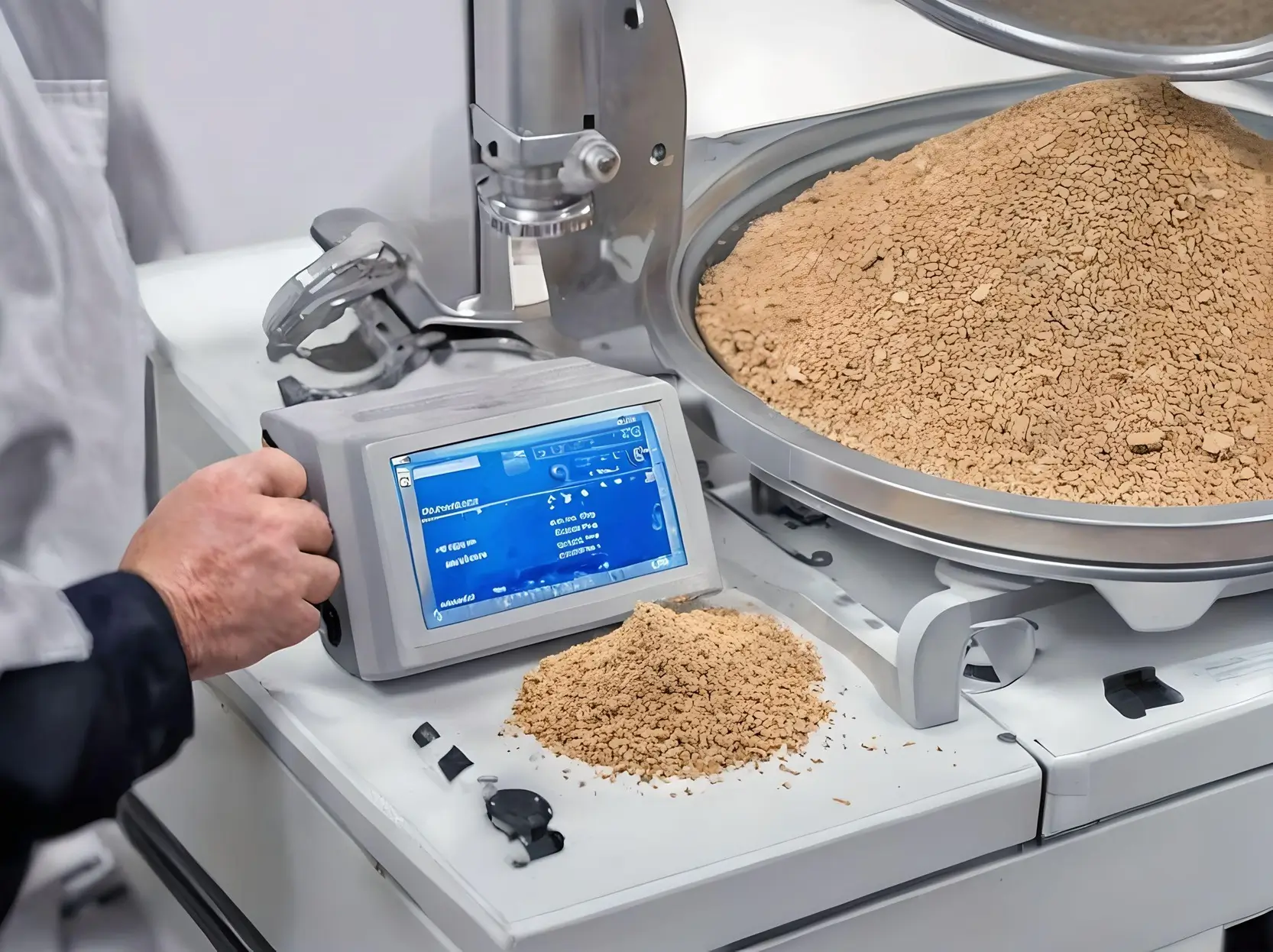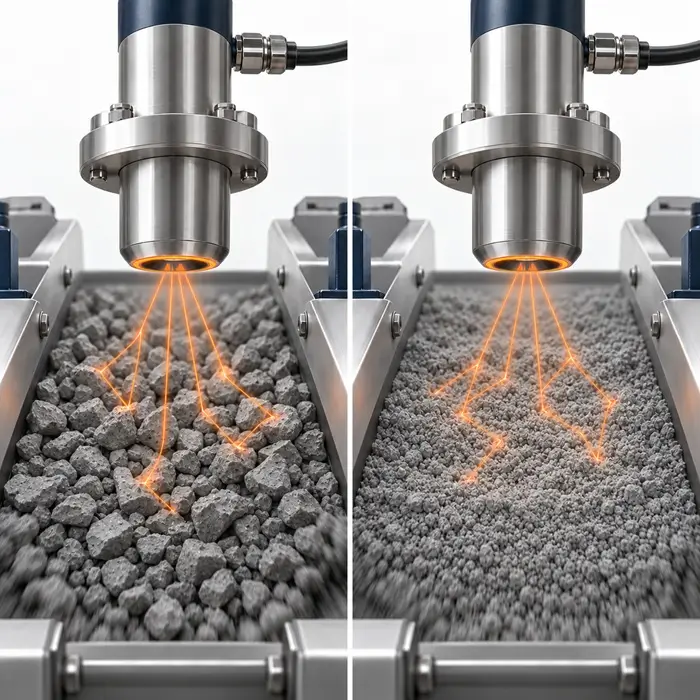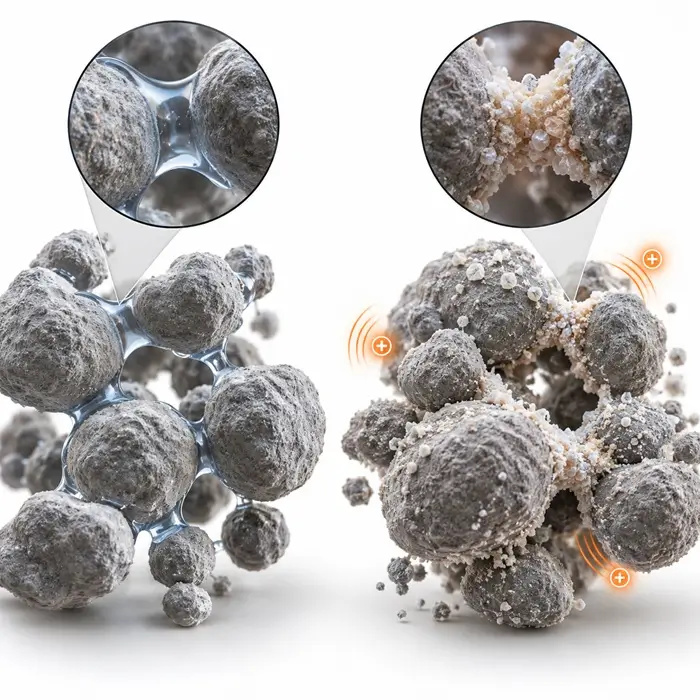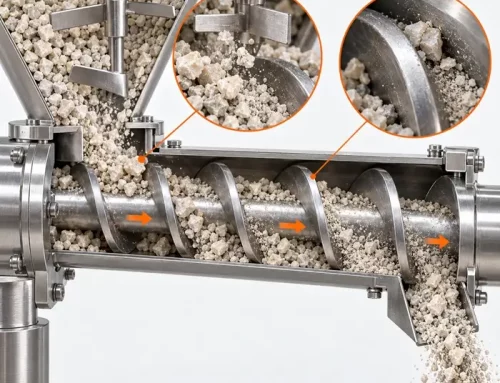
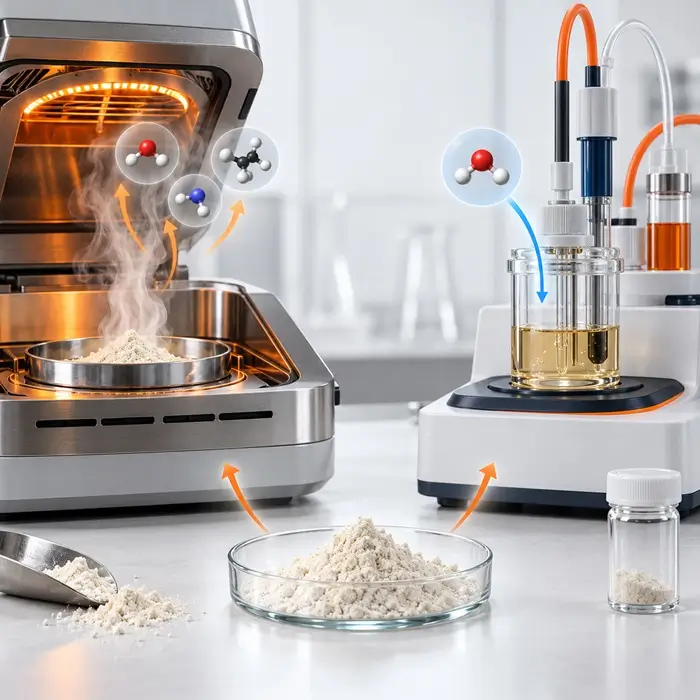
A powder may report 2.1% by LOD and 1.3% by KF even when both methods are repeatable. The discrepancy can arise from the sample, the measurement conditions, or handling.
Why Can LOD Read Higher?
LOD is gravimetric: any net mass loss during the specified drying procedure contributes to the result. USP <731> defines it as volatile matter driven off, not water specifically. Residual solvents can therefore increase LOD, while heating can also cause decomposition.
Sodium bicarbonate illustrates the problem in both directions. Heating can release carbon dioxide and chemically generated water, raising LOD and potentially oven-KF results. In acidic direct-KF media, bicarbonate can also react to generate water, falsely increasing the titration result. Neither signal necessarily represents water originally present in the powder.
Can Karl Fischer Read Too Low?
Yes. Direct KF can under-recover water if a powder dissolves poorly, traps water within particles or pores, or releases it too slowly under the selected extraction conditions. A lower KF reading alone does not prove that LOD overestimates moisture.
How Do You Separate the Causes?
Collect representative aliquots from the same lot, limit humidity exposure, and keep containers closed until testing. Different handling can create an apparent discrepancy before analysis begins.
-
- Repeat both methods on controlled aliquots to confirm the difference.
- Review LOD temperature, time or endpoint, sample mass, layer thickness, and possible volatile ingredients.
- Check direct-KF blanks, drift, reagents, solvent, extraction time, sample dispersion, recovery, and chemical interference.
- Establish the sample’s decomposition onset from existing stability data or thermal analysis. When necessary, use TGA coupled with FTIR or mass spectrometry to identify evolved gases and distinguish decomposition from water release.
- Screen oven-KF temperatures with a ramp or successive temperature tests. Identify a region of reproducible water recovery and stable, low drift below the established decomposition onset. Select a suitable working temperature and compare oven KF with direct KF.
- If residual-solvent loss is suspected, use headspace gas chromatography, where applicable under USP <467>.
What Should You Report?
<p>Report LOD as <strong>loss on drying</strong> unless method suitability demonstrates that the loss represents water for that material and procedure. Report validated KF as <strong><a href=”https://powdertechnology.info/test-methods/moisture-and-environmental-response/”>water content</a></strong>. Because the method is part of a QA/QC specification, do not transfer numerical limits between methods without demonstrating equivalence.</p>
<p>Use the following decision rule:</p>
<ul>
<li><strong>Oven KF approaches LOD below decomposition onset:</strong> investigate incomplete direct-KF recovery, while checking for interference.</li>
<li><strong>Direct and oven KF agree, but LOD remains higher:</strong> investigate non-water volatiles or other mass loss.</li>
<li><strong>Oven KF approaches LOD only as decomposition begins:</strong> investigate chemically generated water, not merely direct-KF recovery.</li>
</ul>
Technical Basis / Sources
-
- USP <731>, Loss on Drying (2020). Definition of LOD.
-
- USP <921>, Water Determination (2025). Methods for water determination.
-
- USP <467>, Residual Solvents (2022). Pharmaceutical residual-solvent testing.
-
- Metrohm, Oven Method for Sample Preparation in Karl Fischer Titration. Temperature screening and decomposition.
-
- Honeywell HYDRANAL, Laboratory Report L 053. Sodium bicarbonate interference and oven-KF decomposition.
-
- PerkinElmer, Evolved Gas Analysis – Hyphenated Technology Guide. Coupled thermal and gas analysis.